Collaborazione
ARTE
BELLEZZA E BENESSERE
MESTIERE
CULTURA E STORIA
DIVERTIMENTO
AMBIENTE
CIBO E BEVANDE
INGEGNERIA INVERSA
SCIENZE
SPORT
TECNOLOGIA
INDOSSABILI
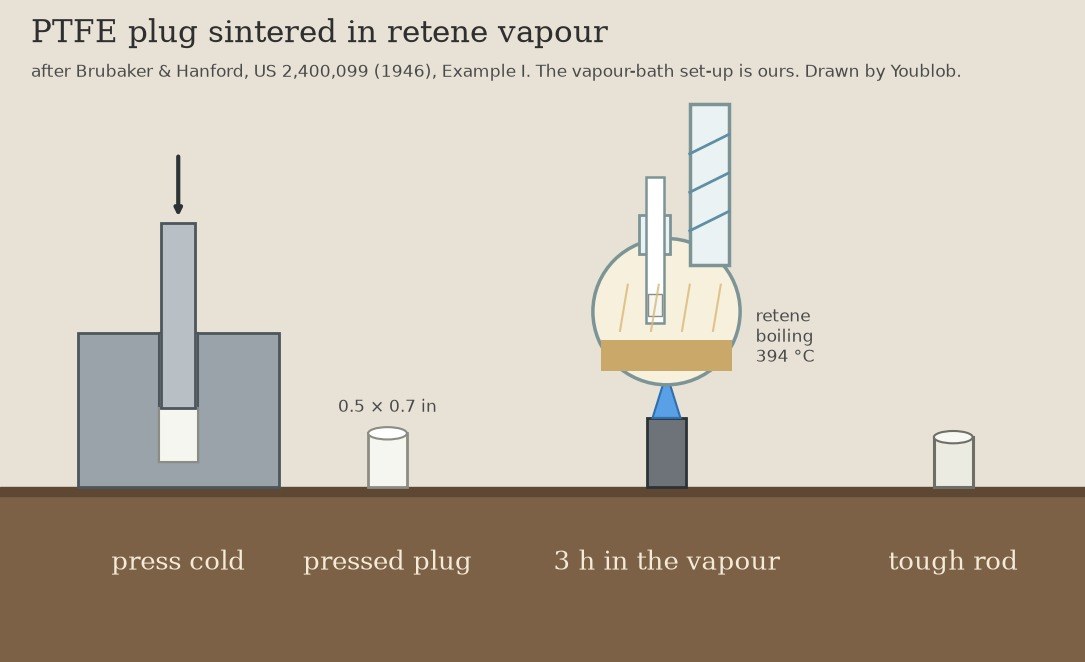


PTFE Rod: a Plug Sintered in Boiling Retene Vapour (Brubaker & Hanford 1946)
The first example of du Pont's way to shape PTFE: press a small rod of powder cold, then heat it above 327 °C out of the mould. Here the heat comes from the vapour of boiling retene, which boils at 394 °C, so the temperature holds steady by itself. The plug comes out sintered into one tough piece.
Source: M. M. Brubaker and W. E. Hanford (du Pont), US 2,400,099 (1946), Example I. The pressure is the patent's usual range, as the example gives none. The mould, press and the vapour-bath set-up are ours. Picture drawn by Youblob.
Avanzato
1 day
Istruzioni
1
1
Press a plug from the powder
Press a plug from the powder
At room temperature, press small particles of PTFE in a mould into a plug 0.5 in across and 0.7 in long. The example gives no pressure; the patent's usual range is 100–3000 lb/sq in.
Materiali per questo passaggio:
 Polvere di resina PTFE1 as required for the plug
Strumenti necessari:
 Stampo a compressione
 Pressa idraulica
 Righello
2
2
Set up a retene vapour bath
Set up a retene vapour bath
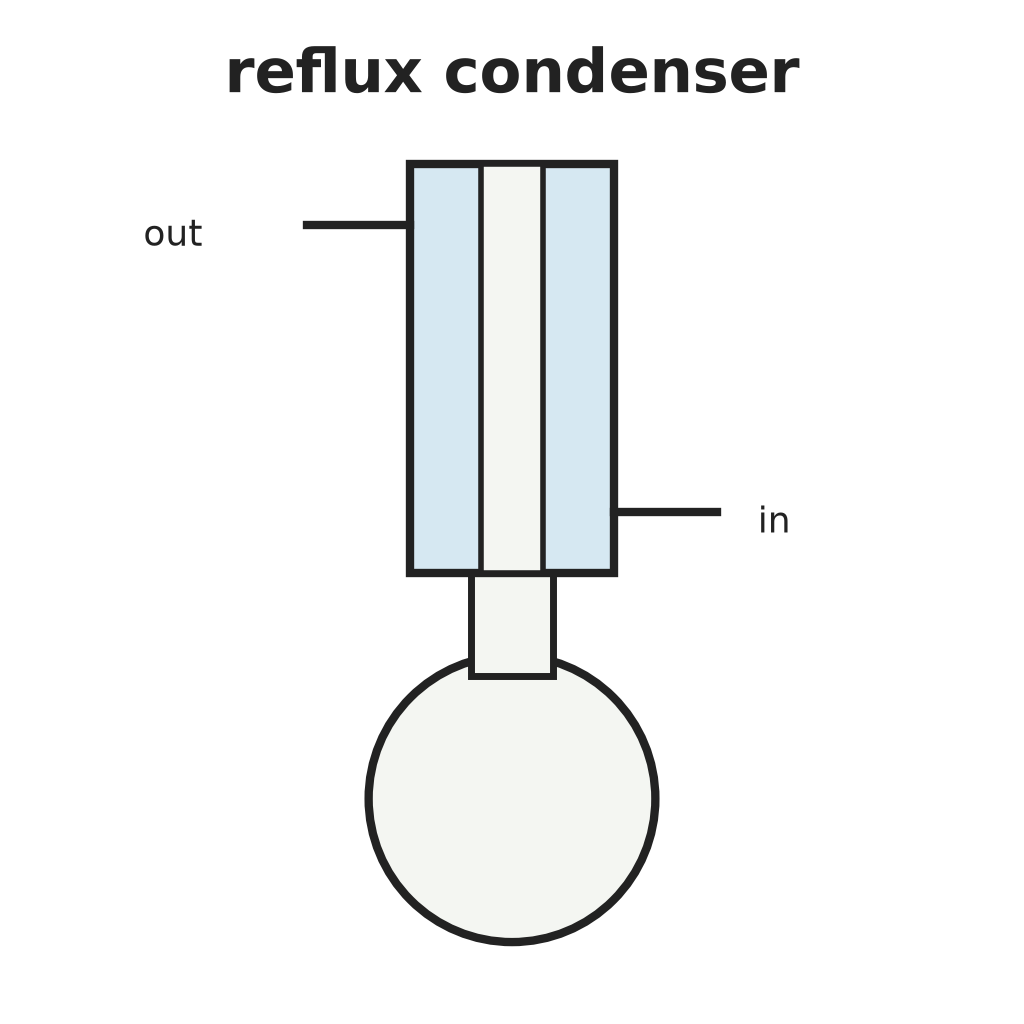
Boil retene so its vapour fills the space round a glass tube. Ours: retene in a flask on a burner, a reflux condenser on top, and the tube standing in the vapour.
Strumenti necessari:
 Retene
 Pallone di distillazione in vetro
 Refrigerante a ricadere
 Becco Bunsen
 Provette
3
3
Sinter for 3 hours
Sinter for 3 hours
Take the plug out of the mould, put it in the glass tube, and heat it in the vapour of boiling retene (394 °C) for 3 hours.
Strumenti necessari:
ProvetteReteneBecco Bunsen4
4
Cool it under the retene
Cool it under the retene
Remove the heat source and let the plug cool where it is. It is now sintered together into a tough mass.
Strumenti necessari:
ProvetteMateriali
1- 1 as required for the plugSegnaposto
Questo progetto realizza

Blueprint correlati
Questi blueprint condividono conoscenze — tecniche, materiali o principi


CC0 Pubblico dominio
Questo progetto è rilasciato sotto CC0. Sei libero di copiare, modificare, distribuire e utilizzare quest'opera per qualsiasi scopo, senza chiedere permesso.
Supporta il Maker acquistando prodotti tramite il suo progetto dove guadagna una Commissione Maker stabilita dai venditori, oppure crea una nuova iterazione di questo progetto e includilo come collegamento nel tuo progetto per condividere i ricavi.