ARTE
BELLEZZA E BENESSERE
MESTIERE
CULTURA E STORIA
DIVERTIMENTO
AMBIENTE
CIBO E BEVANDE
INGEGNERIA INVERSA
SCIENZE
SPORT
TECNOLOGIA
INDOSSABILI
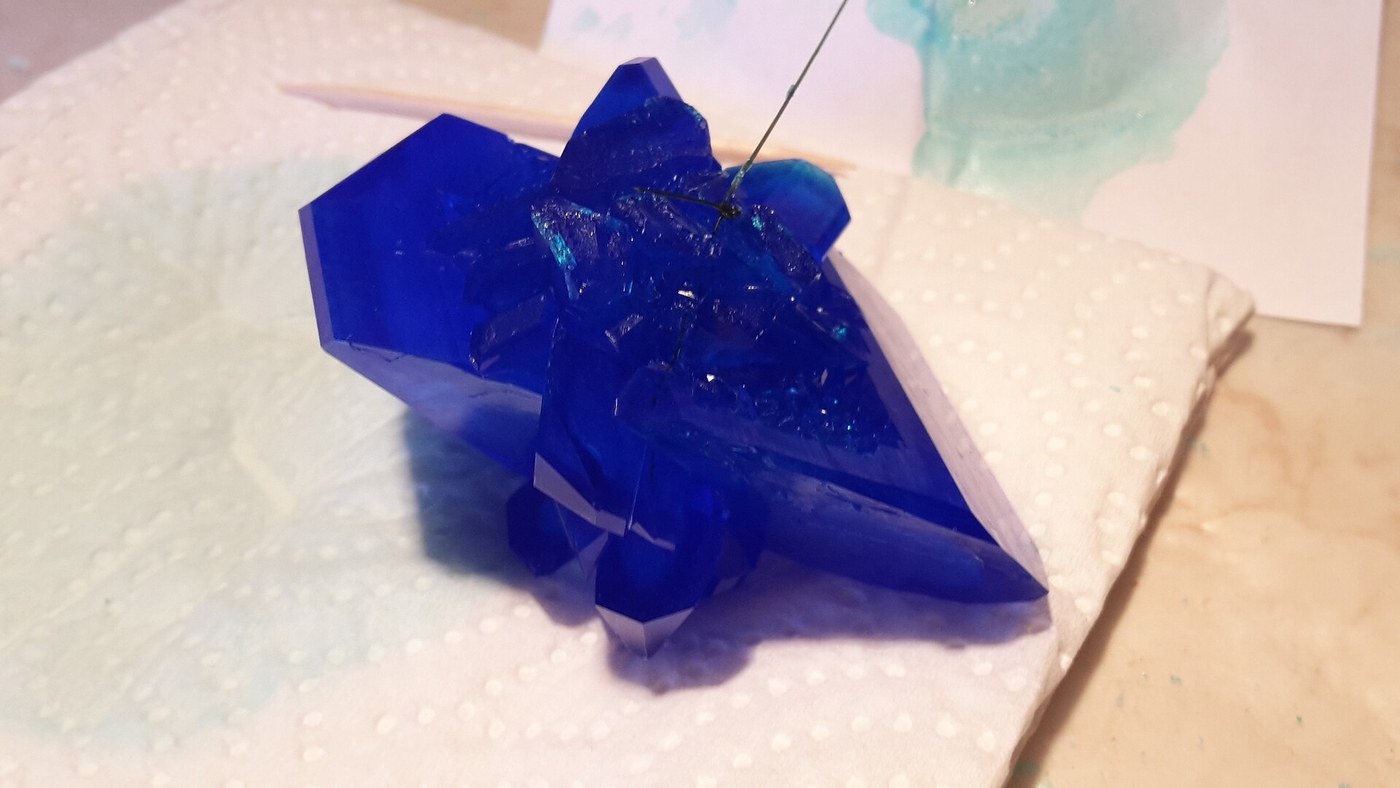


Purified Copper Sulphate: Iron Thrown Down by Fresh Copper Carbonate, Then Recrystallised
Ordinary copper sulphate usually carries a little iron sulphate. The 1907 US Dispensatory gives the cure: add freshly precipitated copper carbonate, which throws the iron down as carbonate, then filter and crystallise. The pharmacopoeia salt had to be at least 99.5 % pure copper sulphate. Making the copper carbonate from part of the same solution, and drying below 30 °C, are our choices. The source gives no quantities, so none are given here.
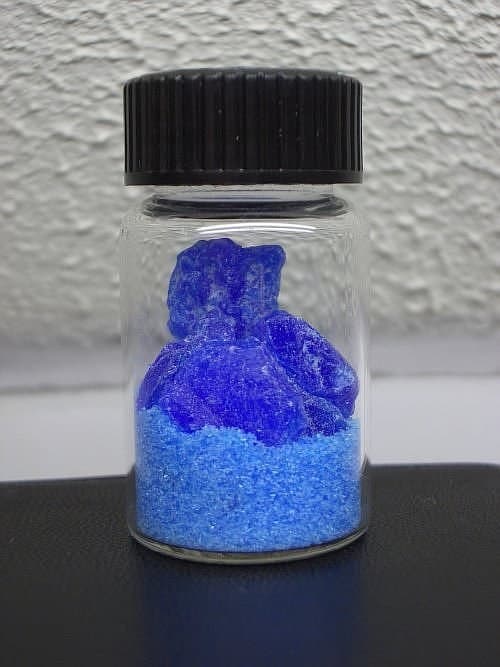
The picture: a copper sulphate crystal (Crystal Titan, Wikimedia Commons, CC BY-SA 4.0).
Intermedio
Two to three days
Istruzioni
1
1
Dissolve in boiling water
Dissolve in boiling water
Dissolve the copper sulphate in boiling distilled water: it takes about half its weight of boiling water (and about 2.2 times its weight of water at 25 °C).
Materiali per questo passaggio:
 Solfato di rame pentaidrato (CuSO4·5H2O)1 as required
Strumenti necessari:
 Acqua distillata
 Becher in borosilicato
 Bacchetta di vetro
 Piastra riscaldante
 Occhiali antispruzzo chimico
 Guanti di gomma
2
2
Make fresh copper carbonate
Make fresh copper carbonate
Take a small part of the solution and stir in sodium carbonate solution: alkaline carbonates decompose copper sulphate and copper carbonate falls. Filter it and wash it with distilled water. Use it fresh.
Strumenti necessari:
 Carbonato di sodio (soda)Acqua distillataBecher in borosilicatoBacchetta di vetro
 Imbuto di vetro con gambo
 Carta da filtroOcchiali antispruzzo chimicoGuanti di gomma
3
3
Throw down the iron and filter
Throw down the iron and filter
Stir the fresh copper carbonate into the hot solution, in excess. The iron is deposited as carbonate. Filter the hot solution clear.
Strumenti necessari:
Becher in borosilicatoBacchetta di vetroPiastra riscaldanteImbuto di vetro con gamboCarta da filtroOcchiali antispruzzo chimicoGuanti di gomma4
4
Crystallise and dry
Crystallise and dry
Evaporate the filtrate in a dish until crystals begin to form, then let it cool. Large, transparent, deep blue crystals grow. Drain them and dry them in the air below 30 °C: at 30 °C the salt starts to lose its water of crystallisation. It slowly loses water in dry air too, so keep it in stoppered bottles.
Strumenti necessari:
 Capsula di evaporazionePiastra riscaldante
 Bottiglie di vetro con tappiGuanti di gomma
5
5
Test for iron
Test for iron
Dissolve a crystal in water in a test tube and add ammonia water drop by drop. A pale blue precipitate forms and then dissolves in more ammonia to a deep azure-blue solution. Any iron is thrown down with it and does not dissolve again in the excess, so the solution should stay clear. A salt that turns green on the surface in air still contains iron.
Strumenti necessari:
 ProvetteAcqua distillata
 Soluzione di ammoniaca diluitaOcchiali antispruzzo chimicoGuanti di gomma
Materiali
1- 1 as requiredSegnaposto
Strumenti richiesti
13- Segnaposto
- Segnaposto
- Segnaposto
- Segnaposto
- Segnaposto
- Segnaposto
- Segnaposto
- Segnaposto
- Segnaposto
- Segnaposto
- Segnaposto
- Segnaposto
- Segnaposto
Questo progetto realizza

Blueprint correlati
Questi blueprint condividono conoscenze — tecniche, materiali o principi
CC0 Pubblico dominio
Questo progetto è rilasciato sotto CC0. Sei libero di copiare, modificare, distribuire e utilizzare quest'opera per qualsiasi scopo, senza chiedere permesso.
Supporta il Maker acquistando prodotti tramite il suo progetto dove guadagna una Commissione Maker stabilita dai venditori, oppure crea una nuova iterazione di questo progetto e includilo come collegamento nel tuo progetto per condividere i ricavi.