ARTE
BELLEZZA E BENESSERE
MESTIERE
CULTURA E STORIA
DIVERTIMENTO
AMBIENTE
CIBO E BEVANDE
INGEGNERIA INVERSA
SCIENZE
SPORT
TECNOLOGIA
INDOSSABILI
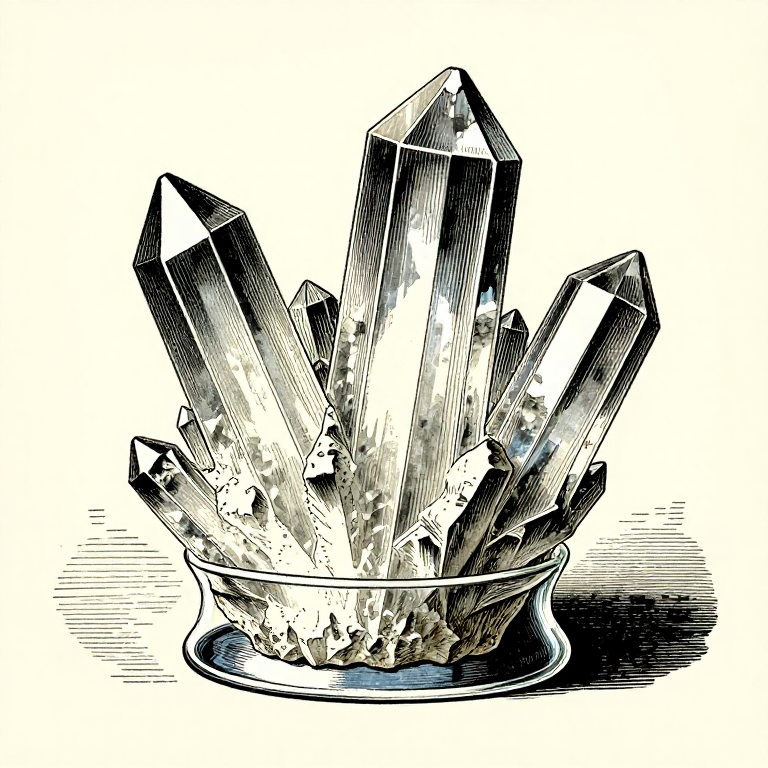

Recrystallisation: The Smallest Possible Volume of Hot Solvent
Recrystallisation is the oldest and still the best way to purify a solid, and it works on one fact: most substances dissolve far better hot than cold.
Dissolve the crude solid in the least possible hot solvent, cool it, and the product crystallises out while the impurities — present in much smaller amounts — stay in solution because they never become saturated.
Everything that goes wrong with it comes from one of three things: the wrong solvent, too much of it, or cooling too fast. This rung is how to choose, how much, and how slowly.
Intermedio
4 hours
Istruzioni
1
1
Choosing the solvent
Choosing the solvent
A recrystallisation solvent has to do four things, and the first two are the whole test:
**Dissolve the product well when hot and badly when cold.** A hot-to-cold solubility ratio above about five makes a good solvent; below about two it is useless. This is the only property that matters much.
**Not react with the product.** Obvious, and worth checking for anything reactive.
**Boil below the product's melting point.** If the product melts before it dissolves, it forms an oil and oils do not crystallise cleanly — they trap impurity. "Oiling out" is the classic failure.
**Be removable.** Volatile enough to dry off the crystals.
**Finding one by test.** Put a few milligrams in a test tube with a few drops of candidate solvent, cold. If it dissolves cold, that solvent is no good. If it does not, heat it: if it dissolves hot and crystallises on cooling, that is the solvent. Five minutes each, and it is the only reliable method.
**Mixed solvents** work when no single one does: dissolve in the good solvent hot, then add the poor one dropwise until it just turns cloudy, then a drop of the good one to clear it, and cool. Ethanol and water is the classic pair.
Materiali per questo passaggio:
 Etanolo per laboratorio, 95 %1 pezzo
 Allume (allume di potassio)1 pezzo
Strumenti necessari:
 Becher in borosilicato
 Piastra riscaldante
 Occhiali di sicurezza trasparenti
 Guanti resistenti agli agenti chimici
 Acetone
2
2
Solvent volume, recovery and the second crop
Solvent volume, recovery and the second crop
Caricamento del notebook Jupyter…
Strumenti necessari:
 Computer da tavolo
3
3
Doing it
Doing it
**Dissolve hot, in the minimum.** Add solvent in small portions to the solid in a flask, heating and swirling between additions, and stop the moment everything has dissolved. Every extra millilitre is product that will stay in solution.
**Filter hot, only if there is insoluble matter.** Dust, fibres, undissolved impurity. Use a fluted filter and a pre-warmed funnel, and work fast — a cold funnel crystallises the product in the paper, which is the most annoying possible loss. If nothing is floating, skip this step.
**Cool slowly.** This is the step that decides crystal quality. Slow cooling grows large, well-formed crystals that trap little; fast cooling gives a fine powder or an amorphous mass full of solvent and impurity. Leave the flask on the bench, covered, and only then move it to ice.
**Scratch or seed if nothing happens.** A glass rod on the inner wall, or one seed crystal, starts a solution that is supersaturated but not nucleating.
**Filter cold**, wash the crystals with a little ICE-COLD solvent — cold, because warm wash solvent dissolves the crop — and dry.
**Keep the mother liquor** until the yield is confirmed. It is the only place the missing material can be.
Materiali per questo passaggio:
Allume (allume di potassio)1 pezzoEtanolo per laboratorio, 95 %1 pezzo Ghiaccio tritato1 pezzo
Strumenti necessari:
 Beuta di ErlenmeyerPiastra riscaldante
 Imbuto di Büchner (porcellana)
 Carta da filtro
 Bacchetta di vetro
4
4
Reading a failed recrystallisation
Reading a failed recrystallisation
**Nothing crystallised.** Too much solvent — boil some off and cool again. Or the solution is supersaturated and needs scratching or seeding. Or the solvent was the wrong one and the product is simply soluble cold.
**An oil separated instead of crystals.** The product melted before it dissolved, or came out above its melting point. Reheat to dissolve the oil, add a little more solvent, and cool more slowly. A lower-boiling solvent is the real fix.
**A fine powder rather than crystals.** Cooled too fast. Redissolve and cool on the bench rather than in ice.
**Good crystals but poor recovery.** Too much solvent again. The notebook shows exactly what that costs.
**Crystals still coloured or still impure.** Either the impurity is above the level that can stay dissolved, or it co-crystallises. A second recrystallisation helps the first case and not the second. For coloured impurities, a small amount of activated charcoal in the hot solution adsorbs them — a pinch, not a spoonful, because charcoal also adsorbs product.
**Everything crystallised, including the impurity.** The two are too alike. Recrystallisation is the wrong method; try chromatography or a different solvent.
Materiali per questo passaggio:
Allume (allume di potassio)1 pezzoEtanolo per laboratorio, 95 %1 pezzoStrumenti necessari:
Beuta di ErlenmeyerBacchetta di vetroMateriali
3- Segnaposto
- 3 pezziSegnaposto
- 1 pezzoSegnaposto
Strumenti richiesti
10- Segnaposto
- Segnaposto
- Segnaposto
- Segnaposto
- Segnaposto
- Segnaposto
- Segnaposto
- Segnaposto
- Segnaposto
- Segnaposto
Blueprint correlati
Questi blueprint condividono conoscenze — tecniche, materiali o principi
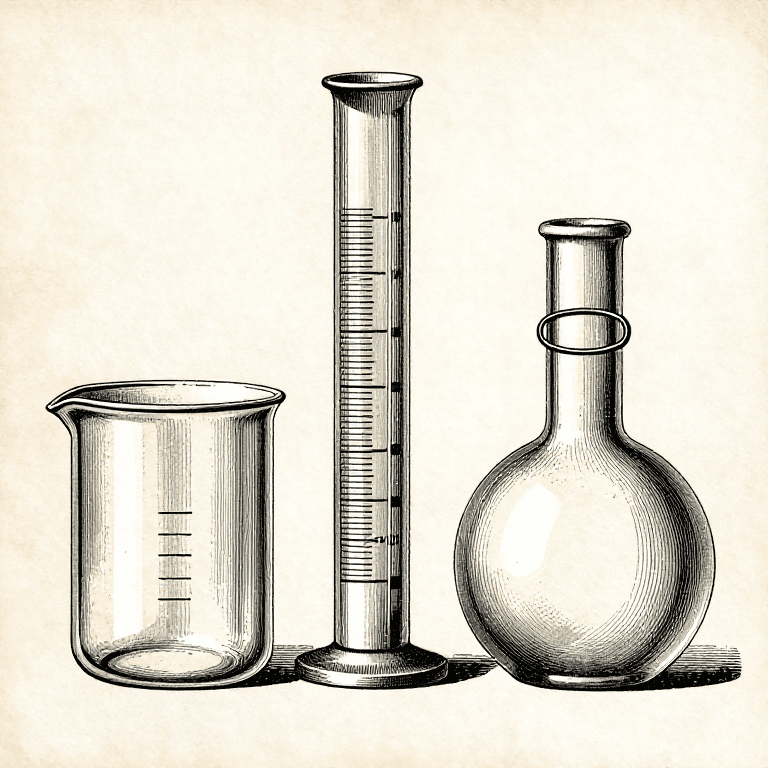
Making Up a Solution: Which Glassware Actually Measures, and Which Only Looks Like It
di Charlie
Chimica
51
0
0
0
0
0
Recovering Magnesium Salts from Seawater — The Lightweight Metal That Burns White
di Peter
Mare
92
0
0
0
1
0
Making Phthalocyanine Blue — The Copper Complex That Became the World's Most Used Blue Pigment
di Charlie
ARTE
59
0
0
0
3
0
CC0 Pubblico dominio
Questo progetto è rilasciato sotto CC0. Sei libero di copiare, modificare, distribuire e utilizzare quest'opera per qualsiasi scopo, senza chiedere permesso.
Supporta il Maker acquistando prodotti tramite il suo progetto dove guadagna una Commissione Maker stabilita dai venditori, oppure crea una nuova iterazione di questo progetto e includilo come collegamento nel tuo progetto per condividere i ricavi.