Collaborazione
ARTE
BELLEZZA E BENESSERE
MESTIERE
CULTURA E STORIA
DIVERTIMENTO
AMBIENTE
CIBO E BEVANDE
INGEGNERIA INVERSA
SCIENZE
SPORT
TECNOLOGIA
INDOSSABILI
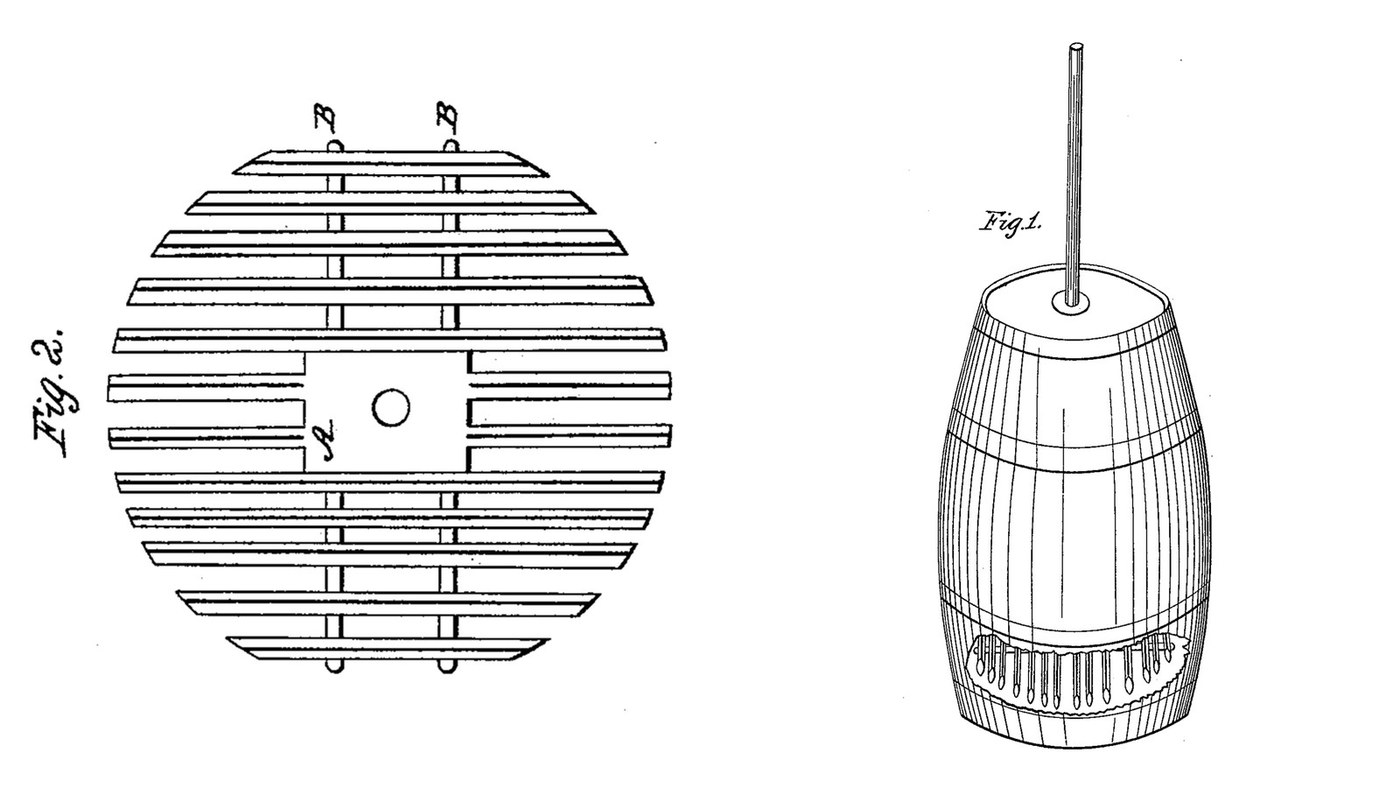


Oval-Breaker Rod Dasher: Breakers Strung on Two Rods, Add More for More Agitation
Alfred Rose of Penn Yan, New York, received US 25,914, dated 25 October 1859, for a churn-dasher for an ordinary up-and-down churn. A centre piece takes the staff, and breakers of oval section, with nearly sharp upper and lower edges, are strung beside it on two parallel rods, their ends cut to a circle. Putting on more breakers narrows the gaps between them and gives more agitation.
The patent gives no sizes; every size here is ours.
Principiante
About a day, plus printing
Istruzioni
1
1
Breaker lengths, and how open the dasher is
Breaker lengths, and how open the dasher is
Caricamento del notebook Jupyter…
2
2
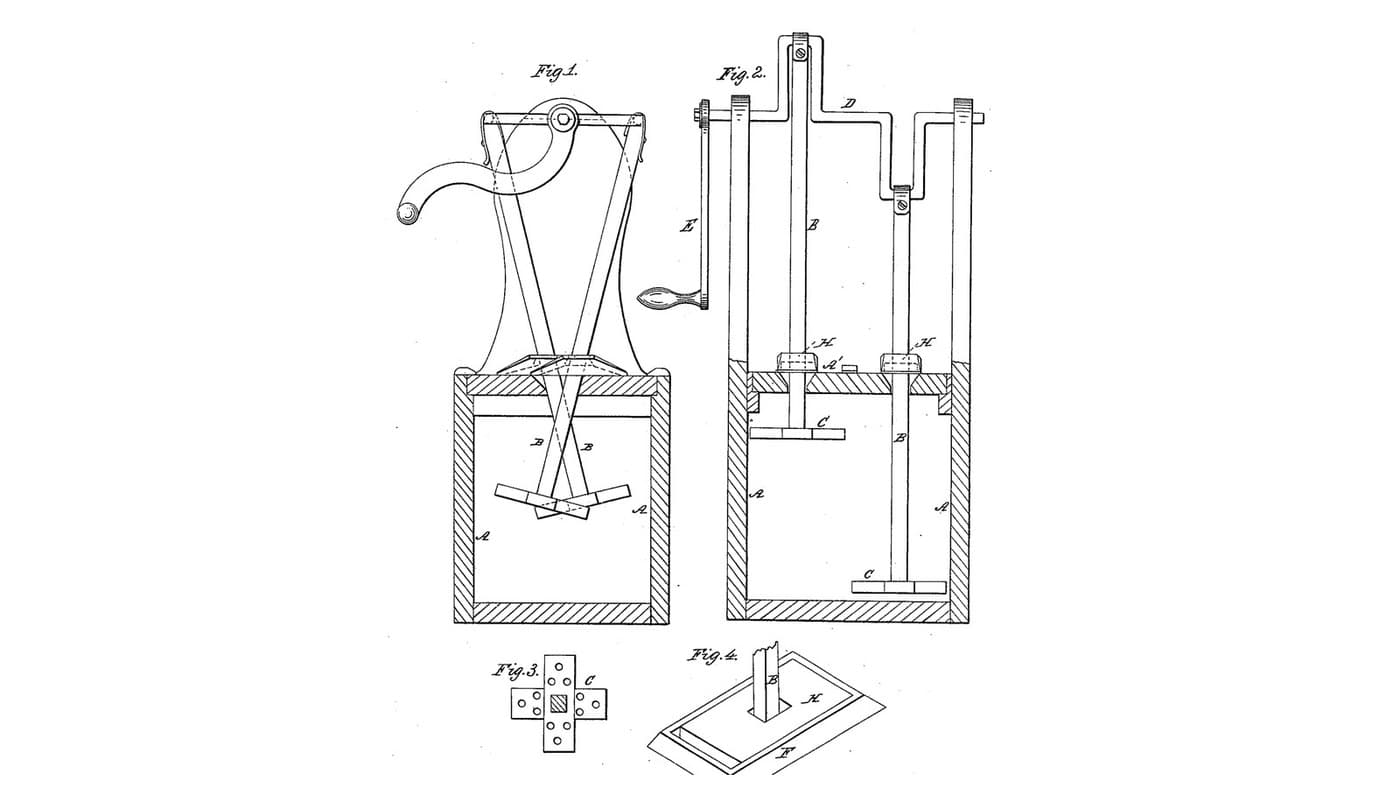
An up-and-down dasher of crossed boards, a few weeks before
An up-and-down dasher of crossed boards, a few weeks before
Gilpatrick's dashers are two boards crossed and bored with holes. Rose builds his from breakers strung on rods, so the openings can be changed.
3
3
Read US 25,914
Read US 25,914
"They may be adjusted to the width required to give the necessary agitation and if more agitation is required put on more of the breakers, thereby reducing the space between them and any amount of agitation required may by this means be produced."
4
4
Print the spacers
Print the spacers
Sixteen spacer rings 12 mm across and 8 mm long, bored 6.4 mm, to go on the rods between the pieces. Print more, or shorter ones, to change the gaps. PETG, 0.2 mm layers, 100 % infill.
5
5
Centre piece A
Centre piece A
Draw a 248 mm circle on 30 mm hardwood. Cut the centre piece 64 mm wide right across it, then cut away its middle down to a 90 mm block, leaving two prongs 12 mm wide each side, 20 mm apart, out to the circle. Bore a 31 mm hole down through the block for the staff, and two 6.6 mm holes across it, 50 mm apart, for the rods. Shave the prongs to an oval 12 x 24 mm, their upper and lower edges nearly sharp.
Materiali per questo passaggio:
 Tavola di legno duro1 pezzo
 Colla da legno1 pezzo
Strumenti necessari:
 Bussola
 Sega circolare da banco
 Seghetto alternativo
 Set di punte a lancia
 Trapano a batteria
 Serie di punte da trapano
 Pialletto a due manici
 Carta abrasiva
6
6
Breakers and rods B
Breakers and rods B
Cut eight breakers 12 x 24 mm from hardwood, two each of 230, 210, 179 and 129 mm long along their middles, ends trimmed to the circle. Shave each to the same oval with nearly sharp edges, and bore two 6.6 mm holes through each, 50 mm apart across their middles. Cut two 6 mm stainless threaded rods 236 mm long, thread the breakers and spacers on either side of the centre piece, and close each end with a cap nut.
Materiali per questo passaggio:
Tavola di legno duro1 pezzo Barra filettata1 pezzo
 Dado autobloccante con inserto in nylon4 pezzi
 Filamento PETG1 pezzo
Strumenti necessari:
 Stampante 3D a filamento (FDM)Sega circolare da bancoPialletto a due maniciTrapano a batteriaSerie di punte da trapano
 Seghetto per metalli
 Lime (lima a mano)
 Chiave regolabile a rullino
 Metro a nastro
7
7
The build in 3D
The build in 3D
FreeCAD model of the dasher: the centre piece with its prongs and the staff's foot, the eight breakers with their ends on a 248 mm circle, the two rods, spacers and cap nuts.
8
8
Churn
Churn
Fit a 30 mm hardwood staff into the centre piece and wedge it. Use a dash churn at least 260 mm across inside where the dasher works. Pour in cream at about 15 °C to a third of the churn's height, checked with the thermometer, put the dasher in and the lid on, and work the staff up and down, timing it. When the butter comes, lift the dasher out, drain the buttermilk, wash the butter in cold water until it runs clear, salt and weigh it. If it churns slowly, add breakers next time to close the gaps.
Materiali per questo passaggio:
 Panna da montare6 l
 Sale marino grosso1 pezzo
 Tasselli di legno duro1 pezzoColla da legno1 pezzo
Strumenti necessari:
 Zangola
 Termometro a sonda permanente
 Cronometro
 Bilancia digitale da cucina
 Grande ciotola da impasto in acciaio inossidabile
 Acqua
9
9
Troubleshooting
Troubleshooting
Rod dasher troubleshooting.
Flow
Loading...
10
10
History and honest limits
History and honest limits
**Alfred Rose** of Penn Yan, Yates County, New York, US 25,914, 25 October 1859, "Churn-Dasher". He claimed "the churn dasher when made in the manner substantially as specified". The patent gives no sizes and leaves the number of breakers to the maker; every size here is ours, and his drawing shows five breakers each side where ours has four.
Materiali
8- 1 pezzoSegnaposto
- 2 pezziSegnaposto
- 1 pezzoSegnaposto
- Segnaposto
- 1 pezzoSegnaposto
- Segnaposto
- 1 pezzoSegnaposto
- 1 pezzoSegnaposto
Strumenti richiesti
19- Segnaposto
- 1 vendor sell this, none ship to you yetSegnaposto
- 1 vendor sell this, none ship to you yetSegnaposto
- Segnaposto
- 1 vendor sell this, none ship to you yetSegnaposto
- Segnaposto
- Segnaposto
- Segnaposto
- Segnaposto
- Segnaposto
- Segnaposto
- Segnaposto
- 1 vendor sell this, none ship to you yetSegnaposto
- Segnaposto
- Segnaposto
- Segnaposto
- Segnaposto
- Segnaposto
File di progetto
2Questo progetto realizza


Blueprint correlati
Questi blueprint condividono conoscenze — tecniche, materiali o principi


CC0 Pubblico dominio
Questo progetto è rilasciato sotto CC0. Sei libero di copiare, modificare, distribuire e utilizzare quest'opera per qualsiasi scopo, senza chiedere permesso.
Supporta il Maker acquistando prodotti tramite il suo progetto dove guadagna una Commissione Maker stabilita dai venditori, oppure crea una nuova iterazione di questo progetto e includilo come collegamento nel tuo progetto per condividere i ricavi.