Collaborazione
ARTE
BELLEZZA E BENESSERE
MESTIERE
CULTURA E STORIA
DIVERTIMENTO
AMBIENTE
CIBO E BEVANDE
INGEGNERIA INVERSA
SCIENZE
SPORT
TECNOLOGIA
INDOSSABILI
Balance-Wheel Churn Frame: A Weighted Wheel Drives the Dash Up and Down and Its Pitched Blades Make It Revolve
Buttercup

Creato da

Buttercup

11. novembre 2026IE
0
0
0
0
0

Balance-Wheel Churn Frame: A Weighted Wheel Drives the Dash Up and Down and Its Pitched Blades Make It Revolve

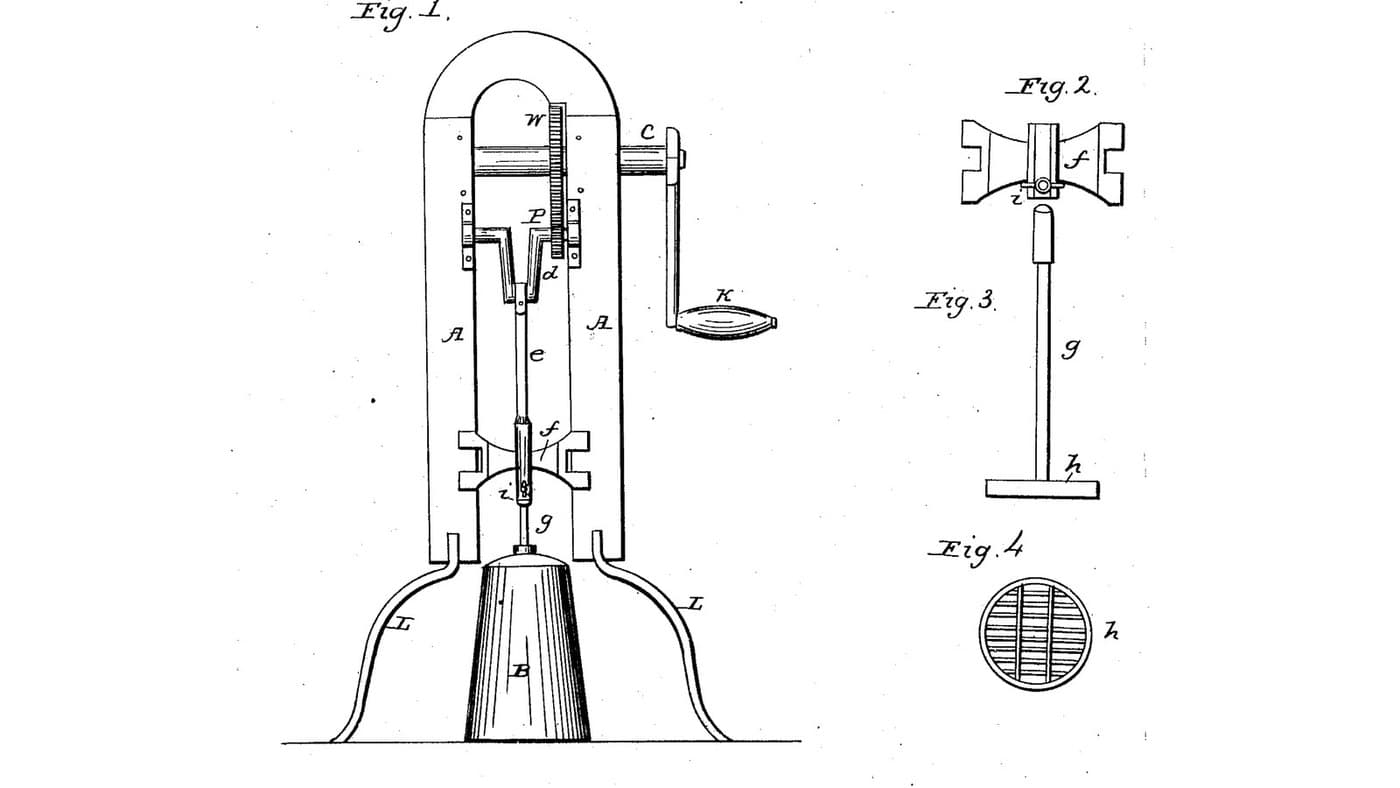
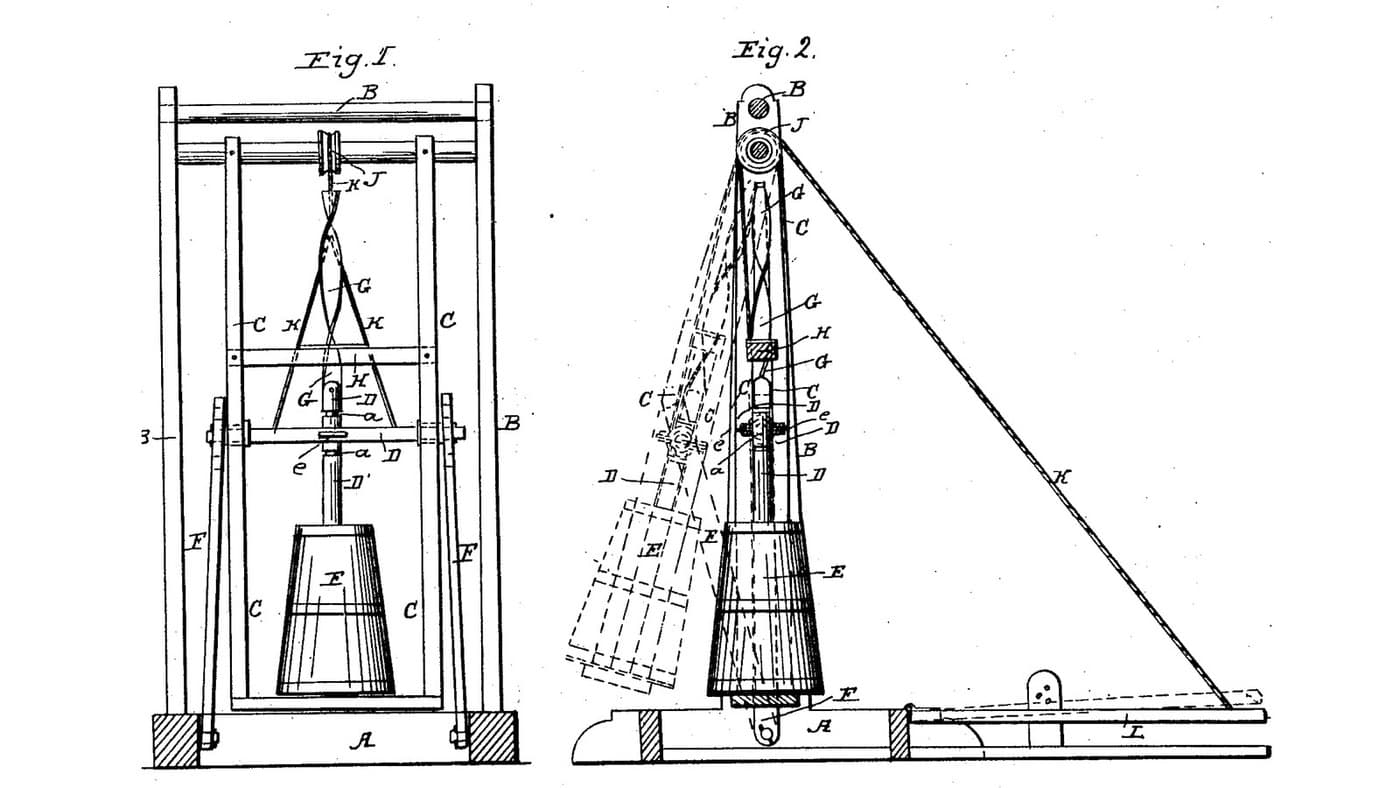
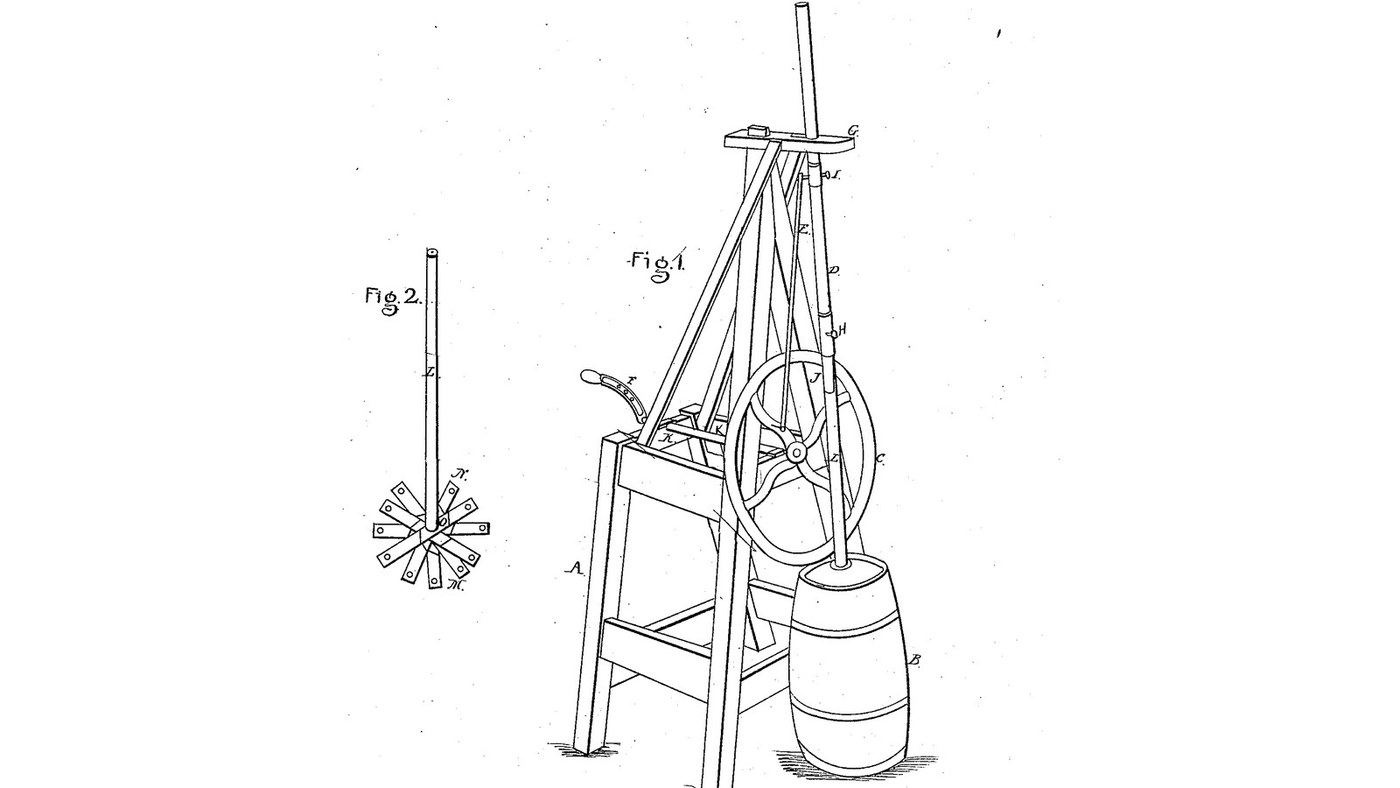
Nathan D. Ross of Braintrim, Pennsylvania, received US 28,607, dated 5 June 1860, for a churn. A tall timber frame carries a shaft with a heavy balance wheel at one end and a crank at the other; a rod from an adjustable wrist on the wheel drives the dash staff up and down through a guide. The staff joins the churn handle by a swivel, and the dashers' blades all stand at one angle, so the dash turns right and left as it is driven through the cream. The frame's, shaft's, wheel's and dasher pieces' sizes are the patent's own, given as "about"; all others are ours.
Avanzato
About 3 days

Istruzioni

1

The patent's sizes, and a wheel of about 30 pounds

Caricamento del notebook Jupyter…
2

A crank frame over an ordinary churn, one week before

Evans gears his crank up. Ross gives his a heavy balance wheel and an adjustable stroke.
3

Read US 28,607

"The nature of my invention consists in lengthening or shortening the stroke and lowering and raising the dash so as to give it the right position in the churn at the same time giving the dash an independent revolving motion to the right and left and giving the operator power over the work to be done."
4

Frame A, cap G and braces

From 51 mm square timber (the patent's two inches) cut two front posts about 1.83 m long and two back posts about 0.91 m. Set the feet about 0.91 m apart; lean the front posts in so they meet at the top, and the back posts at the same angle. Join front and back posts on each side with two side cross pieces about 0.81 m between shoulders, at 300 and 860 mm up, and front and back with cross pieces at the same heights, cut to the bevel. On the top of the long posts fix a cap G reaching 410 mm forward, bored 32 mm near its end for the staff, and brace it with two timbers down to near the tops of the short posts.

Materiali per questo passaggio:

Legname di pinoLegname di pino6 pezzi
Colla da legnoColla da legno1 pezzo
Viti da legnoViti da legno40 pezzi
Bullone a testa tonda e collo quadroBullone a testa tonda e collo quadro8 pezzi

Dado autobloccante con inserto in nylonDado autobloccante con inserto in nylon8 pezzi

Strumenti necessari:
Sega circolare da bancoSega circolare da banco
Serie di scalpelli da legnoSerie di scalpelli da legno
GoniometroGoniometro
Trapano a batteriaTrapano a batteria
Serie di punte da trapanoSerie di punte da trapano
Set di punte a lanciaSet di punte a lancia
Morsetto a barraMorsetto a barra
Chiave regolabile a rullinoChiave regolabile a rullino
Metro a nastroMetro a nastro
5

Shaft K, balance wheel C and slide crank F

Bolt a hardwood bearing block bored 26 mm to the middle of each top front and back cross piece, and pass a 25 mm mild steel shaft K through them (the patent's about one inch). Glue two 18 mm plywood discs into a wheel 600 mm across with a rim 50 mm wide and four arms, and screw a ring of 60 x 12 mm mild steel flat bar round it so it weighs about 14 kg, near the patent's 30 pounds. Cut a slot 13 mm wide from 60 to 140 mm out along one arm for the wrist, a 16 mm bolt with a nut. Fix the wheel on the shaft's front end. On the back end fix a crank F of flat bar with three holes for the handle, so it can be lengthened or shortened.

Materiali per questo passaggio:

Tavola di legno duroTavola di legno duro1 pezzo
Barra tonda di acciaio dolceBarra tonda di acciaio dolce1 pezzo
Pannello di compensatoPannello di compensato1 pezzo
Colla da legnoColla da legno1 pezzo
Piatto di acciaio dolcePiatto di acciaio dolce2 pezzi
Viti da legnoViti da legno24 pezzi
Bullone a testa tonda e collo quadroBullone a testa tonda e collo quadro4 pezzi
Dado autobloccante con inserto in nylonDado autobloccante con inserto in nylon4 pezzi
Shaft CollarShaft Collar2 pezzi
Tasselli di legno duroTasselli di legno duro1 pezzo

Strumenti necessari:

Seghetto alternativoSeghetto alternativo
Morsetto a barraMorsetto a barra
Trapano a batteriaTrapano a batteria
Serie di punte da trapanoSerie di punte da trapano
Seghetto per metalliSeghetto per metalli
Morsa da bancoMorsa da banco
Lime (lima a mano)Lime (lima a mano)
Chiave regolabile a rullinoChiave regolabile a rullino
6

Rod E, staff D, socket I, socket H and swivel J

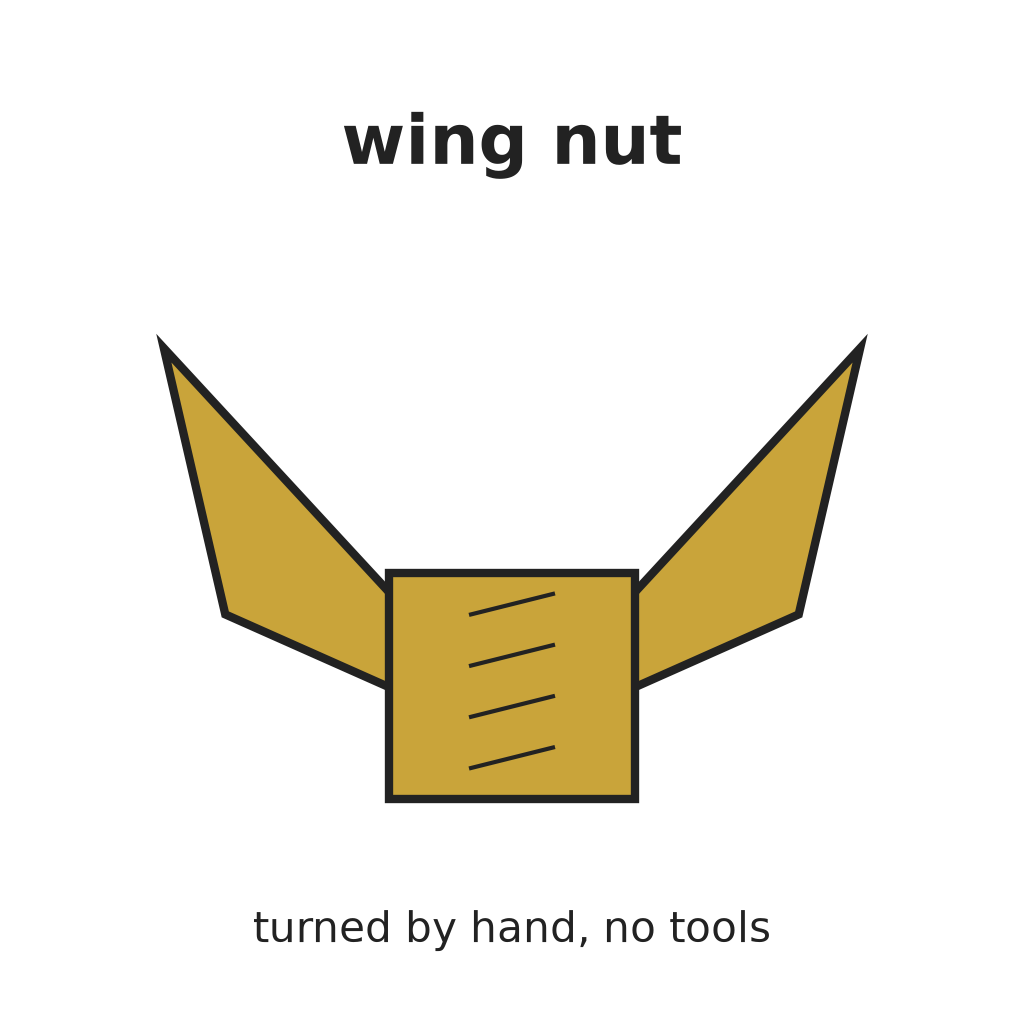
Cut a 32 mm hardwood staff D about 1.25 m long and pass it up through the cap. Make a hardwood socket I to slide on it, with a lug for the rod and a thumb screw (threaded rod, nut and wing nut) to fix it. Cut a hardwood rod E 730 mm between holes, from the wrist to the lug. Fit a hardwood socket H on the staff's foot, bored 16.5 mm, with a thumb screw through its side; turn the top of the churn handle L down to a 16 mm pin with a groove, so the thumb screw rides in the groove and the handle turns freely: the swivel J.

Materiali per questo passaggio:

Tasselli di legno duroTasselli di legno duro2 pezzi
Tavola di legno duroTavola di legno duro1 pezzo
Barra filettataBarra filettata1 pezzo
Dado esagonaleDado esagonale2 pezzi
Dado ad aletteDado ad alette2 pezzi
Bullone a testa tonda e collo quadroBullone a testa tonda e collo quadro2 pezzi
Dado autobloccante con inserto in nylonDado autobloccante con inserto in nylon2 pezzi
Colla da legnoColla da legno1 pezzo

Strumenti necessari:

Sega circolare da bancoSega circolare da banco
Trapano a batteriaTrapano a batteria
Serie di punte da trapanoSerie di punte da trapano
Set di punte a lanciaSet di punte a lancia
Seghetto per metalliSeghetto per metalli
Lime (lima a mano)Lime (lima a mano)
Chiave regolabile a rullinoChiave regolabile a rullino
7

Handle L and dashers M

Cut a 28 mm hardwood handle 420 mm long. For each dasher halve together two hardwood pieces 38 x 19 mm (the patent's 1 1/2 x 3/4 inch), 260 long, at right angles, and plane each blade on both sides down to about 6 mm at its edges, every blade bevelled the same way so they all stand on one angle, about 30 degrees. Fix two such dashers on the handle's foot, 60 mm apart.

Materiali per questo passaggio:

Tasselli di legno duroTasselli di legno duro1 pezzo
Tavola di legno duroTavola di legno duro1 pezzo
Colla da legnoColla da legno1 pezzo
Barra di acciaio inossidabileBarra di acciaio inossidabile1 pezzo
CoppigliaCoppiglia2 pezzi

Strumenti necessari:

Sega circolare da bancoSega circolare da banco
Serie di scalpelli da legnoSerie di scalpelli da legno
Pialla a manoPialla a mano
GoniometroGoniometro
Trapano a batteriaTrapano a batteria
Serie di punte da trapanoSerie di punte da trapano
8

The build in 3D

FreeCAD model of this build: the frame with its leaning posts, cap G and braces, the shaft K on its bearings with the balance wheel and slide crank, the rod E from the wrist to the socket I on the staff, the swivel and handle with two pitched dashers in the bucket, cut open.
File di designBLENDCC0 - Free
9

Churn

Pour about 10 litres of heavy cream at about 15 °C, checked with the thermometer, into the bucket, stand it under the staff with the handle through its lid, and join handle and staff at the swivel. Set the socket I on the staff so the dash just clears the bottom at the low point, and the wrist for the stroke you want. Turn the crank F, timing it; the wheel carries the stroke round and the dash turns as it goes. When the butter comes, loosen the swivel's thumb screw, lift the handle out, take out the butter, pour the buttermilk into a bowl, wash the butter in cold water until it runs clear, salt and weigh it.

Materiali per questo passaggio:

Panna da montarePanna da montare10 l
Sale marino grossoSale marino grosso1 pezzo
AcquaAcqua1 pezzo
Secchio da 20 litriSecchio da 20 litri1 pezzo

Strumenti necessari:

Termometro a sonda permanenteTermometro a sonda permanente
CronometroCronometro
Bilancia digitale da cucinaBilancia digitale da cucina
Grande ciotola da impasto in acciaio inossidabileGrande ciotola da impasto in acciaio inossidabile
10

Troubleshooting

Balance-wheel churn troubleshooting.

Flow

Loading...
11

History and honest limits

**Nathan D. Ross** of Braintrim, Wyoming County, Pennsylvania, US 28,607, 5 June 1860, "Churn". He did not claim the up-and-down motion of dasher and handle, but the revolving of the dashers and handle by the series of dashers and blades. The frame, shaft, wheel and dasher-piece sizes are his, given as "about"; he gives the wheel's size and weight but not its material; ours is plywood with a steel ring; the bucket, stroke, rod and blade angle are ours.

Materiali

20

Strumenti richiesti

18

File di progetto

1

CC0 Pubblico dominio

Questo progetto è rilasciato sotto CC0. Sei libero di copiare, modificare, distribuire e utilizzare quest'opera per qualsiasi scopo, senza chiedere permesso.

Supporta il Maker acquistando prodotti tramite il suo progetto dove guadagna una Commissione Maker stabilita dai venditori, oppure crea una nuova iterazione di questo progetto e includilo come collegamento nel tuo progetto per condividere i ricavi.

Commenti

(0)

Accedi per partecipare alla discussione

Caricamento commenti...