ARTE
BELLEZZA E BENESSERE
MESTIERE
CULTURA E STORIA
DIVERTIMENTO
AMBIENTE
CIBO E BEVANDE
INGEGNERIA INVERSA
SCIENZE
SPORT
TECNOLOGIA
INDOSSABILI
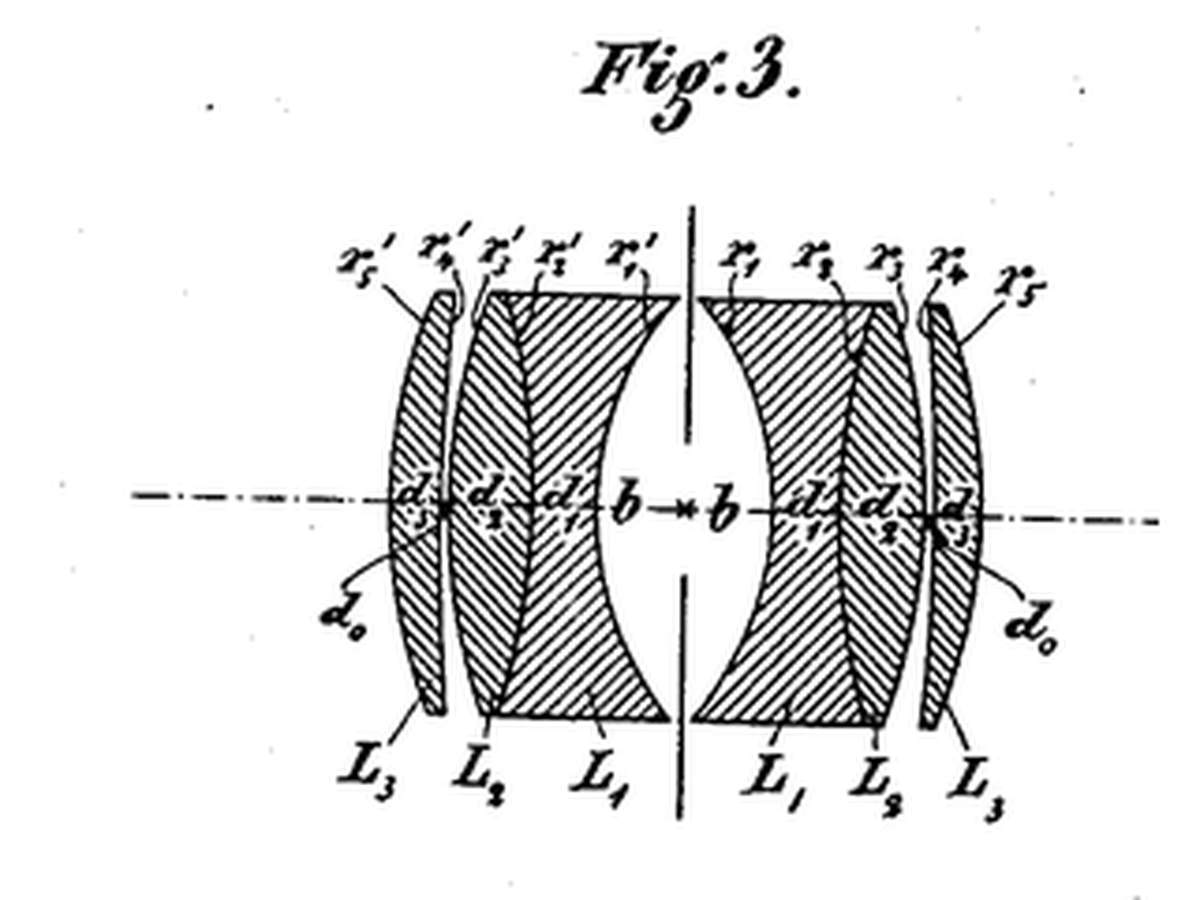


Planar (Double-Gauss) Lens
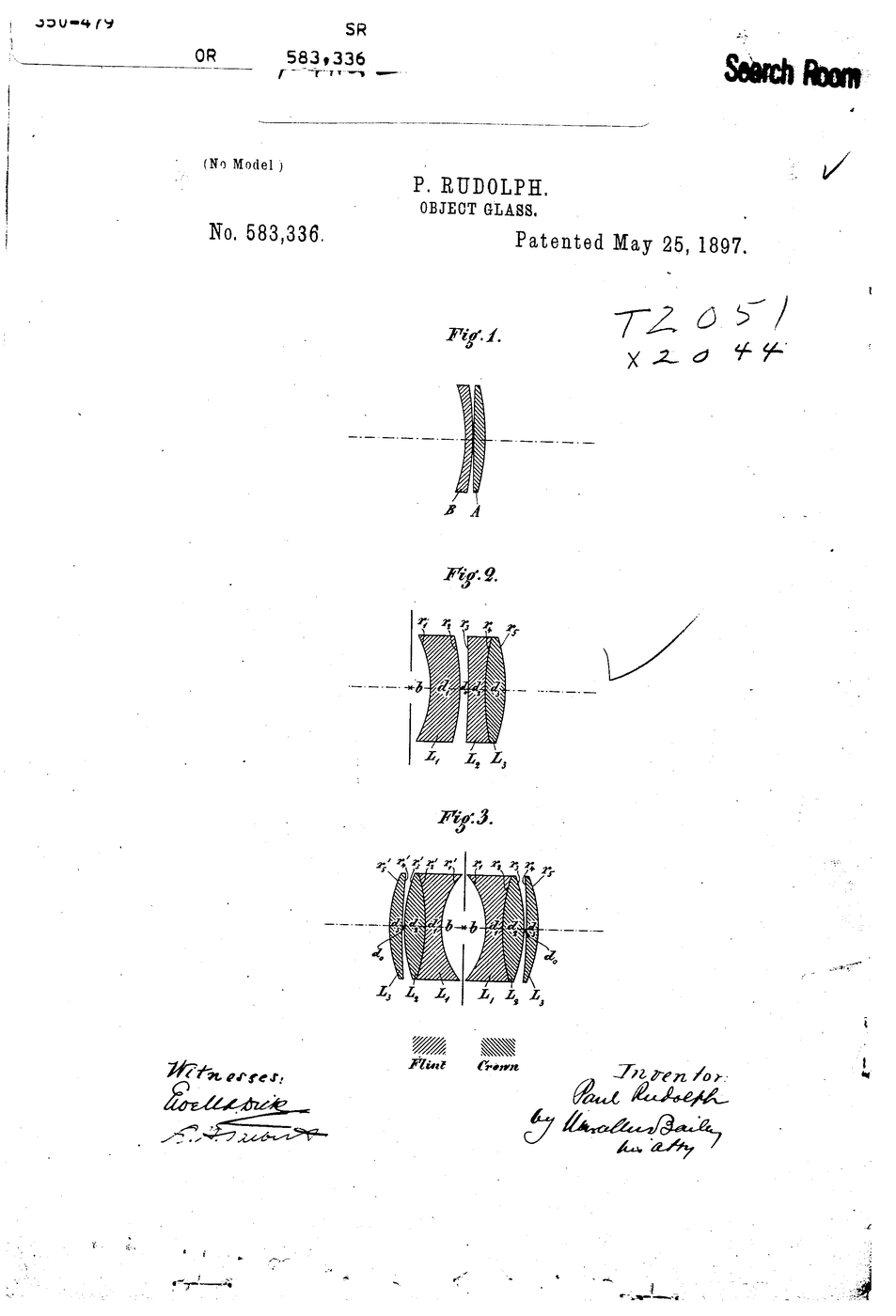
Carl Friedrich Gauss had designed a telescope objective of two air-spaced lenses - a crown meniscus and a flint lens with differently curved facing surfaces - that corrected spherical aberration for two colours at once. Paul Rudolph at Zeiss turned it into a camera lens: two such groups placed symmetrically either side of the stop, each group achromatised with a cemented pair of glasses of nearly the same refractive index but different dispersion.
**US 583,336**, "Object-glass", Rudolph, assigned to Carl Zeiss, filed 1. February 1897, granted 25. May 1897. Descendants of this double-Gauss layout became the standard fast normal lens for most of the twentieth century.
**You test what the symmetry buys**: a grid imaged through a single lens with the stop in front, with it behind, and through a symmetric pair with the stop in the middle.
Intermedio
2 hours
Istruzioni
1
1
Make a stop
Make a stop
Cut a 60 mm disc of black card with a 6 mm round hole in its centre. Mount it in a lens holder.
Materiali per questo passaggio:
 Cartoncino nero1 foglio
Strumenti necessari:
 Taglierino di precisione
 Set di portalenti
2
2
Light a grid
Light a grid
Tape graph paper over a torch or a bright window 1 m from the bench. Tracing paper on a holder is the screen.
Materiali per questo passaggio:
 Carta millimetrata1 foglio
 Rotolo di carta da lucido per cartamodelli1 foglio
Strumenti necessari:
 Torcia LED da ispezione
 Banco e guida ottica
 Nastro di carta per mascherature
3
3
Stop in front, then behind
Stop in front, then behind
One 100 mm convex lens with the stop 25 mm in front of it: focus the grid and measure the width of the middle row and the top row across the same squares. Move the stop 25 mm behind the lens and measure again.
Materiali per questo passaggio:
 Set di lenti convesse1 set
Strumenti necessari:
 Righello
4
4
Make it symmetric
Make it symmetric
Add a second identical lens so the stop sits exactly midway between them, 25 mm each side. Refocus and measure the same two widths.
Strumenti necessari:
Righello Metro a nastro
5
5
Distortion from your widths
Distortion from your widths
Caricamento del notebook Jupyter…
6
6
History & Context
History & Context
**What the patent specifies:** Gauss-type objectives made anastigmatic and achromatised by cemented components of nearly equal refractive index but different dispersion, used as a doublet about a central stop. **Modern build (derived):** two identical stock lenses about a card stop.
The Planar was too prone to flare with uncoated glass; once anti-reflection coatings arrived, double-Gauss lenses became the classic 50 mm f/2 and faster. Its limits: many air-glass surfaces, and a design that needs careful glass choice to go wide.
Materiali
4- 1 foglioSegnaposto
- 1 foglioSegnaposto
- Segnaposto
- Segnaposto
Strumenti richiesti
7- Segnaposto
- Segnaposto
- Segnaposto
- Segnaposto
- Segnaposto
- Segnaposto
- 1 vendor sell this, none ship to you yetSegnaposto
Blueprint correlati
Questi blueprint condividono conoscenze — tecniche, materiali o principi

CC0 Pubblico dominio
Questo progetto è rilasciato sotto CC0. Sei libero di copiare, modificare, distribuire e utilizzare quest'opera per qualsiasi scopo, senza chiedere permesso.
Supporta il Maker acquistando prodotti tramite il suo progetto dove guadagna una Commissione Maker stabilita dai venditori, oppure crea una nuova iterazione di questo progetto e includilo come collegamento nel tuo progetto per condividere i ricavi.