ARTE
BELLEZZA E BENESSERE
MESTIERE
CULTURA E STORIA
DIVERTIMENTO
AMBIENTE
CIBO E BEVANDE
INGEGNERIA INVERSA
SCIENZE
SPORT
TECNOLOGIA
INDOSSABILI
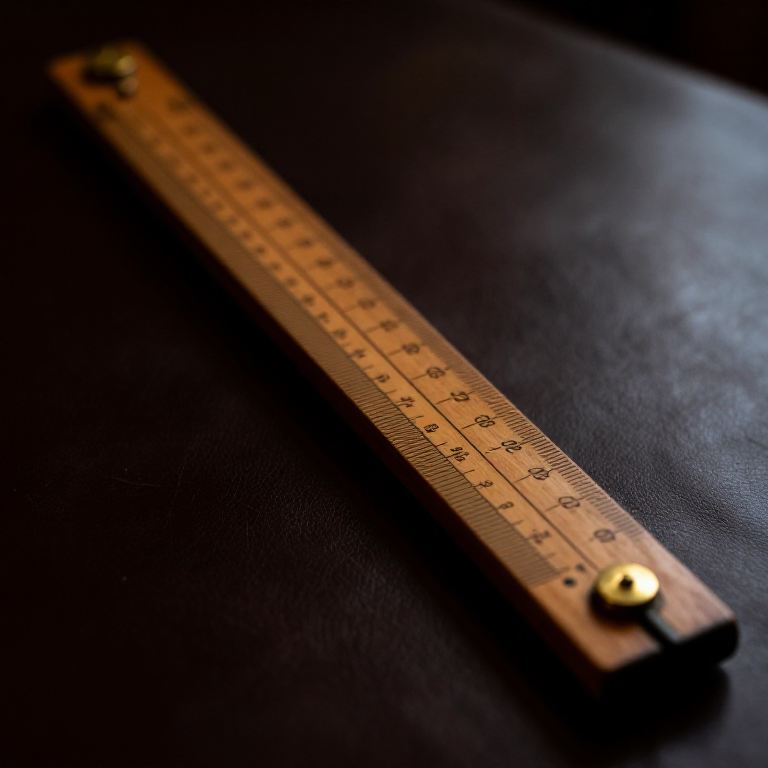


Napier's Logarithms — Build a Paper Slide Rule and Multiply by Sliding
A hands-on maths project: make a slide rule from two paper strips marked with a logarithmic scale, then multiply numbers just by sliding them -- because logarithms turn multiplication into addition. A Python cell shows the log trick, and a compendium covers 300 years of computing before the calculator.
Principiante
30 minutes
Istruzioni
1
1
Turning times into plus
Turning times into plus
In 1614 John Napier published logarithms, which turn hard multiplication into easy addition. The slide rule mechanised the trick and did the world's calculating for 300 years. You will build one from paper.
2
2
Make two logarithmic strips
Make two logarithmic strips
Cut two identical strips of card. On each, mark 1 at the left and 10 at the right, but space the numbers so that 2 sits about 30% along, 3 about 48%, 5 about 70% -- these positions are the logarithms. (Mark 1,2,3,...,10 at the log positions; a printed log scale helps.) These uneven marks are the secret.
Materiali per questo passaggio:
 Cartoncino1 pezzo
Strumenti necessari:
 Righello
 Forbici
 Set di matite di grafite
3
3
Multiply by sliding
Multiply by sliding
To multiply, say, 2 by 3: slide the 1 of the top strip to sit above the 2 on the bottom strip. Now look above the 3 on the top strip -- it points at 6 on the bottom. You just multiplied by ADDING two lengths. Try 2 by 4, or 3 by 3. Sliding adds the log-distances, and adding logs multiplies the numbers.
4
4
See the log trick in numbers
See the log trick in numbers
Caricamento del notebook Jupyter…
Strumenti necessari:
 Computer da tavolo
 Calcolatrice
5
5
Compendium: three centuries of computing
Compendium: three centuries of computing
What your slide rule teaches. (1) A logarithm answers 'what power of 10 gives this number?', and the one law log(a times b) equals log(a) plus log(b) is why sliding (adding lengths) multiplies. (2) Equal MULTIPLES sit at equal DISTANCES on a log scale -- that is why the marks bunch up toward 10. (3) From Kepler's orbits to the Apollo programme, science ran on log tables and slide rules until electronic calculators retired them in the 1970s. (4) Logarithms never left: they measure sound in decibels, acidity in pH, earthquakes on the Richter scale and information in bits.
Materiali
2- 1 pezzoSegnaposto
- 1 foglioSegnaposto
Strumenti richiesti
5- Segnaposto
- Segnaposto
- Segnaposto
- Segnaposto
- Segnaposto
Blueprint correlati
Questi blueprint condividono conoscenze — tecniche, materiali o principi

CC0 Pubblico dominio
Questo progetto è rilasciato sotto CC0. Sei libero di copiare, modificare, distribuire e utilizzare quest'opera per qualsiasi scopo, senza chiedere permesso.
Supporta il Maker acquistando prodotti tramite il suo progetto dove guadagna una Commissione Maker stabilita dai venditori, oppure crea una nuova iterazione di questo progetto e includilo come collegamento nel tuo progetto per condividere i ricavi.