Collaborazione
ARTE
BELLEZZA E BENESSERE
MESTIERE
CULTURA E STORIA
DIVERTIMENTO
AMBIENTE
CIBO E BEVANDE
INGEGNERIA INVERSA
SCIENZE
SPORT
TECNOLOGIA
INDOSSABILI
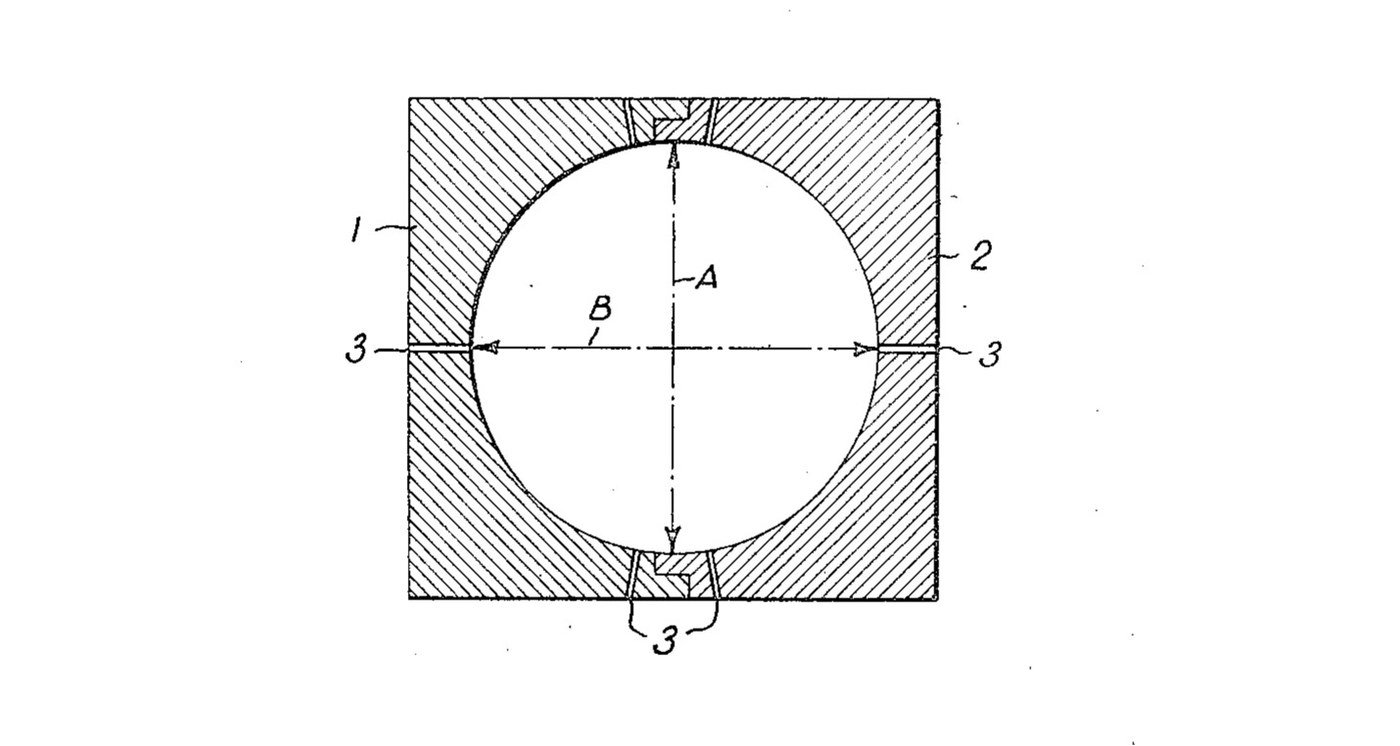
J. M. Jaques · Public domain (US patent)


Table Tennis Balls: Celluloid Halves Blown in an Out-of-Round Mould (Jaques 1935)
A celluloid table tennis ball is two stamped halves sealed with acetone, then blown out round by its own air in a hot mould. The overlapped seam shrinks a little as it cools, so the ball ends slightly narrower across the seam. John Jaques made the mould wider across the seam by just that amount, so the ball cools truly round.
Source: J. M. Jaques, US 2,025,455 (1935). The patent gives no sheet thickness, ball size or temperatures. The press, pot and micrometer are ours. Picture: the patent drawing.
Intermedio
1 day
Istruzioni
1
1
Stamp two halves from hot sheet
Stamp two halves from hot sheet
Stamp two half-balls out of celluloid sheet while it is hot. The patent gives no temperature.
Materiali per questo passaggio:
 Celluloide1 foglio
Strumenti necessari:
 Stampo per semisfere
 Pressa per stampaggio
2
2
Seal the halves with acetone
Seal the halves with acetone
Wet the edges of both halves with acetone, fit them together with the edges overlapping and let them seal. You now have a closed rough ball with a seam round its middle.
Strumenti necessari:
 Acetone
3
3
Measure the seam shrinkage
Measure the seam shrinkage
Blown balls come out narrower across the seam than across the poles: about one to two ten-thousandths of an inch on the celluloid balls Jaques measured. For your own celluloid, measure it on a test ball.
Strumenti necessari:
 Micrometro
4
4
Use a mould wider at the seam
Use a mould wider at the seam
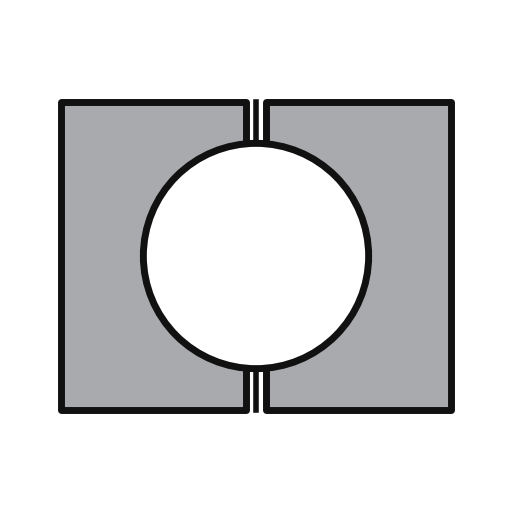
The split mould is not a true sphere. Measured in the plane where its two halves meet (diameter A), it is wider than at right angles to that plane (diameter B) by the amount the seam shrinks, and it has small vents to let air out.
Strumenti necessari:
 Stampo a sfera in due partiMicrometro
5
5
Set the ball seam to joint
Set the ball seam to joint
Lay the rough ball in the mould with its seam exactly on the mould joint, and hold it there with a little petroleum jelly so it cannot move.
Strumenti necessari:
Stampo a sfera in due parti Vaselina
6
6
Blow it out in hot water
Blow it out in hot water
Close the mould and put it in hot water. The air inside the ball expands and blows the ball out to fill the mould.
Strumenti necessari:
Stampo a sfera in due parti Pentola grande
 Acqua
7
7
Cool and take out
Cool and take out
Let the mould cool, then open it and take the ball out. As the seam shrinks it comes back to the same diameter as the rest, so the ball is as near round as it can be.
Strumenti necessari:
Stampo a sfera in due partiMateriali
1- 1 foglioSegnaposto
Questo progetto realizza

CC0 Pubblico dominio
Questo progetto è rilasciato sotto CC0. Sei libero di copiare, modificare, distribuire e utilizzare quest'opera per qualsiasi scopo, senza chiedere permesso.
Supporta il Maker acquistando prodotti tramite il suo progetto dove guadagna una Commissione Maker stabilita dai venditori, oppure crea una nuova iterazione di questo progetto e includilo come collegamento nel tuo progetto per condividere i ricavi.