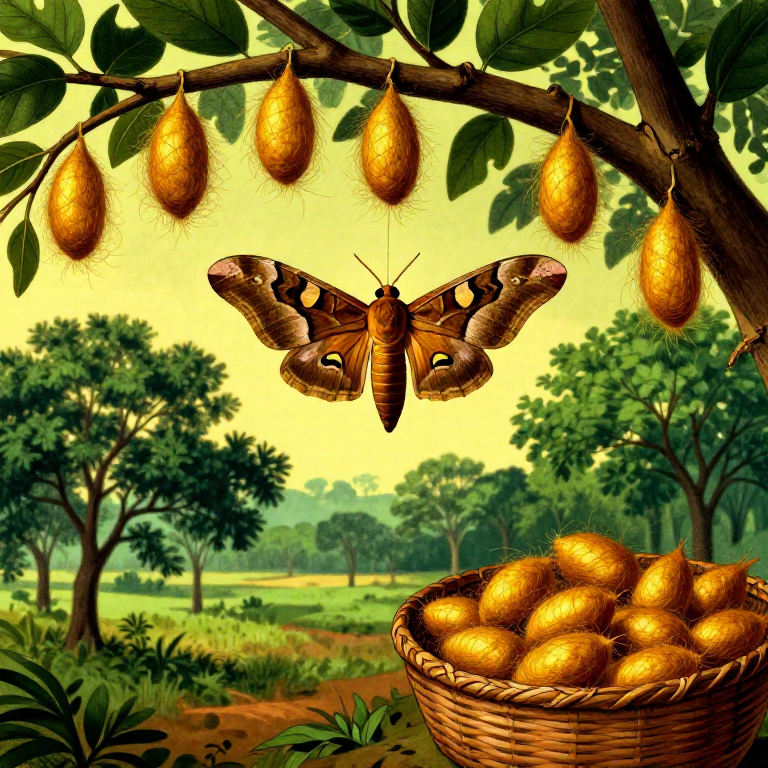


ତସର ରେଶମ କୋକୁନ ସଂଗ୍ରହ — ଓଡ଼ିଶାର ବନ୍ୟ ରେଶମ
ଓଡ଼ିଶାର ଜଙ୍ଗଲରେ ଆସନ (Terminalia tomentosa) ଏବଂ ଅର୍ଜୁନ (Terminalia arjuna) ଗଛରୁ ତସର ରେଶମ କୋକୁନ (Antheraea mylitta) ସଂଗ୍ରହ କରିବାର ସମ୍ପୂର୍ଣ୍ଣ ମାର୍ଗଦର୍ଶିକା। ଭାରତ ବିଶ୍ୱର ସର୍ବବୃହତ୍ ତସର ରେଶମ ଉତ୍ପାଦକ ଦେଶ ଏବଂ ଓଡ଼ିଶା ଏହାର ଅନ୍ୟତମ ପ୍ରମୁଖ ଉତ୍ପାଦକ ରାଜ୍ୟ। ତସର ରେଶମ ବନ୍ୟ ବା ଅର୍ଦ୍ଧ-ପାଳିତ (wild/semi-cultivated) — ଏହା ମଲବେରୀ ରେଶମ ପରି ଘର ଭିତରେ ପାଳନ ହୁଏ ନାହିଁ। କୀଟ ବନ ଗଛରେ ପାଳିତ ହୁଏ ଏବଂ ଡାଳରେ କୋକୁନ ବୁଣେ। ଏହି ମାର୍ଗଦର୍ଶିକା ପୋଷକ ଗଛ ଚିହ୍ନଟ, ଋତୁ ସମୟ (ଜୁଲାଇ-ସେପ୍ଟେମ୍ବର ପ୍ରଥମ ଫସଲ, ଅକ୍ଟୋବର-ଡିସେମ୍ବର ଦ୍ୱିତୀୟ), କୋକୁନ ସ୍ଥାନ ନିର୍ଣ୍ଣୟ, ସାବଧାନ ସଂଗ୍ରହ, ପ୍ୟୁପା ସଂରକ୍ଷଣ (ପ୍ରଜନନ ପାଇଁ) ବନାମ ମୃତ କୋକୁନ (ରିଲିଂ ପାଇଁ), ଏବଂ ଗ୍ରେଡିଂ ବିଷୟରେ ବିସ୍ତୃତ ବର୍ଣ୍ଣନା ଦିଏ।
Istruzioni
ତସର ରେଶମ କୀଟ ବିଷୟରେ ଜାଣିବା
ତସର ରେଶମ କୀଟ ବିଷୟରେ ଜାଣିବା
ତସର ରେଶମ କୀଟ (Antheraea mylitta) ଏକ ବନ୍ୟ ରେଶମ କୀଟ ଯାହା ଭାରତର ଉଷ୍ଣ ଓ ଆର୍ଦ୍ର ଜଙ୍ଗଲରେ ମିଳେ। ଏହା Saturniidae ପରିବାର ଅନ୍ତର୍ଗତ ଏକ ବଡ଼ ପ୍ରଜାପତି। ମଲବେରୀ ରେଶମ କୀଟ (Bombyx mori) ପରି ଏହା ଘର ଭିତରେ ପାଳନ ହୁଏ ନାହିଁ — ଏହା ବନ ଗଛର ଡାଳ ଉପରେ ବଞ୍ଚେ ଏବଂ ପତ୍ର ଖାଏ। ତସର ରେଶମ ସୁନେଲୀ-ବାଦାମୀ ରଙ୍ଗର ହୋଇଥାଏ ଏବଂ ଏହାର ଧାଗା ମଲବେରୀ ଅପେକ୍ଷା ମୋଟା ଓ ଶକ୍ତ। ଭାରତ ବିଶ୍ୱର ଏକମାତ୍ର ବୃହତ୍ ତସର ଉତ୍ପାଦକ — ବାର୍ଷିକ ପ୍ରାୟ ୨,୫୦୦ ମେଟ୍ରିକ ଟନ୍ ଉତ୍ପାଦନ ହୁଏ। ଝାଡ଼ଖଣ୍ଡ, ଛତ୍ତିସଗଡ଼, ଓଡ଼ିଶା, ପଶ୍ଚିମବଙ୍ଗ ଏବଂ ମଧ୍ୟପ୍ରଦେଶ ପ୍ରମୁଖ ଉତ୍ପାଦକ ରାଜ୍ୟ।
ପୋଷକ ଗଛ ଚିହ୍ନଟ କରିବା
ପୋଷକ ଗଛ ଚିହ୍ନଟ କରିବା
ତସର କୀଟ ମୁଖ୍ୟତଃ ଦୁଇ ପ୍ରକାର ଗଛରେ ପାଳିତ ହୁଏ: ଆସନ (Terminalia tomentosa) ଏବଂ ଅର୍ଜୁନ (Terminalia arjuna)। ଆସନ ଗଛ ଓଡ଼ିଶାର ଶୁଷ୍କ ପର୍ଣ୍ଣପାତୀ ଜଙ୍ଗଲରେ ବହୁତ ସାଧାରଣ — ଏହା ୨୦-୩୦ ମିଟର ଉଚ୍ଚ ହୁଏ, ପତ୍ର ଚଉଡ଼ା ଓ ଖସଡ଼ା ଏବଂ ତଟକା (bark) ଗାଢ଼ ବାଦାମୀ ଓ ଫାଟିଥାଏ। ଅର୍ଜୁନ ଗଛ ନଦୀ ତଟରେ ଓ ଆର୍ଦ୍ର ଜାଗାରେ ବଢ଼େ — ଏହାର ତଟକା ଧଳା-ସବୁଜିଆ, ସୂଳ ଓ ପରତ ପରତ ଖସେ। ଅର୍ଜୁନ ଗଛରେ ପାଳିତ କୀଟ ଭଲ ମାନର ରେଶମ ଦିଏ। ଓଡ଼ିଶାର ମୟୂରଭଞ୍ଜ, କେଉଁଝର, ସୁନ୍ଦରଗଡ଼, ସମ୍ବଲପୁର ଏବଂ ଦେବଗଡ଼ ଜିଲ୍ଲା ତସର ଉତ୍ପାଦନ ପାଇଁ ପ୍ରସିଦ୍ଧ।
Strumenti necessari:
 Guida da campo (alberi dell'India)
ଋତୁ ଓ ସଂଗ୍ରହ ସମୟ ନିର୍ଧାରଣ
ଋତୁ ଓ ସଂଗ୍ରହ ସମୟ ନିର୍ଧାରଣ
ତସର ରେଶମର ବର୍ଷରେ ଦୁଇଟି ଫସଲ ହୁଏ। ପ୍ରଥମ ଫସଲ (ପ୍ରଥମ ବାନା): ଜୁଲାଇ-ସେପ୍ଟେମ୍ବର — ବର୍ଷା ଋତୁରେ ଗଛରେ ନୂଆ ପତ୍ର ଆସିଲା ପରେ ଅଣ୍ଡାରୁ ବାହାରିଥିବା ଲାର୍ଭା ପତ୍ର ଖାଏ ଏବଂ ୪୦-୫୦ ଦିନରେ କୋକୁନ ବୁଣେ। ଦ୍ୱିତୀୟ ଫସଲ (ଦ୍ୱିତୀୟ ବାନା): ଅକ୍ଟୋବର-ଡିସେମ୍ବର — ଏହି ଫସଲର କୋକୁନ ଶୀତ ଋତୁରେ ପ୍ରସ୍ତୁତ ହୁଏ। ଦ୍ୱିତୀୟ ଫସଲର କୋକୁନ ସାଧାରଣତଃ ବଡ଼ ଓ ଭଲ ମାନର ହୋଇଥାଏ। କୋକୁନ ସଂଗ୍ରହ ସମୟ — ଲାର୍ଭା କୋକୁନ ବୁଣିସାରିବା ପରେ ୧୦-୧୫ ଦିନ ଅପେକ୍ଷା କରିବା ଉଚିତ, ଯେପରି ପ୍ୟୁପା ଭିତରେ ସଠିକ ଭାବେ ଗଠିତ ହୋଇଥାଏ।
ସଂଗ୍ରହ ଉପକରଣ ପ୍ରସ୍ତୁତ କରିବା
ସଂଗ୍ରହ ଉପକରଣ ପ୍ରସ୍ତୁତ କରିବା
ଜଙ୍ଗଲରେ କୋକୁନ ସଂଗ୍ରହ ପାଇଁ ଆବଶ୍ୟକ ଉପକରଣ ମୋଡ଼ିବା ଜରୁରୀ। ଉଚ୍ଚ ଡାଳରୁ କୋକୁନ ପାଡ଼ିବା ପାଇଁ ବାଉଁଶ ସିଡ଼ି ବା ଲମ୍ବା ବାଉଁଶ ଲାଠି ଦରକାର। କୋକୁନ ରଖିବା ପାଇଁ ବାୟୁ ଚଳାଚଳ ଥିବା ବାଉଁଶ ଝୁଡ଼ି (ଡାଲି) ବ୍ୟବହାର କରିବା ଉଚିତ — ପ୍ଲାଷ୍ଟିକ ବ୍ୟାଗ ବ୍ୟବହାର କରନ୍ତୁ ନାହିଁ, କାରଣ ଏହା ଆର୍ଦ୍ରତା ଜମା କରି କୋକୁନ ନଷ୍ଟ କରେ। ଜଙ୍ଗଲରେ ସାପ ଓ କୀଟପତଙ୍ଗ ଥିବାରୁ ଲମ୍ବା ବୁଟ ଓ ପୁରୁ କପଡ଼ା ପିନ୍ଧିବା ଆବଶ୍ୟକ।
Materiali per questo passaggio:
 Cesto di bambù3 pezzi
 Spago di iuta10 metri
Strumenti necessari:
 Scala di bambù
 Lunga pertica di bambù con uncino
 Forbici da potatura a una mano
 Guanti in cuoio a manichetta lunga
 Stivali di gomma al ginocchio
 Fodera in tela di cotone
ଗଛରେ କୋକୁନ ଖୋଜିବା
ଗଛରେ କୋକୁନ ଖୋଜିବା
ତସର କୋକୁନ ଗଛର ଡାଳ ଓ ପତ୍ରର ମଧ୍ୟରେ ଝୁଲିଥାଏ। କୀଟ କୋକୁନ ବୁଣିବା ସମୟରେ ଗୋଟିଏ ବା ଦୁଇଟି ପତ୍ରକୁ ରେଶମ ଧାଗାରେ ବାନ୍ଧି ଏହା ଭିତରେ କୋକୁନ ତିଆରି କରେ। ଏହି ପତ୍ର-ଆଚ୍ଛାଦିତ (leaf-wrapped) କୋକୁନ ଡାଳରେ ରେଶମ ପେଡୁନ୍କଲ ଦ୍ୱାରା ଶକ୍ତ ଭାବେ ଲାଗିଥାଏ — ଏହା ଜୋରରେ ବାତ୍ୟାରେ ମଧ୍ୟ ଖସେ ନାହିଁ। କୋକୁନ ସାଧାରଣତଃ ୪-୬ ସେ.ମି. ଲମ୍ବ ଏବଂ ଅଣ୍ଡାକୃତି। ସୁନେଲୀ-ବାଦାମୀ ରଙ୍ଗର ହୋଇଥାଏ। ଗଛର ମଝି ଓ ତଳ ଡାଳରେ ଅଧିକ କୋକୁନ ମିଳେ। ସକାଳର ସୂର୍ଯ୍ୟ କିରଣରେ ସୁନେଲୀ କୋକୁନ ସହଜରେ ଦେଖାଯାଏ।
Strumenti necessari:
 Binocolo
ଜୀବିତ ଓ ମୃତ କୋକୁନ ଚିହ୍ନଟ କରିବା
ଜୀବିତ ଓ ମୃତ କୋକୁନ ଚିହ୍ନଟ କରିବା
ସଂଗ୍ରହ ସମୟରେ ଜୀବିତ ଓ ମୃତ କୋକୁନ ଚିହ୍ନଟ କରିବା ଅତ୍ୟନ୍ତ ଗୁରୁତ୍ୱପୂର୍ଣ୍ଣ। ଜୀବିତ କୋକୁନ — ଭିତରେ ଜୀବିତ ପ୍ୟୁପା ଥାଏ: ହାଲୁକା ହଲାଇଲେ ଭିତରେ ଅଳ୍ପ ନଡ଼ାଚଡ଼ା ଅନୁଭବ ହୁଏ, ଓଜନ ଅଧିକ, ଏବଂ ଏକ ଶିରା ଛିଦ୍ର (emergence hole) ନାହିଁ। ମୃତ କୋକୁନ — ପ୍ୟୁପା ମରିଯାଇଥାଏ ବା ପ୍ରଜାପତି ବାହାରିସାରିଥାଏ: ହାଲୁକା, ଶୁଷ୍କ, ଏବଂ ବାହାରିବାର ଛିଦ୍ର ଥାଏ। ପ୍ରଜନନ (breeding) ପାଇଁ ଜୀବିତ କୋକୁନ ସଂରକ୍ଷଣ କରିବା ଜରୁରୀ। ରିଲିଂ (ଧାଗା ବାହାର) ପାଇଁ ମୃତ କୋକୁନ ବା ଷ୍ଟିଫଲ୍ଡ (stifled) କୋକୁନ ବ୍ୟବହାର ହୁଏ।
ସାବଧାନରେ କୋକୁନ ସଂଗ୍ରହ କରିବା
ସାବଧାନରେ କୋକୁନ ସଂଗ୍ରହ କରିବା
କୋକୁନ ଅତି ସାବଧାନରେ ସଂଗ୍ରହ କରିବା ଦରକାର — ଜୋରରେ ଟାଣିଲେ ଧାଗା ଛିଣ୍ଡିଯାଏ ଓ ରିଲିଂ ମାନ କମିଯାଏ। ପ୍ରୁନିଂ ସିୟର୍ସ ଦ୍ୱାରା କୋକୁନ ସହ ଛୋଟ ଡାଳ ଟୁକଡ଼ା (peduncle ସହ) କାଟି ନିଅନ୍ତୁ — ଏହା ପେଡୁନ୍କଲ ଅକ୍ଷତ ରଖେ। କୋକୁନକୁ ହାତରେ ଅଧିକ ଚାପ ଦିଅନ୍ତୁ ନାହିଁ — ଭିତରର ପ୍ୟୁପା ନଷ୍ଟ ହୋଇପାରେ। ଉଚ୍ଚ ଡାଳ ପାଇଁ ବାଉଁଶ ଲାଠିର ହୁକ୍ ବ୍ୟବହାର କରି ଡାଳ ନମାଇ ଆଣନ୍ତୁ ଏବଂ ସିୟର୍ସରେ କାଟନ୍ତୁ। ସଂଗ୍ରହିତ କୋକୁନ ତୁରନ୍ତ ବାଉଁଶ ଡାଲିରେ ରଖନ୍ତୁ — ଏକ ସ୍ତରରେ ସଜାନ୍ତୁ, ଗଦାଗଦା ରଖନ୍ତୁ ନାହିଁ।
Strumenti necessari:
Forbici da potatura a una manoLunga pertica di bambù con uncinoScala di bambùGuanti in cuoio a manichetta lungaପ୍ରଜନନ ପାଇଁ ଜୀବିତ କୋକୁନ ଅଲଗା କରିବା
ପ୍ରଜନନ ପାଇଁ ଜୀବିତ କୋକୁନ ଅଲଗା କରିବା
ସଂଗ୍ରହିତ କୋକୁନରୁ ସର୍ବୋତ୍ତମ ମାନର ଜୀବିତ କୋକୁନ ପ୍ରଜନନ ପାଇଁ ଅଲଗା ରଖନ୍ତୁ। ପ୍ରଜନନ ପାଇଁ ବଡ଼, ଭାରୀ, ନିର୍ଦୋଷ ଆକୃତିର କୋକୁନ ଚୟନ କରନ୍ତୁ — ଏହା ପରବର୍ତ୍ତୀ ପିଢ଼ିର ମାନ ଉନ୍ନତ କରେ। ସାଧାରଣତଃ ସଂଗ୍ରହିତ କୋକୁନର ୨୦-୩୦% ପ୍ରଜନନ ପାଇଁ ରଖାଯାଏ। ଏହି ଜୀବିତ କୋକୁନ ଠାଣ୍ଡା, ଛାଇଦାର, ବାୟୁ ଚଳାଚଳ ଥିବା ସ୍ଥାନରେ ବାଉଁଶ ଚାଟାଇ ଉପରେ ରଖନ୍ତୁ। ପ୍ରଜାପତି ବାହାରିବା ସମୟରେ (emergence) ନର ଓ ମାଈ ଜୋଡ଼ା ହୋଇ ଅଣ୍ଡା ଦିଏ — ଏହା ପରବର୍ତ୍ତୀ ଫସଲର ମୂଳ।
Materiali per questo passaggio:
 Stuoia di bambù2 pezzi
Strumenti necessari:
Cesto di bambù Copertura in tela di cotone (zanzariera)
ରିଲିଂ ପାଇଁ କୋକୁନ ଷ୍ଟିଫଲ୍ କରିବା
ରିଲିଂ ପାଇଁ କୋକୁନ ଷ୍ଟିଫଲ୍ କରିବା
ରିଲିଂ ପାଇଁ ଚୟନିତ କୋକୁନରୁ ପ୍ୟୁପାକୁ ମାରିଦେବା ଆବଶ୍ୟକ — ନଚେତ୍ ପ୍ରଜାପତି ବାହାରିବା ସମୟରେ କୋକୁନ ଛିଡ଼ି ଧାଗା ଛିଣ୍ଡିଯାଏ। ଏହାକୁ ଷ୍ଟିଫଲିଂ (stifling) କୁହାଯାଏ। ସାଧାରଣ ପଦ୍ଧତି: ଖରା ସୂର୍ଯ୍ୟରେ ୨-୩ ଦିନ ଶୁଖାଇବା (sun drying) — ଓଡ଼ିଶାର ପାରମ୍ପରିକ ପଦ୍ଧତି। ଏହା ସରଳ ଓ କୌଣସି ଉପକରଣ ଦରକାର ହୁଏ ନାହିଁ। କୋକୁନ ବାଉଁଶ ଚାଟାଇ ଉପରେ ଏକ ସ୍ତରରେ ବିଛାଇ ସିଧା ସୂର୍ଯ୍ୟ ତାପରେ ରଖନ୍ତୁ। ୬୦°C ରୁ ଅଧିକ ତାପମାତ୍ରାରେ ପ୍ୟୁପା ମରିଯାଏ। ରାତିରେ ଆଚ୍ଛାଦନ ଦିଅନ୍ତୁ ଯେପରି ଆର୍ଦ୍ରତା ଲାଗେ ନାହିଁ।
Materiali per questo passaggio:
Stuoia di bambù4 pezzi Telo di cotone (copertura notturna)2 pezzi
କୋକୁନ ମାନ ପରୀକ୍ଷା ଓ ଗ୍ରେଡିଂ
କୋକୁନ ମାନ ପରୀକ୍ଷା ଓ ଗ୍ରେଡିଂ
ଷ୍ଟିଫଲ୍ ହୋଇସାରିଥିବା କୋକୁନ ମାନ ଅନୁସାରେ ଗ୍ରେଡ୍ କରନ୍ତୁ। ଗ୍ରେଡିଂ ମାନଦଣ୍ଡ: ଆକାର — ବଡ଼ କୋକୁନ (୪.୫-୬ ସେ.ମି.) ଅଧିକ ଧାଗା ଦିଏ; ରଙ୍ଗ — ଉଜ୍ଜ୍ୱଳ ସୁନେଲୀ ସର୍ବୋତ୍ତମ, ଗାଢ଼ ବାଦାମୀ ନିମ୍ନ ମାନର; ଆକୃତି — ସମାନ ଅଣ୍ଡାକୃତି ଭଲ, ବିକୃତ ଆକୃତି ରିଲିଂରେ ସମସ୍ୟା ସୃଷ୍ଟି କରେ; ଶେଲ୍ ଅନୁପାତ — ଶେଲ୍ (ବାହାର ଆବରଣ) ର ଓଜନ ସମଗ୍ର କୋକୁନ ଓଜନର ୧୨-୧୫% ହେବା ଉଚିତ। ଗ୍ରେଡ୍ A: ବଡ଼, ସୁନେଲୀ, ସୁନ୍ଦର ଆକୃତି। ଗ୍ରେଡ୍ B: ମଝି ଆକାର, ସାଧାରଣ ରଙ୍ଗ। ଗ୍ରେଡ୍ C: ଛୋଟ, ଦାଗ ଥିବା, ବା ବିକୃତ।
Strumenti necessari:
 Bilancia digitale
 Calibro a corsoio
 Vassoi di cernita
କୋକୁନ ସଂରକ୍ଷଣ ଓ ଗୋଦାମ
କୋକୁନ ସଂରକ୍ଷଣ ଓ ଗୋଦାମ
ଗ୍ରେଡ୍ ହୋଇସାରିଥିବା କୋକୁନ ସଠିକ ଭାବେ ସଂରକ୍ଷଣ ନ କଲେ ଫିମ୍ପି (fungus) ଓ କୀଟ ଆକ୍ରମଣ ହୁଏ। ସଂରକ୍ଷଣ ନିୟମ: ଶୁଷ୍କ, ଠାଣ୍ଡା, ବାୟୁ ଚଳାଚଳ ଥିବା ଗୋଦାମ। ଆର୍ଦ୍ରତା ୬୫% ରୁ କମ୍ ରଖନ୍ତୁ। ବାଉଁଶ ରାକ୍ ଉପରେ ଜୁଟ ବ୍ୟାଗରେ ରଖନ୍ତୁ — ପ୍ଲାଷ୍ଟିକ ବ୍ୟାଗ ବ୍ୟବହାର ବର୍ଜନୀୟ। ଉଇ (Dermestes beetle) ଆକ୍ରମଣରୁ ରକ୍ଷା ପାଇଁ ନିମ ପତ୍ର ବ୍ୟାଗ ଭିତରେ ରଖନ୍ତୁ — ଏହା ପାରମ୍ପରିକ ଓ ପ୍ରଭାବଶାଳୀ ପଦ୍ଧତି। ପ୍ରତି ସପ୍ତାହରେ କୋକୁନ ଯାଞ୍ଚ କରନ୍ତୁ — ଫିମ୍ପି ବା କୀଟ ଲାଗିଥିଲେ ସଙ୍ଗେ ସଙ୍ଗେ ଅଲଗା କରନ୍ତୁ।
Materiali per questo passaggio:
 Sacchi di juta da magazzino10 pezzi
 Foglie secche di neem2 kilogram
Strumenti necessari:
 Scaffale di stoccaggio in bambù
 Igrometro (misuratore di umidità)
ସଂଗ୍ରହ ତଥ୍ୟ ଲିପିବଦ୍ଧ ଓ ବିକ୍ରୟ ପ୍ରସ୍ତୁତି
ସଂଗ୍ରହ ତଥ୍ୟ ଲିପିବଦ୍ଧ ଓ ବିକ୍ରୟ ପ୍ରସ୍ତୁତି
ପ୍ରତ୍ୟେକ ସଂଗ୍ରହ ଅଧିବେଶନର ବିସ୍ତୃତ ତଥ୍ୟ ଲେଖନ୍ତୁ: ସଂଗ୍ରହ ତାରିଖ, ସ୍ଥାନ, ପୋଷକ ଗଛ ପ୍ରକାର (ଆସନ/ଅର୍ଜୁନ), ମୋଟ କୋକୁନ ସଂଖ୍ୟା, ଗ୍ରେଡ୍ ଅନୁସାରେ ବିଭାଜନ, ଜୀବିତ ଓ ମୃତ ସଂଖ୍ୟା। ଓଡ଼ିଶା ତସର କୋକୁନ ବିକ୍ରୟ Central Silk Board ର କୋକୁନ ବଜାର (cocoon market) ଦ୍ୱାରା ହୁଏ — ବାରିପଦା (ମୟୂରଭଞ୍ଜ) ଏବଂ ଭୁବନେଶ୍ୱରର ବଜାରରେ ବିକ୍ରୟ ହୋଇଥାଏ। ଗୁଣବତ୍ତା ଅନୁସାରେ ମୂଲ୍ୟ ଭିନ୍ନ ହୁଏ — ଗ୍ରେଡ୍ A କୋକୁନ ପ୍ରତି କିଲୋ ₹୮୦୦-₹୧,୨୦୦ ମିଳେ। ସେରିକଲ୍ଚର ବିଭାଗ (Directorate of Textiles, Odisha) ସହ ପଞ୍ଜୀକୃତ ହେବା ବିକ୍ରୟ ପ୍ରକ୍ରିୟା ସରଳ କରେ।
Strumenti necessari:
Bilancia digitale Quaderno di registrazione
Materiali
6- 3 pezziSegnaposto
- 10 metriSegnaposto
- 6 pezziSegnaposto
- Segnaposto
- 10 pezziSegnaposto
- 2 kilogramSegnaposto
Strumenti richiesti
16- Segnaposto
- Segnaposto
- Segnaposto
- Segnaposto
- Segnaposto
- Segnaposto
- Segnaposto
- Segnaposto
- Segnaposto
- Segnaposto
- Segnaposto
- Segnaposto
- Segnaposto
- Segnaposto
- Segnaposto
- Segnaposto
Questo progetto realizza

CC0 Pubblico dominio
Questo progetto è rilasciato sotto CC0. Sei libero di copiare, modificare, distribuire e utilizzare quest'opera per qualsiasi scopo, senza chiedere permesso.
Supporta il Maker acquistando prodotti tramite il suo progetto dove guadagna una Commissione Maker stabilita dai venditori, oppure crea una nuova iterazione di questo progetto e includilo come collegamento nel tuo progetto per condividere i ricavi.