ARTE
BELLEZZA E BENESSERE
MESTIERE
CULTURA E STORIA
DIVERTIMENTO
AMBIENTE
CIBO E BEVANDE
INGEGNERIA INVERSA
SCIENZE
SPORT
TECNOLOGIA
INDOSSABILI
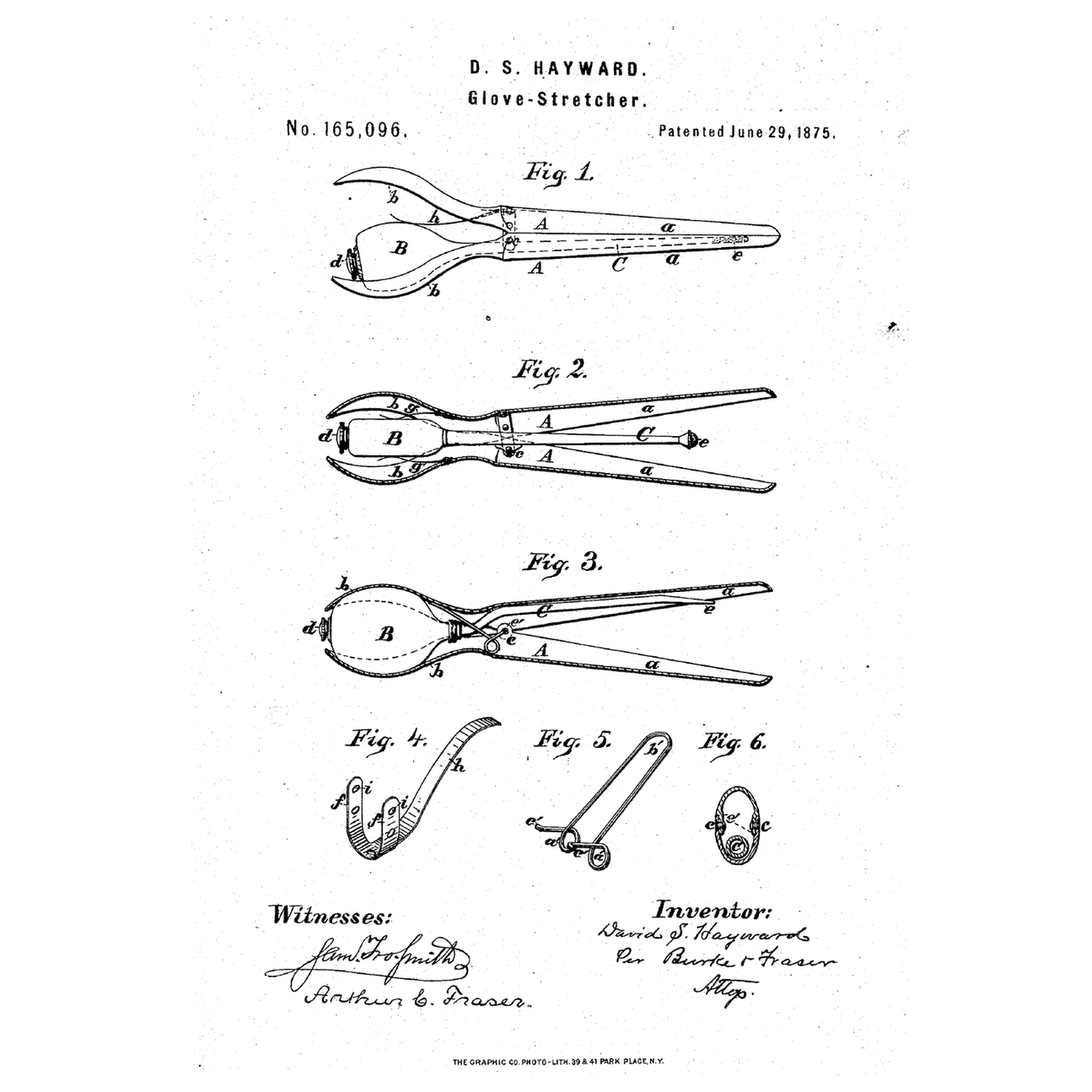


The Hollow Glove Stretcher: Tube Jaws and a Puff of Powder
A tight leather glove has to be stretched and powdered before a hand goes in, and a stretcher strong enough for the job was thick, heavy and weak where its curved handles cut across the grain.
David S. Hayward of New York received US 165,096, dated 29 June 1875, for a stretcher "light, strong, durable, and effective": two hollow halves stamped from sheet steel and hinged together, with a rubber bulb of powder whose tube ends in a finely perforated nozzle between the jaws, "so arranged that the powder may be applied while the stretcher is yet in the glove and the glove expanded."
This rung works out what hollow jaws gain over solid ones of the same weight, then makes a stretcher from aluminium tube with a puffer and bends a tube and a solid rod side by side.
Principiante
About 2 hours
Istruzioni
1
1
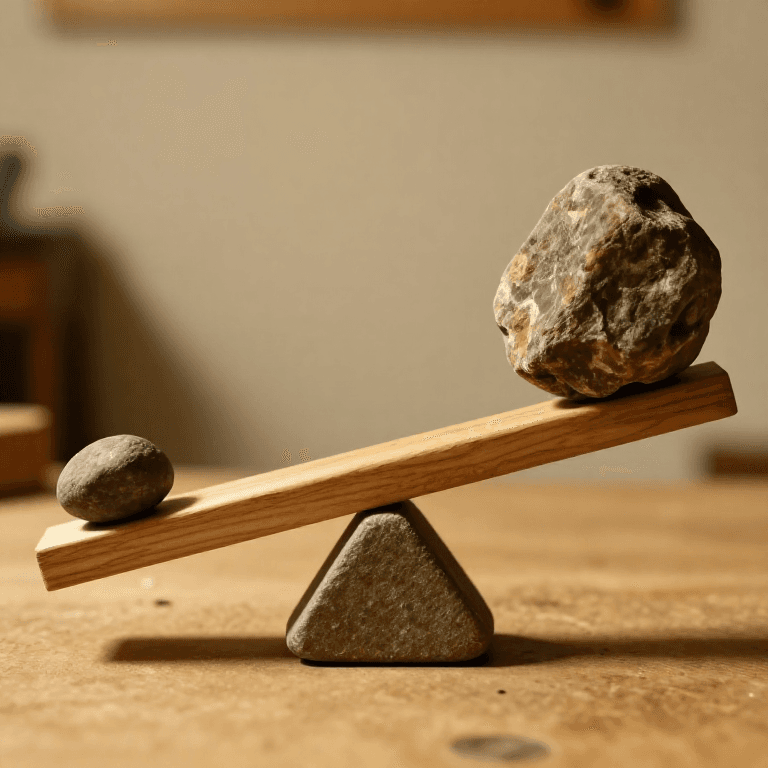
Tube against rod of equal weight
Tube against rod of equal weight
Caricamento del notebook Jupyter…
2
2
Two jaws on a hinge
Two jaws on a hinge
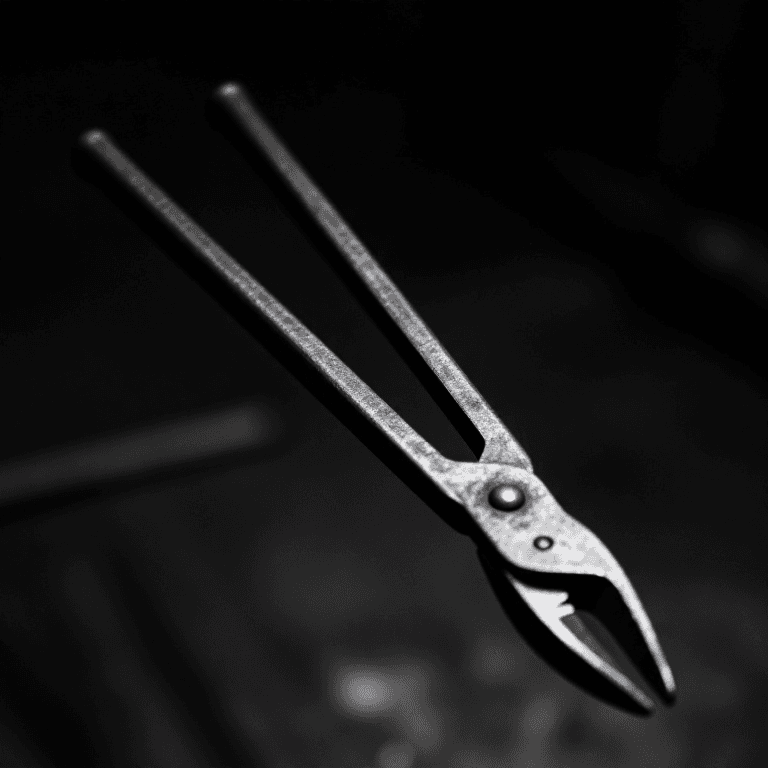
The embedded blueprint forges pivoted jaws. Hayward's stretcher is the same pair of levers, made hollow and used to open rather than to grip.
3
3
Read US 165,096
Read US 165,096
"Heretofore glove-stretchers have been made solid, of hard wood, bone, &c., and to be strong enough it was necessary that the parts should be made thick and heavy."
"I prefer to construct the two halves of sheet-steel precisely alike, stamped or pressed into the required tubular or hollow form; but they may be made of sheet-iron, cast metal, hard rubber, or any other material suitable for the purpose."
4
4
Make the stretcher and bend a tube and a rod
Make the stretcher and bend a tube and a rod
**Jaws.** Cut two 25 cm lengths of 10 mm aluminium tube. Flatten 3 cm in the middle of each in the vice and drill a 5 mm hole through each flat. Bend the front 10 cm of each gently outward so that, bolted at the flats, the two close to a smooth rounded point. Round the tips with the file and seal them with a dab of epoxy.
**Hinge and spring.** Bolt the flats together with an M5 bolt and nut. Seat a compression spring between the handles so it keeps them apart and the jaws closed.
**Puffer.** Push clear vinyl tubing onto the rubber bulb, run it along one handle with tape so its end sits between the jaws behind the tips, and fill the bulb with talcum powder.
**Test.** Cut 20 cm of the tube and 20 cm of 6 mm aluminium rod and weigh them on the kitchen scale. Clamp each in the vice with 15 cm free, hang the spring scale on the end, pull to 10 N and measure the droop with the ruler. Compare with the notebook. Then slide the closed jaws into a glove finger, squeeze the handles and give the bulb one puff.
Materiali per questo passaggio:
 Tubo di alluminio0.7 metro
 Barra tonda di alluminio0.2 metro
 Assortimento di bulloni a testa esagonale1 pezzo
 Dado esagonale1 pezzo
 Assortimento di molle a compressione1 pezzo
 Resina epossidica2 ml
 Peretta di gomma da 60 ml1 pezzo
 Tubo in vinile trasparente0.3 metro
 Talco20 g
Strumenti necessari:
 Seghetto per metalli
 Morsa da banco
 Trapano a batteria
 Serie di punte da trapano
 Lime (lima a mano)
 Nastro di carta per mascherature
 Bilancia digitale da cucina
 Dinamometro (bilancia a molla)
 Righello
 Guanti di cuoio
5
5
A stretcher that bends, snags or will not powder
A stretcher that bends, snags or will not powder
Hollow glove stretcher troubleshooting.
Flow
Loading...
6
6
History and honest limits
History and honest limits
**David S. Hayward** of New York filed US 165,096 on 11 June 1875; it is dated 29 June 1875. He showed the powder box as metal or hard rubber, or as a bulb of elastic rubber, and a hinge and spring made of one piece of spring wire. He noted that curved solid handles cut obliquely across the grain were weak.
**Honest limits.** Aluminium tube stands in for his stamped sheet steel, and a vinyl tube with an open end for his perforated nozzle. The notebook compares round sections of equal area; its diameters are examples. Your droop readings are the result.
Materiali
9- 0.7 metroSegnaposto
- 0.2 metroSegnaposto
- Segnaposto
- 1 pezzoSegnaposto
- Segnaposto
- Segnaposto
- 1 pezzoSegnaposto
- 0.3 metroSegnaposto
- 20 gSegnaposto
Strumenti richiesti
10- Segnaposto
- Segnaposto
- 1 vendor sell this, none ship to you yetSegnaposto
- Segnaposto
- Segnaposto
- Segnaposto
- Segnaposto
- Segnaposto
- Segnaposto
- Segnaposto
Blueprint correlati
Questi blueprint condividono conoscenze — tecniche, materiali o principi

CC0 Pubblico dominio
Questo progetto è rilasciato sotto CC0. Sei libero di copiare, modificare, distribuire e utilizzare quest'opera per qualsiasi scopo, senza chiedere permesso.
Supporta il Maker acquistando prodotti tramite il suo progetto dove guadagna una Commissione Maker stabilita dai venditori, oppure crea una nuova iterazione di questo progetto e includilo come collegamento nel tuo progetto per condividere i ricavi.