ARTE
BELLEZZA E BENESSERE
MESTIERE
CULTURA E STORIA
DIVERTIMENTO
AMBIENTE
CIBO E BEVANDE
INGEGNERIA INVERSA
SCIENZE
SPORT
TECNOLOGIA
INDOSSABILI
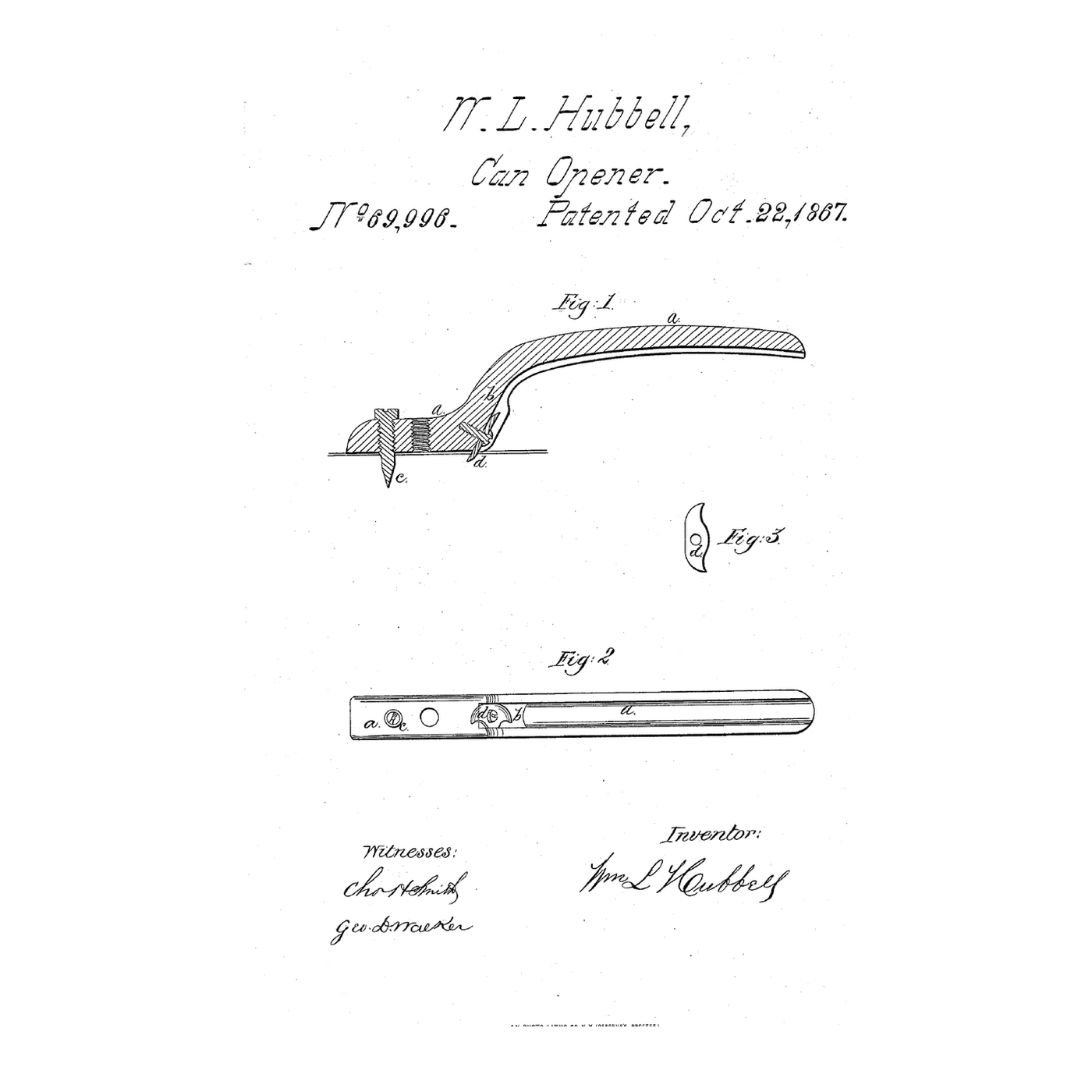


The Lifting-Cutter Can Opener: A Diagonal Blade Cuts Under and Holds the Disk
A can opener's knife can slip out of its cut, and the cut disk drops into the can.
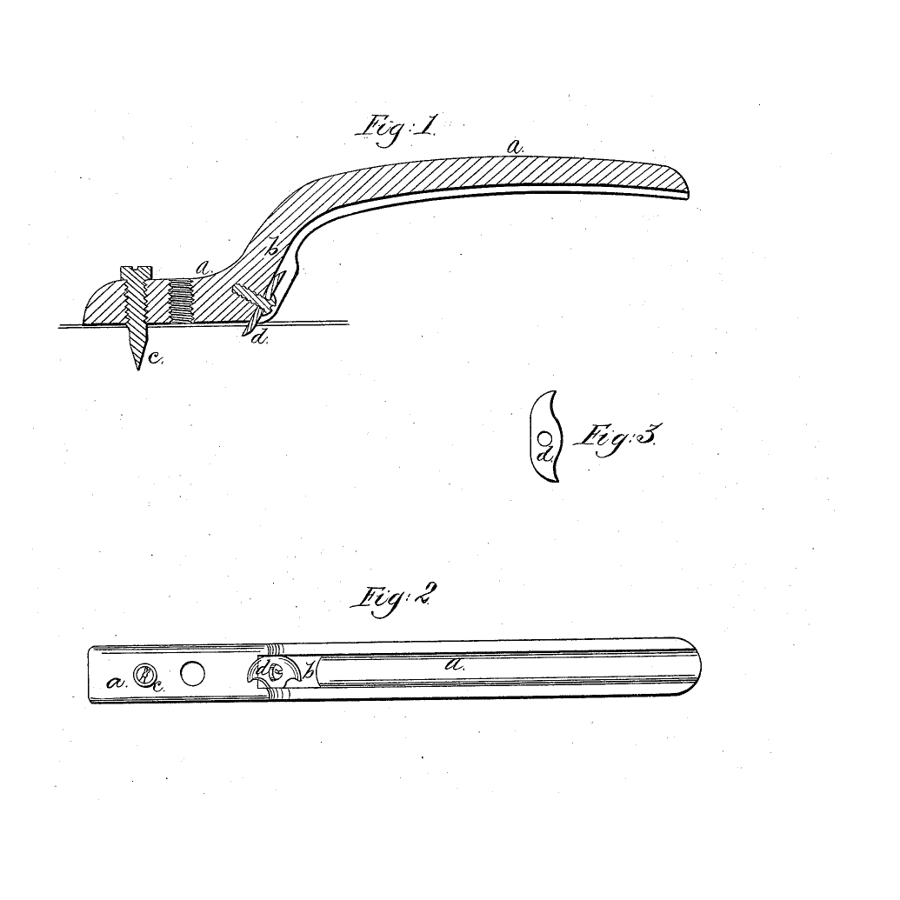
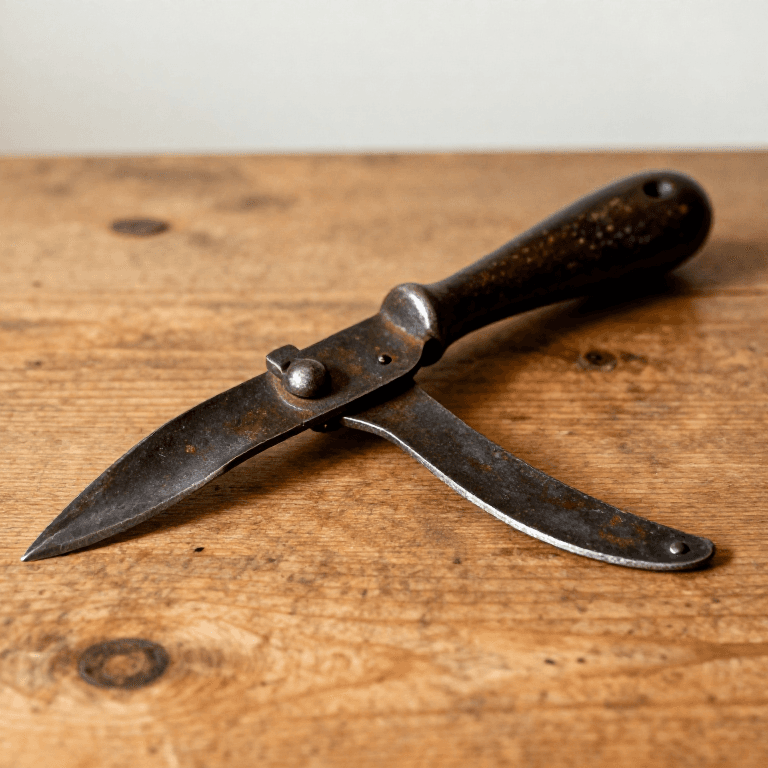
William L. Hubbell of Brooklyn, New York, received US 69,996, dated 22 October 1867, for a can opener made of a lever with a screw spike that fits any of several holes, to vary the size of the disk, and a cutter set diagonally "so as to cut under and lift up the said disk, and prevent the knife slipping out while in use," holding the disk until it is taken from the can.
This rung works out which hole suits which can, then builds the lever, spike and diagonal cutter and opens a can.
Intermedio
About 3 hours
Istruzioni
1
1
Spike hole against can size
Spike hole against can size
Caricamento del notebook Jupyter…
2
2
A turning cutter before it
A turning cutter before it
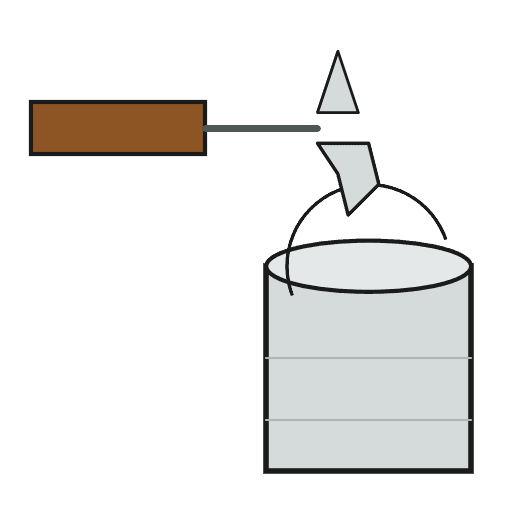
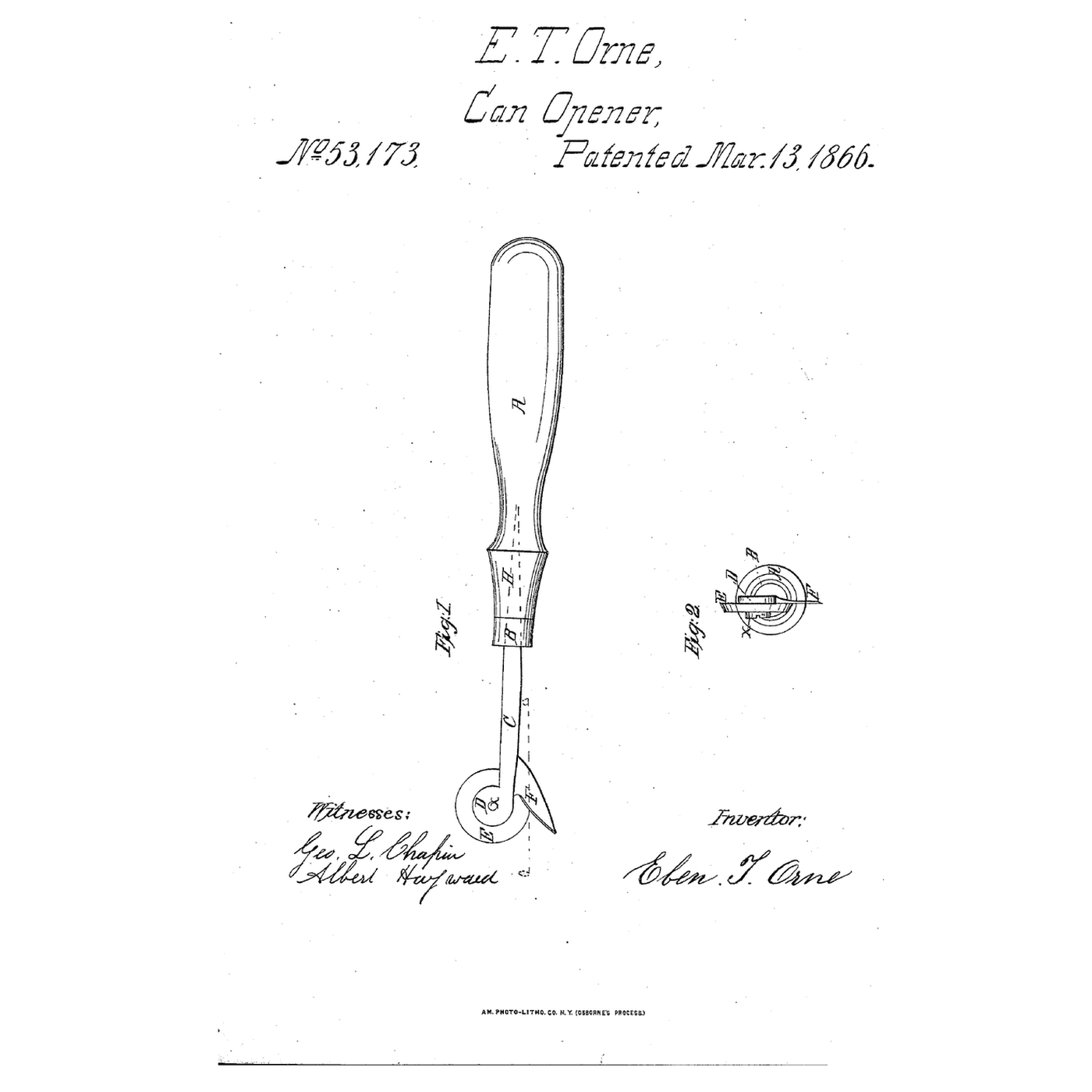
The embedded blueprint cuts round a can with a wheel and a fixed cutter. Hubbell turns a lever round a spike and inclines the cutter so it lifts what it cuts.
3
3
Read US 69,996
Read US 69,996
"The cutter d is set into a recess, formed by grooves, on the edges of the lever a, at the curved part b, so that one edge of the cutter projects below the under side of the lever at an inclination, as shown, so that the cutter is prevented from rising by its being below, and inclining inwards under the edge of the disk that is being cut out by revolving either the can or the opener."
4
4
Make the lever
Make the lever
Cut 180 mm of 25 × 3 mm flat bar and bend the last 20 mm down at about 40° in the vice. Drill and tap three M5 holes 25, 30 and 35 mm from the bend's foot.
Materiali per questo passaggio:
 Piatto di acciaio dolce1 pezzo
Strumenti necessari:
 Seghetto per metalli
 Morsa da banco
 Martello
 Bulino da centro
 Trapano a batteria
 Serie di punte da trapano
 Serie di maschi e filiere
 Righello
5
5
Slot the bent end
Slot the bent end
Saw a slot 1 mm wide and 12 mm deep across the bent end at 25° to the bar with the hacksaw.
Strumenti necessari:
Seghetto per metalliMorsa da banco Set di lime ad ago
6
6
Make and set the cutter
Make and set the cutter
Cut a 16 × 18 mm cutter from 1 mm steel sheet and file both short ends to rounded cutting edges. Set it in the slot with epoxy so one end projects 5 mm below the bar, inclined inward.
Materiali per questo passaggio:
 Lamiera di acciaio dolce1 pezzo
 Resina epossidica bicomponente1 pezzo
Strumenti necessari:
 Cesoie da lattoniere
 Lime (lima a mano)
 Pietra per affilare
 Occhiali di sicurezza trasparenti
7
7
Make the spike
Make the spike
File the end of an M5 screw to a long taper point. Screw it into the hole that suits the can.
Materiali per questo passaggio:
 Viti da metallo1 pezzo
Strumenti necessari:
Morsa da bancoLime (lima a mano)8
8
The patent drawing
The patent drawing
US 69,996 drawing sheet, public domain (expired patent).
9
9
Open a can and lift the disk
Open a can and lift the disk
Stand a sealed can on the kitchen scale. Thrust the spike into the top's centre, press the cutter through and turn the lever round; read the peak load and time it. Lift the opener and see whether the disk comes with it.
Materiali per questo passaggio:
 Barattolo di latta1 pezzo
Strumenti necessari:
 Bilancia digitale da cucina
 Cronometro
 Calibro digitale da 6 pollici
 Guanti da lavoro in pelle
10
10
A cutter that rides up, slips or drops the disk
A cutter that rides up, slips or drops the disk
Lifting-cutter can opener troubleshooting.
Flow
Loading...
11
11
History and honest limits
History and honest limits
**William L. Hubbell** of Brooklyn, New York, signed his specification on 16 August 1867; US 69,996 is dated 22 October 1867. He wrote that earlier openers with semicircular knives, or tools to perforate and raise the edges, were costly and some were liable to slip. The cutter's edge is rounded outwardly so as not to draw the spike out, and both ends are shaped alike so it can be changed end for end.
**Honest limits.** Epoxy in a sawn slot stands in for his grooved recess, and the cutter is unhardened. Your loads and times are the result.
Materiali
5- 1 pezzoSegnaposto
- 1 pezzoSegnaposto
- Segnaposto
- 1 pezzoSegnaposto
- 1 pezzoSegnaposto
Strumenti richiesti
17- Segnaposto
- Segnaposto
- Segnaposto
- Segnaposto
- 1 vendor sell this, none ship to you yetSegnaposto
- Segnaposto
- Segnaposto
- Segnaposto
- Segnaposto
- Segnaposto
- Segnaposto
- Segnaposto
- Segnaposto
- Segnaposto
- Segnaposto
- Segnaposto
- Segnaposto
Questo progetto realizza
Blueprint correlati
Questi blueprint condividono conoscenze — tecniche, materiali o principi
CC0 Pubblico dominio
Questo progetto è rilasciato sotto CC0. Sei libero di copiare, modificare, distribuire e utilizzare quest'opera per qualsiasi scopo, senza chiedere permesso.
Supporta il Maker acquistando prodotti tramite il suo progetto dove guadagna una Commissione Maker stabilita dai venditori, oppure crea una nuova iterazione di questo progetto e includilo come collegamento nel tuo progetto per condividere i ricavi.