ARTE
BELLEZZA E BENESSERE
MESTIERE
CULTURA E STORIA
DIVERTIMENTO
AMBIENTE
CIBO E BEVANDE
INGEGNERIA INVERSA
SCIENZE
SPORT
TECNOLOGIA
INDOSSABILI
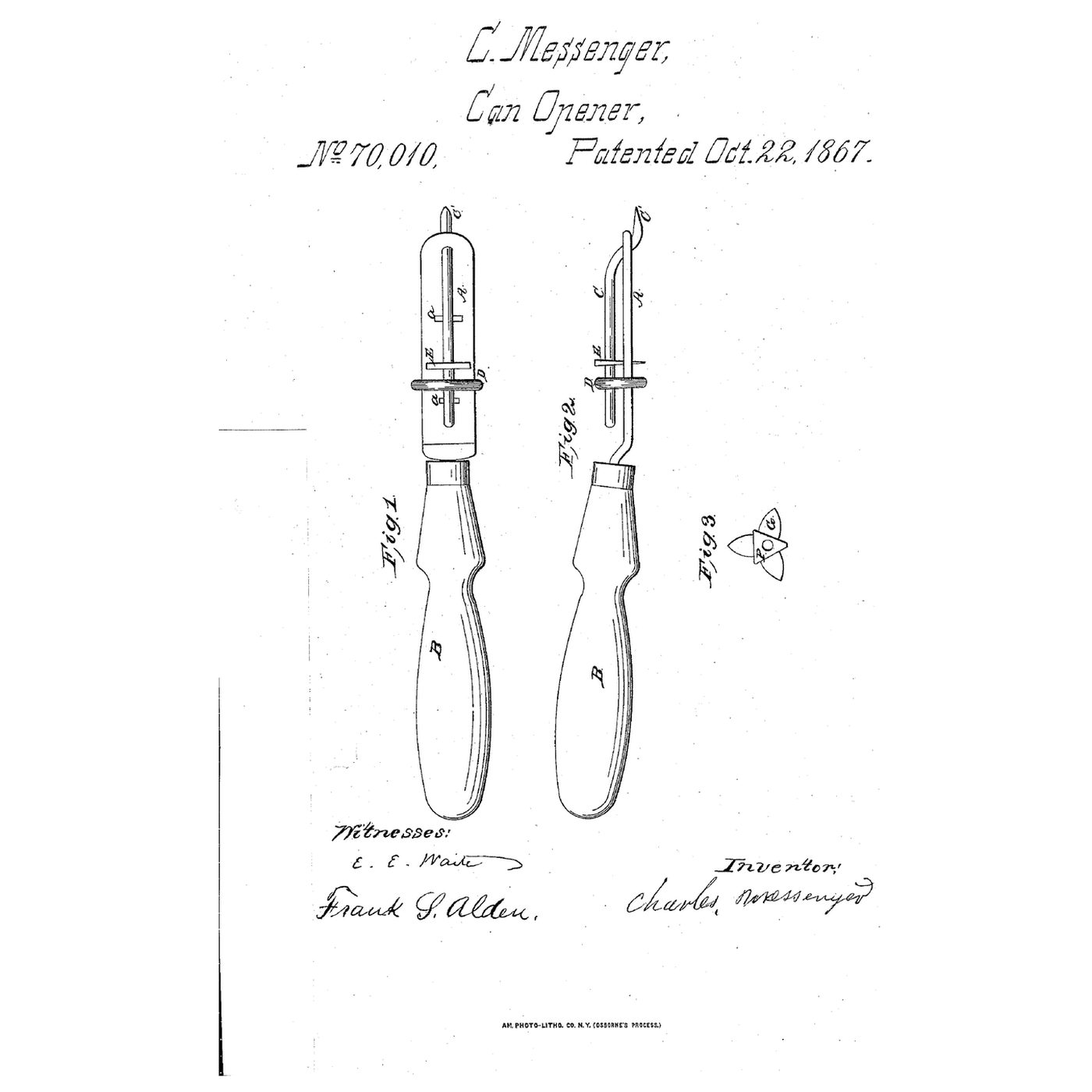


The Pivot-Point Can Opener: A Spike at the Centre, a Blade Set to the Size
A knife driven round a can top wanders, and leaves a ragged hole of no particular size.
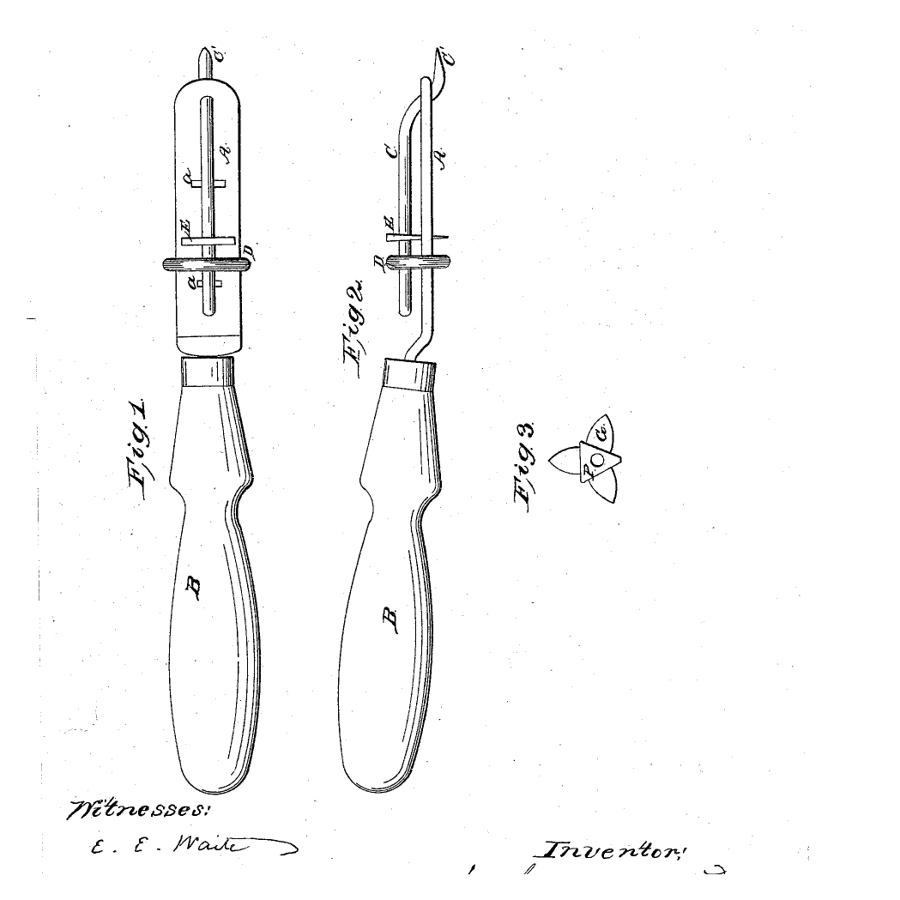
Charles Messenger of Cleveland, Ohio, received US 70,010, dated 22 October 1867, for a tool for opening sheet-metal cans: a plate fixed in a handle, a pointed rod at its end thrust through the centre of the top as a pivot, and a blade slipped on the rod through one of several holes in the plate, held by a ring; turning the handle round cuts a round hole, small or large.
This rung works out the hand force for each hole size, then builds the plate, pivot and blade from steel and opens a can.
Intermedio
About 3 hours
Istruzioni
1
1
Hole size and hand force
Hole size and hand force
Caricamento del notebook Jupyter…
2
2
A turning cutter before it
A turning cutter before it
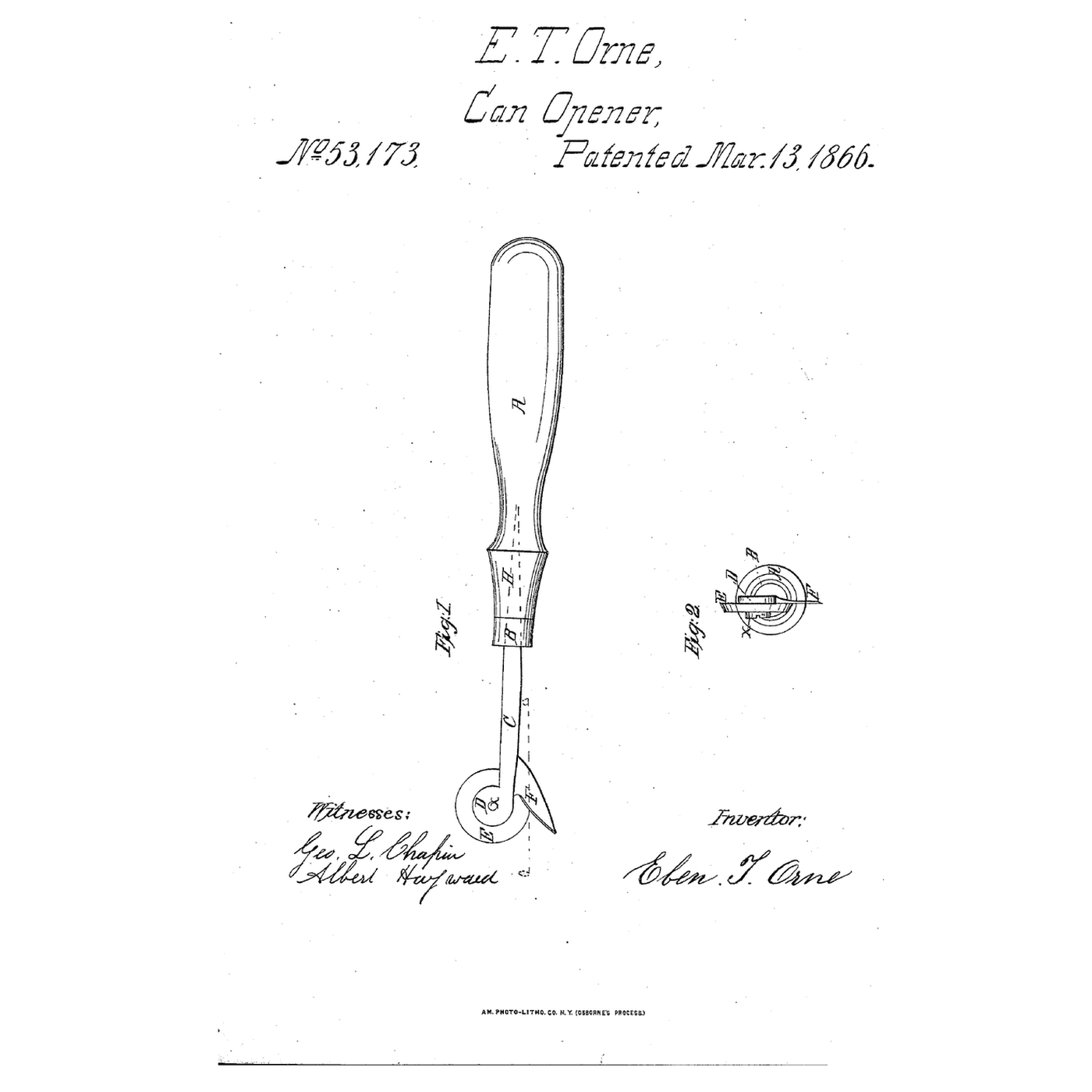
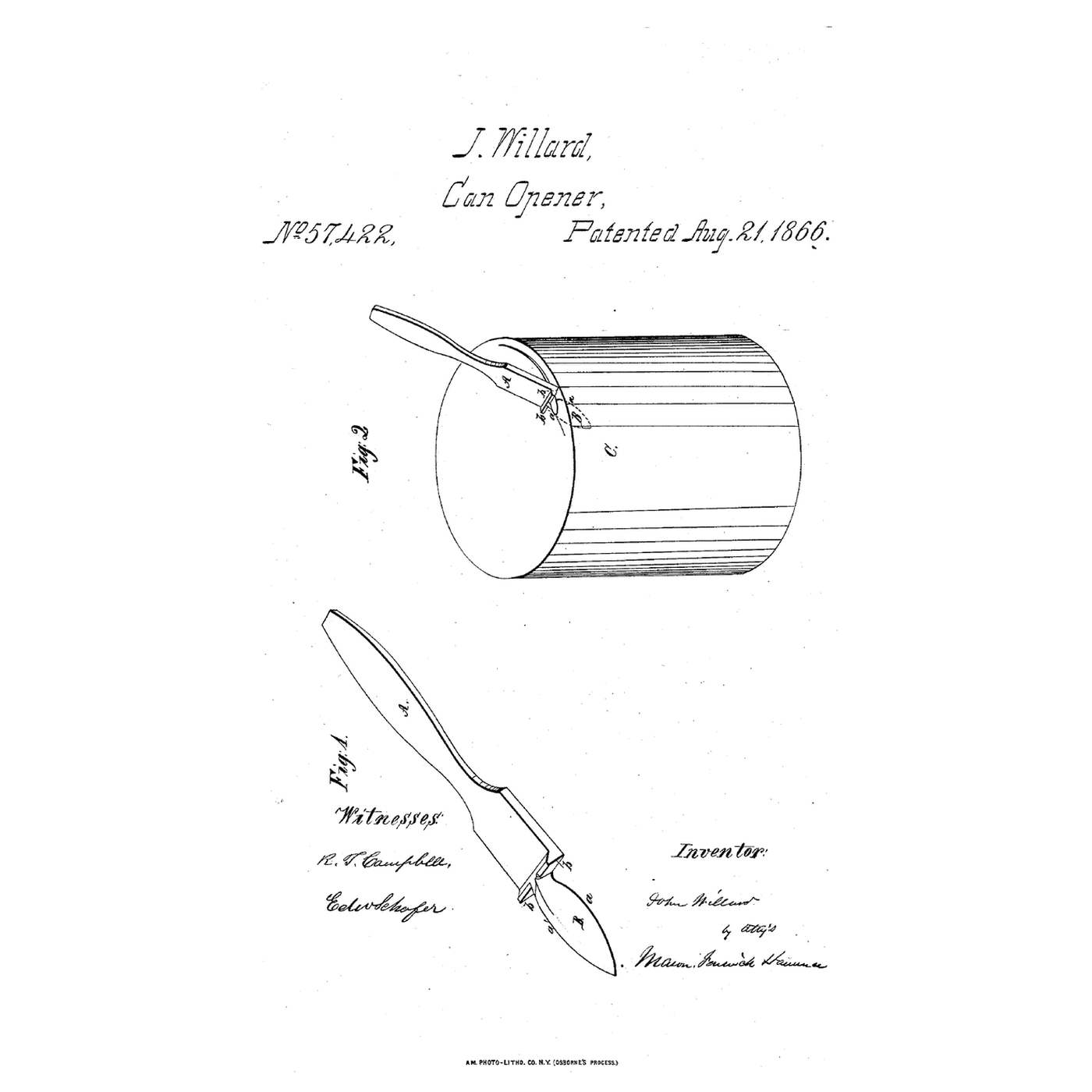
The embedded blueprint cuts tin with a turning wheel against a fixed cutter. Messenger turns the whole tool round a centre spike.
3
3
Read US 70,010
Read US 70,010
"The apparatus is held in the right hand, and the point C' thrust through the centre of the top of the can. The handle is then brought down so as to cause the blade to penetrate the cover; the instrument is turned around the circumference of the top, the point acting as a pivot, and the handle as a lever; the blade, as the instrument turns, will cut out a round hole through which the contents of the can may be emptied."
4
4
Make the plate
Make the plate
Cut 90 mm of 25 × 3 mm flat bar. Drill a 5 mm hole 6 mm from one end for the rod, and three 4 × 8 mm slots at 30, 45 and 60 mm from it for the blade. File the slots square.
Materiali per questo passaggio:
 Piatto di acciaio dolce1 pezzo
Strumenti necessari:
 Seghetto per metalli
 Morsa da banco
 Bulino da centro
 Trapano a batteria
 Serie di punte da trapano
 Set di lime ad ago
5
5
Make the rod and blade
Make the rod and blade
Cut 100 mm of 5 mm steel rod, file one end to a sharp point, and thread the other M5. Cut the blade from flat bar, drill it for the rod, and file its lower end to a cutting edge.
Materiali per questo passaggio:
 Tondo di acciaio dolce1 pezzoPiatto di acciaio dolce1 pezzo
Strumenti necessari:
Seghetto per metalli Lime (lima a mano)
 Serie di maschi e filiereTrapano a batteriaSerie di punte da trapano
 Pietra per affilare
6
6
Assemble
Assemble
Push the rod through the plate's end hole so the point stands 12 mm below. Slip the blade on the rod and down through a slot; hold both with a nut on the rod's thread. Fit the plate into a hardwood handle with epoxy.
Materiali per questo passaggio:
 Dado esagonale1 pezzo
 Tasselli di legno duro1 pezzo
 Resina epossidica bicomponente1 pezzo
Strumenti necessari:
Trapano a batteriaSerie di punte da trapano Pinze a becchi piatti
7
7
The patent drawing
The patent drawing
US 70,010 drawing sheet, public domain (expired patent).
8
8
Open a can at two sizes
Open a can at two sizes
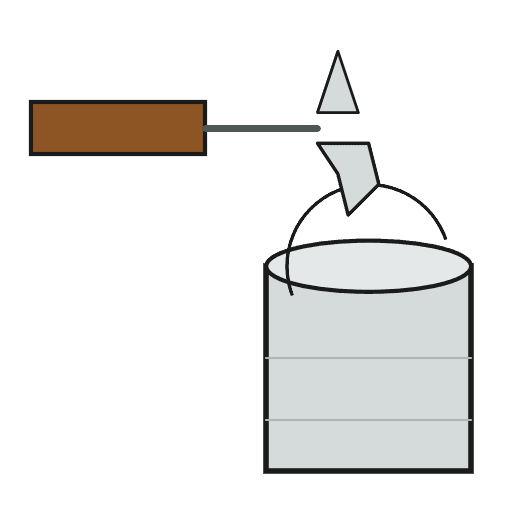
Stand a sealed can on the kitchen scale. Thrust the point into the centre, bring the handle down and turn it round; read the peak load and time a full circle. Move the blade to another slot and repeat.
Materiali per questo passaggio:
 Barattolo di latta1 pezzo
Strumenti necessari:
 Bilancia digitale da cucina
 Cronometro
 Guanti da lavoro in pelle
9
9
A cutter that wanders, tears or slips
A cutter that wanders, tears or slips
Pivot-point can opener troubleshooting.
Flow
Loading...
10
10
History and honest limits
History and honest limits
**Charles Messenger** of Cleveland, Ohio, received US 70,010, dated 22 October 1867, for opening oyster, paint and fruit cans. The ring slides on the rod and can be removed to change the blade; a knife with radial arms, each with two sharp edges, gives a spare edge when one is dull. His claim covers the rod, blade and ring in combination with the plate.
**Honest limits.** A nut stands in for his sliding ring, and an unhardened blade for a steel one. Your loads and times are the result.
Materiali
6- 1 pezzoSegnaposto
- 1 pezzoSegnaposto
- 1 pezzoSegnaposto
- 1 pezzoSegnaposto
- Segnaposto
- 1 pezzoSegnaposto
Strumenti richiesti
13- Segnaposto
- Segnaposto
- Segnaposto
- 1 vendor sell this, none ship to you yetSegnaposto
- Segnaposto
- Segnaposto
- Segnaposto
- Segnaposto
- Segnaposto
- Segnaposto
- Segnaposto
- Segnaposto
- Segnaposto
Questo progetto realizza
Blueprint correlati
Questi blueprint condividono conoscenze — tecniche, materiali o principi
CC0 Pubblico dominio
Questo progetto è rilasciato sotto CC0. Sei libero di copiare, modificare, distribuire e utilizzare quest'opera per qualsiasi scopo, senza chiedere permesso.
Supporta il Maker acquistando prodotti tramite il suo progetto dove guadagna una Commissione Maker stabilita dai venditori, oppure crea una nuova iterazione di questo progetto e includilo come collegamento nel tuo progetto per condividere i ricavi.