
ARTE
BELLEZZA E BENESSERE
MESTIERE
CULTURA E STORIA
DIVERTIMENTO
AMBIENTE
CIBO E BEVANDE
INGEGNERIA INVERSA
SCIENZE
SPORT
TECNOLOGIA
INDOSSABILI
The Reversible Crochet Hook Holder: Collet Jaws Grip the Hook Either Way Round
Emma

Creato da

Emma

6. ottobre 2026SE
34
0
0
0
0

The Reversible Crochet Hook Holder: Collet Jaws Grip the Hook Either Way Round

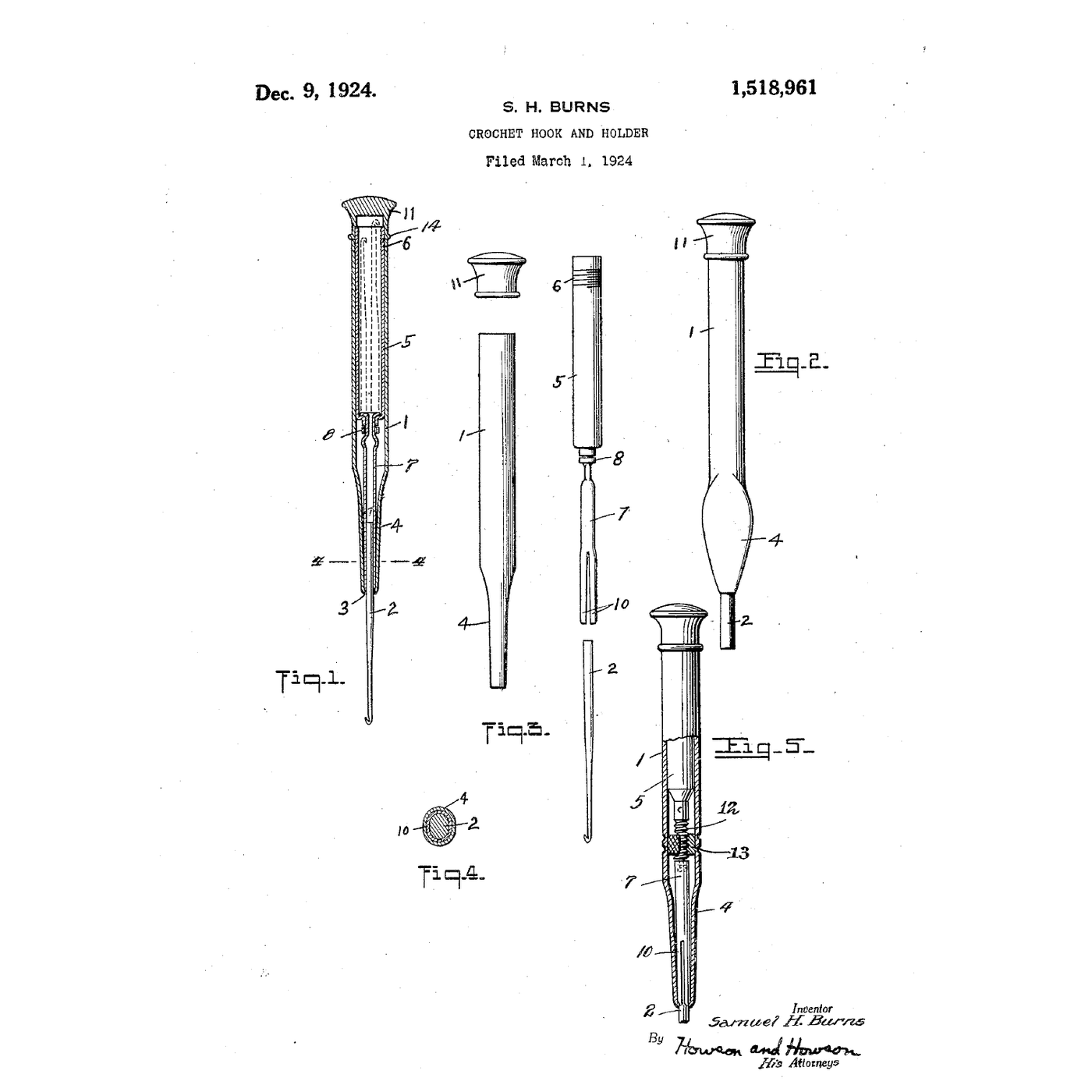
A fine steel hook is hard to hold, and its point catches when carried. Samuel H. Burns of Brooklyn, New York, received US 1,518,961, patented 9 December 1924, for a crochet hook and holder "in which the needle can be reversed and left with the point inside the holder for protection when not in use": split jaws on a small tube are drawn into the handle's flattened, tapered end by a threaded inner shell and grip the hook's non-round shank; the hollow inner shell stores hooks of other sizes. This rung works out how hard a taper squeezes the jaws, then builds a collet holder from brass, aluminium and an M4 screw and measures the pull it holds.
Avanzato
About 4 hours

Istruzioni

1

Grip from the taper

Caricamento del notebook Jupyter…
2

A hook protected in its handle before it

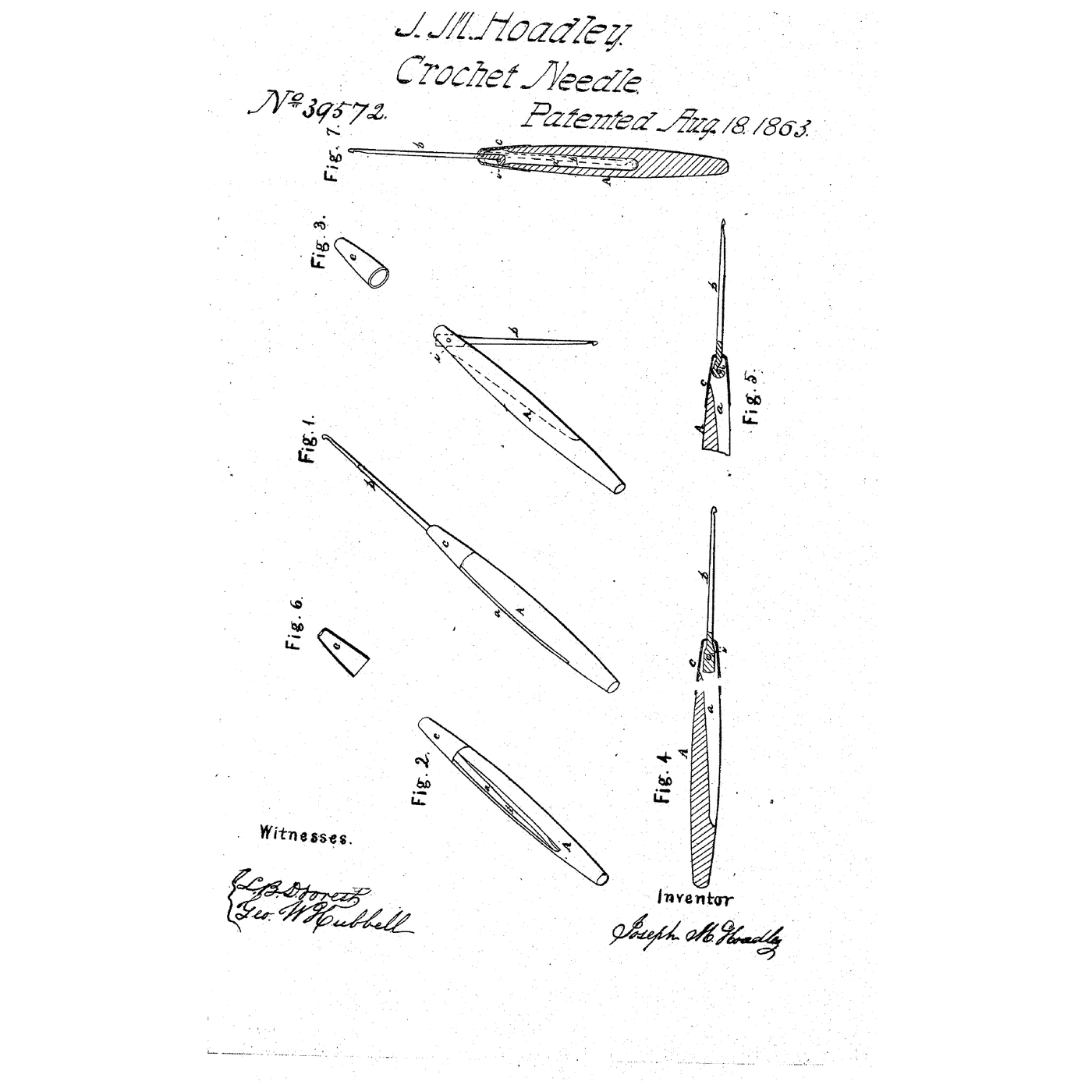
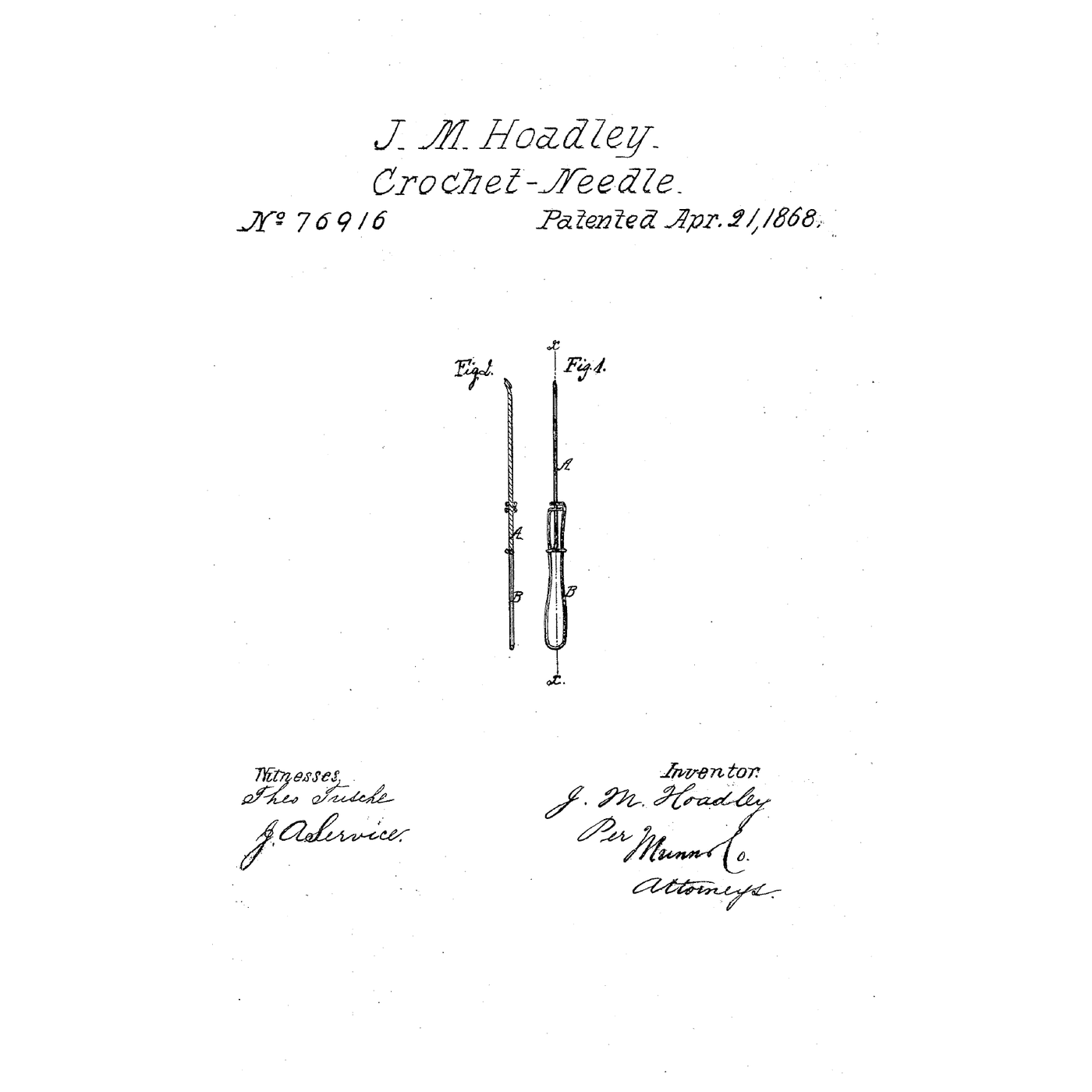
The embedded blueprint folds the hook into its handle. Burns takes the hook out, turns it round and clamps it point-in.
3

Read US 1,518,961

"The shank of the hook is then introduced into opening 3 of the tapered end and the jaws 10 until the desired length of the shank is left outside the holder when the inner shell 5 can be screwed into the outer shell and the clamping jaws 10 forced into the opening 3 of the tapered end thus gripping the shank of the hook." "By making the inner shell 5 hollow, and of the proper length, I can use it as a reservoir for an assortment of needles for various sizes and kinds of crochet work."
4

Make the nose

Cut 30 mm of 12 mm aluminium rod. Drill 3.5 mm through on the axis, then 8.5 mm from the back 18 mm deep. Finish the bottom of the bore with the 8.5 mm bit's point, then file the front 15 mm to a flattened taper.

Materiali per questo passaggio:

Barra tonda di alluminioBarra tonda di alluminio1 pezzo

Strumenti necessari:

Seghetto per metalliSeghetto per metalli
Morsa da bancoMorsa da banco
Trapano a batteriaTrapano a batteria
Serie di punte da trapanoSerie di punte da trapano
Lime (lima a mano)Lime (lima a mano)
Calibro digitale da 6 polliciCalibro digitale da 6 pollici
Occhiali di sicurezza trasparentiOcchiali di sicurezza trasparenti
5

Make the jaws

Cut 30 mm of 8 mm brass rod. Drill 3.3 mm through on the axis and tap the back 10 mm M4. File the front to a cone matching the bore's bottom, and saw two cuts across it 12 mm deep, making four jaws.

Materiali per questo passaggio:

Barra di ottoneBarra di ottone1 pezzo

Strumenti necessari:

Seghetto per metalliSeghetto per metalli
Morsa da bancoMorsa da banco
Trapano a batteriaTrapano a batteria
Serie di punte da trapanoSerie di punte da trapano
Serie di maschi e filiereSerie di maschi e filiere
Set di lime ad agoSet di lime ad ago
6

Assemble the handle

Epoxy the nose into one end of 120 mm of 1/2" brass tube. Epoxy an M4 nut in a 20 mm hardwood plug, centred, and set it 50 mm behind the nose. Screw 90 mm of M4 threaded rod through the nut into the jaws.

Materiali per questo passaggio:

Tubo di ottone da 1/2 pollice di diametro esternoTubo di ottone da 1/2 pollice di diametro esterno1 pezzo

Resina epossidica bicomponenteResina epossidica bicomponente1 pezzo
Dado esagonaleDado esagonale1 pezzo
Tasselli di legno duroTasselli di legno duro1 pezzo
Barra filettataBarra filettata1 pezzo

Strumenti necessari:

Seghetto per metalliSeghetto per metalli
Trapano a batteriaTrapano a batteria
Serie di punte da trapanoSerie di punte da trapano
7

Clamp a hook both ways

Choose a hook from the set with a shank under 3.3 mm and file two flats on it. Push it through the nose into the jaws and turn the rod's back end to draw the jaws in until it grips. Then reverse it, point inside, and clamp it again.

Strumenti necessari:

Set di lime ad agoSet di lime ad ago
Set di uncinettiSet di uncinetti
8

Measure the grip

Tie yarn to the hook's throat and pull along it with the force meter until it slips. Repeat at finger-tight and at firm; then twist the hook by hand and see if it turns.

Materiali per questo passaggio:

FilatoFilato1 pezzo

Strumenti necessari:

Dinamometro (bilancia a molla)Dinamometro (bilancia a molla)
9

A holder that slips, binds or will not open

Reversible crochet hook holder troubleshooting.

Flow

Loading...
10

History and honest limits

**Samuel H. Burns** of Brooklyn, New York, filed US 1,518,961 on 1 March 1924, a continuation in part of his application of 5 June 1922; it was patented 9 December 1924. The flattened tapered end gives the thumb and forefinger a grip, and with a non-round shank the hook cannot turn in it. His small tube turns freely on the inner shell, so the jaws are drawn in without revolving; a cap on the inner shell turns it. **Honest limits.** Our jaws turn with the screw, where his did not, and a threaded rod replaces his threaded inner shell. The drill point leaves a steep 118° cone, which grips less than a shallow taper would. Sizes are ours. Your pull forces are the result.

Materiali

8

Strumenti richiesti

11

CC0 Pubblico dominio

Questo progetto è rilasciato sotto CC0. Sei libero di copiare, modificare, distribuire e utilizzare quest'opera per qualsiasi scopo, senza chiedere permesso.

Supporta il Maker acquistando prodotti tramite il suo progetto dove guadagna una Commissione Maker stabilita dai venditori, oppure crea una nuova iterazione di questo progetto e includilo come collegamento nel tuo progetto per condividere i ricavi.

Commenti

(0)

Accedi per partecipare alla discussione

Caricamento commenti...