ARTE
BELLEZZA E BENESSERE
MESTIERE
CULTURA E STORIA
DIVERTIMENTO
AMBIENTE
CIBO E BEVANDE
INGEGNERIA INVERSA
SCIENZE
SPORT
TECNOLOGIA
INDOSSABILI
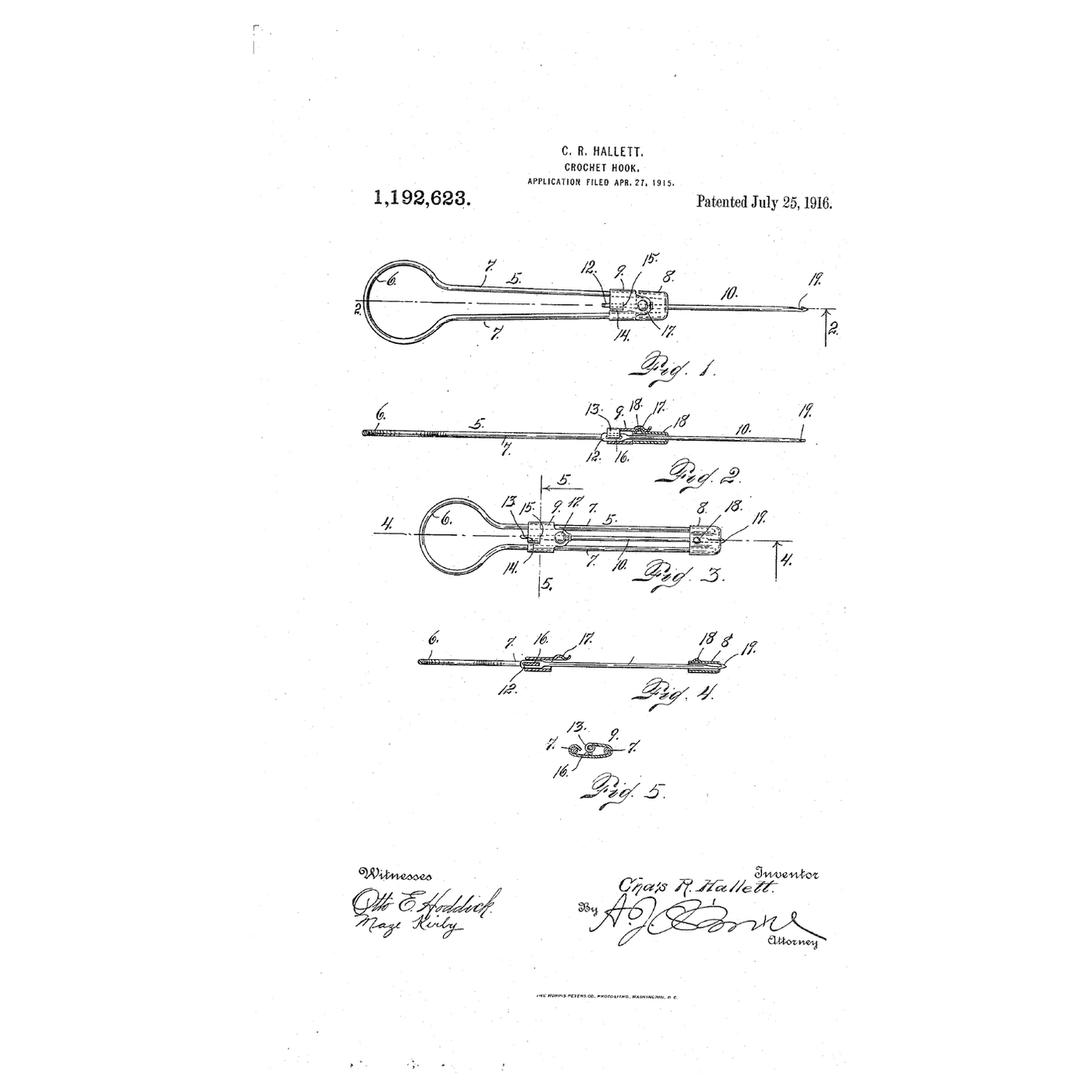


The Spring-Loop Sliding Crochet Hook: The Hook Draws In and Holds Its Thread
Crochet laid down loses its thread, and a hook fixed in its handle is always its full length.
Charles R. Hallett of Denver, Colorado, received US 1,192,623, patented 25 July 1916, for a crochet hook "which, when the hook is not in use, may be adjusted to hold the thread employed in the work so that when the user resumes the work after a period of cessation, no delay is required for the purpose of finding the thread." The handle is a single loop of spring wire whose arms are joined by a band; a clasp sliding on the arms carries the needle, locked forward by a spring lip over a stud on the band, and drawn back it pulls the hook against the band with the thread in it.
This rung works out how hard the arms grip the clasp, then bends the loop, makes the band, clasp and needle, and leaves a chain of stitches parked on it.
Avanzato
About 5 hours
Istruzioni
1
1
Grip of the spring arms
Grip of the spring arms
Caricamento del notebook Jupyter…
2
2
A needle on spring wire before it
A needle on spring wire before it
The embedded blueprint slides a crochet needle on a holder of tempered wire that grips it. Hallett's whole handle is one spring-wire loop, and a clasp on its arms carries the needle in and out.
3
3
Read US 1,192,623
Read US 1,192,623
"Let the numeral 5 designate the body or handle of the instrument, which as shown in the drawing, is formed from an integral piece of relatively strong spring wire, arranged in the form of a closed loop, the closed end of the loop consisting of an approximately circular part 6 which merges into spring arms 7 arranged in approximately parallel relation."
"At the same time, the hook 19 of the needle will draw the thread with it and retain the thread as long as the device is in the collapsed or inactive position. As the clasp is moved rearwardly, the arms 7 are compressed or moved inwardly toward each other to cause them to change their normal or slightly diverging position as illustrated in Fig. 1, to the parallel position illustrated in Fig. 3."
4
4
Bend the handle and fit the hook
Bend the handle and fit the hook
**Handle.** Bend 1.6 mm spring steel wire round a 35 mm dowel into a circle, cross the ends and bend both straight on as arms 9 cm long, so that with their front ends 6 mm apart they stand 3 mm wider apart where they leave the circle.
**Band.** Cut a strip of brass sheet 8 × 30 mm, wrap it round both arm ends with the arms 6 mm apart, squeeze it tight with pliers and set it with epoxy, leaving a gap between the arms for the needle. Raise a small dome on its rear face with the centre punch.
**Needle.** Cut 11 cm of 3 mm steel rod. File a hook with a throat about 1 mm deep at one end. Hammer the other 8 mm flat on the anvil and drill two 2 mm holes side by side, filing them into one long eye.
**Clasp.** Cut brass sheet 10 × 30 mm. Slit a tongue in its middle on two sides and bend it down; bend the sides round the two arms 6 mm apart so it slides, and grips harder as it is drawn back toward the circle. Pass the needle through the band, hook its eye on the tongue and close the tongue with pliers. Cut a spring lip on the clasp's front edge and punch a dimple in it that snaps over the dome.
**Test.** With the hook out, crochet a chain of 20 stitches, catch the thread and draw the clasp back. Hang the spring scale on the clasp and read the pull that moves it; then carry the work about and see whether the thread is still held.
Materiali per questo passaggio:
 Filo di acciaio armonico1 pezzo
 Lamiera di ottone1 pezzo
 Resina epossidica bicomponente1 pezzo
 Tondo di acciaio dolce0.15 metro
 Filato1 pezzo
Strumenti necessari:
 Pinze a becchi tondi
 Pinze a becchi piatti
 Cesoie da lattoniere
 Set di lime ad ago
 Lime (lima a mano)
 Morsa da banco
 Martello
 Incudine
 Bulino da centro
 Trapano a batteria
 Serie di punte da trapano
 Dinamometro a molla
 Calibro digitale da 6 pollici
 Occhiali di sicurezza trasparenti
5
5
A hook that slips, will not lock or drops its thread
A hook that slips, will not lock or drops its thread
Spring-loop sliding crochet hook troubleshooting.
Flow
Loading...
6
6
History and honest limits
History and honest limits
**Charles R. Hallett** of Denver, Colorado, filed US 1,192,623 on 27 April 1915; it was patented 25 July 1916. The needle 10's inner end has an eye or elongated opening 12, entered by a lip 13 on the clasp 9, formed by slitting the clasp at 14 and 15 and bending the freed part through the eye; the clasp's forward spring lip 17 has a recess that takes a small convex projection 18 on the band 8, and yields to a pull on the clasp. The shank moves freely through the band between the arms' ends, and drawn back the instrument is shorter. His claims cover the handle and needle with a spring lip and projection that lock them extended, and the handle of spaced arms joined by a spring and a band open between them, with the clasp and its lip in the needle's eye.
**Honest limits.** A band set with epoxy and a hand-filed needle stand in for his. The notebook treats each arm as a straight cantilever; its sizes and friction are examples. The pull you read is the result.
Materiali
5- 1 pezzoSegnaposto
- 1 pezzoSegnaposto
- Segnaposto
- 0.15 metroSegnaposto
- 1 pezzoSegnaposto
Strumenti richiesti
14- Segnaposto
- Segnaposto
- Segnaposto
- Segnaposto
- Segnaposto
- Segnaposto
- Segnaposto
- Segnaposto
- Segnaposto
- 1 vendor sell this, none ship to you yetSegnaposto
- Segnaposto
- Segnaposto
- Segnaposto
- Segnaposto
Blueprint correlati
Questi blueprint condividono conoscenze — tecniche, materiali o principi
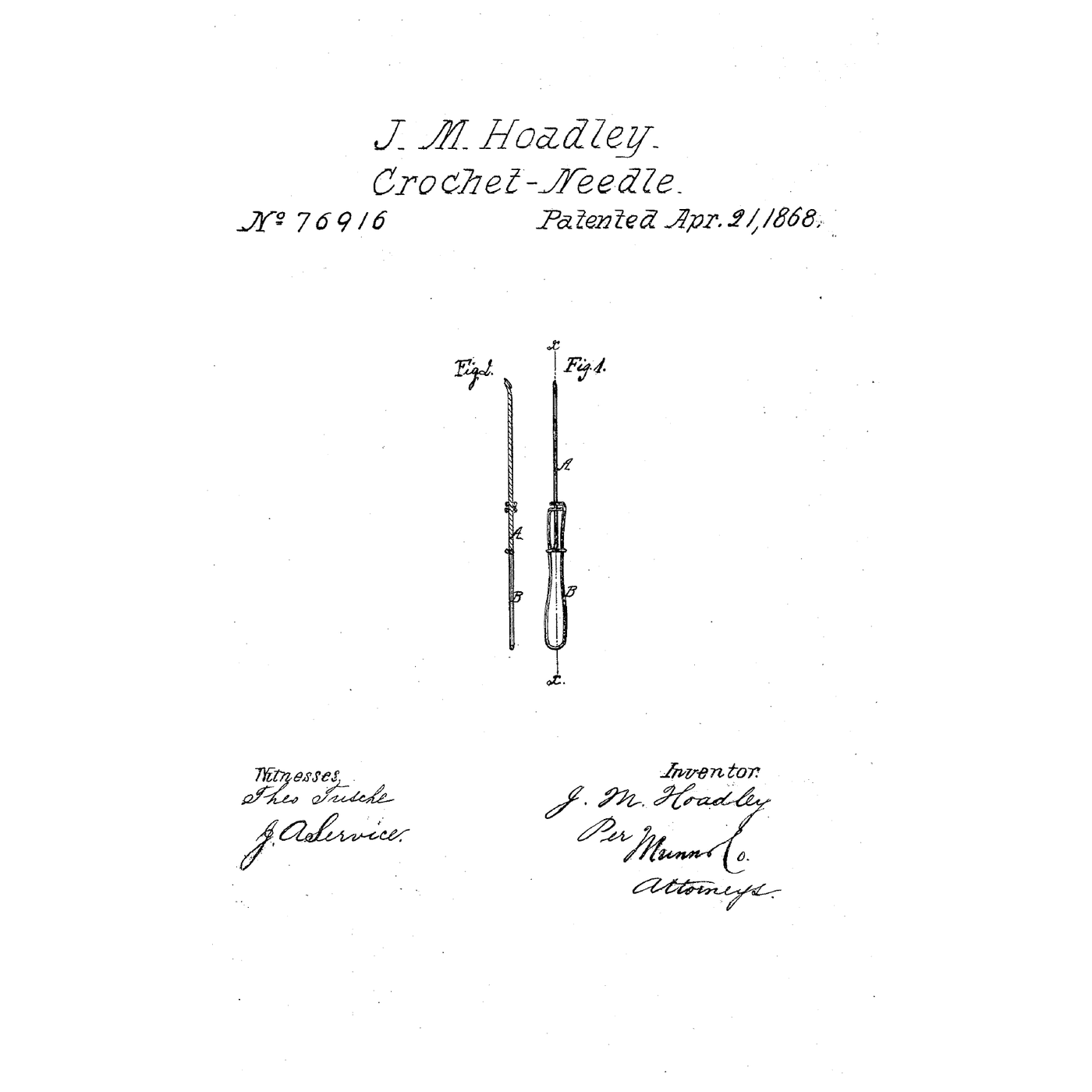
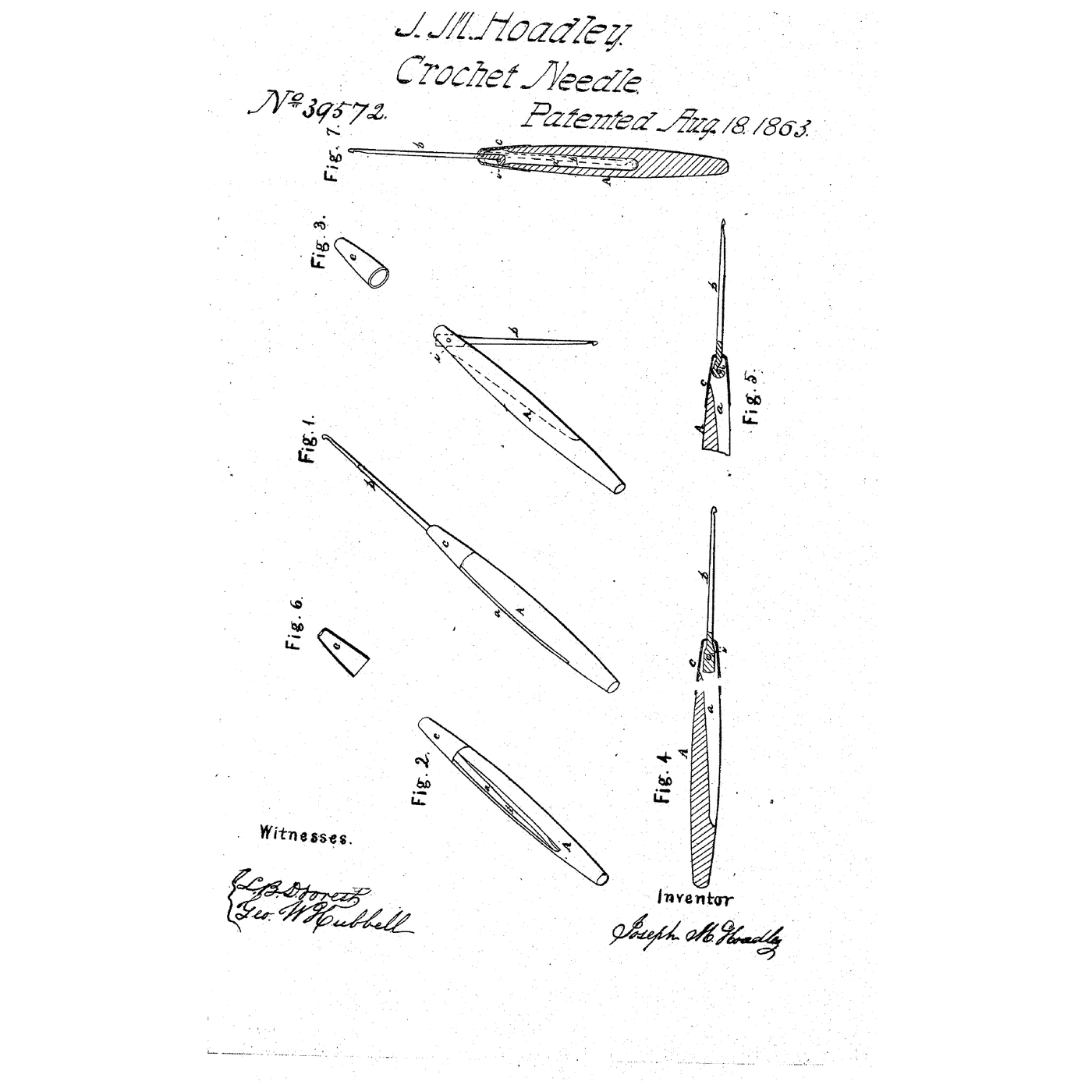


CC0 Pubblico dominio
Questo progetto è rilasciato sotto CC0. Sei libero di copiare, modificare, distribuire e utilizzare quest'opera per qualsiasi scopo, senza chiedere permesso.
Supporta il Maker acquistando prodotti tramite il suo progetto dove guadagna una Commissione Maker stabilita dai venditori, oppure crea una nuova iterazione di questo progetto e includilo come collegamento nel tuo progetto per condividere i ricavi.