ARTE
BELLEZZA E BENESSERE
MESTIERE
CULTURA E STORIA
DIVERTIMENTO
AMBIENTE
CIBO E BEVANDE
INGEGNERIA INVERSA
SCIENZE
SPORT
TECNOLOGIA
INDOSSABILI
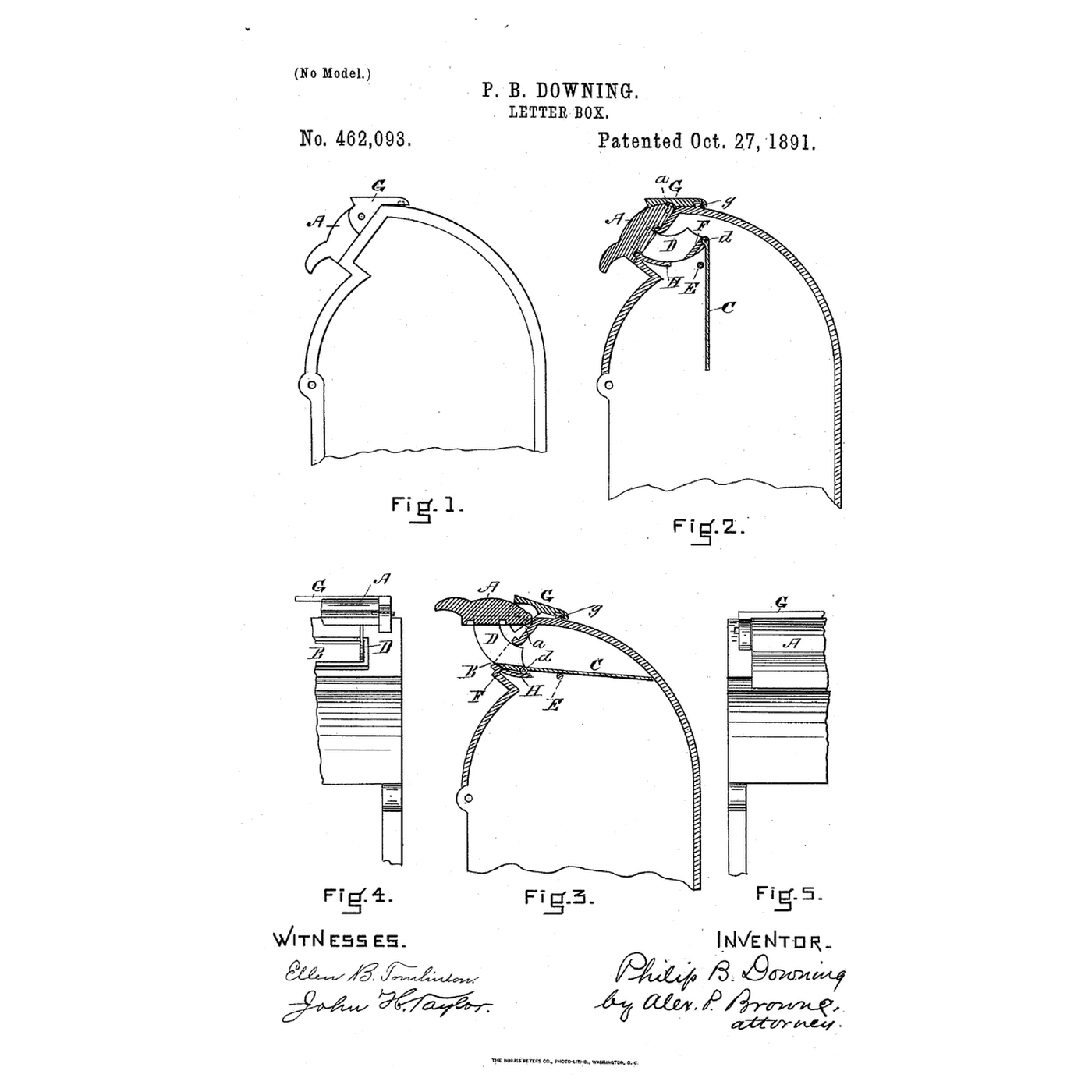

The Street Letter Box: A Lid That Is Also an Air-Lock
A letter box on the street must take letters in without letting rain in, and without letting anyone fish the letters back out through the slot.
Philip B. Downing of Boston filed US 462,093 on 2 April 1891; it is dated 27 October 1891. His hinged lid carries arms with a pivoted safety plate. Raising the lid draws the plate over a fulcrum rod so it swings level: it cuts off the box and, with a fixed transverse plate, makes a shelf for the letter. Dropping the lid lets the plate fall and deliver the mail into the box. A rib stops a hook being worked in past the plate, and a hinged weather-strip over a storm-rib keeps rain and snow out of the hinge.
This rung works out the box's capacity and the lid's self-closing, and builds a cardboard model of the lid mechanism.
Principiante
About 2 hours
Istruzioni
1
1
Capacity and the self-closing lid
Capacity and the self-closing lid
Caricamento del notebook Jupyter…
2
2
What goes into the box
What goes into the box
Machine-folded envelopes made mass letter post possible. The embedded blueprint shows the machine.
3
3
Read US 462,093
Read US 462,093
Downing's improvement is to "the lid or that portion through which mail-matter is introduced into the box", shown on "the upper part of a street letter-box."
The cover A is hinged to ears a and normally closes the mailing-slot B. Arms D on the cover carry a safety-plate C, pivoted at d, which hangs vertically in the box when the cover is shut. For it to swing "when the cover A is raised from its vertical position" to "close the entrance into the box proper", an abutment or fulcrum E, a rod across the box, is provided: raising the cover draws the plate over it, and the plate takes an approximately horizontal position "and at the same time to cut off communication with the body of the box through the mailing-slot." A transverse plate F between the arms forms, with the guard plate, "a table or shelf upon which mail-matter will be received". "As soon as the cover is dropped the guard plate, being no longer held upward by its abutment or fulcrum, drops and delivers the mail into the box proper."
A rib H under the slot prevents "the insertion of a wire or other hook" past plate F, and a hinged "weather-strip" G resting over a storm-rib g keeps "rain or snow" out of the hinge joint.
4
4
The lid's two doors, step by step
The lid's two doors, step by step
Spazio di lavoro Blockly
Loading Blockly workspace...
5
5
Build the lid in card
Build the lid in card
Make a box from corrugated card with a slot near the top of its front. Cut a lid hinged above the slot with tape, and two arc-shaped card arms fixed to the lid that pass in through the ends of the slot. Pin a card guard plate to the arms, and push a dowel across the box as the fulcrum.
Adjust the dowel's position until the plate swings level as the lid is raised and drops cleanly as it closes. Post folded paper letters and check that, with the lid raised, you cannot reach the letters already inside with a bent wire.
Materiali per questo passaggio:
 Fogli di cartone ondulato1 pezzo
 Tasselli di legno duro1 pezzo
 Carta1 pezzo
Strumenti necessari:
 Taglierino di precisione
 Tappetino da taglio autorigenerante
 Righello
 Pistola per colla a caldo
 Nastro di carta per mascherature
6
6
A letter box that misbehaves
A letter box that misbehaves
Letter box troubleshooting.
Flow
Loading...
7
7
History and honest limits
History and honest limits
**Philip B. Downing** of Boston filed US 462,093 on 2 April 1891; it is dated 27 October 1891. Its claims cover the hinged cover with arms carrying a pivoted guard-plate that rides on a fulcrum, the transverse plate, and the weather-strip. Note: US 462,096, often given for this invention, is a different patent (a carving machine).
**Honest limits.** The box size, letter size, packing and lid weight in the notebook are examples.
Materiali
3- 1 pezzoSegnaposto
- 1 pezzoSegnaposto
- 1 pezzoSegnaposto
Strumenti richiesti
5- Segnaposto
- Segnaposto
- Segnaposto
- Segnaposto
- Segnaposto
Blueprint correlati
Questi blueprint condividono conoscenze — tecniche, materiali o principi
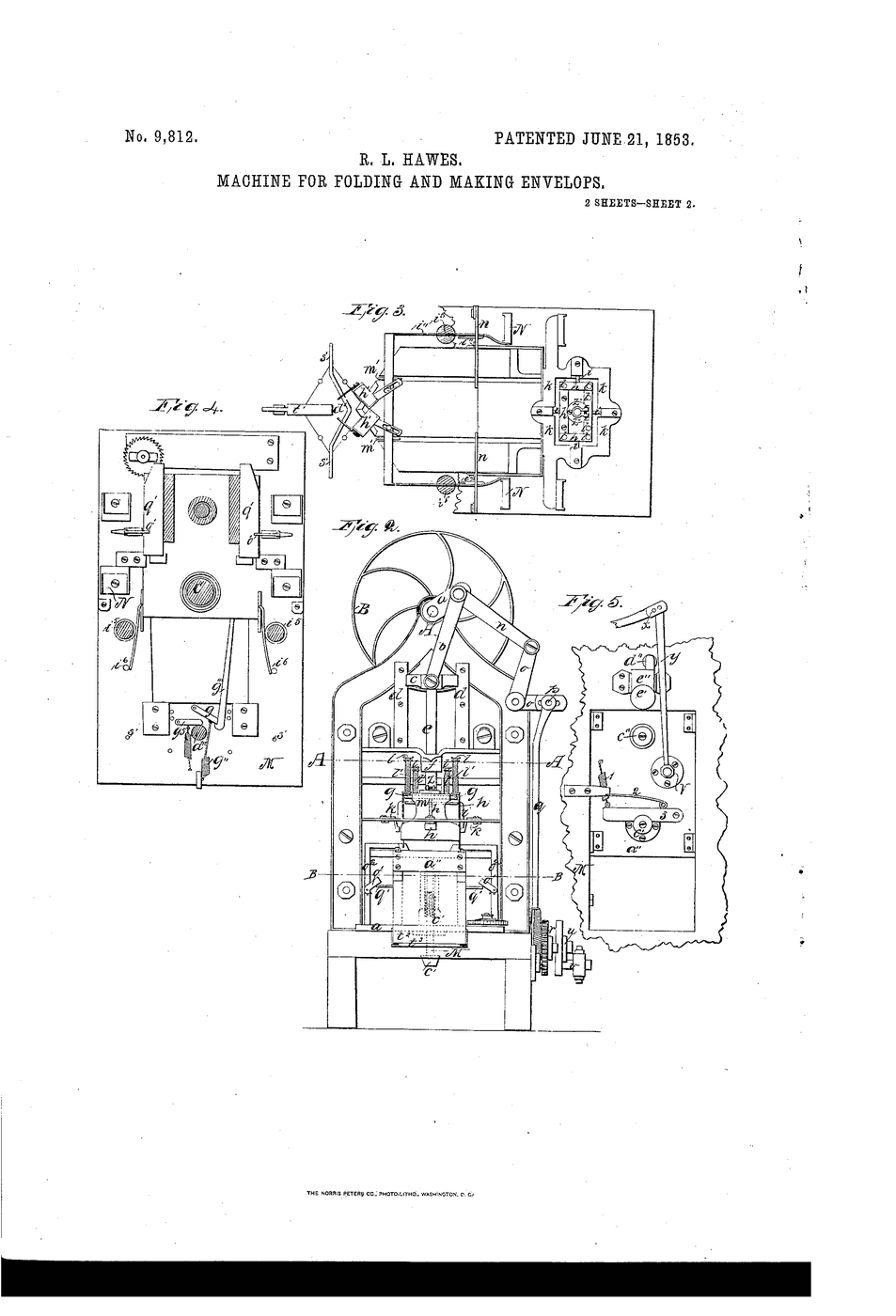
Envelope Folding Machine
di Martin
Papercraft
51
0
0
0
0
0
Forming a Clay Envelope for Tablet Security — Tamper-Proof Seal
di Clay
Ceramica e argilla
74
0
0
0
0
0

The Law of the Lever — Archimedes' Balance of Weight and Distance
di Martin
Fisica
63
0
0
0
1
0
Forging a Strap Iron Door Hinge — Medieval Hardware
di Forge
Lavorazione dei metalli
72
0
0
0
0
0
CC0 Pubblico dominio
Questo progetto è rilasciato sotto CC0. Sei libero di copiare, modificare, distribuire e utilizzare quest'opera per qualsiasi scopo, senza chiedere permesso.
Supporta il Maker acquistando prodotti tramite il suo progetto dove guadagna una Commissione Maker stabilita dai venditori, oppure crea una nuova iterazione di questo progetto e includilo come collegamento nel tuo progetto per condividere i ricavi.