ARTE
BELLEZZA E BENESSERE
MESTIERE
CULTURA E STORIA
DIVERTIMENTO
AMBIENTE
CIBO E BEVANDE
INGEGNERIA INVERSA
SCIENZE
SPORT
TECNOLOGIA
INDOSSABILI
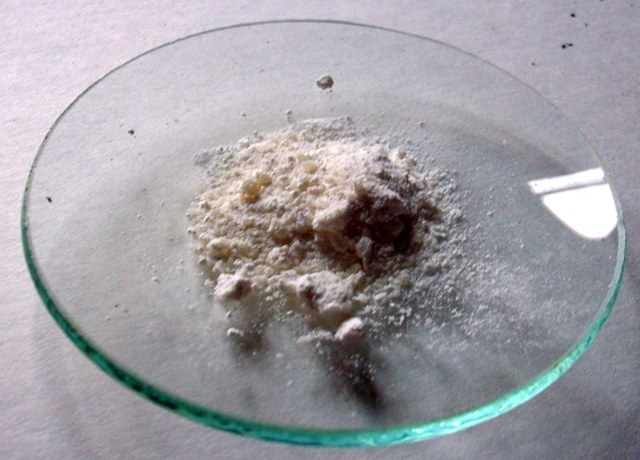


Tin Oxide: Tin Burnt in an Open Iron Pot
Tin oxide is made by burning tin in air: melted tin in an open pot slowly turns to a white powder. Andrew Ure (1839) describes the enamel makers' way, with a lead-tin alloy in a flat iron pot, the powder raked aside as it forms, then ground and washed fine. Done with pure tin it gives the milky white oxide used in glazes, opal glass and polishing.
The picture: tin(IV) oxide powder on a watch glass.
Intermedio
A day
Istruzioni
1
1
Melt the tin in an open pot
Melt the tin in an open pot
Melt the tin in a flat cast-iron pot over a charcoal fire. Leave the pot open to the air.
Materiali per questo passaggio:
 Lingotto di stagno1 kg
 Carbone di legna1 as required
Strumenti necessari:
 Bilancia a bracci
 Crogiolo di ghisa
 Forno a carbone di legna
 Pinze
 Guanti resistenti al calore
2
2
Burn it, rake the powder aside
Burn it, rake the powder aside
Raise the heat towards a dull red and keep stirring the surface. Rake the white crust to the sides as it forms, as Ure describes, and add tin as it is used up. Keep the heat as low as will do: Ure warns that too strong a fire fuses the powder and makes it hard to grind.
Strumenti necessari:
Crogiolo di ghisa Rastrello di ferro
 Schiumarola forataGuanti resistenti al calore
3
3
Pick out the metal
Pick out the metal
Let the powder cool. Sift it and pick out any beads of tin; Ure: no metal may be left in the oxide. Melt the beads back in.
Strumenti necessari:
 Setaccio fine
 Occhiali antispruzzo chimico
4
4
Grind and wash
Grind and wash
Grind the powder fine with water. Stir it up in a bucket of water, let the coarse part settle for a moment and pour off the milky water; let the fine part settle out of that, as Ure washed his. Dry it in a dish and store it closed.
Materiali per questo passaggio:
 Acqua10 litri
Strumenti necessari:
 Mortaio e pestello
 Macinello
 Secchio
 Capsula di evaporazione
 Barattolo di vetro
5
5
Tin to oxide
Tin to oxide
Caricamento del notebook Jupyter…
6
6
Limits
Limits
Burning tin in air is how tin oxide is made (Wikipedia); the pot, raking, low heat and washing are Ure's practice for the lead-tin calx of enamel makers, used here with pure tin by our choice. Tin oxidises more slowly than Ure's lead-rich alloy, so allow time.
Materiali
3- Segnaposto
- 1 as requiredSegnaposto
- 10 litriSegnaposto
Strumenti richiesti
14- Segnaposto
- Segnaposto
- Segnaposto
- Segnaposto
- Segnaposto
- Segnaposto
- Segnaposto
- Segnaposto
- Segnaposto
- Segnaposto
- Segnaposto
- Segnaposto
- Segnaposto
- Segnaposto
Questo progetto realizza
CC0 Pubblico dominio
Questo progetto è rilasciato sotto CC0. Sei libero di copiare, modificare, distribuire e utilizzare quest'opera per qualsiasi scopo, senza chiedere permesso.
Supporta il Maker acquistando prodotti tramite il suo progetto dove guadagna una Commissione Maker stabilita dai venditori, oppure crea una nuova iterazione di questo progetto e includilo come collegamento nel tuo progetto per condividere i ricavi.