ARTE
BELLEZZA E BENESSERE
MESTIERE
CULTURA E STORIA
DIVERTIMENTO
AMBIENTE
CIBO E BEVANDE
INGEGNERIA INVERSA
SCIENZE
SPORT
TECNOLOGIA
INDOSSABILI
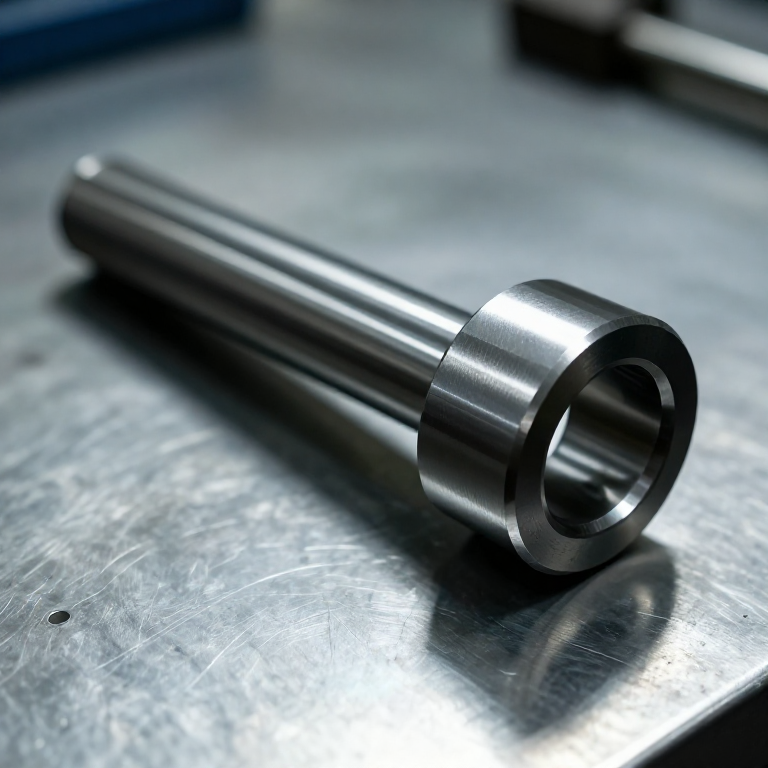


Tolerance and Fit: Clearance, Transition and Interference
A drawing that says 25 mm is asking for something impossible, and everyone knows it. What it means is 25 mm within some allowance — and the size of that allowance decides the cost of the part, so it is an engineering decision rather than a formality.
What it decides beyond cost is how the parts BEHAVE together. A shaft slightly smaller than its hole spins; slightly larger, it has to be pressed in and will never come out. The gap between those two cases is a few tens of micrometres, and inside it sits every bearing, every dowel, every keyed hub and every press-fitted bush ever made.
This rung is where the measurements of the previous ones acquire a purpose: you now know how to find the size, and this is how to know what size to want.
Avanzato
4 hours
Istruzioni
1
1
Write limits, not a size and a hope
Write limits, not a size and a hope
Every dimension that matters gets two numbers: the largest and the smallest the feature may be. 25.000/25.021 for a hole is a complete specification. '25 mm' is not a specification at all.
The difference between them is the TOLERANCE, and it is what you are really buying. Halving a tolerance does not halve the cost of a part, it roughly doubles it: tighter tolerances mean slower cuts, more passes, better machines, temperature control and more rejects.
So the first question on any dimension is not 'how accurate can we be' but 'how loose can we get away with'. Tolerance is a budget being spent, and the dimensions that do not touch anything should be spending nothing.
Strumenti necessari:
 Calcolatrice
2
2
Hole basis: fix the hole, vary the shaft
Hole basis: fix the hole, vary the shaft
By convention the hole is held at one size and the shaft is changed to produce the fit you want. In the ISO system that is the H hole — H7 being the common one — whose lower limit is exactly nominal.
The reason is practical. A hole is made by a tool of fixed size: a reamer or a drill produces the size it produces, and you own a set of them. A shaft is turned to whatever diameter you like by moving the cross-slide. So it is far cheaper to keep one reamer and turn the shaft three different ways than to buy three reamers.
Shaft basis exists and is used where the shaft is bought in as a fixed size — ground bar stock, or a drawn shaft carrying several different components along its length.
3
3
The three fits, in numbers
The three fits, in numbers
Caricamento del notebook Jupyter…
Strumenti necessari:
Calcolatrice4
4
Stack the tolerances before you trust the assembly
Stack the tolerances before you trust the assembly
Caricamento del notebook Jupyter…
Strumenti necessari:
Calcolatrice5
5
Make one of each and feel the difference
Make one of each and feel the difference
Turn three short shafts to sit in the same reamed hole: one a few hundredths under, one within a hundredth, one a few hundredths over. Measure each with the micrometer and the bore with the telescoping gauge, and write the numbers down before you try them.
Then try them. The clearance one falls through. The transition one goes with thumb pressure and holds its position. The interference one will not start without a press or a temperature difference.
Nothing on paper substitutes for that. Twenty micrometres is invisible and unimaginable until it is the difference between a part falling out of your hand and a part you cannot move, and after that the numbers on a drawing stop being abstract.
Materiali per questo passaggio:
 Barra di acciaio grezza3 pezzi
Strumenti necessari:
 Micrometro
 Serie di alesametri telescopici
Materiali
1- 3 pezziSegnaposto
Strumenti richiesti
3- Segnaposto
- Segnaposto
- Segnaposto
Blueprint correlati
Questi blueprint condividono conoscenze — tecniche, materiali o principi


CC0 Pubblico dominio
Questo progetto è rilasciato sotto CC0. Sei libero di copiare, modificare, distribuire e utilizzare quest'opera per qualsiasi scopo, senza chiedere permesso.
Supporta il Maker acquistando prodotti tramite il suo progetto dove guadagna una Commissione Maker stabilita dai venditori, oppure crea una nuova iterazione di questo progetto e includilo come collegamento nel tuo progetto per condividere i ricavi.