
अभ्रक संग्रहण झारखंड — खदान से मस्कोवाइट अभ्रक पत्तियाँ निकालना
手順
अभ्रक खनिज को समझना
अभ्रक खनिज को समझना
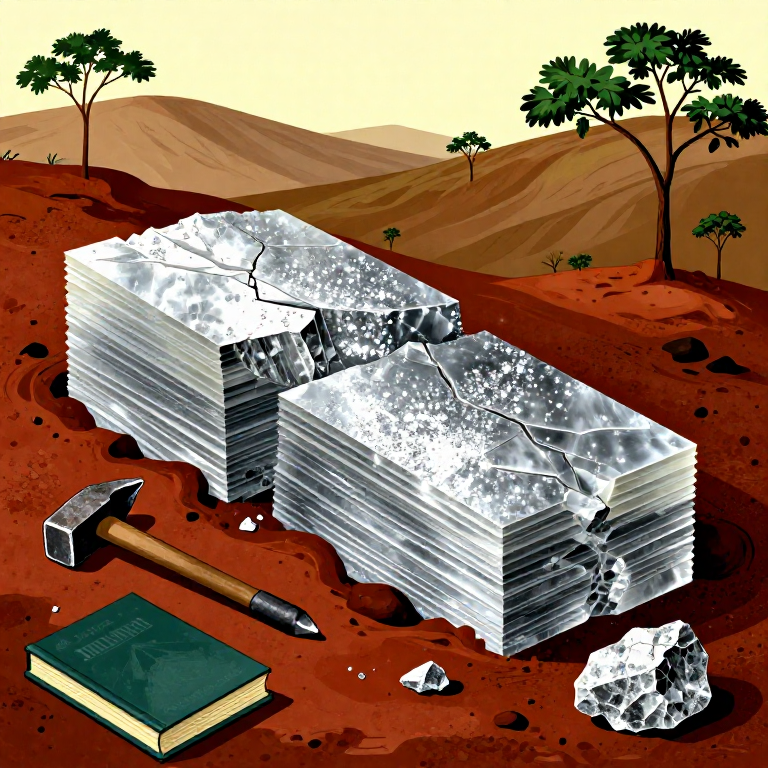
अभ्रक (mica) एक सिलिकेट खनिज समूह है जो परतदार (layered) संरचना में पाया जाता है। मस्कोवाइट (muscovite, KAl₂(AlSi₃O₁₀)(OH)₂) सबसे सामान्य और व्यावसायिक रूप से महत्वपूर्ण अभ्रक है। इसकी कठोरता मोह्स पैमाने पर 2-2.5 होती है। मस्कोवाइट पारदर्शी से अर्ध-पारदर्शी, रंगहीन से हल्का पीला होता है। इसका सबसे विशिष्ट गुण बेसल विदलन (basal cleavage) है — यह पतली-पतली लचीली पत्तियों (sheets) में आसानी से विभाजित होता है। अभ्रक विद्युत और ऊष्मा का कुचालक है, ८०० डिग्री सेल्सियस तक ऊष्मा सहन कर सकता है, और इसी कारण यह विद्युत उपकरणों, इन्सुलेशन और सौंदर्य प्रसाधनों में प्रयोग होता है। झारखंड-बिहार की अभ्रक पट्टी लगभग १५० किमी लम्बी और ३० किमी चौड़ी है।
पेग्मेटाइट शिराओं की पहचान
पेग्मेटाइट शिराओं की पहचान
अभ्रक पेग्मेटाइट चट्टानों में पाया जाता है — ये मोटे दानों वाली आग्नेय चट्टानें (coarse-grained igneous rocks) हैं जो ग्रेनाइटिक मैग्मा के धीमे शीतलन से बनती हैं। पेग्मेटाइट शिराएँ (veins) आसपास की चट्टानों से स्पष्ट रूप से भिन्न दिखती हैं — इनमें बड़े-बड़े क्वार्ट्ज़ (सफ़ेद), फ़ेल्डस्पार (गुलाबी-सफ़ेद) और अभ्रक (चमकीले चांदी जैसे) के क्रिस्टल होते हैं। कोडरमा, गिरिडीह और हज़ारीबाग ज़िलों में पेग्मेटाइट शिराएँ प्रायः उत्तर-दक्षिण दिशा में चलती हैं और ५-५० मीटर चौड़ी हो सकती हैं। अभ्रक-समृद्ध पेग्मेटाइट की पहचान: सतह पर चमकीली अभ्रक की टुकड़ियाँ बिखरी दिखती हैं और चट्टान में बड़ी चांदी जैसी 'पुस्तकें' (books) दिखाई देती हैं।
必要な工具:
 手持ちルーペ 10倍
 地質ハンマー
 地質調査図(コーデルマ・ギリディ地域)
खनन स्थल का सर्वेक्षण और तैयारी
खनन स्थल का सर्वेक्षण और तैयारी
संभावित खनन स्थल पर पहुँचकर पहले सतह का निरीक्षण करें। पेग्मेटाइट शिरा की दिशा, चौड़ाई और ढलान नोट करें। ऊपरी मिट्टी (overburden) की मोटाई अनुमान करें — यदि ३ मीटर से अधिक है तो उथली खदान (shallow mine) बनानी होगी। सतह पर बिखरे अभ्रक के टुकड़ों का आकार और गुणवत्ता जाँचें — यदि सतही टुकड़े बड़े और साफ़ हैं तो नीचे अच्छी गुणवत्ता की संभावना अधिक है। कार्यक्षेत्र को साफ़ करें — झाड़ियाँ, घास और ढीले पत्थर हटाएँ। छाया में उपकरण और पानी रखने की जगह बनाएँ।
このステップの材料:
 飲料水5 リットル
 防水シート1 個
必要な工具:
 マチェーテ(山刀)
 メジャー(巻尺)
सतही संग्रहण
सतही संग्रहण
पेग्मेटाइट शिरा के ऊपर और आसपास की मिट्टी में अभ्रक की पुस्तकें (books) और टुकड़े बिखरे मिलते हैं — ये अपक्षय (weathering) से चट्टान से अलग हुए होते हैं। सतही संग्रहण में हाथ से या छोटे गैंती (pickaxe) से ऊपरी मिट्टी खोदकर अभ्रक निकाला जाता है। ऊपरी ३०-६० सेमी मिट्टी में सबसे अधिक बिखरे टुकड़े मिलते हैं। प्रत्येक टुकड़े को सावधानी से उठाएँ — अभ्रक नरम होता है और लापरवाही से टूट सकता है। एकत्र किए गए अभ्रक को बाँस की टोकरी में रखें, एक-दूसरे पर दबाव न पड़ने दें। सतही अभ्रक प्रायः छोटे आकार (२-५ सेमी) का होता है और गुणवत्ता में मिश्रित होता है।
このステップの材料:
 竹の採集かご2 個
必要な工具:
 つるはし
つるはし 手持ち移植ごて
 綿手袋
綿手袋उथली खदान से अभ्रक निकालना
उथली खदान से अभ्रक निकालना
बड़ी और उच्च गुणवत्ता वाली अभ्रक पुस्तकें (books) चट्टान के अंदर से निकालनी पड़ती हैं। पेग्मेटाइट शिरा के साथ-साथ छेनी और हथौड़े से चट्टान तोड़ें। अभ्रक पुस्तकें प्रायः क्वार्ट्ज़ और फ़ेल्डस्पार के बीच जमी (pocket) होती हैं — इन जेबों (pockets) को ढूँढना ही कुशलता है। जब अभ्रक की जेब मिले तो उसके चारों ओर सावधानी से चट्टान हटाएँ — सीधे अभ्रक पर हथौड़ा न मारें क्योंकि यह टूट जाएगा। छेनी को अभ्रक और आसपास की चट्टान के बीच दरार में डालकर धीरे-धीरे अलग करें। अच्छी जेबों में अभ्रक पुस्तकें १५-३० सेमी व्यास की मिल सकती हैं, कभी-कभी ६० सेमी तक भी।
必要な工具:
 平たがね
平たがね 先のとがったたがね
 大ハンマー
大ハンマー 片手ハンマー
 密閉式保護ゴーグル
अभ्रक पुस्तकों को चट्टान से मुक्त करना
अभ्रक पुस्तकों को चट्टान से मुक्त करना
जब अभ्रक पुस्तक (book) चारों ओर से ढीली हो जाए, तो उसे सावधानी से बाहर निकालें। दोनों हाथों से पकड़कर हल्के-हल्के हिलाते हुए निकालें — झटका न दें। यदि पुस्तक अभी भी एक तरफ़ से जुड़ी है तो पतली छेनी से उस जोड़ को काटें। बड़ी पुस्तकें (२० सेमी से बड़ी) बहुत क़ीमती होती हैं — इन्हें बिल्कुल न तोड़ें। निकाली गई पुस्तकों को सपाट ज़मीन पर नरम सतह (बोरी या कपड़ा) पर रखें। अभ्रक पुस्तक कई सौ पतली पत्तियों का संचय होती है — एक मोटी पुस्तक में ५०-३०० पत्तियाँ हो सकती हैं। चट्टान से चिपके छोटे टुकड़े भी एकत्र करें — ये भी उपयोगी होते हैं।
このステップの材料:
 乾いた麻袋2 個
 木綿布1 個
必要な工具:
 薄い平のみ片手ハンマー
पुस्तकों को पत्तियों में विभाजित करना (Splitting)
पुस्तकों को पत्तियों में विभाजित करना (Splitting)
अभ्रक की पुस्तक को पत्तियों (sheets/films) में विभाजित करना एक कुशल कार्य है। पुस्तक को सपाट सतह पर रखें। किनारे पर पतले चाकू की नोक या सुई से दो परतों के बीच का विभाजन (cleavage plane) ढूँढें। अभ्रक का बेसल विदलन इतना उत्तम है कि परतें लगभग बिना प्रतिरोध के अलग होती हैं। चाकू की नोक को धीरे-धीरे आगे बढ़ाएँ और परत को उठाते जाएँ। पत्तियाँ ०.०२५ मिमी (25 माइक्रॉन) जितनी पतली विभाजित की जा सकती हैं। व्यावसायिक उपयोग के लिए मोटाई के अनुसार वर्गीकरण होता है: 'थिन' (0.018-0.05 मिमी) सबसे क़ीमती है। विभाजन शांत, धैर्यपूर्ण वातावरण में करें — हवा से पतली पत्तियाँ उड़ सकती हैं।
必要な工具:
 割り包丁
割り包丁 縫い針
縫い針 平らな作業台
अभ्रक पत्तियों की सफ़ाई
अभ्रक पत्तियों की सफ़ाई
विभाजित पत्तियों पर मिट्टी, धूल और अन्य खनिजों के कण चिपके हो सकते हैं। सूखे मुलायम कपड़े से धीरे-धीरे पोंछकर सफ़ाई करें। यदि कठोर गंदगी हो तो हल्के गुनगुने पानी में डुबोकर मुलायम ब्रश से साफ़ करें — अभ्रक पानी से क्षतिग्रस्त नहीं होता। सफ़ाई के बाद पत्तियों को छाया में सुखाएँ — सीधी धूप से पत्तियाँ मुड़ सकती हैं। किनारों पर चिपकी अन्य खनिजों (क्वार्ट्ज़, फ़ेल्डस्पार) की पपड़ी को कैंची से काटकर हटाएँ। स्वच्छ, पारदर्शी पत्तियाँ सबसे अधिक मूल्यवान होती हैं।
このステップの材料:
 蒸留水5 リットル
 柔らかい綿の布2 個
必要な工具:
 柔らかい毛のブラシ
 金切りばさみ
ट्रिमिंग — पत्तियों को आकार में काटना
ट्रिमिंग — पत्तियों को आकार में काटना
प्राकृतिक अभ्रक पत्तियाँ अनियमित आकार की होती हैं और किनारे दाँतेदार या फटे हो सकते हैं। व्यावसायिक उपयोग के लिए इन्हें नियमित आकार (आयताकार) में काटा जाता है — इसे ट्रिमिंग (trimming) कहते हैं। पत्ती को सपाट सतह पर रखें और कैंची से दोषपूर्ण किनारे, दरारें (cracks), और खनिज समावेशन (mineral inclusions) वाले भाग काट दें। अधिकतम संभव आयताकार क्षेत्र बचाने का प्रयास करें — बड़ा क्षेत्रफल = अधिक मूल्य। कटे हुए छोटे टुकड़े (scrap mica) फेंकें नहीं — ये पिसकर माइका पाउडर बनाने में उपयोग होते हैं। भारतीय मानक ब्यूरो (BIS) के अनुसार ट्रिम्ड अभ्रक का न्यूनतम आकार 2.5 सेमी x 2.5 सेमी होना चाहिए।
必要な工具:
金切りばさみ 定規平らな作業台
आकार के अनुसार वर्गीकरण (Size Grading)
आकार के अनुसार वर्गीकरण (Size Grading)
ट्रिम्ड अभ्रक पत्तियों को आकार (area) के अनुसार ग्रेड किया जाता है। भारतीय अभ्रक उद्योग का मानक वर्गीकरण: OEEM (Special) — 103 वर्ग सेमी से अधिक (सबसे क़ीमती, दुर्लभ), No. 1 — 64-103 वर्ग सेमी, No. 2 — 42-64 वर्ग सेमी, No. 3 — 23-42 वर्ग सेमी, No. 4 — 13-23 वर्ग सेमी, No. 5 — 6.5-13 वर्ग सेमी, No. 5½ — 3.2-6.5 वर्ग सेमी, No. 6 — 2.5-3.2 वर्ग सेमी (सबसे छोटा व्यावसायिक आकार)। प्रत्येक पत्ती को मापकर उपयुक्त ग्रेड की ढेरी में रखें। ग्रेड OEEM और No. 1 अत्यंत मूल्यवान होते हैं — एक बड़ी पत्ती का मूल्य सैकड़ों छोटी पत्तियों से अधिक हो सकता है।
必要な工具:
定規 等級分け型板(厚紙の抜き型)
गुणवत्ता जाँच (Quality Inspection)
गुणवत्ता जाँच (Quality Inspection)
आकार वर्गीकरण के बाद प्रत्येक पत्ती की गुणवत्ता जाँच आवश्यक है। गुणवत्ता मापदंड: पारदर्शिता (transparency) — पत्ती को प्रकाश के सामने रखकर देखें, स्वच्छ और पारदर्शी पत्तियाँ सर्वोत्तम हैं। रंग — रंगहीन (clear ruby muscovite) सबसे मूल्यवान, फिर हल्का हरा, फिर भूरा। दोष — दरारें (cracks), हवा के बुलबुले (air bubbles), खनिज समावेशन (mineral inclusions जैसे बायोटाइट, टूरमैलीन के काले धब्बे), और लहरदार सतह (waviness) — ये सभी ग्रेड कम करते हैं। भारतीय गुणवत्ता वर्गीकरण: V1 (clear, stain-free, flat) सबसे उच्च, V4 (heavily stained, buckled) सबसे निम्न।
必要な工具:
手持ちルーペ 10倍 ライトボックス
तौल और अभिलेखन
तौल और अभिलेखन
प्रत्येक ग्रेड और गुणवत्ता श्रेणी के अभ्रक को अलग-अलग तौलें। अभ्रक का मूल्य आकार, गुणवत्ता और वज़न के संयोजन से निर्धारित होता है — बड़ी, स्वच्छ पत्तियाँ प्रति किलोग्राम कई गुना अधिक मूल्यवान होती हैं। प्रत्येक बैच का विस्तृत अभिलेख रखें: खनन स्थल, तिथि, ग्रेड, गुणवत्ता श्रेणी (V1-V4), वज़न और पत्तियों की अनुमानित संख्या। औसतन एक दिन के हस्त-खनन से ५-१५ किलोग्राम कच्चा अभ्रक प्राप्त होता है, जिसमें से ट्रिमिंग के बाद ४०-६०% उपयोग योग्य पत्तियाँ बचती हैं।
必要な工具:
 デジタル計量器
 記録帳
記録帳पैकेजिंग और भंडारण
पैकेजिंग और भंडारण
अभ्रक पत्तियाँ अत्यंत नाज़ुक होती हैं — उचित पैकेजिंग के बिना यातायात में टूट जाती हैं। प्रत्येक ग्रेड की पत्तियों को अलग-अलग बंडल बनाएँ। पत्तियों को समतल रखकर एक के ऊपर एक रखें और बीच में मुलायम कागज़ की परत रखें। बंडल को मोटे गत्ते (cardboard) के बीच रखें और सूती कपड़े की पट्टी से बाँधें। बड़े बंडलों को लकड़ी के बक्से में रखें, किनारों पर अख़बार भरकर पत्तियों को हिलने से रोकें। स्क्रैप अभ्रक (छोटे टुकड़े और छीलन) को अलग बोरियों में भरें — ये पाउडर बनाने वाली इकाइयों को बेचे जाते हैं। भंडारण स्थान सूखा और हवादार होना चाहिए — नमी से अभ्रक पत्तियाँ फूल (delaminate) सकती हैं।
このステップの材料:
 段ボール板10 個
 綿の結束テープ5 メートル
 木製の梱包木箱1 個
 ジュート袋3 個
必要な工具:
 新聞紙(当て物)
 中性紙(薄葉紙)
सुरक्षा सावधानियाँ और पर्यावरण संरक्षण
सुरक्षा सावधानियाँ और पर्यावरण संरक्षण
अभ्रक खनन में सुरक्षा अत्यंत महत्वपूर्ण है। उथली खदान में हमेशा सहायक (support) लगाएँ — असमर्थित खदानें धँसने (collapse) का ख़तरा रखती हैं। चट्टान तोड़ते समय सुरक्षा चश्मा पहनें — पत्थर के टुकड़े उड़कर आँखों को नुकसान पहुँचा सकते हैं। सिलिका धूल (क्वार्ट्ज़ से) के लंबे समय तक संपर्क से सिलिकोसिस हो सकता है — धूल वाले कार्य में मास्क अवश्य पहनें। भारत में बाल श्रम अभ्रक खनन का एक गंभीर मुद्दा रहा है — केवल वयस्क श्रमिक ही खनन कार्य करें। खनन के बाद खदान क्षेत्र को समतल करें और पुनः वनस्पति लगाएँ। अभ्रक का अपशिष्ट (waste rock) व्यवस्थित ढेरों में रखें, जल स्रोतों से दूर।
このステップの材料:
 防じんマスク2 個
必要な工具:
密閉式保護ゴーグル 保護帽
保護帽材料
13- 5 リットルプレースホルダー
- 1 個プレースホルダー
- 2 個プレースホルダー
- 2 個プレースホルダー
- 1 個プレースホルダー
- 5 リットルプレースホルダー
- 2 個プレースホルダー
- 10 個プレースホルダー
- 5 メートルプレースホルダー
- 1 個プレースホルダー
- 3 個プレースホルダー
- 2 個プレースホルダー
- 5 リットルプレースホルダー
必要な工具
28- プレースホルダー
- プレースホルダー
- プレースホルダー
- プレースホルダー
- 1 vendor sell this, none ship to you yetプレースホルダー
- プレースホルダー
- プレースホルダー
- プレースホルダー
- プレースホルダー
- プレースホルダー
- プレースホルダー
- プレースホルダー
- プレースホルダー
- プレースホルダー
- プレースホルダー
- プレースホルダー
- プレースホルダー
- プレースホルダー
- プレースホルダー
- プレースホルダー
- プレースホルダー
- inspectionプレースホルダー
- プレースホルダー
- プレースホルダー
- プレースホルダー
- プレースホルダー
- プレースホルダー
- プレースホルダー
この設計図で作るもの

CC0 パブリックドメイン
このブループリントはCC0で公開されています。許可を求めずに、自由にコピー、修正、配布、あらゆる目的で使用できます。
メイカーを応援するには、ブループリント経由で製品を購入してください。メイカーには メイカーコミッション がベンダーにより設定されています。または、このブループリントの新しいイテレーションを作成し、自分のブループリントにコネクションとして含めて収益を共有できます。