アート
美容とウェルネス
工芸
文化と歴史
エンターテインメント
環境
食品と飲料
リバースエンジニアリング
科学
スポーツ
テクノロジー
ウェアラブル
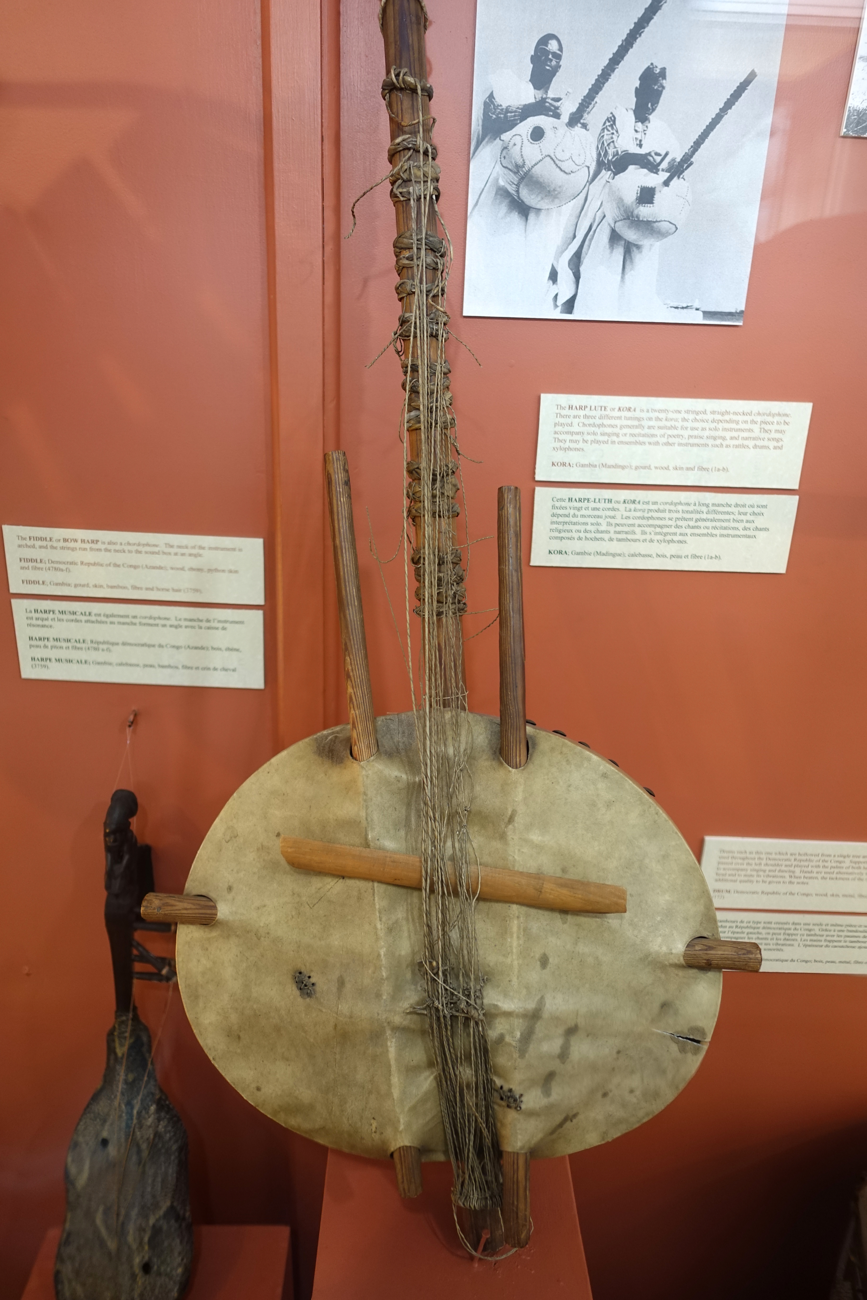
Redpath Museum, McGill University · Public Domain


Building a Kora — The West African Harp-Lute
Build a kora: the great 21-string harp-lute of the Mande griots — a huge calabash gourd faced with skin, a tall notched bridge, and strings running in TWO parallel rows up a long neck, plucked with the thumbs and forefingers. A serious maker build in the harp-lute, part harp and part lute.
中級者
Several hours over several sessions
手順
1
1
Half harp, half lute
Half harp, half lute
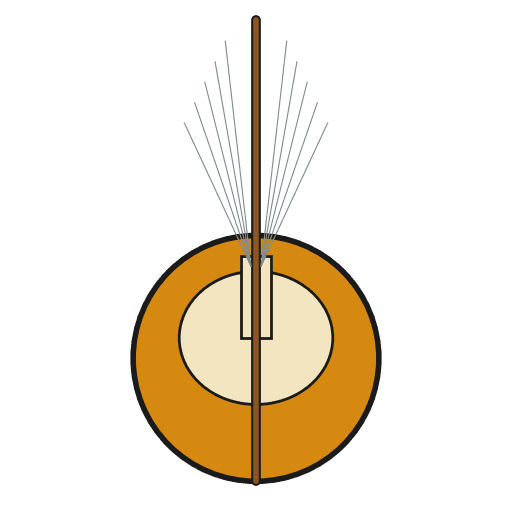
The kora is a 21-string harp-lute of the West African griots. A huge gourd faced with skin is the body; a long neck holds the strings, which run in two parallel rows and are plucked with the thumbs and forefingers.
2
2
Prepare the gourd body
Prepare the gourd body
Take a large calabash gourd and cut a wide flat opening across one side — the biggest gourd you can find, for a deep, full sound.
このステップの材料:
 熟したひょうたん1 個
必要な工具:
 スロイドナイフ
3
3
Face it with skin
Face it with skin
Stretch cow-skin rawhide drum-tight over the flat opening and lash it down. This skin is the soundboard that radiates the strings.
このステップの材料:
 生皮(ローハイド)1 個
 マニラ麻ひも1 個
4
4
Fit the neck
Fit the neck
Drive a long, straight hardwood neck right through the gourd, sticking out both ends. Two hand-posts either side of the neck give the player something to hold.
このステップの材料:
 木ダボ棒1 個
必要な工具:
 目打ち(キリ)
5
5
Stand the tall bridge
Stand the tall bridge
Stand a tall wooden bridge upright on the skin with a row of notches down EACH edge — the strings will split into two rows, left and right, one for each thumb.
必要な工具:
スロイドナイフ6
6
String it in two rows
String it in two rows
Run twenty-one strings from the base up over the notched bridge and to the neck, eleven in the left row and ten in the right, each held by a sliding leather tuning ring or a peg.
このステップの材料:
 鋼製ピアノ線 0.032 インチ1 個
 糸巻き(ペグ)9 個
7
7
Tune and play
Tune and play
Tune the two rows so they interleave into a scale, then pluck with the thumbs and forefingers of both hands, the left and right rows answering each other.
8
8
Compendium — the harp-lute
Compendium — the harp-lute
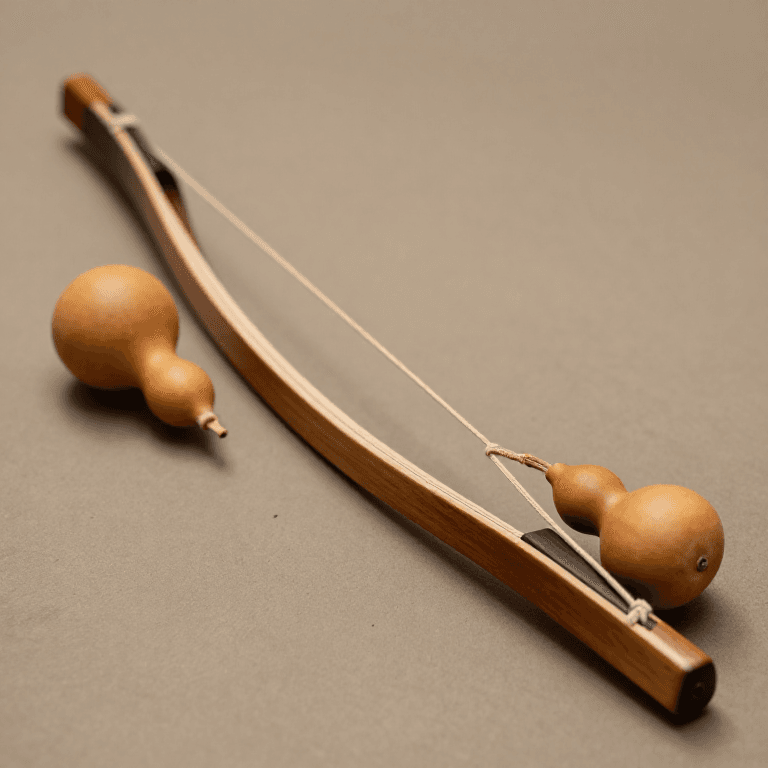
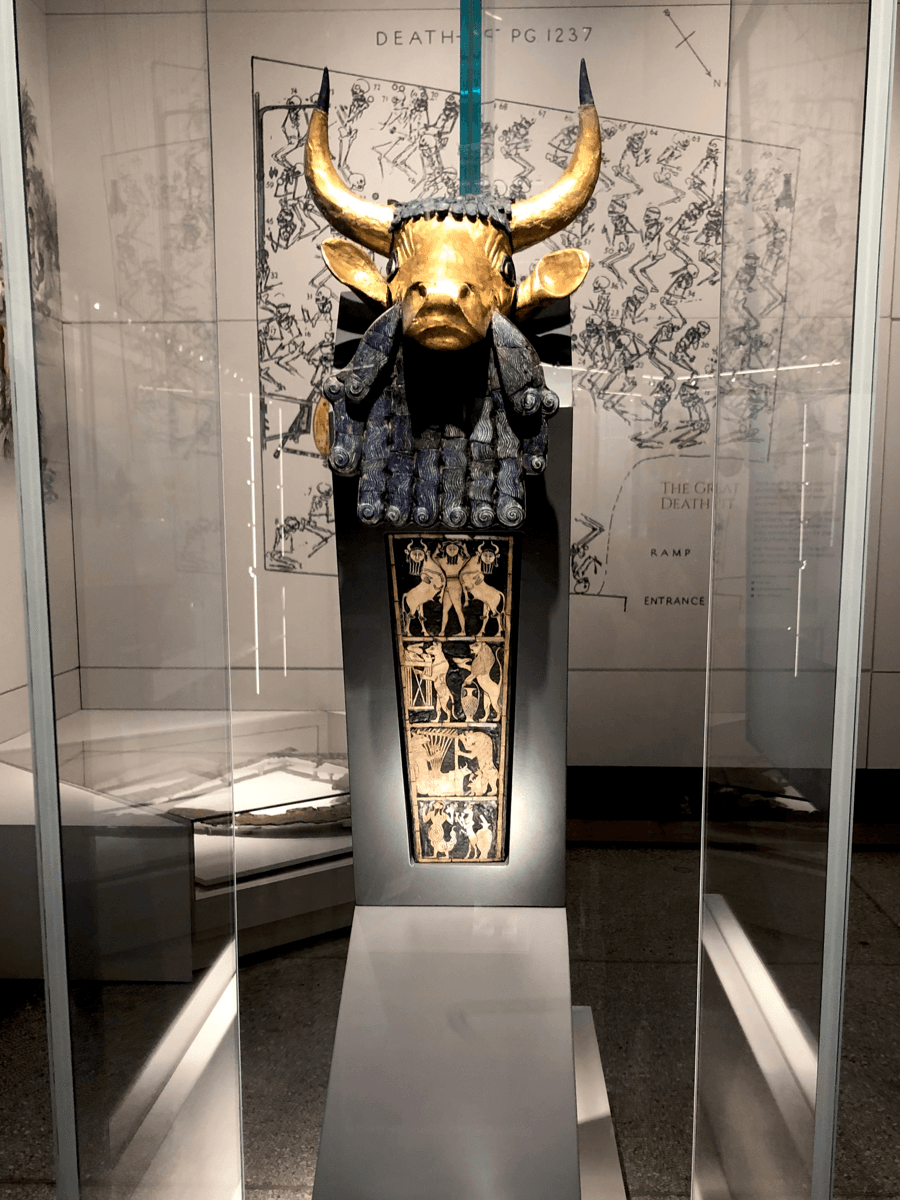
The kora is a 'harp-lute', and its clever bridge is why. On a true harp, each string runs at its own angle straight from a soundboard to a neck, one string per note; on a lute, a few strings run parallel over a bridge and along a neck. The kora does both at once: its strings run parallel like a lute, but they pass over a TALL bridge notched down both edges, so they leave the bridge in two flat planes, one on the left and one on the right — effectively two little harps sharing one body, one for each thumb. Each string is a single fixed note (the kora, like a harp, is not stopped or fretted — you simply pluck the string you want), and the two interleaved rows let the player weave fast, rippling patterns with just thumbs and forefingers. The sound is radiated by a stretched skin over a giant calabash gourd, exactly the drum-like resonator idea of the ektara and the banjo, scaled up. Strings obey the same rule as the musical bow — tension, length and mass set the pitch — and the kora belongs with the lyre of Ur and every soundbox-and-strings instrument, the branch of the family that keeps one string per note. It is the instrument of the Mande griots (jeliw), the hereditary musician-historians of West Africa.
材料
6- 1 個プレースホルダー
- 1 個プレースホルダー
- 1 個プレースホルダー
- 1 個プレースホルダー
- プレースホルダー
- 9 個プレースホルダー
この設計図で作るもの
関連ブループリント
これらのブループリントは知識を共有しています — 技術、材料、原理
CC0 パブリックドメイン
このブループリントはCC0で公開されています。許可を求めずに、自由にコピー、修正、配布、あらゆる目的で使用できます。
メイカーを応援するには、ブループリント経由で製品を購入してください。メイカーには メイカーコミッション がベンダーにより設定されています。または、このブループリントの新しいイテレーションを作成し、自分のブループリントにコネクションとして含めて収益を共有できます。