

アート
美容とウェルネス
工芸
文化と歴史
エンターテインメント
環境
食品と飲料
グリーンフューチャー
リバースエンジニアリング
科学
スポーツ
テクノロジー
ウェアラブル
Making Blister Steel by Cementation — Carburizing Wrought Iron into Steel
Balin

作成者

Balin

25. 6月 2026US
3
0
0
1
0

Making Blister Steel by Cementation — Carburizing Wrought Iron into Steel

Wrought iron bends but will not hold an edge; cast iron holds an edge but shatters. Steel — iron with just the right sliver of carbon — does both, and for centuries the great problem of metalworking was how to make it reliably. The cementation process, used across Europe from the 1600s, was the first method to manufacture steel in quantity from ordinary wrought iron bars.

The idea is to add carbon to solid iron without ever melting it. Bars of wrought iron are packed in powdered charcoal inside a sealed stone chest and roasted for a week at a bright red heat. Over those days, carbon slowly creeps out of the charcoal and diffuses into the surface of the iron, turning the skin into steel. Gas trapped under the surface raises little blisters across the bars — which is why the product is called blister steel.

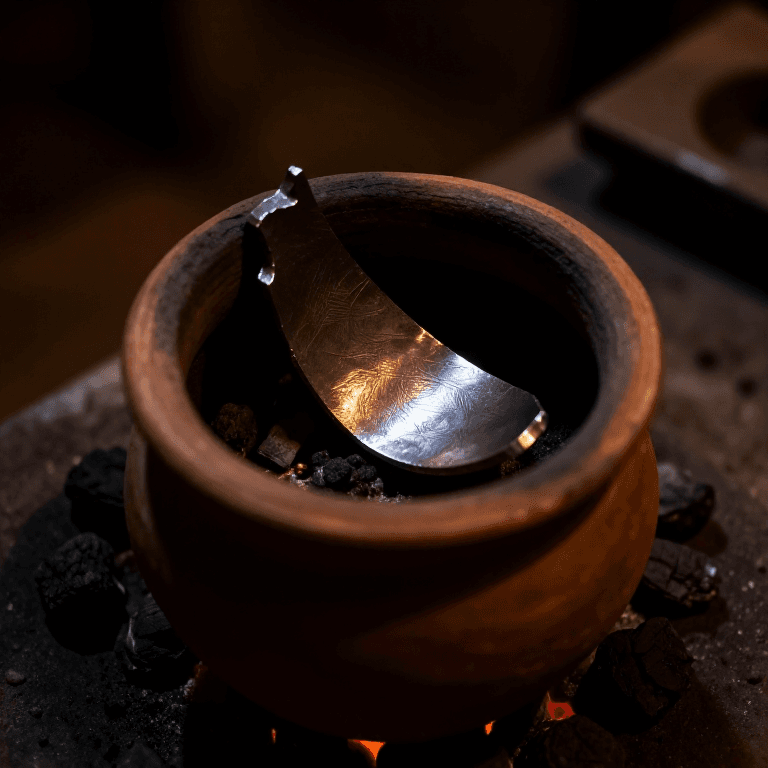
Blister steel is uneven, carbon-rich at the surface and soft in the core, so smiths refined it further: forge-welding and folding it into shear steel, or melting it in crucibles into perfectly uniform cast steel. But cementation was the foundation — the step that first made steel an industrial material rather than a rare treasure.

上級者
7-10 days of continuous firing plus several days to heat and cool

手順

1

Understand cementation

Steel is iron with a small, controlled amount of carbon. Cementation adds that carbon to solid wrought iron by diffusion — the metal is never melted. Heat and time let carbon atoms migrate from charcoal into the iron, converting the surface into steel.
2

Select wrought iron bars

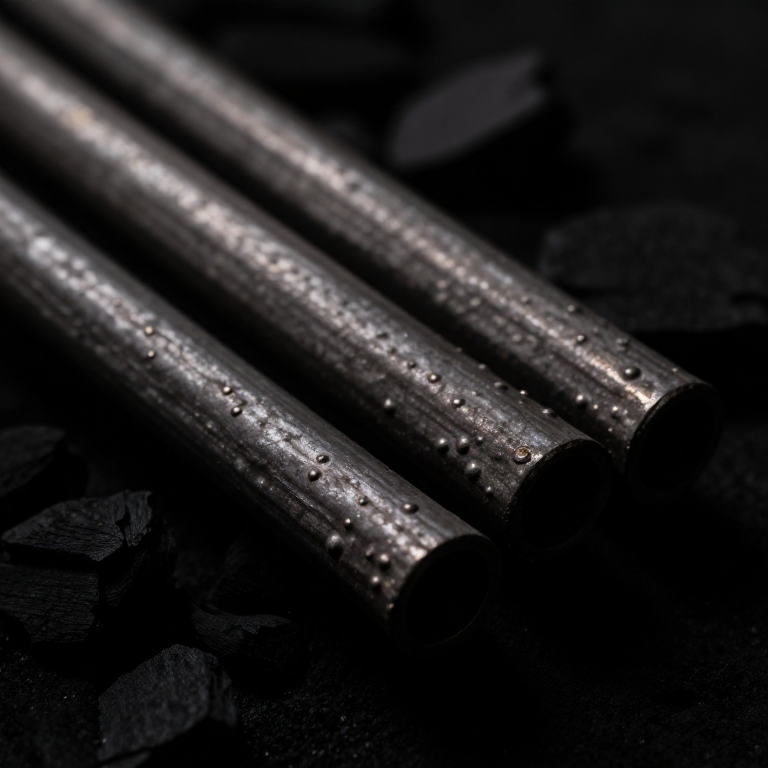
Start with flat bars of good low-carbon wrought iron, the cleaner the better. Thin bars carburize through more evenly than thick ones, since the carbon must diffuse inward from the surface over the whole firing.

このステップの材料:

Wrought Iron BarsWrought Iron Bars20 kg
3

Build the cementation chest

Build a long sealed box of sandstone or firebrick — the cementation chest — set inside a coal-fired furnace that can surround it with even heat for many days. The chest must hold its contents sealed away from the open flame and air.

このステップの材料:

FirebrickFirebrick60

必要な工具:

TrowelTrowel
4

Crush the charcoal

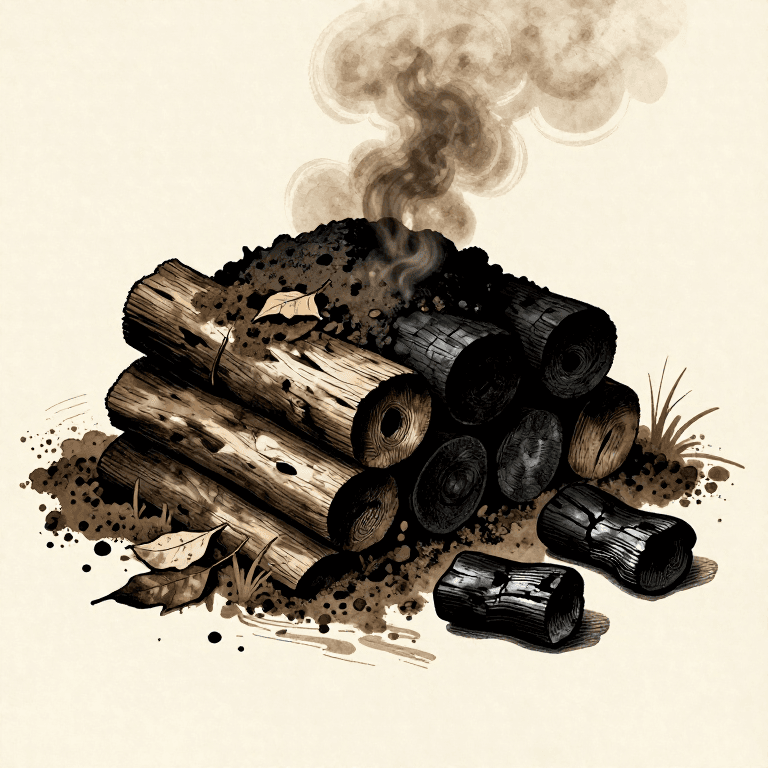
Crush hardwood charcoal into coarse powder. This is the carbon source — the more intimate the contact between charcoal and iron surface, the faster and more even the carburizing. Some smiths add a little wood ash or salt to speed the carbon transfer.

このステップの材料:

CharcoalCharcoal15 kg

必要な工具:

HammerHammer
5

Pack iron and charcoal in layers

Lay a bed of charcoal in the chest, then alternate layers of iron bars and packed charcoal so every bar is fully buried in carbon with none touching another. Complete contact with charcoal on all faces gives even carburizing.
6

Seal the chest with clay

Lute the lid shut with a thick coat of wet clay to exclude air. This seal is critical: any oxygen reaching the hot charcoal would burn it away and decarburize the iron instead of carburizing it.

このステップの材料:

ClayClay10 kg
7

Fire at red heat for days

Bring the furnace to a bright red heat, around 1000 degrees Celsius, and hold it there continuously for seven to ten days. The iron stays solid throughout — this is a slow diffusion, not a melt, and it cannot be rushed with higher heat.

このステップの材料:

Bituminous CoalBituminous Coal200 kg
8

Let the carbon diffuse

Over the days of firing, carbon migrates out of the charcoal and into the iron, penetrating deeper the longer it is held. This builds a carbon gradient: a hard high-carbon case at the surface grading to softer iron in the core of each bar.
9

Recognise the blisters

Gas generated within the metal pushes up the surface into small blisters across each bar. These blisters are the visible sign that carburizing has happened and give blister steel its name. Test bars were sometimes pulled to judge when the heat was complete.

必要な工具:

TongsTongs
10

Cool slowly and open

Stop the fire and let the sealed chest cool slowly over several days before breaking the clay seal. Slow cooling prevents thermal cracking and lets you recover the bars intact for inspection and refining.

必要な工具:

TongsTongs
11

Refine into shear steel

Because the carbon is uneven, smiths improved blister steel by cutting the bars, stacking them, forge-welding the pile, and drawing it out — sometimes twice. This piling and welding evens the carbon through the bar and produces tougher, more uniform shear steel for tools.

必要な工具:

HammerHammer
12

Test that it is steel

Heat a small piece to red and quench it in water. Unlike the original wrought iron, hardened blister steel becomes glass-hard and will skate a file — the definitive proof that carbon has turned the iron into steel, ready for edge tools or for remelting into cast steel.

このステップの材料:

WaterWater5 リットル

材料

6

必要な工具

3

接続ブループリントの材料

関連ブループリント

これらのブループリントは知識を共有しています — 技術、材料、原理
CC0 パブリックドメイン

このブループリントはCC0で公開されています。許可を求めずに、自由にコピー、修正、配布、あらゆる目的で使用できます。

メイカーを応援するには、ブループリント経由で製品を購入してください。メイカーには メイカーコミッション がベンダーにより設定されています。または、このブループリントの新しいイテレーションを作成し、自分のブループリントにコネクションとして含めて収益を共有できます。

ディスカッション

(0)

ログイン してディスカッションに参加

コメントを読み込み中...