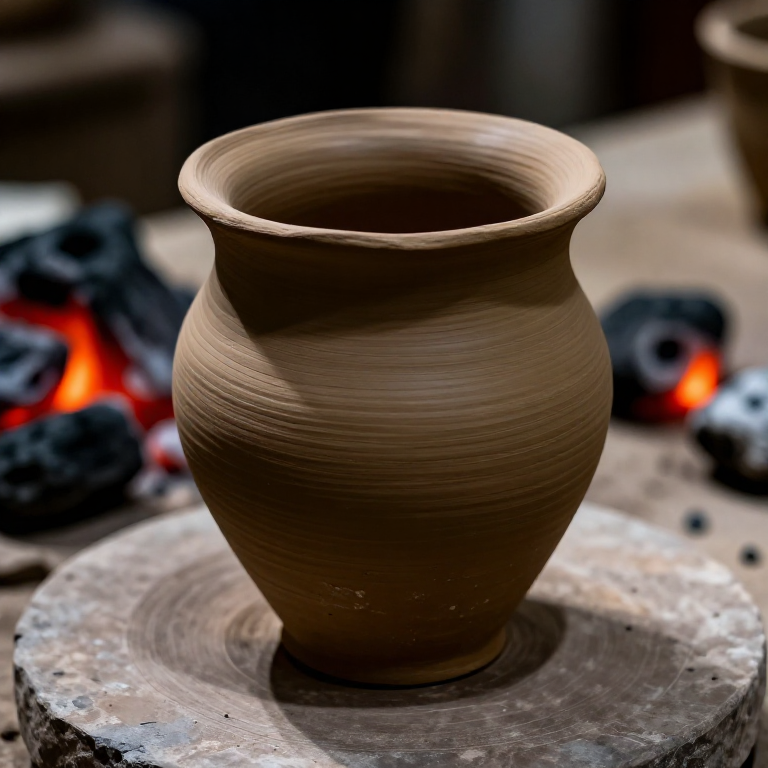


Making a Clay Crucible for Smelting — The Vessel That Holds Molten Metal
The clay crucible is the most essential tool in early metallurgy — a hand-formed vessel of refractory clay and grog that can withstand the 1,100 °C temperatures needed to melt copper and bronze. Without it, smelting is impossible.
This blueprint follows the Bronze Age method of mixing local clay with crushed pottery (grog) to create a thermal-shock-resistant vessel. The grog opens the clay body, allowing steam to escape during firing instead of shattering the crucible. The thick walls and tapered form channel heat inward while the pouring lip allows controlled transfer of molten metal into moulds.
Every bronze tool, weapon, and ornament of the ancient world began inside a vessel like this one.
手順
Collect and prepare the clay
Collect and prepare the clay
このステップの材料:
 耐火粘土2 kg
Crush fired pottery into grog
Crush fired pottery into grog
このステップの材料:
 シャモット(焼成陶片の粉砕物)500 g
Mix the crucible body
Mix the crucible body
このステップの材料:
 石英砂200 g
 水500 ml
必要な工具:
 平らな石板
平らな石板 木の撹拌棒
木の撹拌棒Wedge the clay to remove air
Wedge the clay to remove air
Form the base
Form the base
Build up the walls with coils
Build up the walls with coils
Smooth and compress the walls
Smooth and compress the walls
必要な工具:
 なめらかな石
Form the pouring lip
Form the pouring lip
Thicken the base and lower walls
Thicken the base and lower walls
Dry the crucible slowly
Dry the crucible slowly
Pre-heat near a fire
Pre-heat near a fire
Fire the crucible in a kiln
Fire the crucible in a kiln
Inspect and test
Inspect and test
材料
5- 2 kgプレースホルダー
- 500 gプレースホルダー
- 200 gプレースホルダー
- 500 mlプレースホルダー
- 1 個プレースホルダー
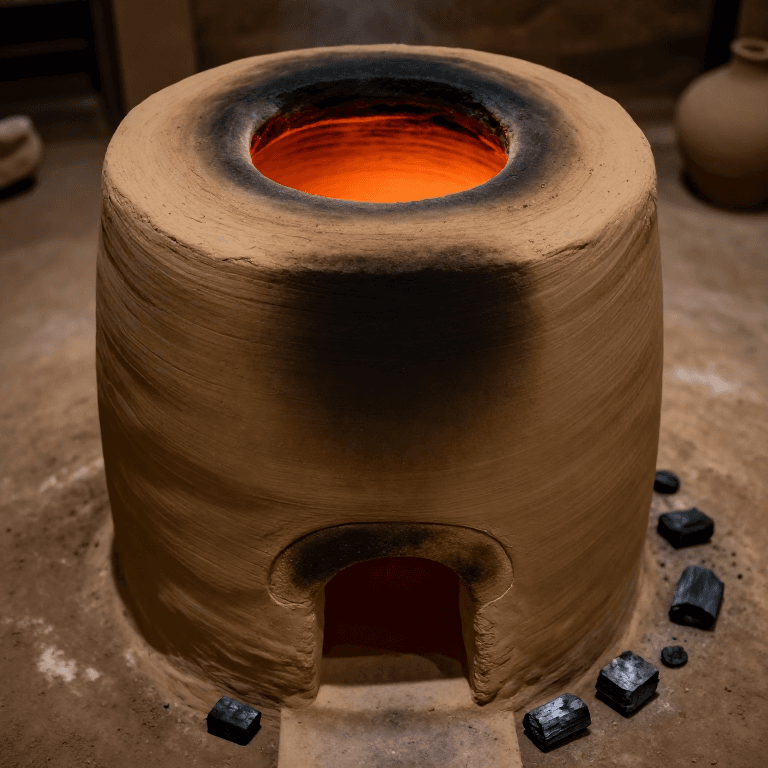
関連ブループリント
これらのブループリントは知識を共有しています — 技術、材料、原理
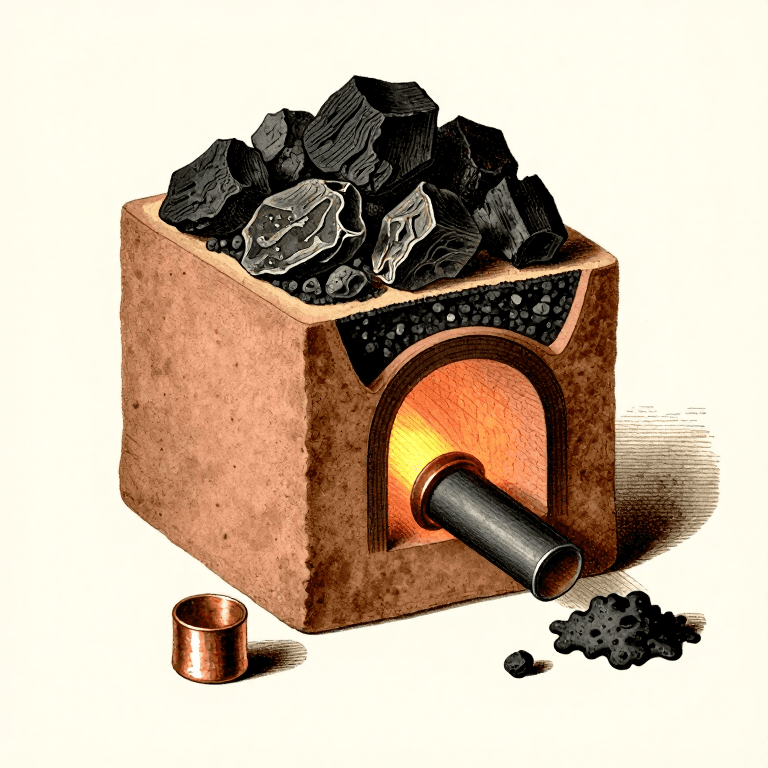

CC0 パブリックドメイン
このブループリントはCC0で公開されています。許可を求めずに、自由にコピー、修正、配布、あらゆる目的で使用できます。
メイカーを応援するには、ブループリント経由で製品を購入してください。メイカーには メイカーコミッション がベンダーにより設定されています。または、このブループリントの新しいイテレーションを作成し、自分のブループリントにコネクションとして含めて収益を共有できます。