コラボレーション
アート
美容とウェルネス
工芸
文化と歴史
エンターテインメント
環境
食品と飲料
リバースエンジニアリング
科学
スポーツ
テクノロジー
ウェアラブル
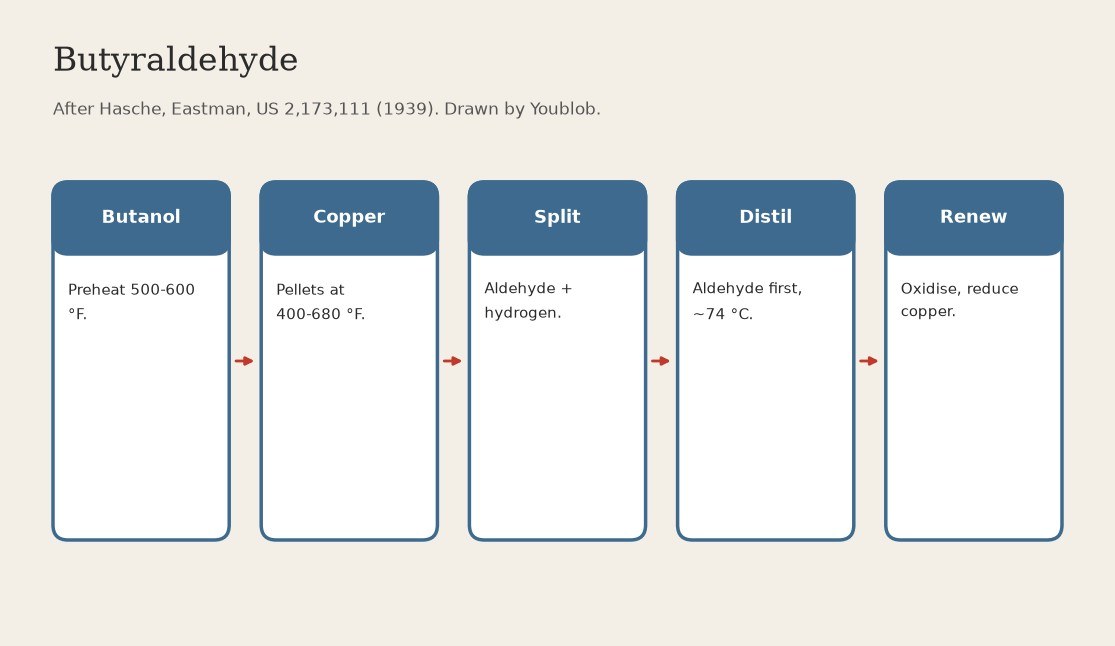


Butyraldehyde: Butyl Alcohol Dehydrogenated over Copper Pellets at 400-680 °F (Hasche, Eastman, US 2,173,111)
Hot copper pulls two hydrogen atoms off butyl alcohol and leaves butyraldehyde. Hasche's catalyst is copper made from blown, water-quenched cuprous oxide, in dust-free pellets that can be burnt clean and reduced again when they tire.
Result: butyraldehyde, distilled off from the unchanged alcohol.
Source: Hasche, US 2,173,111 (Eastman Kodak, 1939), claims 6, 9 and 12. His worked run is for propyl alcohol; conversion for butanol is not given. Picture drawn by Youblob.
上級者
1 day
手順
1
1
Pack the copper catalyst
Pack the copper catalyst
Fill a tube with dust-free copper pellets made from cuprous oxide blown from molten copper and quenched in water (2-5 mesh in claim 17).
必要な工具:
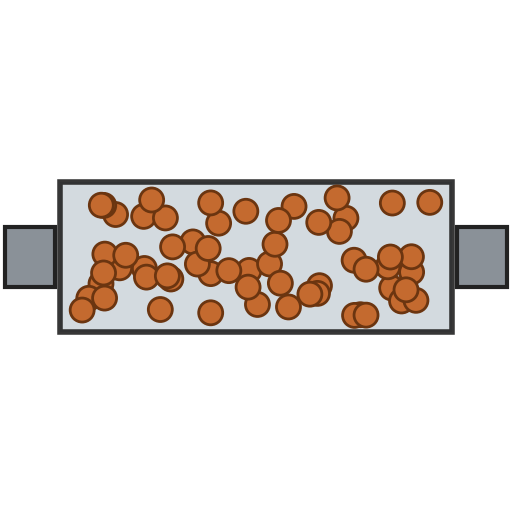 銅触媒ペレット
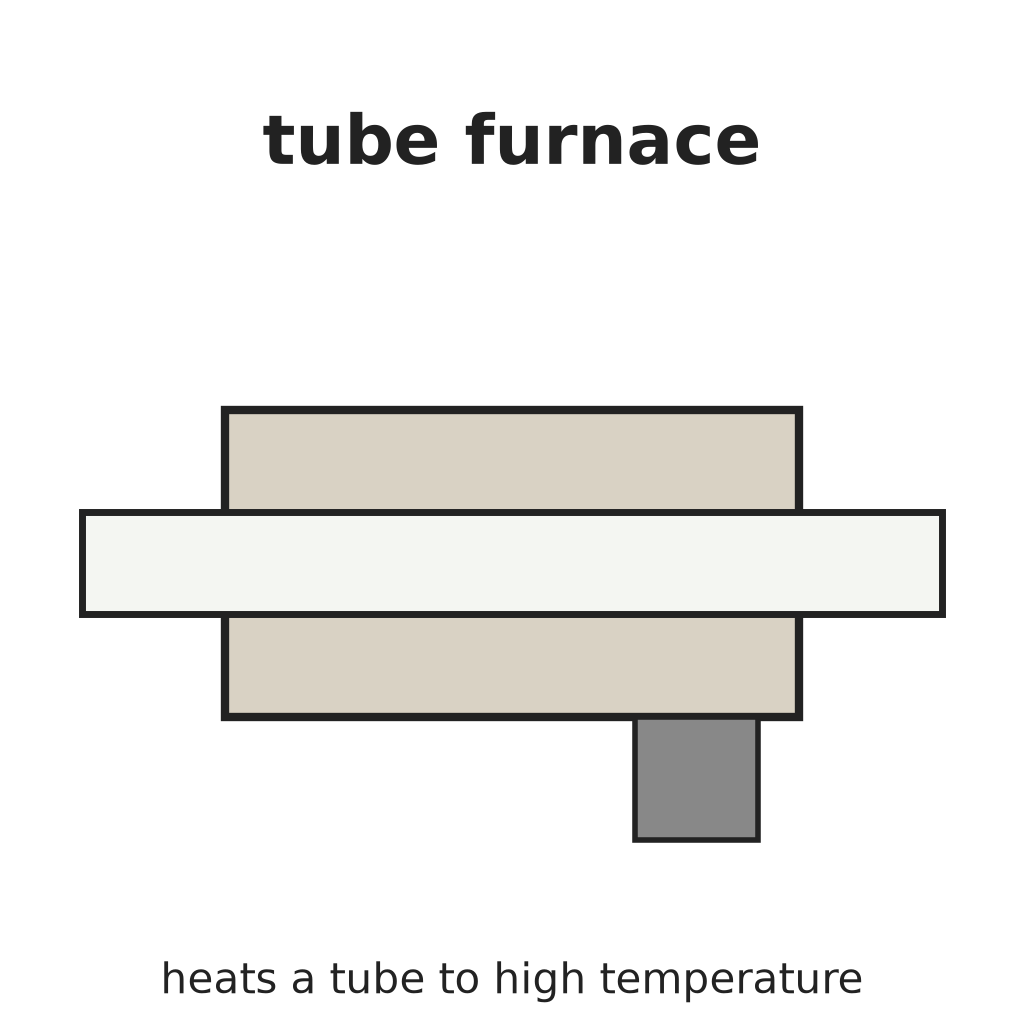 管状炉
2
2
Preheat the butyl alcohol
Preheat the butyl alcohol
Vaporise and preheat the butyl alcohol to about 500-600 °F.
このステップの材料:
 n-ブタノール1 as required
必要な工具:
管状炉3
3
Pass it over the copper at 400-680 °F
Pass it over the copper at 400-680 °F
Lead the hot vapour over the catalyst held at about 400-680 °F. It splits into butyraldehyde and hydrogen; part of the alcohol passes unchanged.
必要な工具:
銅触媒ペレット管状炉 凝縮器のコイル
4
4
Distil off the aldehyde
Distil off the aldehyde
Condense the products and distil: butyraldehyde comes over first (it boils near 74 °C); distil the alcohol back in the presence of alkali and return it.
必要な工具:
 分留の蒸留器
 水酸化ナトリウム 10 % 水溶液
5
5
Reactivate the spent copper
Reactivate the spent copper
When the catalyst slows, flush it, oxidise it at about 600-800 °F, cool, and reduce it again with alcohol vapour at about 300-400 °F.
必要な工具:
銅触媒ペレット管状炉この設計図で作るもの
関連ブループリント
これらのブループリントは知識を共有しています — 技術、材料、原理
CC0 パブリックドメイン
このブループリントはCC0で公開されています。許可を求めずに、自由にコピー、修正、配布、あらゆる目的で使用できます。
メイカーを応援するには、ブループリント経由で製品を購入してください。メイカーには メイカーコミッション がベンダーにより設定されています。または、このブループリントの新しいイテレーションを作成し、自分のブループリントにコネクションとして含めて収益を共有できます。