アート
美容とウェルネス
工芸
文化と歴史
エンターテインメント
環境
食品と飲料
リバースエンジニアリング
科学
スポーツ
テクノロジー
ウェアラブル


Cotton Roving by Hand: Carded, Drawn and Lightly Twisted
Roving is cotton made ready to spin: the fibres combed parallel, drawn into a long strand and given just enough twist to hold together. Mills did it with carding engines, drawing frames and roving frames; Andrew Ure (1839) explains them by the hand cards they copied. This is the hand version, from ginned lint.
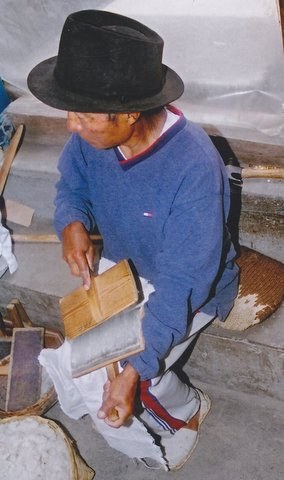
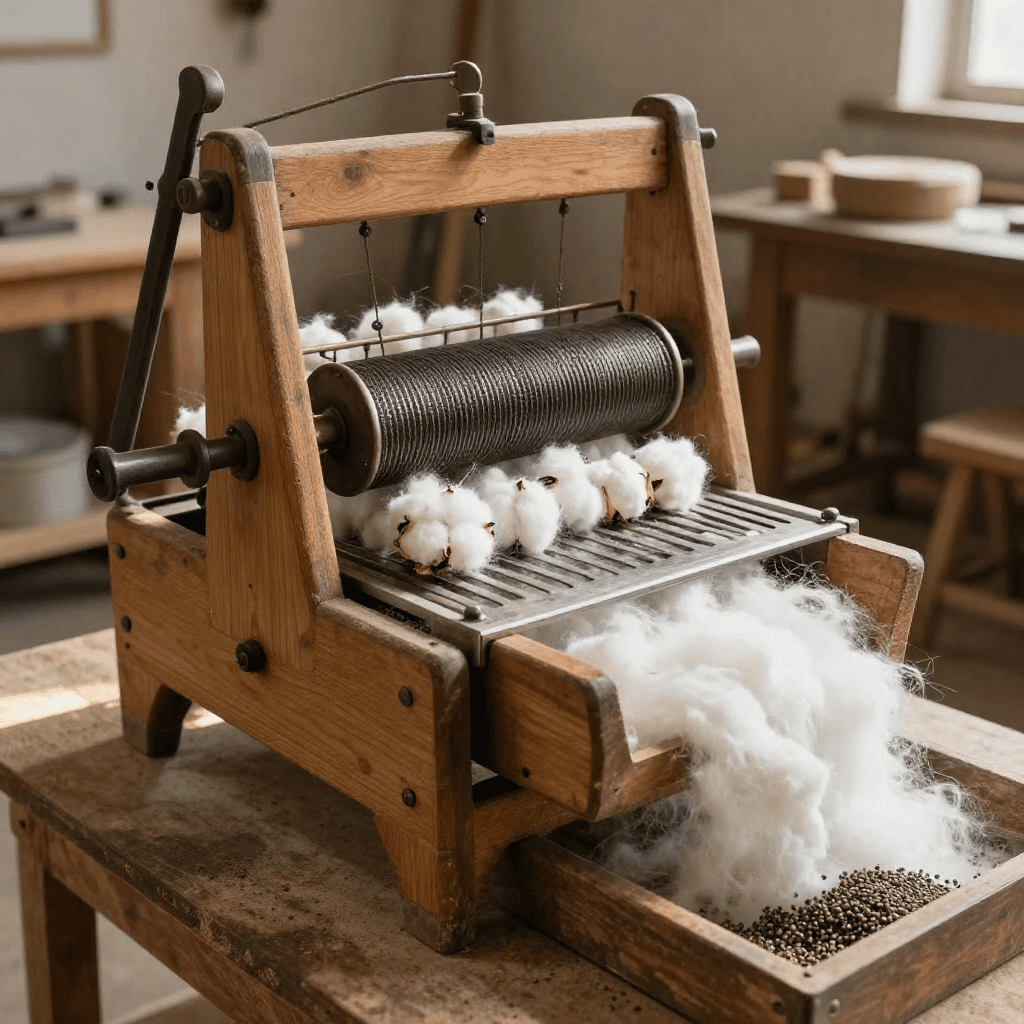
The picture: carding with a pair of hand cards in Ecuador.
初心者
An afternoon
手順
1
1
Load and card
Load and card
Spread a thin layer of lint on one hand card. Brush the other card across it, teeth against teeth, again and again until the fibres lie parallel.
このステップの材料:
 繰綿100 g
必要な工具:
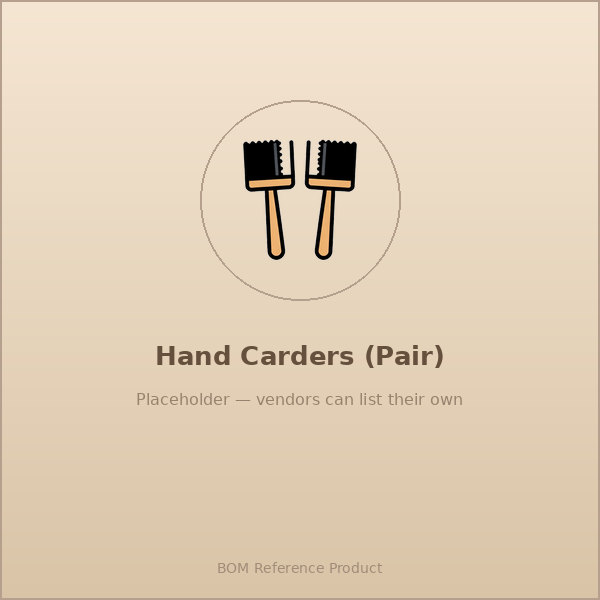 ハンドカーダー
2
2
Strip the card
Strip the card
Turn one card round so its teeth face the other way and draw it across: it lifts the whole layer off in one web (Ure's stripping position).
必要な工具:
ハンドカーダー3
3
Roll off a sliver
Roll off a sliver
Roll the stripped web off the card into a loose, untwisted rope: a sliver. Card the rest of the lint the same way.
必要な工具:
ハンドカーダー4
4
Double, draw and add a little twist
Double, draw and add a little twist
Lay two or three slivers together and draw them out to the length of one; repeat a few times to even out thick and thin places, as the mills' drawing frames did. Draw the strand to about pencil thickness. It now pulls apart easily, so give it a little twist with a slowly turning spindle and wind it on loosely. That twist is what makes it roving.
必要な工具:
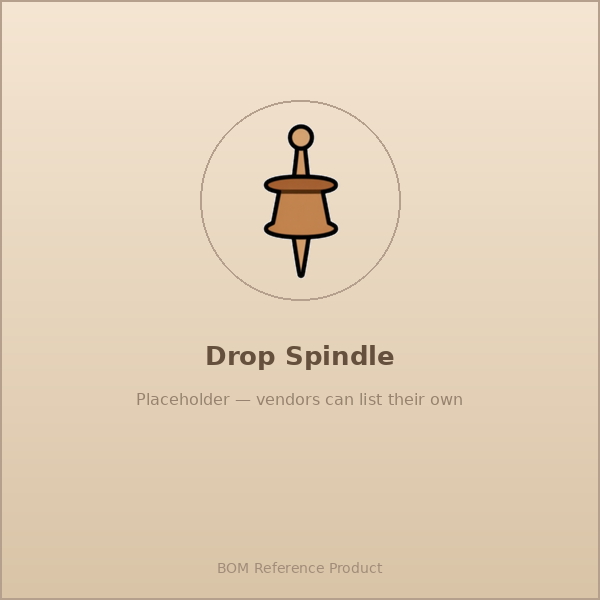 手紡ぎ用スピンドル
この設計図で作るもの

関連ブループリント
これらのブループリントは知識を共有しています — 技術、材料、原理
CC0 パブリックドメイン
このブループリントはCC0で公開されています。許可を求めずに、自由にコピー、修正、配布、あらゆる目的で使用できます。
メイカーを応援するには、ブループリント経由で製品を購入してください。メイカーには メイカーコミッション がベンダーにより設定されています。または、このブループリントの新しいイテレーションを作成し、自分のブループリントにコネクションとして含めて収益を共有できます。