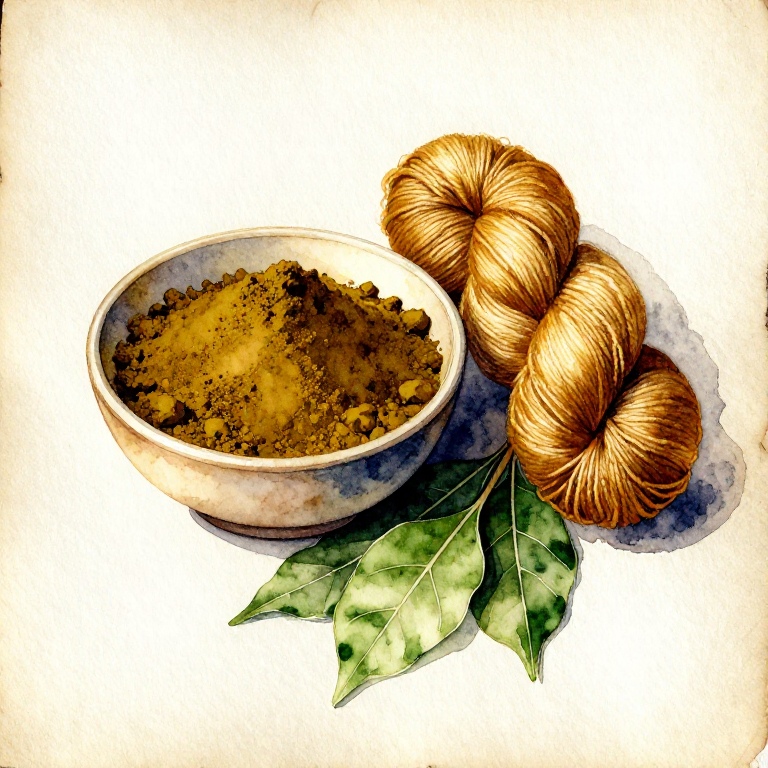


Dyeing with Henna — The Lawsone Pigment That Colours Fibre, Skin, and Hair
Henna (Lawsonia inermis) is a small tree native to North Africa, the Middle East, and the Indian subcontinent. Its leaves contain lawsone (2-hydroxy-1,4-naphthoquinone), a pigment that bonds permanently to protein — whether that protein is keratin in hair and skin, or the amino acid chains in wool and silk. Henna has been used for body art and textile dyeing since at least 3000 BCE. Traces of henna-dyed linen have been found in Egyptian tombs, and the Indian textile tradition has used henna as both a standalone dye and a base layer for centuries.
On wool, henna produces warm golden-brown to rich cinnamon, depending on concentration and pH. The colour is more muted than henna's vivid orange on skin because textile fibres absorb the pigment differently than keratin. Nonetheless, henna is one of the most permanent plant dyes — lawsone bonds covalently to protein fibres in an irreversible Michael addition reaction. Once set, the colour is virtually impossible to wash out.
Henna textile dyeing differs from body art application. For textiles, the dried leaf powder is simmered in acidified water (citric acid or vinegar) to extract lawsone into solution, rather than applied as a paste. The wool is then immersed in this dye bath. Henna works best on protein fibres (wool, silk) — on cellulose (cotton, linen) the colour is weak without a tannin pre-treatment.
手順
Weigh the henna powder
Weigh the henna powder
Use 50-100% WOF of henna leaf powder. For 100 g of wool, weigh out 50-100 g of powder. Use body-art quality (BAQ) henna powder — this is finely ground from fresh leaves with high lawsone content. Avoid compound hennas or henna products marketed for hair that contain metallic salts or synthetic dyes. True henna powder is a fine, green-brown powder that smells earthy and herbaceous. The fresher the powder, the higher the lawsone content and the stronger the dye.
このステップの材料:
 ヘナの粉(BAQ 等級)80 g
必要な工具:
 デジタルキッチンスケール
Make a henna paste and rest for dye release
Make a henna paste and rest for dye release
Mix the henna powder with enough warm water (40°C) to form a thick paste — roughly the consistency of yoghurt. Add 2 tablespoons of white vinegar or lemon juice to lower the pH to around 5.0-5.5. Stir until smooth and cover with plastic wrap. Let the paste rest at room temperature for 8-12 hours. This rest period is critical — lawsone releases slowly from the cell walls of the powdered leaves. The paste will darken from green-brown to a deep reddish-brown as lawsone oxidises, indicating dye release is complete.
このステップの材料:
 掃除用ホワイトビネガー30 ml
Dissolve the paste into a dye bath
Dissolve the paste into a dye bath
After the overnight rest, add the henna paste to 4 litres of warm water in the dye pot and stir vigorously until the paste is fully dissolved. The water will turn a dark brownish-red. Some fine sediment is normal — henna powder does not dissolve completely. For the cleanest results, strain through muslin cloth to remove the coarsest plant particles, though many dyers leave the sediment in and strain after dyeing instead.
必要な工具:
 寸胴鍋
寸胴鍋 木製の混ぜ棒(スプーン)
Simmer the dye bath at 80°C for 30 minutes
Simmer the dye bath at 80°C for 30 minutes
Bring the dye bath to 80°C and hold for 30 minutes. Do not boil — lawsone degrades above 90°C. This simmering step completes the extraction of any remaining lawsone from the plant particles and activates the dye. The liquid will darken further to a deep reddish-brown. Stir occasionally to prevent the sediment from settling and scorching on the bottom of the pot.
必要な工具:
 調理用温度計
Dye alum-mordanted wool at 80°C for 60 minutes
Dye alum-mordanted wool at 80°C for 60 minutes
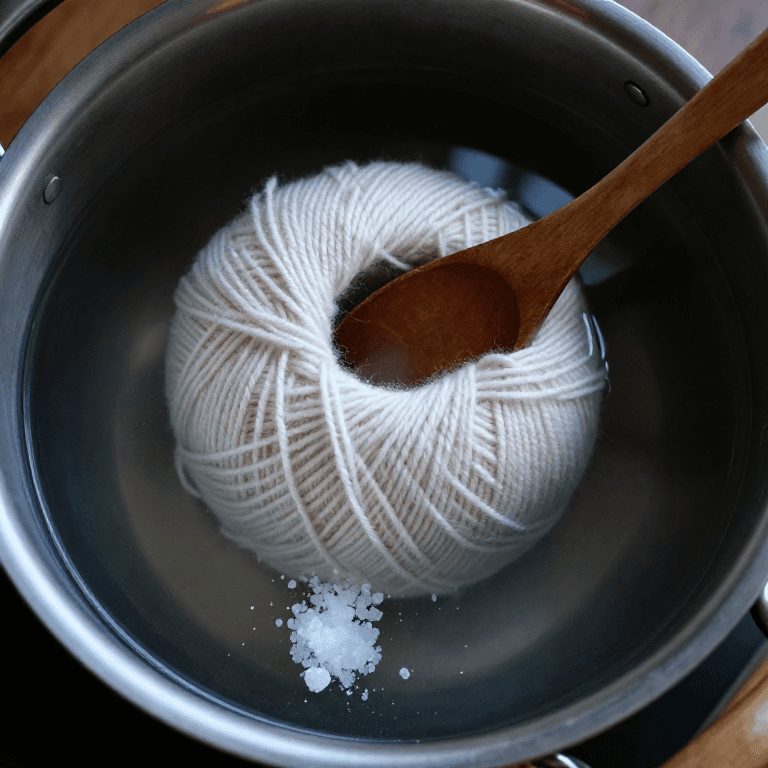
Pre-wet the alum-mordanted wool in lukewarm water for 15 minutes. Lower the wool into the henna dye bath at 60°C and raise slowly to 80°C. Hold for 60 minutes, turning the wool gently every 10 minutes. Henna dyes protein fibres through a Michael addition reaction — the lawsone molecule bonds covalently to the amino acids in wool. This makes the colour extremely permanent once set. The wool will turn a warm golden-brown to cinnamon, darker at higher concentrations. Without a mordant, the colour is slightly duller; alum produces the warmest, most vibrant tones.
このステップの材料:
 毛糸のかせ100 g
 ミョウバン(カリミョウバン)10 g
Cool overnight, rinse, and dry
Cool overnight, rinse, and dry
Turn off the heat and let the wool cool in the dye bath overnight. The colour will continue to develop and deepen during cooling — henna needs time for the lawsone-fibre bond to fully mature. Remove, squeeze gently, and rinse in lukewarm water. Some plant sediment may cling to the yarn — rinse thoroughly until the water runs clear. The final colour is a warm golden-brown to rich cinnamon. Henna-dyed wool has exceptional washfastness — the colour is essentially permanent on protein fibres. Lightfastness is moderate to good. Dry in shade.
材料
4- 80 gプレースホルダー
- 30 mlプレースホルダー
- 100 gプレースホルダー
- 10 gプレースホルダー
接続ブループリントの材料
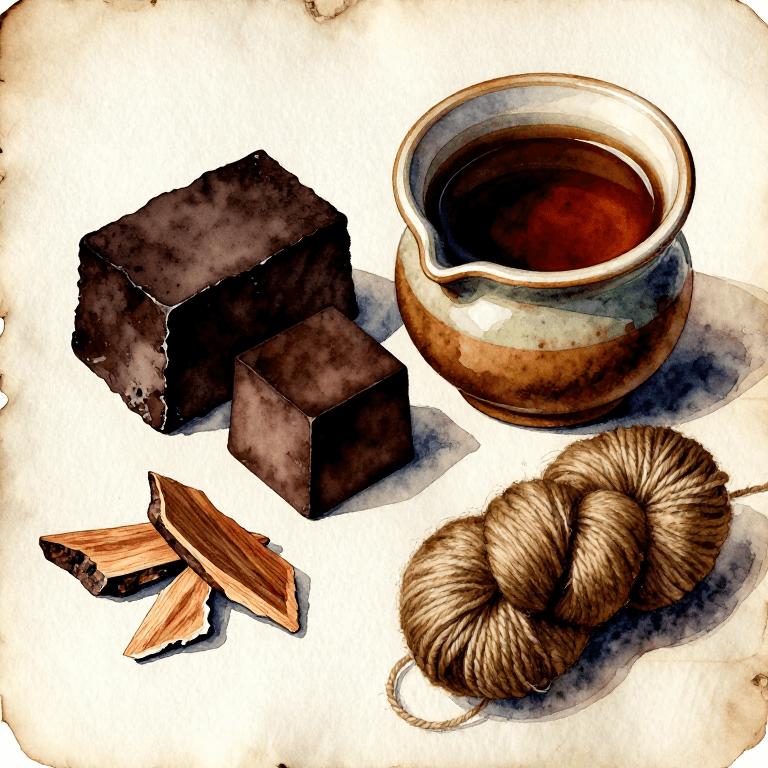
この設計図で作るもの

関連ブループリント
これらのブループリントは知識を共有しています — 技術、材料、原理
CC0 パブリックドメイン
このブループリントはCC0で公開されています。許可を求めずに、自由にコピー、修正、配布、あらゆる目的で使用できます。
メイカーを応援するには、ブループリント経由で製品を購入してください。メイカーには メイカーコミッション がベンダーにより設定されています。または、このブループリントの新しいイテレーションを作成し、自分のブループリントにコネクションとして含めて収益を共有できます。