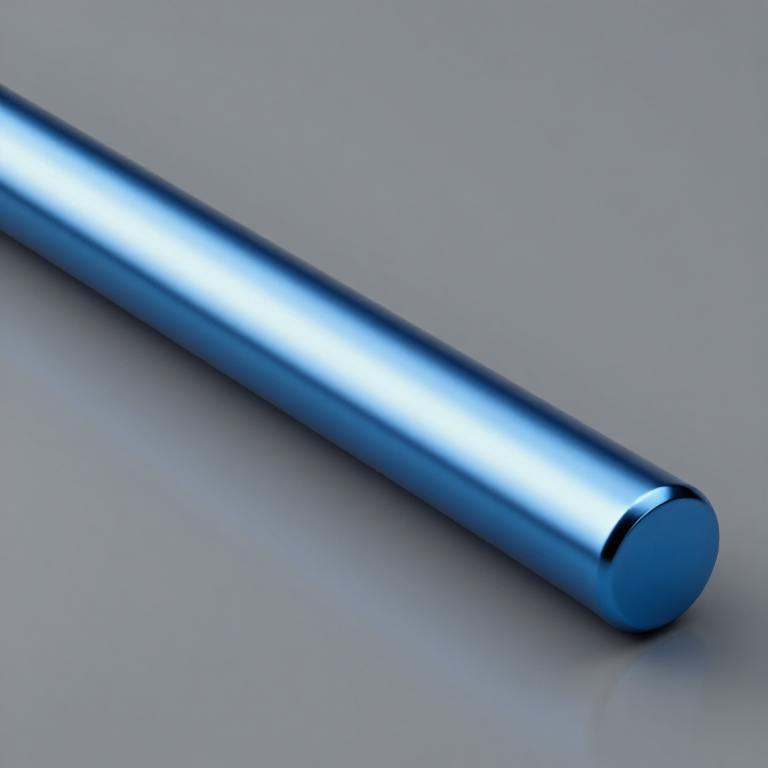


Chromium Plating
Nickel plating was already routine by 1900, and it had one flaw: nickel yellows and dulls as it oxidises. Chromium does not — it holds a blue-white mirror indefinitely and is far harder than nickel. Everyone knew that. Nobody could deposit it.
Chromium plates out of chromic acid, and a pure chromic acid bath simply does not work: it deposits nothing, or a grey powder that brushes off. Dozens of chemists failed on it for thirty years.
Colin G. Fink found the missing piece — a catalyst anion. A small, precisely controlled quantity of sulphate must be present, at roughly 100 parts chromic acid to 1 part sulphate. Too little and nothing deposits; too much and nothing deposits. The window is narrow and it is the entire invention. His patent is US 1,581,188, "Process of Electrodepositing Chromium and of Preparing Baths Therefor", filed 19 December 1925 and granted 20 April 1926, later assigned to United Chromium, Inc.
Within five years every American car carried chrome, and the 1930s look — chrome bumpers, chrome grilles, chrome trim — exists because of a ratio.
⚠ This process uses hexavalent chromium, a confirmed human carcinogen. It is documented here because it is historically decisive and because omitting dangerous processes leaves holes in the record — not because it should be attempted outside professional containment. Read the safety step before anything else.
この設計図で作るもの

CC0 パブリックドメイン
このブループリントはCC0で公開されています。許可を求めずに、自由にコピー、修正、配布、あらゆる目的で使用できます。
メイカーを応援するには、ブループリント経由で製品を購入してください。メイカーには メイカーコミッション がベンダーにより設定されています。または、このブループリントの新しいイテレーションを作成し、自分のブループリントにコネクションとして含めて収益を共有できます。