アート
美容とウェルネス
工芸
文化と歴史
エンターテインメント
環境
食品と飲料
グリーンフューチャー
リバースエンジニアリング
科学
スポーツ
テクノロジー
ウェアラブル
Building a Galilean Telescope — The Instrument That Changed Our View of the Universe
Astro

作成者

Astro

30. 5月 2026IS
1
0
0
4
0

Building a Galilean Telescope — The Instrument That Changed Our View of the Universe

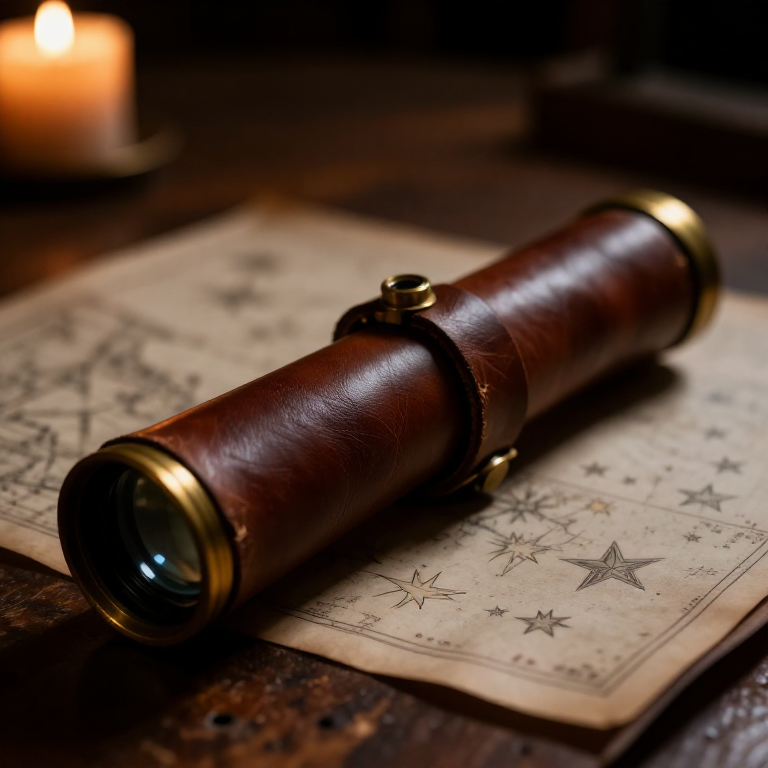
In 1609, Galileo Galilei built a telescope based on reports of a Dutch invention and turned it toward the sky — and nothing in astronomy was ever the same. Within months he discovered the craters and mountains of the Moon, the four largest moons of Jupiter, the phases of Venus, and the stars of the Milky Way. A Galilean telescope uses two lenses: a large convex (converging) objective lens at the front that gathers light and forms an image, and a smaller concave (diverging) eyepiece lens that intercepts the light before it comes to focus and produces an upright, magnified image. The magnification equals the focal length of the objective divided by the focal length of the eyepiece. Galileo's first telescope magnified about 8 times; his best achieved roughly 20 times. This blueprint builds a functional Galilean refracting telescope using two glass lenses mounted in a cardboard or wooden tube — simple enough to build in an afternoon, powerful enough to see Jupiter's moons and the craters of our Moon, exactly as Galileo did over four hundred years ago.

中級者
4-8 hours

手順

1

Understand the optics

A Galilean telescope uses two lenses. The objective lens is a large convex (double-convex or plano-convex) lens with a long focal length — typically 50-100 cm. It gathers light from a distant object and bends it toward a focus point. The eyepiece is a small concave (double-concave or plano-concave) lens with a short focal length — typically 5-10 cm — placed before the focal point of the objective. The concave eyepiece diverges the converging rays so they enter the eye as parallel beams, producing a magnified, upright image. The magnification is the ratio of the objective's focal length to the eyepiece's focal length: a 100 cm objective with a 5 cm eyepiece gives 20x magnification.
2

Select the objective lens

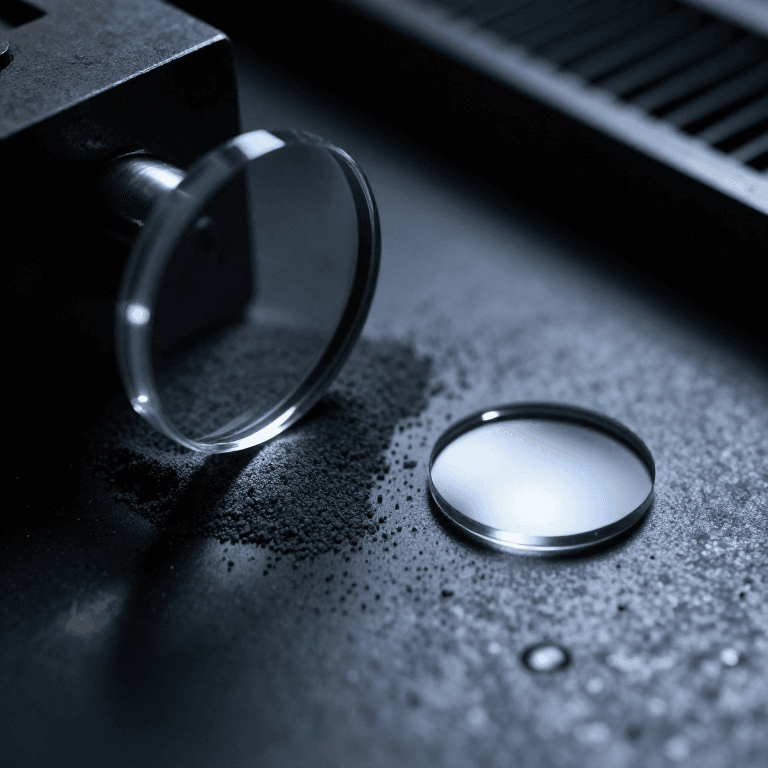
Choose a convex lens with a focal length between 50 and 100 cm and a diameter of at least 3-5 cm. Longer focal length gives higher magnification but requires a longer tube. To find the focal length, hold the lens up to a window and project an image of a distant object (a tree, a building) onto a white card behind the lens — the distance from the lens to the card when the image is sharpest is the focal length. A single-element lens will show chromatic aberration (colour fringing), just as Galileo's lenses did.

このステップの材料:

Convex LensConvex Lens1
3

Select the eyepiece lens

Choose a concave lens with a focal length between 5 and 15 cm. The shorter the focal length relative to the objective, the higher the magnification — but very high magnification with simple lenses gives a dim, blurry image. A good starting point is a concave lens of about 10 cm focal length with a 100 cm objective, giving 10x magnification. To measure the focal length of a concave lens, hold it close to a sheet of graph paper and measure how much the grid shrinks — then calculate from the magnification formula.

このステップの材料:

Concave LensConcave Lens1
4

Calculate the tube length

The distance between the two lenses must equal the focal length of the objective minus the focal length of the eyepiece. For a 100 cm objective and 10 cm eyepiece: tube length = 100 - 10 = 90 cm. This positions the concave eyepiece exactly where it intercepts the converging light before it reaches focus. If the tube is too long or too short, the image will be blurred — but slight adjustment (sliding the eyepiece in and out) allows focusing on objects at different distances.
5

Build the main tube

Roll stiff card or thin hardwood veneer into a tube slightly longer than the calculated lens separation. The tube's inner diameter should be just larger than the objective lens. Use wood glue to hold the seam, and wrap the outside with another layer of card for rigidity. Alternatively, use a pre-made cardboard mailing tube of the right diameter. The inside of the tube must be painted flat black to absorb stray light — any reflected light inside the tube washes out the image.

このステップの材料:

Hardwood BlockHardwood Block1
6

Build the sliding eyepiece tube

Make a shorter tube (about 15-20 cm long) that slides snugly inside or outside the main tube — this allows the eyepiece to move in and out for focusing. The fit must be tight enough to hold position but loose enough to slide with gentle pressure. Mount the concave eyepiece lens at the end of this tube, held in place by a cardboard ring or a small wooden retaining collar.
7

Mount the objective lens

Mount the convex objective lens at the front end of the main tube. Cut a cardboard disc with a circular hole slightly smaller than the lens diameter and glue it inside the tube as a retaining ring. Place the lens against this ring, then glue another retaining ring on the other side to hold the lens securely. The lens must be centred precisely in the tube — any tilt degrades the image. Use a thin cardboard washer around the lens to take up any slack.
8

Add an aperture stop

Cut a cardboard disc to fit inside the tube just in front of the objective lens, with a central hole about 2-3 cm in diameter. This aperture stop blocks light from passing through the outer edges of the lens, where aberrations are worst. Galileo discovered this trick — stopping down the objective lens dramatically improves image sharpness at the cost of some brightness. For daytime use, a smaller aperture (1.5 cm) gives sharper images; for nighttime stargazing, open it wider.
9

Paint the interior black

Disassemble the telescope and paint the entire inside surface of both tubes with flat black paint or ink. Any light that bounces off the inside walls reduces contrast and creates a hazy glow around bright objects. Flat black absorbs this scattered light. Let the paint dry completely before reassembling. Historical telescope makers lined their tubes with black-dyed paper or cloth.
10

First light — focus on a distant object

Point the telescope at a distant object — a church steeple, a mountain peak, or a ship on the horizon. Slide the eyepiece tube slowly in and out until the image snaps into sharp focus. The image should be upright (right-side up) and magnified. You may notice colour fringing around bright edges — this chromatic aberration is inherent to simple lenses and is exactly what Galileo saw. Adjust the aperture stop to find the best balance between brightness and sharpness.
11

Observe the Moon

On a clear night, point your telescope at the Moon. Even at 10x magnification, you will see what Galileo saw in January 1610 — the Moon is not a smooth, perfect sphere but a rugged world covered with craters, mountains, and flat dark plains (the maria). The shadows along the terminator (the line between the lit and dark halves) reveal the three-dimensional relief of the lunar surface. Galileo's sketches of the Moon were the first realistic depictions of another world.
12

Observe Jupiter and its moons

Find Jupiter in the night sky — it appears as a brilliant, steady point of light (unlike stars, which twinkle). Through your telescope, Jupiter shows as a small disc. On either side of the disc, you should see up to four tiny points of light in a rough line — these are the Galilean moons: Io, Europa, Ganymede, and Callisto. Watch them on successive nights and you will see them change position as they orbit Jupiter. This was Galileo's most revolutionary observation: here were objects clearly orbiting another body, proving that not everything orbits the Earth.

材料

3

接続ブループリントの材料

CC0 パブリックドメイン

このブループリントはCC0で公開されています。許可を求めずに、自由にコピー、修正、配布、あらゆる目的で使用できます。

メイカーを応援するには、ブループリント経由で製品を購入してください。メイカーには メイカーコミッション がベンダーにより設定されています。または、このブループリントの新しいイテレーションを作成し、自分のブループリントにコネクションとして含めて収益を共有できます。

ディスカッション

(0)

ログイン してディスカッションに参加

コメントを読み込み中...