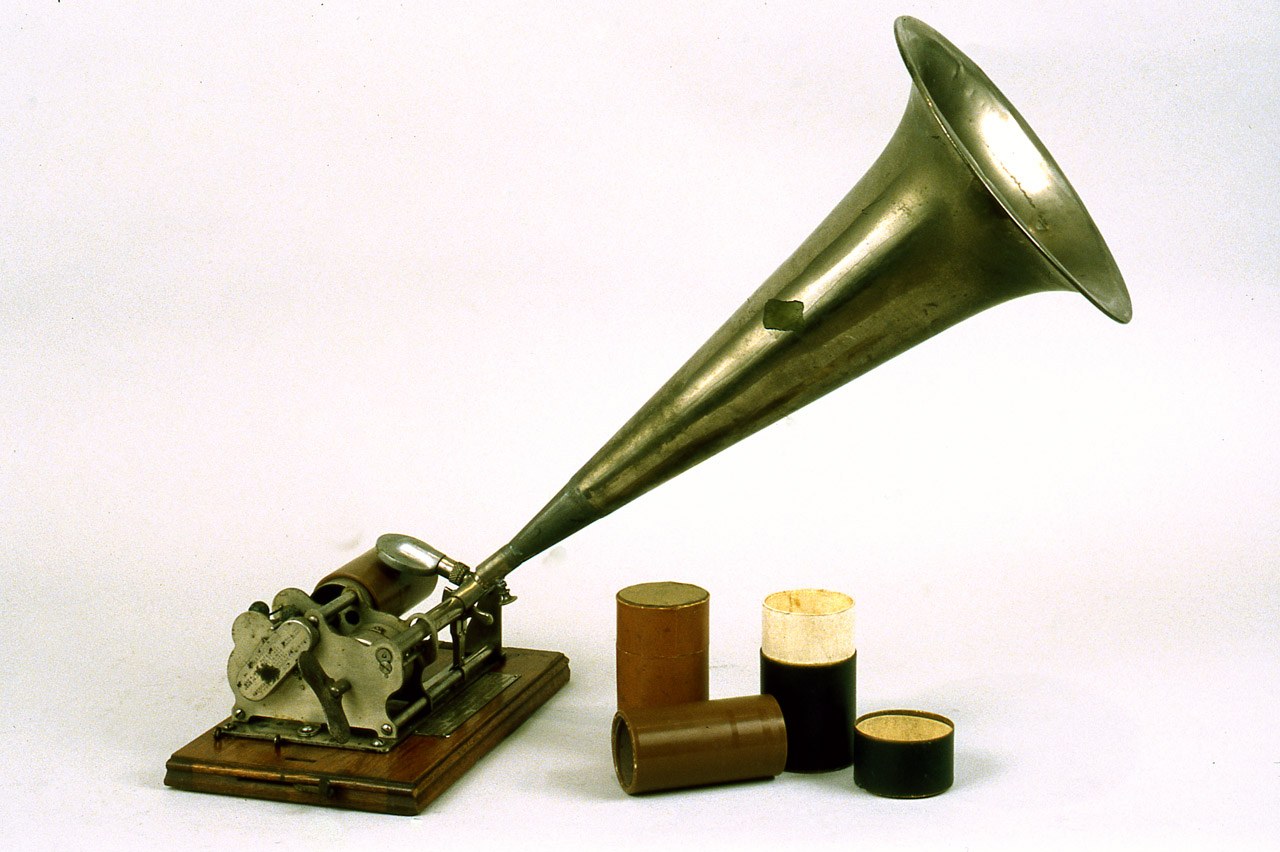

Graphophone
Edison's 1877 phonograph recorded onto tinfoil wrapped around a cylinder. The stylus INDENTED the foil — pushed it down without removing anything — and the foil tore, distorted, could not be taken off and put back, and was good for a handful of playbacks before it was ruined.
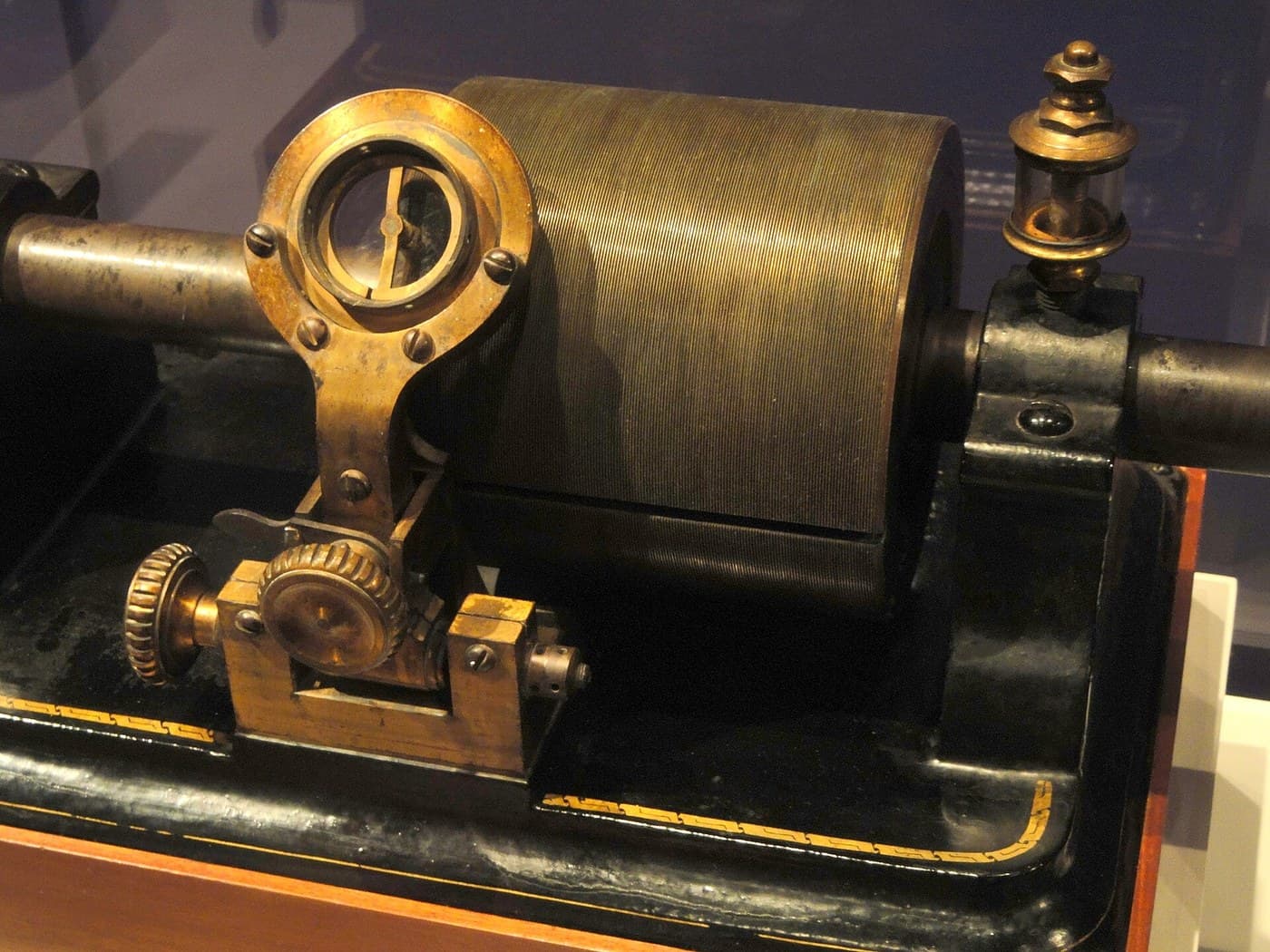
Bell and Tainter changed one verb: cut instead of press. A sharp stylus engraves a groove in a wax coating, carrying the waste away as a fine thread. Cutting needs far less force than deforming, so the groove is cleaner, quieter and repeatable — and a wax cylinder can be shaved smooth and recorded again.
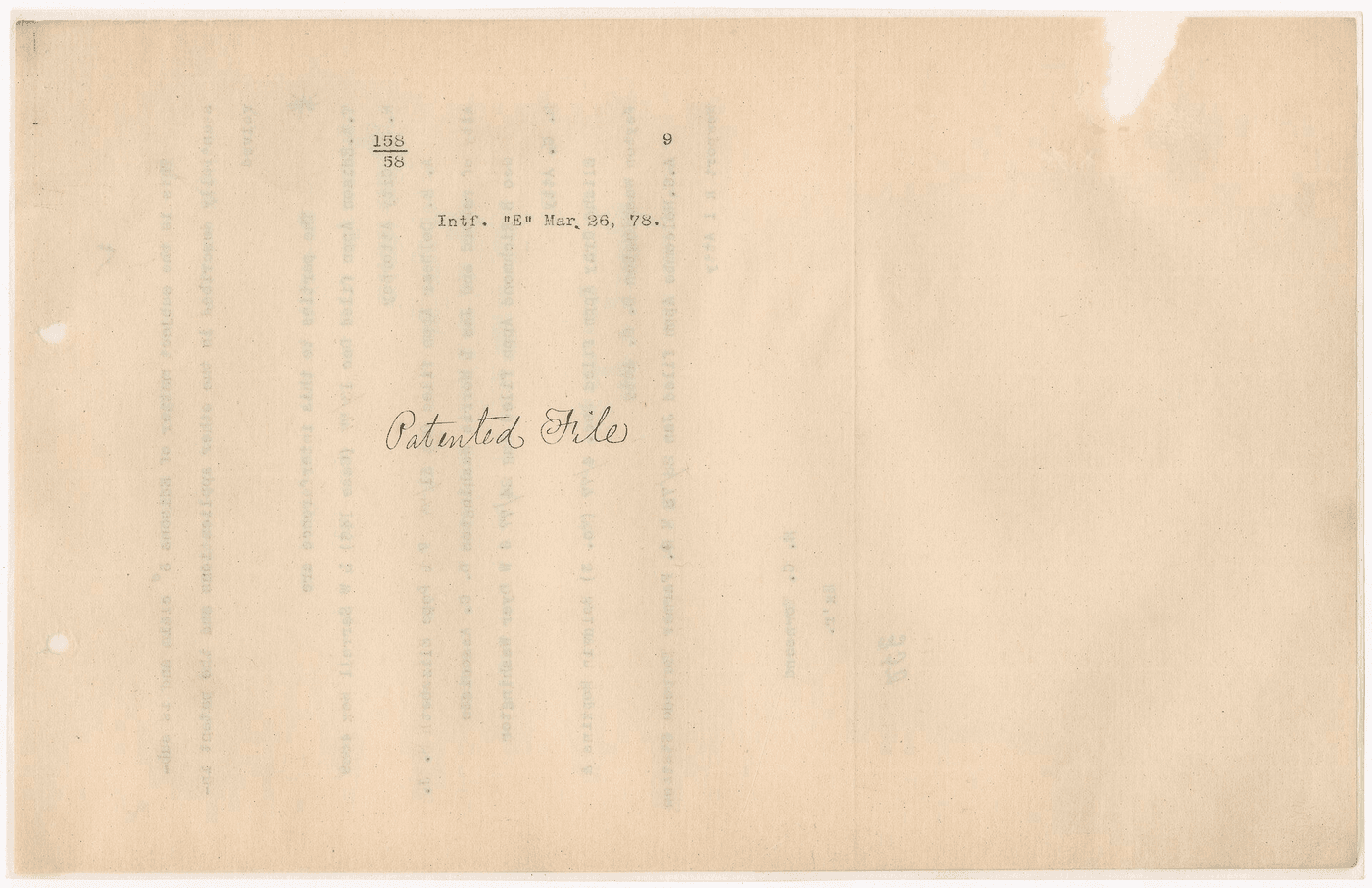
US Patent 341,214, "Recording and reproducing speech and other sounds", granted 4 May 1886 to Chichester A. Bell and Sumner Tainter — two inventors, working at the Volta Laboratory funded by Alexander Graham Bell's Volta Prize money.
手順
Read US 341,214 and note BOTH inventors
Read US 341,214 and note BOTH inventors
The patent names Chichester A. Bell AND Sumner Tainter. It claims engraving a record into a wax coating with a cutting stylus, expressly rather than indenting it.
Try indenting foil first and hear why it failed
Try indenting foil first and hear why it failed
Press a blunt stylus into thin foil on a rotating drum. It stretches, tears and cannot be replayed twice. Deforming a material is not the same as removing some of it.
Build a cylinder mandrel on a screw-fed shaft
Build a cylinder mandrel on a screw-fed shaft
Mount a drum on a threaded shaft so it advances sideways as it turns. The thread pitch sets the groove spacing, and it must be steady.
このステップの材料:
 軟鋼丸棒1 個
必要な工具:
 金工ヤスリ
金工ヤスリGovern the rotation speed
Govern the rotation speed
Add a flywheel and a governor. Speed variation during recording becomes pitch variation on playback — wow and flutter, audible immediately in a held note.
Coat a cardboard cylinder with wax
Coat a cardboard cylinder with wax
Build up an even layer of hard wax on a tube. Even thickness matters — a thin patch means the stylus cuts through to the substrate and the recording stops.
このステップの材料:
 蜜蝋ペレット200 g
Turn the wax true on the mandrel
Turn the wax true on the mandrel
Skim the surface with a blade while it rotates. An out-of-round cylinder lifts the stylus once per revolution and adds a thump at exactly that rate.
Make a diaphragm-and-stylus recorder head
Make a diaphragm-and-stylus recorder head
Mount a thin diaphragm with a sharp cutting stylus at its centre. Sound pressure moves the diaphragm; the stylus writes that movement into the wax.
このステップの材料:
 真鍮 260 板 24 ゲージ1 枚
Sharpen the stylus to CUT, not to press
Sharpen the stylus to CUT, not to press
Give it a real cutting edge. You should see a fine thread of wax curling away as it works — if there is no swarf, you are indenting, and you have built Edison's machine.
Mount the head on a flexible support
Mount the head on a flexible support
Let the head float so it follows the cylinder's surface rather than being driven into it. The patent specifies flexible mounting for exactly this reason.
Cut a groove with sloping walls
Cut a groove with sloping walls
Shape the stylus so the groove is V-sectioned. Sloping walls let a playback stylus seat itself and centre automatically instead of wandering.
Record by shouting into a horn
Record by shouting into a horn
Fit a horn to concentrate sound onto the diaphragm and speak loudly. All the energy cutting that groove comes from your voice — there is no amplifier anywhere.
Swap to a blunt playback stylus
Swap to a blunt playback stylus
Fit a rounded stylus that rides the groove without cutting. A sharp one on playback destroys the recording as it reads it.
Play it back and then play it again
Play it back and then play it again
Listen twice and compare. A wax groove survives repeated playing where foil did not — repeatability is the practical difference this patent bought.
Shave the cylinder and record over it
Shave the cylinder and record over it
Skim the surface again and re-record. An erasable, reusable medium is why this machine sold to offices as a dictating device rather than as entertainment.
Compendium — cutting instead of pressing
Compendium — cutting instead of pressing
The patent. US 341,214, "Recording and reproducing speech and other sounds", granted 4 May 1886 to Chichester A. Bell and Sumner Tainter. They worked at the Volta Laboratory in Washington, funded by the Volta Prize that France awarded Alexander Graham Bell for the telephone. Chichester Bell was Alexander's cousin. The machine was named the Graphophone, and the Volta Graphophone Company eventually became part of Columbia Records.
The whole invention is one verb. Edison's 1877 tinfoil phonograph INDENTED: a blunt stylus pressed the foil into a groove in the mandrel beneath. Indenting requires enough force to plastically deform metal, which loads the diaphragm heavily, distorts the waveform, and leaves a fragile record that tears and cannot be removed and refitted. Bell and Tainter ENGRAVE: a sharp stylus cuts a groove in wax and carries the waste away as swarf. Cutting takes far less force, so the diaphragm can follow the sound more faithfully, and the resulting groove is clean, durable and replayable.
Wax makes the medium reusable. A wax cylinder can be shaved smooth on a lathe and recorded again — the surface is consumable rather than the object. That single property decided the machine's market: the Graphophone sold to offices as a dictating machine, where a clerk records, a typist transcribes, and the cylinder is shaved for tomorrow. Edison, stung, returned to the field and produced his own improved wax phonograph; the rivalry ran for years and the two lines of patents were eventually cross-licensed.
Why it lost anyway. Cylinders have one real advantage — constant linear velocity, since the groove speed past the stylus is the same at both ends — and one fatal commercial disadvantage: they cannot be stamped. Emile Berliner's disc, patented in 1887, can be pressed in quantity from a master, and mass duplication beat sound quality decisively. Cylinders were gone from the market by about 1929. The cutting stylus survived, though: every lacquer master cut for a vinyl record until the digital era was made by engraving a groove and carrying the swarf away, exactly as this patent describes.
この設計図で作るもの

関連ブループリント
これらのブループリントは知識を共有しています — 技術、材料、原理

CC0 パブリックドメイン
このブループリントはCC0で公開されています。許可を求めずに、自由にコピー、修正、配布、あらゆる目的で使用できます。
メイカーを応援するには、ブループリント経由で製品を購入してください。メイカーには メイカーコミッション がベンダーにより設定されています。または、このブループリントの新しいイテレーションを作成し、自分のブループリントにコネクションとして含めて収益を共有できます。