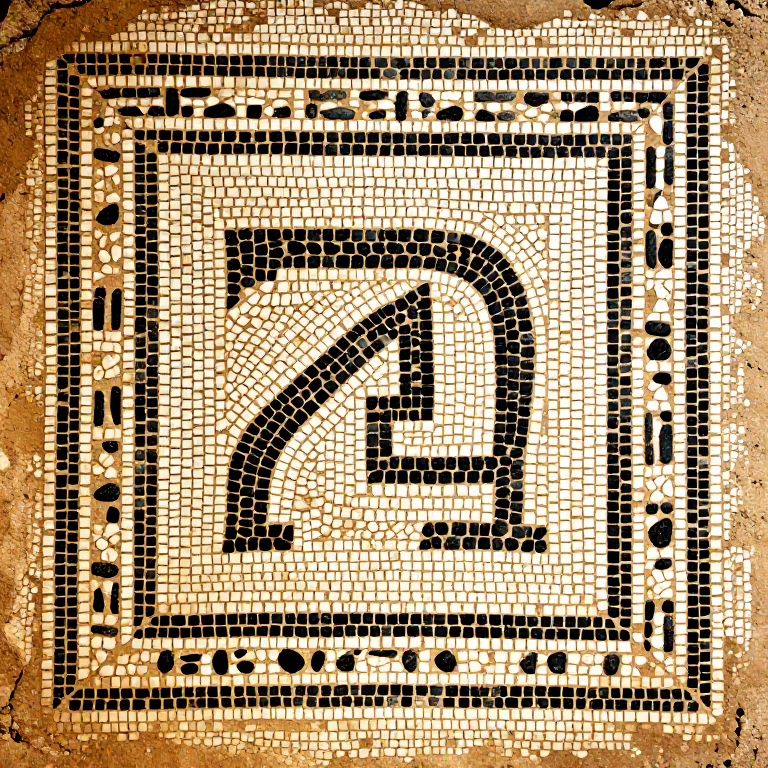


Greek Mosaic Floor — Laying a Pebble Mosaic Floor
手順
Prepare the Foundation Bed
Prepare the Foundation Bed
Excavate the floor area to a depth of approximately 15-20 cm. Lay a foundation of compacted coarse aggregate (gravel, broken pottery sherds, or rubble) approximately 10-12 cm deep. This drainage layer prevents moisture from wicking up through the mosaic and causing frost damage. Over the aggregate, spread a leveling layer of coarse sand approximately 3 cm thick and tamp it flat and level. Greek pebble mosaics at Olynthos (destroyed 348 BCE) and Pella (4th century BCE) were laid on carefully prepared multi-layer foundations that have survived over 2,300 years. The foundation must be perfectly level, as any unevenness will show as bumps or dips in the finished mosaic surface.
このステップの材料:
 川の玉石several kilograms, 1-3 cm diameter cm
 消石灰(水酸化カルシウム)enough for the design area 個
 砂利sufficient for foundation layer 個
必要な工具:
 手持ち移植ごて
 ストレートエッジ
 平らな突き固め具
 スプレー瓶(ガラス、褐色)
Apply the Mortar Setting Bed and Mark the Design
Apply the Mortar Setting Bed and Mark the Design
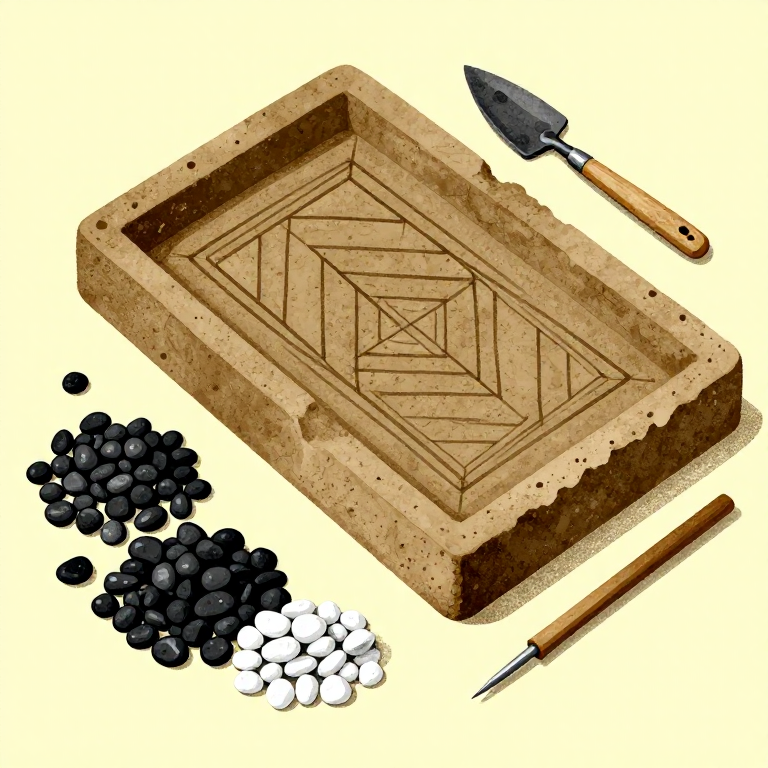
Mix lime mortar (1 part hydrated lime to 2-3 parts sharp sand) to a stiff, workable consistency. Spread a setting bed approximately 3-4 cm thick over the prepared foundation, working in small sections to prevent the mortar from setting before pebbles are placed. Lightly sketch the design outline into the wet mortar surface using a pointed stick. Start with simple geometric borders (meanders, wave patterns, chevrons) before attempting figural designs. Sort your pebbles by size and color before beginning — you will need white pebbles for the background and dark (black or dark grey) pebbles for the design figures and borders, following the established Greek convention of dark figures on a light ground.
Set the Pebbles into the Mortar
Set the Pebbles into the Mortar
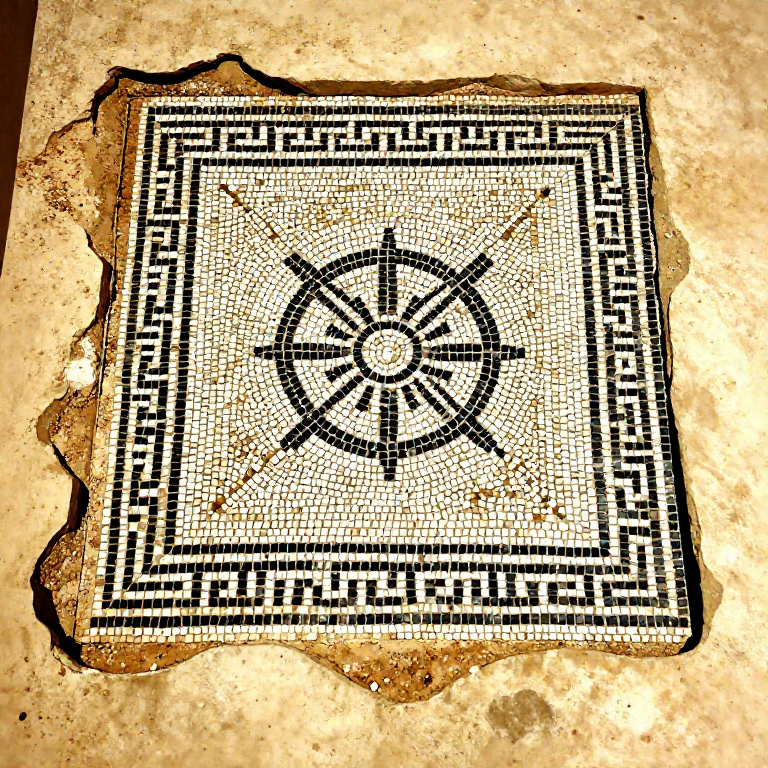
Press pebbles vertically (on edge, not flat) into the mortar bed, pushing each one approximately two-thirds of its depth into the mortar so only the top third protrudes. Setting pebbles on edge creates a denser surface with less visible mortar between stones, and provides a better wearing surface for foot traffic. Work from the border inward, completing the geometric frame before filling the central design. Place pebbles close together with only 1-2 mm gaps between them. Follow the sketched design lines carefully, using the darkest pebbles for outlines and fill progressively. Some of the finest Greek pebble mosaics, like the lion-hunt mosaic at Pella attributed to Gnosis, achieve remarkable detail and naturalism using carefully selected pebbles of graduated sizes and colors.
Tamp and Level the Surface
Tamp and Level the Surface
Once a section is fully set with pebbles, place a flat board over the surface and tap it gently with a mallet to push all pebbles to the same height, creating a level wearing surface. Check with a straightedge across the surface. Any pebbles that sit too high or too low should be individually adjusted — push deeper or add mortar beneath as needed. The finished surface should be smooth enough to walk on comfortably in bare feet or sandals. Keep the mortar moist during setting by misting with water — lime mortar cures by carbonation (absorbing carbon dioxide from the air), not by drying, and it needs moisture to cure properly. Curing takes several days to weeks.
Grout and Cure the Mosaic
Grout and Cure the Mosaic
After the setting mortar has firmed (24-48 hours), brush a thin slurry of fine lime mortar over the surface to fill any remaining gaps between pebbles, then wipe the excess off the pebble tops with a damp sponge. This grouting step locks all the pebbles securely and creates a smooth, continuous surface. Allow the completed mosaic to cure slowly for at least 2-4 weeks, keeping it damp by periodic misting. The lime mortar gradually hardens by absorbing atmospheric carbon dioxide, converting calcium hydroxide back to calcium carbonate (essentially re-forming limestone). Over time, lime mortar continues to harden and can approach the compressive strength of natural stone — which is why Greek pebble mosaics laid over 2,300 years ago are still intact and walkable at archaeological sites today.
材料
3- enough for the design area 個プレースホルダー
- sufficient for foundation layer 個プレースホルダー
- several kilograms, 1-3 cm diameter 個プレースホルダー
この設計図で作るもの
CC0 パブリックドメイン
このブループリントはCC0で公開されています。許可を求めずに、自由にコピー、修正、配布、あらゆる目的で使用できます。
メイカーを応援するには、ブループリント経由で製品を購入してください。メイカーには メイカーコミッション がベンダーにより設定されています。または、このブループリントの新しいイテレーションを作成し、自分のブループリントにコネクションとして含めて収益を共有できます。