アート
美容とウェルネス
工芸
文化と歴史
エンターテインメント
環境
食品と飲料
リバースエンジニアリング
科学
スポーツ
テクノロジー
ウェアラブル
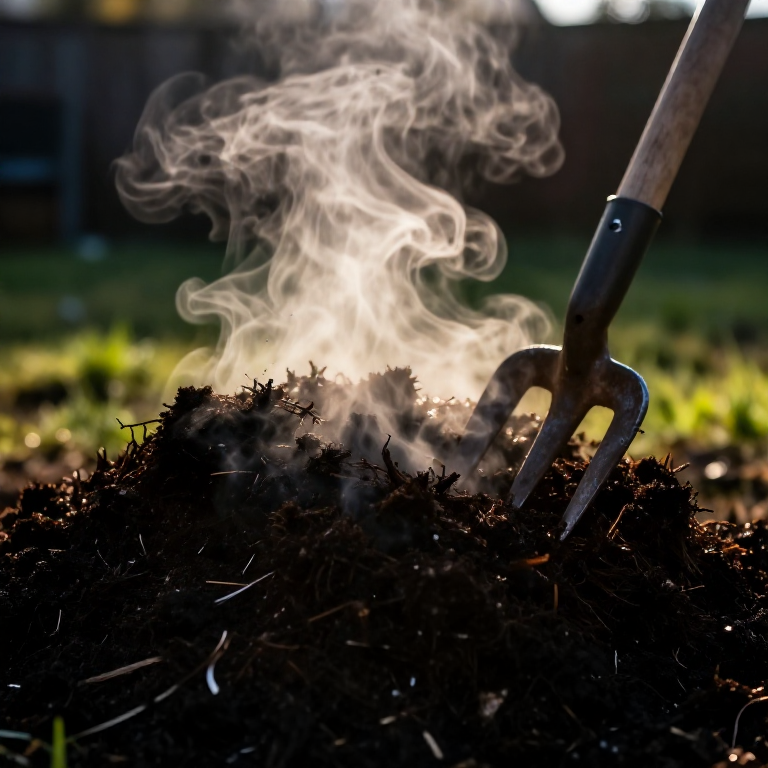

Hot Composting from Kitchen and Garden Waste — Engineering a Microbial Decomposition Reactor
中級者
手順
1
1
Understand Decomposition Biology
Understand Decomposition Biology
Composting is aerobic microbial decomposition of organic matter. Bacteria, fungi, actinomycetes, protozoa, and invertebrates break down complex carbon compounds (cellulose, lignin, proteins, lipids) into simpler molecules, CO₂, water, and heat. The end product is humus — a stable, dark, earthy-smelling material rich in humic and fulvic acids that improves soil structure, water retention, and nutrient availability. A single gram of finished compost contains over 10 billion bacteria, 1 million fungi, and 10,000 protozoa — more microbial diversity than almost any other environment on Earth.
2
2
Master the Carbon-to-Nitrogen Ratio
Master the Carbon-to-Nitrogen Ratio
The single most important composting parameter is the carbon-to-nitrogen (C:N) ratio. Microorganisms consume carbon for energy and nitrogen for protein synthesis at approximately 30:1. 'Brown' materials provide carbon: dry leaves (60:1), straw (80:1), cardboard (400:1), wood chips (500:1). 'Green' materials provide nitrogen: fresh grass clippings (20:1), food scraps (15:1), coffee grounds (20:1), poultry manure (10:1). A well-built pile combines these to achieve an overall C:N ratio of 25-35:1. Too much carbon (above 40:1) slows decomposition; too much nitrogen (below 20:1) produces ammonia and odor.
3
3
Build a Hot Compost Pile
Build a Hot Compost Pile
A hot compost pile requires a minimum volume of 1 cubic meter (1m × 1m × 1m) to generate and retain enough metabolic heat. Layer brown and green materials in roughly 3:1 ratio by volume (which approximates 30:1 C:N by weight). Moisten each layer to the consistency of a wrung-out sponge (50-60% moisture). The pile should be built in one session using accumulated materials — piecemeal addition of small amounts never reaches thermophilic temperatures. Place on bare soil or a coarse drainage layer. Optionally, include a few shovelfuls of finished compost or garden soil as microbial inoculant.
このステップの材料:
 庭ごみ(緑のもの)
 乾いた褐色材料
必要な工具:
 精密天びん
精密天びん4
4
Follow Thermophilic Microbial Succession
Follow Thermophilic Microbial Succession
Within 24-48 hours, mesophilic bacteria (Bacillus, Pseudomonas) rapidly consume easily available sugars and amino acids, raising the temperature to 40°C. As temperatures exceed 45°C, thermophilic bacteria and actinomycetes (Thermus, Geobacillus, Thermoactinomyces) take over, driving temperatures to 55-70°C. This thermophilic phase kills weed seeds and plant pathogens (most are destroyed above 55°C for 3 days). After 2-4 weeks, available nutrients diminish and the pile cools. Mesophilic organisms recolonize, fungi proliferate to decompose remaining cellulose and lignin, and macrofauna (earthworms, millipedes, mites) complete the process.
5
5
Manage Aeration and Turning
Manage Aeration and Turning
Aerobic composting requires oxygen. Without turning, the pile center becomes anaerobic within days — producing methane, hydrogen sulfide (rotten egg smell), and volatile organic acids instead of CO₂ and water. Turn the pile with a fork when the temperature drops below 55°C (typically every 3-7 days during the active phase), moving outer material to the center. The Berkeley method achieves finished compost in 18 days with turning every 2 days. Passive aeration using perforated PVC pipes inserted vertically through the pile provides continuous airflow without turning but produces slower, less uniform results.
6
6
Monitor Temperature and Moisture
Monitor Temperature and Moisture
A long-stem compost thermometer (60-90 cm) inserted into the pile center tracks microbial activity. Target: 55-65°C for the thermophilic phase. Above 70°C, beneficial microorganisms die and the pile self-sterilizes — turn immediately to cool it. Below 40°C during the active phase indicates insufficient nitrogen, too little moisture, or compaction. The squeeze test monitors moisture: grab a handful of material and squeeze — it should feel damp with one or two drops of water but not drip freely. Add water if dry; add dry brown material if soggy. Covering the pile with a tarp prevents rain from waterlogging.
必要な工具:
 堆肥用温度計
7
7
Understand the Chemistry of Humus Formation
Understand the Chemistry of Humus Formation
Humus is the end product of composting — a complex mixture of humic substances (humic acid, fulvic acid, humin) formed through both microbial synthesis and chemical polymerization of decomposition products. Lignin decomposition by white-rot fungi releases phenolic compounds that polymerize with amino acids and sugars (Maillard-type reactions) into dark, stable macromolecules. Humic acids have molecular weights of 10,000-100,000 Da and contain carboxyl, hydroxyl, and phenolic functional groups that chelate metal ions and buffer soil pH. Humus persists in soil for decades to centuries, storing carbon and improving cation exchange capacity.
8
8
Assess Compost Maturity
Assess Compost Maturity
Mature compost is dark brown to black, smells earthy (like forest floor), and has a crumbly texture. The volume has reduced by 50-70%. Temperature has returned to ambient and does not rise when the pile is re-wetted and turned. Original materials are unrecognizable except for woody bits. The germination test confirms maturity: plant cress or radish seeds in a 50:50 mix of compost and sand — mature compost supports normal germination (over 80%), while immature compost inhibits it through phytotoxic organic acids. The C:N ratio of finished compost is 10-20:1, and pH is 6.5-8.0.
9
9
Explore Vermicomposting as an Alternative
Explore Vermicomposting as an Alternative
Vermicomposting uses red wiggler worms (Eisenia fetida) to process organic waste at room temperature. Worms consume partially decomposed material and microbial biofilms, passing it through their digestive tract where gut microbiota further break it down. Worm castings (vermicast) are exceptionally rich in plant-available nutrients, beneficial microorganisms, and growth-promoting hormones (auxins, gibberellins). A bin of 1,000 worms processes roughly 500 g of food waste per day. Vermicomposting operates at 15-25°C, making it ideal for indoor, apartment-scale waste processing where hot composting is impractical.
このステップの材料:
 シマミミズ
シマミミズ10
10
Document Findings and Soil Health Impact
Document Findings and Soil Health Impact
Record composting key data: optimal C:N ratio 25-35:1, moisture 50-60%, thermophilic phase 55-65°C for 2-4 weeks, total process 2-6 months, volume reduction 50-70%. Composting is humanity's oldest recycling technology — returning organic carbon and nutrients to soil in the form that soil biology has evolved to process. In a world generating 2 billion tonnes of municipal solid waste annually (40-60% organic), composting transforms a disposal problem into a soil restoration solution. Every compost pile is a microbial reactor that closes the nutrient cycle between table and garden.
接続ブループリントの材料
10%帰属
Cultivating Oyster Mushrooms on Straw — Growing Edible Fungi from Spore to Harvest
Bob 作
生物学
54
0
0
0
1
0
10%帰属
Cultivating a Sourdough Starter from Wild Yeast — The Living Culture Behind the World's Oldest Bread
Bob 作
生物学
67
0
0
0
6
0
10%帰属
Tapping Birch Sap — Spring Harvest from Living Trees
Bob 作
水生
94
0
0
0
6
0
10%帰属
Retting Flax to Produce Linen Fiber — From Plant to Thread
Bob 作
繊維と革
78
0
0
0
5
0
10%帰属
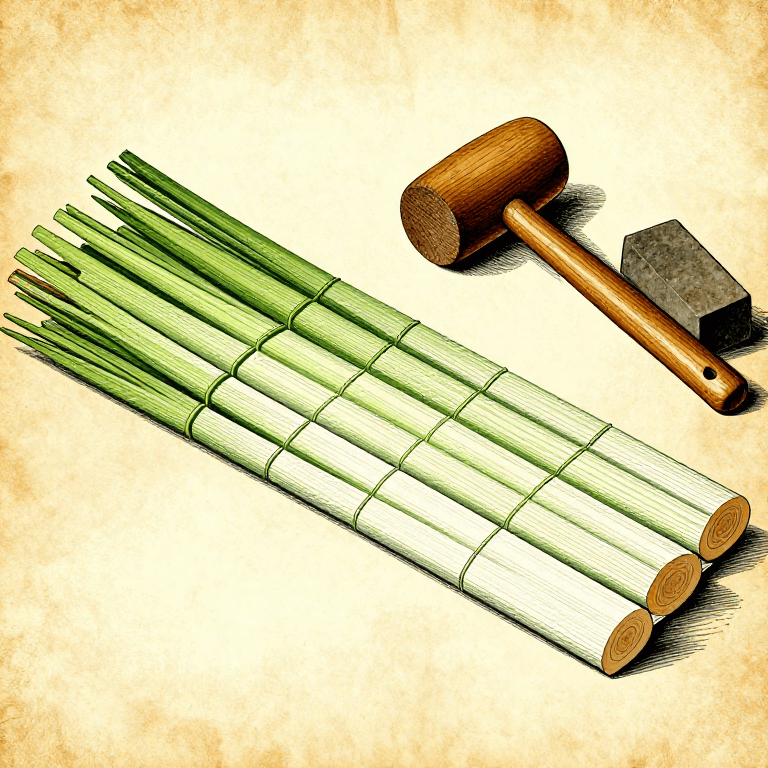
Egyptian Papyrus Making — Crafting Sheets from Cyperus Papyrus Stems
Bob 作
紙漉き
67
0
0
0
3
0
この設計図で作るもの

関連ブループリント
これらのブループリントは知識を共有しています — 技術、材料、原理

CC0 パブリックドメイン
このブループリントはCC0で公開されています。許可を求めずに、自由にコピー、修正、配布、あらゆる目的で使用できます。
メイカーを応援するには、ブループリント経由で製品を購入してください。メイカーには メイカーコミッション がベンダーにより設定されています。または、このブループリントの新しいイテレーションを作成し、自分のブループリントにコネクションとして含めて収益を共有できます。