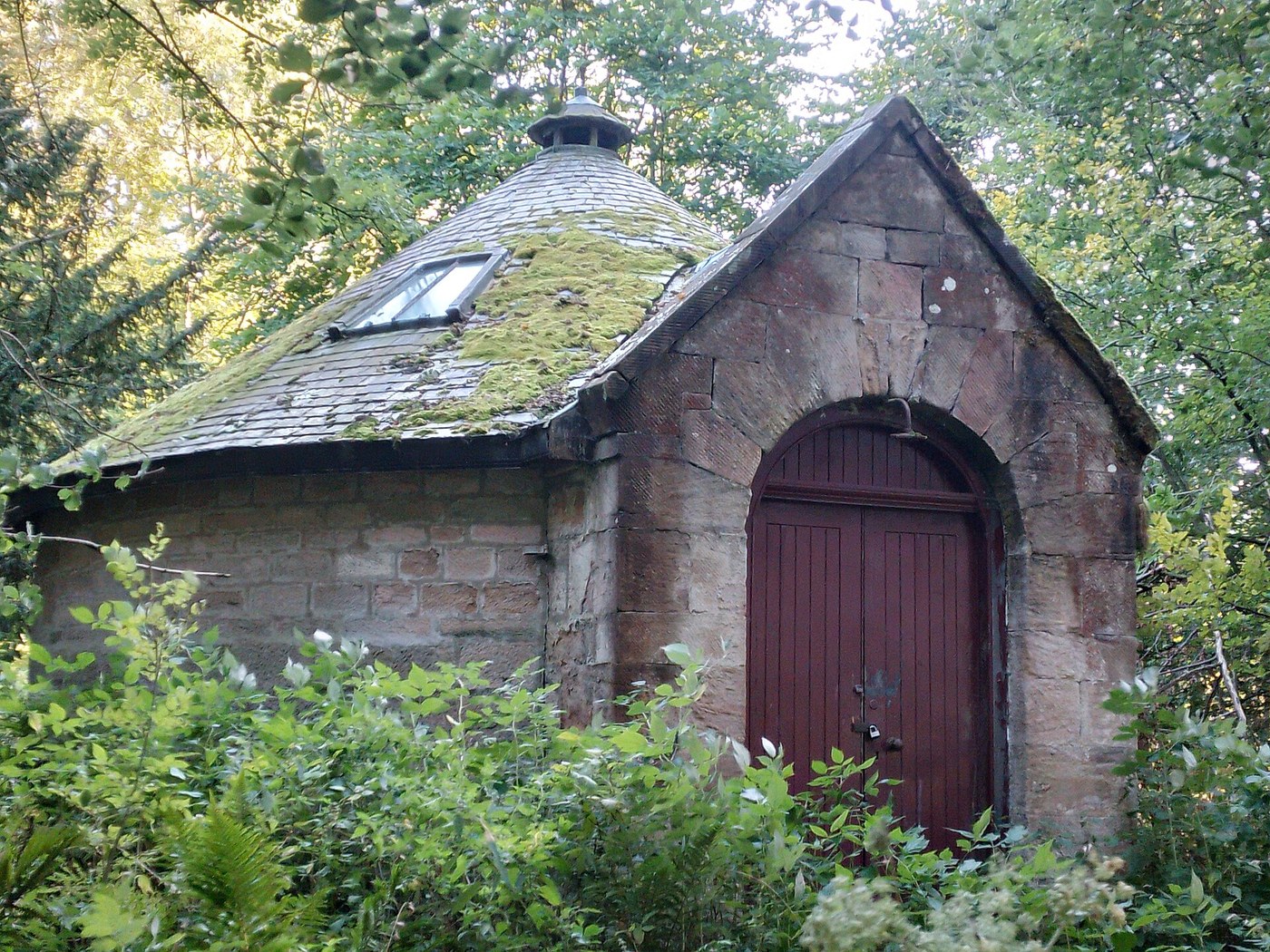


The Ice House
Cutting ice in January is easy. Still having it in August is the problem, and it is not solved by insulation alone.
Two facts make an ice house possible. The first is the square-cube ratio: melting happens at the surface, and a big block has far less surface per tonne than a small one. Double the stack's dimensions and you get eight times the ice behind four times the skin. Scale is the cheapest insulation there is, which is why ice houses were built enormous and packed solid, and why a half-empty one performs terribly.
The second is drainage, and it is the one people forget. Melting is inevitable, and meltwater is the enemy: standing water conducts heat far better than air, it soaks the packing until the insulation stops insulating, and — worst — it sits in contact with the ice and carries heat straight into it. An ice house without a drain destroys its own stock.
Around those two, the usual defences: sunk into the ground for stable temperature, thick walls, a north-facing door, a double-door airlock, and straw or sawdust packed between the blocks so they neither weld together nor touch the walls.
Build big, and let the water leave.
手順
Measure the square-cube advantage
Measure the square-cube advantage
Freeze ice in three sizes — small cubes, a medium block, and the largest block your freezer allows — insulate all three identically, and time how long each takes to melt.
Expect the large block to last far longer per unit mass.
Compute surface area and volume for each and plot melt rate against the ratio.
Write down the conclusion: the single most effective thing you can do is store more ice in one lump. No packing material in this blueprint gives a gain of the size that scale gives for free.
このステップの材料:
 氷1 個
氷1 個必要な工具:
 デジタルキッチンスケール
Let one model drown and watch what it costs
Let one model drown and watch what it costs
Build two identical insulated model stores with equal ice and packing. Give one a drain at the lowest point; seal the other.
Log both to complete melt.
Expect the drained store to outlast the sealed one substantially, and open the sealed one partway to find sodden packing and ice sitting in a pool.
Water conducts heat roughly twenty times better than still air, so once the packing is wet the insulation is gone.
The drain is not tidiness. It is the second-most important feature in the building.
Compare packings, wet and dry
Compare packings, wet and dry
Pack identical blocks in straw, sawdust and wood shavings, and test each dry and then deliberately damp.
Expect all three to perform well dry and all three to collapse wet.
Then check a second job the packing does: try blocks packed against each other with no separator and note that they freeze into one mass that must be broken out.
The packing insulates AND keeps the blocks separable AND holds them off the walls. Judge a material on all three, and on whether it taints food — which is why sawdust from resinous timber was avoided for ice destined for drinks.
このステップの材料:
 わら1 個
わら1 個 おがくず1 個
 かんなくず1 個
Design the door as an airlock
Design the door as an airlock
Fit your model with a single door, then with two doors and a small lobby between. Open each the same number of times a day and log the melt.
Expect the double door to cut the loss from access sharply.
Then put a thermometer at floor level just inside the door and watch what happens when it opens: cold air pours OUT along the floor, because it is dense.
Cold does not leak upward, it falls out of the doorway — which is why ice houses are entered from the north, through a lobby, down steps, and why the chest freezer that opens upward beats the upright one.
必要な工具:
 温度計
温度計Bury it, and see how much that alone gives
Bury it, and see how much that alone gives
Run one model store above ground in the open and an identical one sunk in a pit or heavily banked with earth. Log both through a warm week.
Expect the buried one to be markedly steadier and colder, and its advantage to grow on the hottest days.
The earth is doing two things: shading, and offering a heat sink at the annual average temperature rather than today's peak.
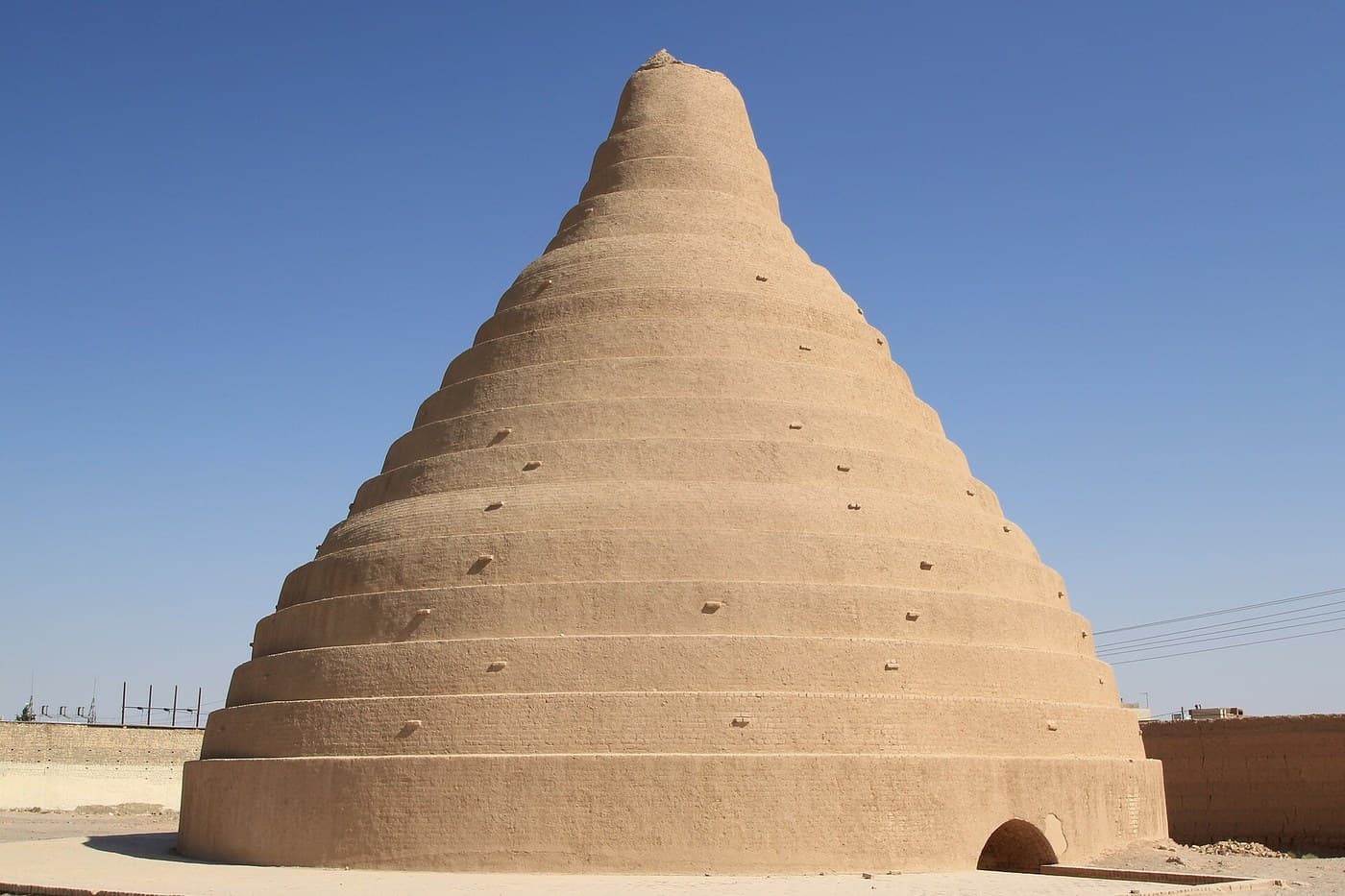
Earth-sheltering is the cheapest thermal mass available anywhere — the same argument as the yakhchāl's pit and the root cellar in this batch.
History & Context
History & Context
Ice houses are far older than refrigeration and nearly universal in cold-winter lands. Mesopotamian ice pits are recorded in the second millennium BC; Roman, Chinese, Persian and later European estates all built them. In Britain and America the country-house ice house — a brick egg sunk in a north-facing bank, with a drain at the bottom — was standard by the eighteenth century.
Then it became an export industry. Frederic Tudor of Boston built a global trade shipping New England pond ice to the Caribbean, to Europe and as far as Calcutta, insulated in sawdust — a waste product of the local timber mills that turned out to be an excellent packing. The ice-harvesting blueprint already in this corpus covers the cutting; this one covers why any of it survived the voyage. An industry existed because a waste material happened to be a good insulator.
The two ideas here outlived the buildings. Cold rooms are still built large rather than numerous, because of step 1; and every commercial cold store still lives or dies on drainage and on door discipline, because of steps 2 and 4. Machine refrigeration changed where the cold comes from and changed nothing about how it is kept.
Honest limits. It stores cold, it does not make it — no cold winter, no ice house. It is a large permanent structure with a serious excavation. It needs annual labour at exactly the coldest time of year. Natural ice carries whatever was in the pond, which caused real public-health argument in the nineteenth century and is part of why machine-made ice won. And the store empties: by late summer the building is a cold damp cellar with nothing in it.
接続ブループリントの材料



CC0 パブリックドメイン
このブループリントはCC0で公開されています。許可を求めずに、自由にコピー、修正、配布、あらゆる目的で使用できます。
メイカーを応援するには、ブループリント経由で製品を購入してください。メイカーには メイカーコミッション がベンダーにより設定されています。または、このブループリントの新しいイテレーションを作成し、自分のブループリントにコネクションとして含めて収益を共有できます。