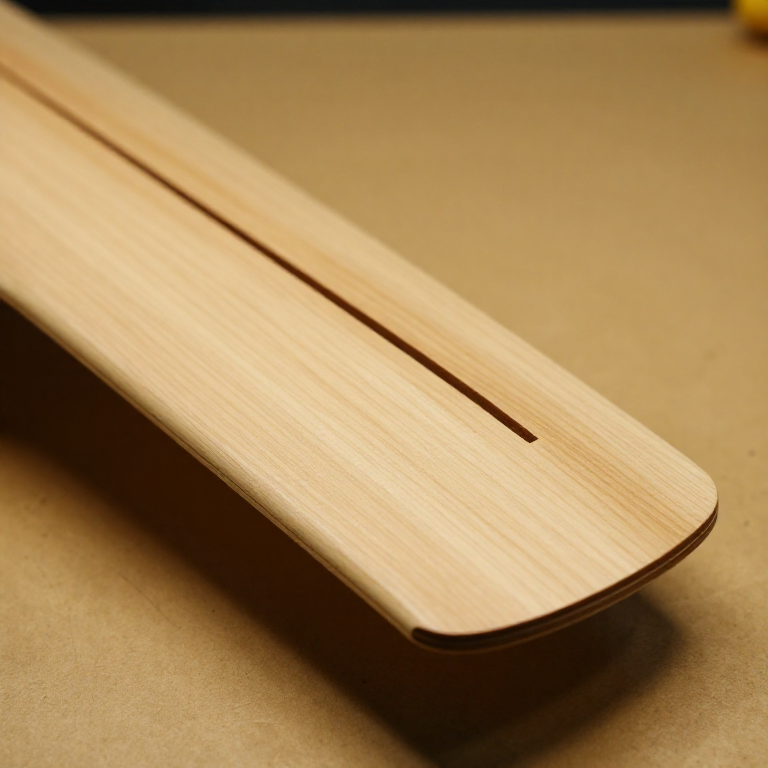


The Leading-Edge Slot
手順
See the stall happen, in smoke
See the stall happen, in smoke
The stall is invisible in numbers and obvious in smoke. Look at it before you try to cure it.
- Mount a plain aerofoil in the wind tunnel and introduce a smoke line just upstream of the leading edge.
- Start at a low angle and watch the smoke follow the upper surface all the way to the trailing edge.
- Increase the angle a degree at a time, filming as you go.
- Find the angle where the smoke stops following the surface and breaks away into a churning wake.
Separation begins near the trailing edge and creeps forward as the angle increases, then reaches the leading edge and the flow lets go entirely. That last moment is the stall, and the lift you measured on the balance falls off a cliff at exactly that angle.
The critical realisation, and the one that makes the slot make sense: a wing does not stall because it is going too slowly. It stalls because the angle of attack is too high. An aircraft can stall at any speed — including at high speed in a tight turn — and that is why the instrument that matters is the angle-of-attack indicator, not the airspeed indicator.このステップの材料:
 バルサ材の板2 枚
 木工用接着剤1 本
 方眼紙1 pad
必要な工具:
 煙を見るための線香
 スローモーション撮影ができるスマートフォン
 分度器
分度器 ばねばかり
ばねばかり デジタル角度計
 透明保護メガネ
Understand why the flow gives up
Understand why the flow gives up
Separation has a cause, and knowing it tells you which cures can possibly work.
- Sketch the pressure distribution along the upper surface: pressure falls sharply just behind the leading edge, reaching a minimum, then rises again toward the trailing edge.
- Mark the region where pressure is RISING in the direction of flow.
- Consider what that means for a particle of air travelling through it very close to the surface.
Air in the boundary layer is being asked to travel INTO rising pressure, uphill, while friction with the surface is already slowing it. The particles further out have momentum to spare; the ones nearest the skin do not. When they run out, they stop, then reverse, and the flow detaches.
That framing is what makes the whole family of fixes obvious. You cannot remove the pressure rise — it is what produces lift. So you must either give the boundary layer more energy, or take the tired air away. Slots and slats add energy. Boundary-layer suction, tried on later aircraft, removes the tired layer through a porous skin. Vortex generators — those little upright tabs you see on airliner wings — stir high-energy air down into the boundary layer. Three different mechanisms, one problem.
Steeper camber and thicker sections produce more lift and also a steeper pressure recovery, which is why high-lift aerofoils tend to stall more sharply. It is not a coincidence, it is the same curve seen twice.このステップの材料:
方眼紙1 pad必要な工具:
分度器 デジタルノギス 6インチ煙を見るための線香
Cut the slot and place it correctly
Cut the slot and place it correctly
The slot only works in one place, and finding that place is the design work.
- Build a second aerofoil identical to the first, but with a slot cut through from the lower surface to the upper, emerging just behind the leading edge.
- Shape the passage so it converges — wider at the entry, narrower at the exit — so the air leaves faster than it entered.
- Aim the exit so the emerging jet runs ALONG the upper surface, tangentially, not up into the free stream.
- Build two more with the exit at different chordwise positions for comparison.
The convergent passage is what makes the slot work: it accelerates the air, so what arrives in the boundary layer is faster than what was already there. A parallel-sided hole feeds slow air into slow air and achieves very little.
Aim matters as much as shape. A jet fired perpendicular to the surface disturbs the flow rather than energising it, and can make the stall worse. This is a topology problem, not a hole-drilling problem — the geometry of the passage IS the invention.このステップの材料:
バルサ材の板3 枚 バルサ材の角棒1 束木工用接着剤1 本
必要な工具:
 替刃付きホビーナイフ
 ヤスリセット
 ベルトサンダーデジタルノギス 6インチ分度器透明保護メガネ
 紙やすり
紙やすりMeasure what the slot bought and what it cost
Measure what the slot bought and what it cost
Every high-lift device is a trade. Measure both sides of it.
- Run the plain and slotted aerofoils through the full angle range, recording lift AND drag.
- Note the stall angle and maximum lift for each.
- Now compare drag at small angles — the cruise condition — rather than at the stall.
The slotted wing stalls several degrees later and reaches a higher maximum lift; it also has more drag at every angle, including the ones it spends most of its life at. A permanently open slot pays that penalty all the time to buy safety that matters for perhaps thirty seconds per flight.
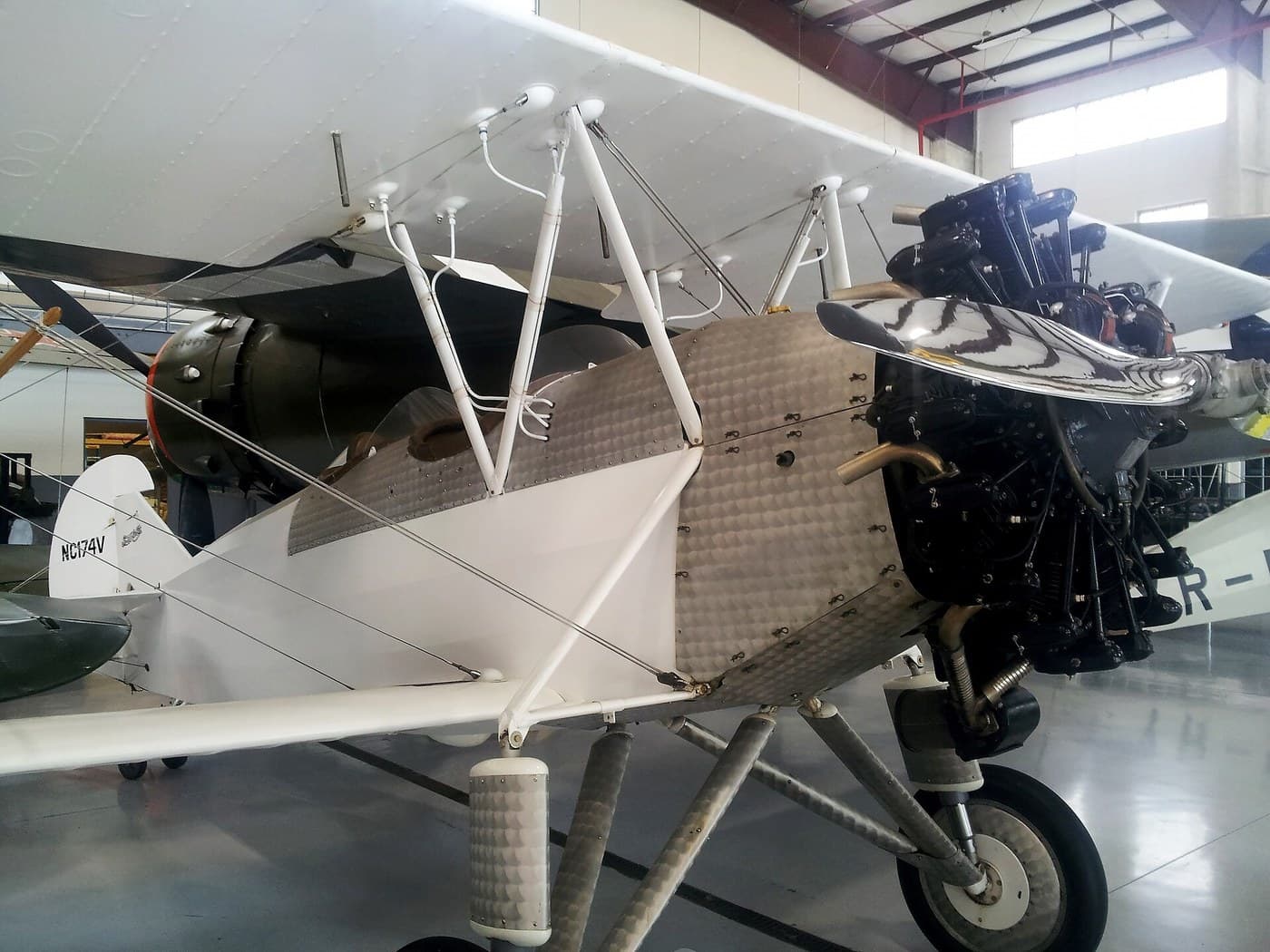
Which is precisely why the automatic slat exists. Handley Page mounted the slotted portion as a separate small aerofoil on curved tracks, held closed against the leading edge by airflow in cruise. At high angle of attack the pressure peak near the leading edge moves forward and sucks it open — no pilot action, no actuator, no sensor. The device deploys itself using the very condition it exists to counter.
That self-actuating quality puts it in the same family as the oil circuit breaker, whose arc supplies the energy for its own extinction, and the self-energising band brake. Mechanisms that draw their actuation from the problem are consistently the most reliable, because there is nothing to fail separately.このステップの材料:
方眼紙1 pad必要な工具:
ばねばかり分度器デジタル角度計 手持ち風速計煙を見るための線香スローモーション撮影ができるスマートフォン透明保護メガネ
Slot only the outer wing, and find out why
Slot only the outer wing, and find out why
The most important use of the slot is not more lift. It is deciding WHERE the stall happens first.
- Build a model wing with slots fitted only to the outboard third of each side.
- Fly it and stall it deliberately, filming from behind.
- Compare with an unslotted wing stalled the same way.
The unslotted wing tends to drop a wing and roll at the stall; the outboard-slotted wing tends to pitch nose-down with the wings roughly level. The reason is that with slots outboard, the inner wing stalls first while the tips are still flying — and the tips are where the ailerons are.
That is the whole game. A stall with working ailerons is an event you fly out of; a stall that begins at the tips takes your roll control away at the exact moment you need it, drops a wing, and becomes a spin.
The same result is achieved on many aircraft by washout — building a few degrees of twist into the wing so the tip sits at a lower angle than the root and reaches its stall later. Slots, washout and stall strips are three routes to one goal: choose where the wing gives up. A designer who does not choose has the choice made for them by manufacturing tolerance.このステップの材料:
バルサ材の板3 枚バルサ材の角棒1 束 模型用の薄紙1 キット
 模型用の張り塗料1 キット木工用接着剤1 本
必要な工具:
替刃付きホビーナイフデジタルノギス 6インチ分度器デジタル角度計スローモーション撮影ができるスマートフォンベルトサンダー透明保護メガネ材料
6- 8 枚プレースホルダー
- 1 本プレースホルダー
- 1 padプレースホルダー
- 1 束プレースホルダー
- 1 キットプレースホルダー
- 1 キットプレースホルダー
必要な工具
12- プレースホルダー
- プレースホルダー
- プレースホルダー
- プレースホルダー
- プレースホルダー
- プレースホルダー
- プレースホルダー
- プレースホルダー
- プレースホルダー
- 1 vendor sell this, none ship to you yetプレースホルダー
- プレースホルダー
- プレースホルダー
関連ブループリント
これらのブループリントは知識を共有しています — 技術、材料、原理

CC0 パブリックドメイン
このブループリントはCC0で公開されています。許可を求めずに、自由にコピー、修正、配布、あらゆる目的で使用できます。
メイカーを応援するには、ブループリント経由で製品を購入してください。メイカーには メイカーコミッション がベンダーにより設定されています。または、このブループリントの新しいイテレーションを作成し、自分のブループリントにコネクションとして含めて収益を共有できます。