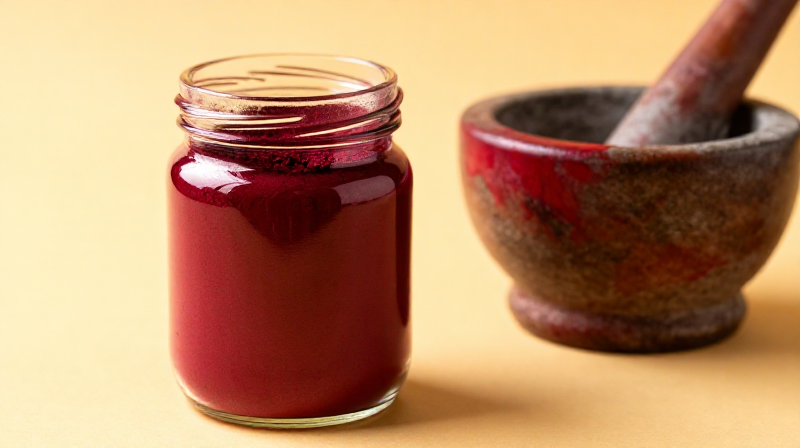

Making Synthetic Alizarin Crimson — The Coal Tar Pigment That Destroyed the Madder Industry
Alizarin (1,2-dihydroxyanthraquinone) is the red colourant that makes madder root one of humanity's oldest and most important dye plants. For millennia, the only source was the root of Rubia tinctorum, painstakingly cultivated, harvested after three years of growth, dried, and ground. Entire regional economies — southern France, the Ottoman Levant, the Dutch lowlands — depended on madder cultivation.
In 1868, German chemists Carl Graebe and Carl Liebermann determined alizarin's molecular structure and synthesised it from anthraquinone, a coal tar derivative. By 1869, three independent groups — Graebe and Liebermann (via BASF), William Henry Perkin in England, and Ferdinand Riese — filed patents for commercial synthesis within a single day of each other. Perkin's method, via sulfonation of anthraquinone followed by alkali fusion, proved the most practical and was scaled to industrial production within two years.
The effect was devastating and swift. By 1880, synthetic alizarin had collapsed the price of natural madder by 90%. The madder fields of Avignon and Alsace were abandoned. An entire agricultural way of life vanished in a decade — the first time a synthetic chemical completely replaced a natural product on a global scale.
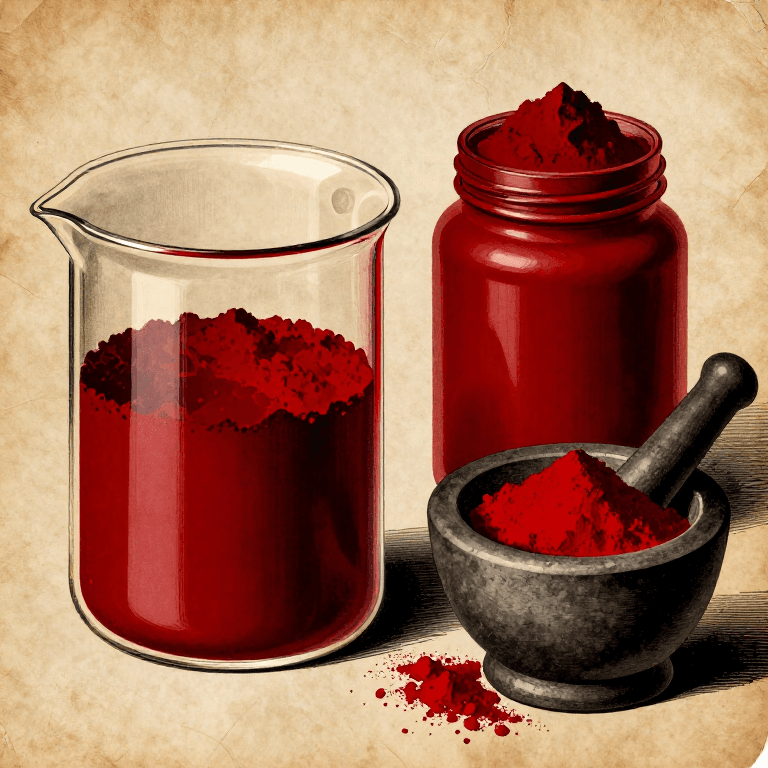
The pigment form — alizarin crimson lake — is made by precipitating synthetic alizarin onto an aluminium hydroxide substrate, creating a transparent, deep red-violet pigment beloved by painters from the Impressionists onward. Colour Index: PR83.
SAFETY WARNING: This process uses concentrated sulfuric acid (causes severe burns on contact), molten sodium hydroxide at over 200 °C (extreme burn and splash hazard), and hydrochloric acid (corrosive fumes). Work in a well-ventilated area or outdoors. Wear acid-resistant gloves, chemical splash goggles, and a lab coat at all times. Keep running water nearby for immediate decontamination.
この設計図で作るもの
関連ブループリント
これらのブループリントは知識を共有しています — 技術、材料、原理
Making Prussian Blue — The First Modern Synthetic Pigment (Berlin, 1704)
Charlie 作
アート
Perkin's Mauveine — The First Synthetic Aniline Dye from Coal Tar
Tex 作
繊維と革
Dyeing Turkey Red with Madder — The Most Important Red Dye in Human History
Tex 作
繊維と革
Making Cobalt Blue (Thénard's Blue) — The First Modern Synthetic Blue Pigment
Charlie 作
アート
Making Chrome Yellow — The Brilliant Lead Chromate Pigment of the 19th Century
Charlie 作
アート
Synthesising Vermillion from Mercury and Sulfur — The King of Red Pigments
Charlie 作
アート
Making Cadmium Red — The Brilliant Cadmium Selenide Pigment of the 20th Century
Charlie 作
アート
CC0 パブリックドメイン
このブループリントはCC0で公開されています。許可を求めずに、自由にコピー、修正、配布、あらゆる目的で使用できます。
メイカーを応援するには、ブループリント経由で製品を購入してください。メイカーには メイカーコミッション がベンダーにより設定されています。または、このブループリントの新しいイテレーションを作成し、自分のブループリントにコネクションとして含めて収益を共有できます。