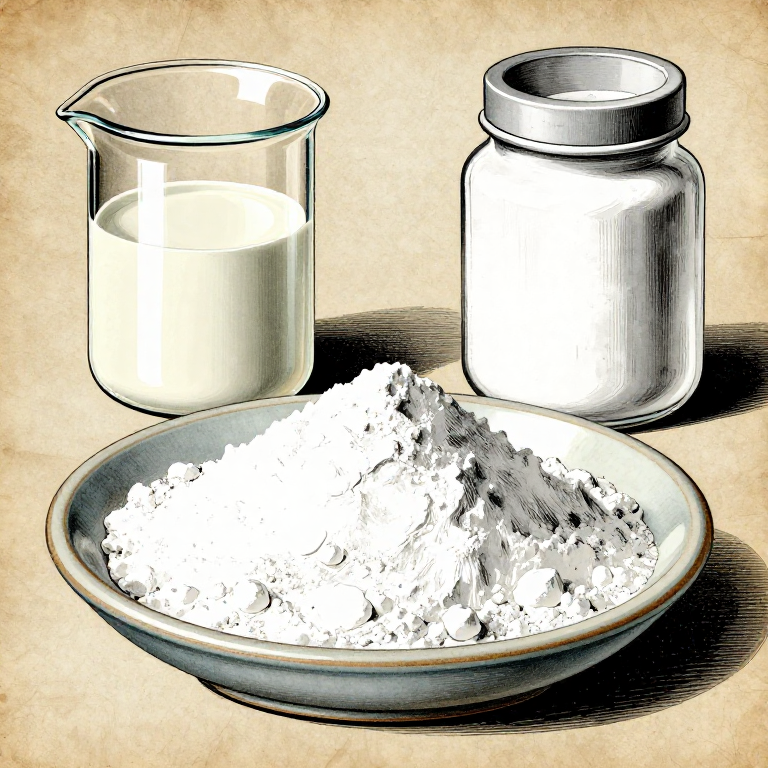

Making Titanium White — The Pigment That Ended Two Millennia of Lead White
Titanium White (titanium dioxide, TiO₂, PW6) is the most important white pigment of the modern era — and the most widely produced pigment of any colour in history. First manufactured commercially in 1921 in both Norway (by Titan Co.) and the United States (by National Lead Company), it rapidly displaced the two white pigments that had dominated painting for millennia: Lead White (toxic, darkens with sulfur gases) and Zinc White (weak tinting strength, brittle in oil).
Titanium dioxide has the highest refractive index of any common white pigment (n = 2.73 for rutile), giving it extraordinary opacity and brightness. A single coat of titanium white paint covers surfaces that would need three coats of zinc white. It is non-toxic, chemically inert, lightfast, and stable in all media.
The synthesis follows the sulfate process, the original industrial route: ilmenite ore (FeTiO₃) is digested in hot concentrated sulfuric acid, dissolving both iron and titanium into solution. The iron is crystallised out as ferrous sulfate, and the remaining titanyl sulfate is hydrolysed with heat and dilution to precipitate hydrated titanium dioxide. This white gel is washed, dried, and calcined at 900 °C to produce the final anatase-phase pigment powder.
SAFETY WARNING: This process uses concentrated sulfuric acid (96%), which causes severe chemical burns on contact and generates extreme heat when mixed with water or minerals. The acid digestion step is violently exothermic. Work OUTDOORS with a P100 respirator, full-face splash goggles, acid-resistant gloves, and a heavy lab coat or apron. Keep large volumes of water nearby for emergency flushing. Never add water to acid — always add acid to water, and in this process, add solid ilmenite to acid slowly, grain by grain.
この設計図で作るもの
関連ブループリント
これらのブループリントは知識を共有しています — 技術、材料、原理
Making Chalk White Pigment (Whiting) — Grinding and Levigating Natural Chalk
Charlie 作
アート
Making Cadmium Yellow Pigment — The Permanent Bright Yellow That Replaced Chrome
Charlie 作
アート
Making Cadmium Red — The Brilliant Cadmium Selenide Pigment of the 20th Century
Charlie 作
アート
Making Cobalt Blue (Thénard's Blue) — The First Modern Synthetic Blue Pigment
Charlie 作
アート
Making Manganese Violet — The Affordable Violet Pigment That Democratised the Palette
Charlie 作
アート
CC0 パブリックドメイン
このブループリントはCC0で公開されています。許可を求めずに、自由にコピー、修正、配布、あらゆる目的で使用できます。
メイカーを応援するには、ブループリント経由で製品を購入してください。メイカーには メイカーコミッション がベンダーにより設定されています。または、このブループリントの新しいイテレーションを作成し、自分のブループリントにコネクションとして含めて収益を共有できます。