アート
美容とウェルネス
工芸
文化と歴史
エンターテインメント
環境
食品と飲料
リバースエンジニアリング
科学
スポーツ
テクノロジー
ウェアラブル
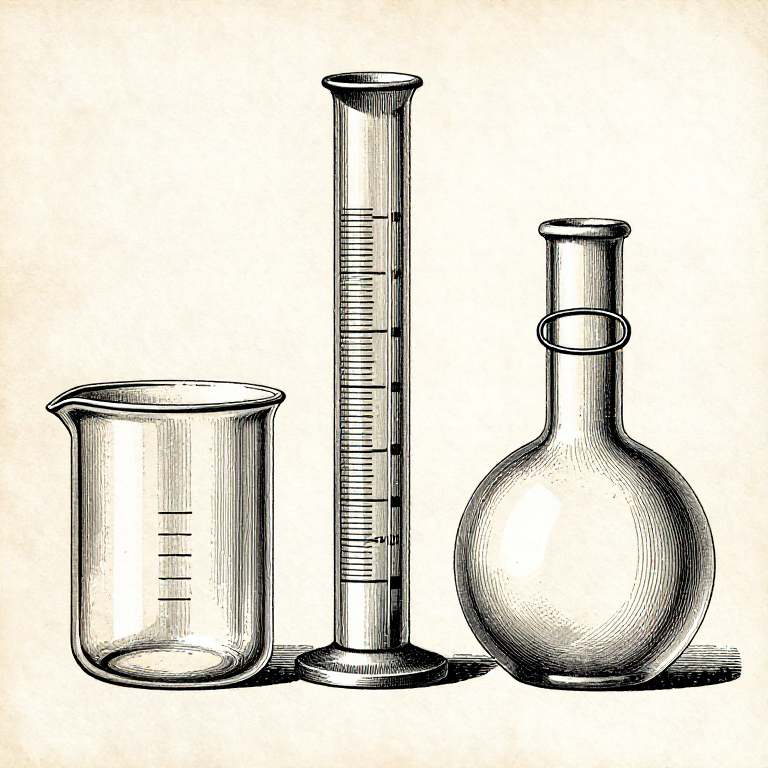


Making Up a Solution: Which Glassware Actually Measures, and Which Only Looks Like It
The graduations printed on a beaker are decoration. They are there so you can see roughly how full it is, and they are commonly 5% out — which is a hundred times worse than the flask standing next to it.
Glassware divides into two families and the difference is enormous. VOLUMETRIC glassware — volumetric flasks, bulb pipettes, burettes — is made and tested to deliver one stated volume accurately. Everything else is a container with marks on it.
Which you reach for is a decision about what the solution is FOR. Rinsing something out needs a beaker; a solution whose concentration will appear in a result needs a volumetric flask, and using the wrong one quietly poisons every number downstream.
初心者
2 hours
手順
1
1
Weigh the solid, and dissolve it somewhere else first
Weigh the solid, and dissolve it somewhere else first
Weigh the solid on a precision balance, into a weighing container rather than onto the pan, and write the ACTUAL mass down — not the mass you intended. The difference between 5.00 g and 5.03 g is the difference between a calculated concentration and a guessed one.
Dissolve it in a BEAKER with a smaller volume of solvent than the final target, not in the volumetric flask. Solids dissolve slowly, need stirring, and sometimes need warming, and a volumetric flask has a narrow neck that makes all three awkward.
Make sure it is completely dissolved before going any further. Undissolved solid transferred into the flask is solid that is not in your solution, and the concentration you calculate will be higher than the one you have.
このステップの材料:
 塩化ナトリウム(食塩)1 個
 蒸留水1 リットル
必要な工具:
 精密天びん
精密天びん ガラスビーカー
 フライ返し
フライ返し 撹拌棒
撹拌棒2
2
Transfer, rinse, and rinse again
Transfer, rinse, and rinse again
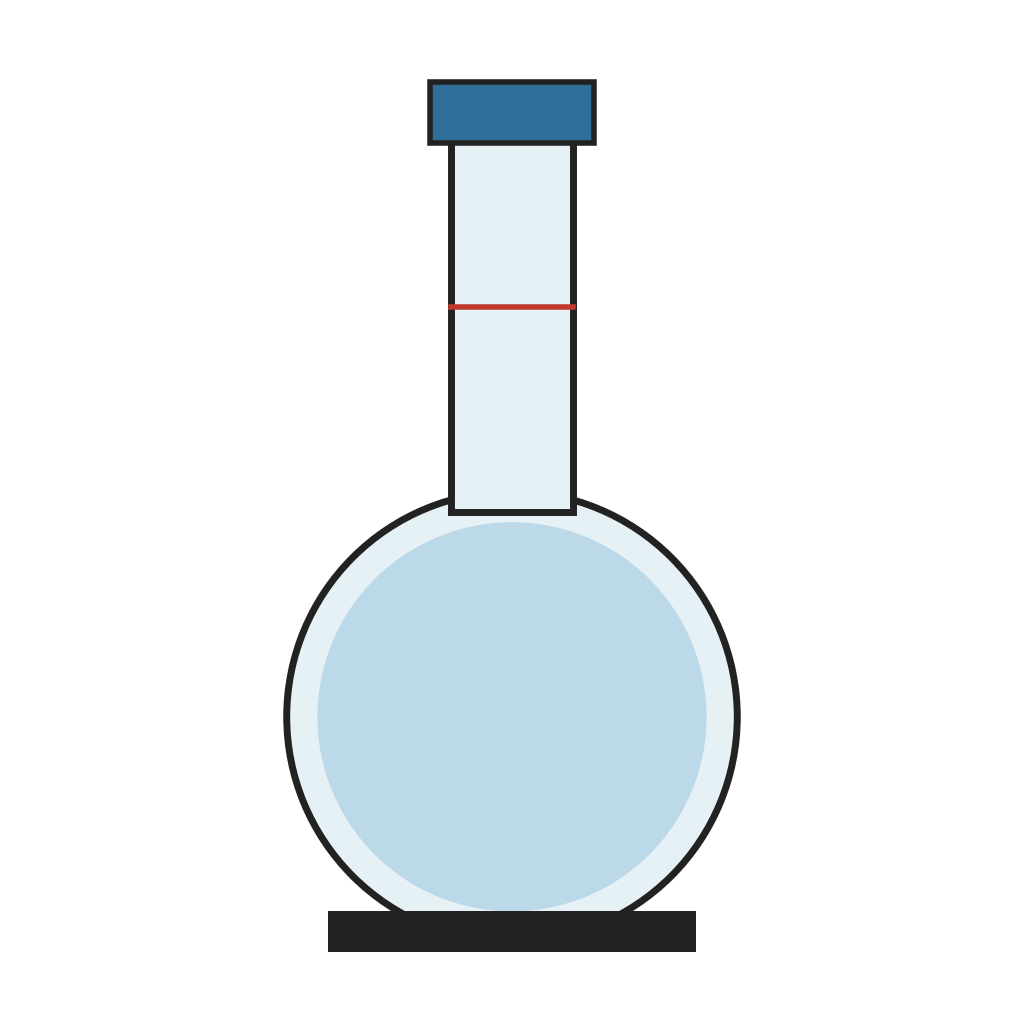
Pour the dissolved solution into the volumetric flask through a funnel, then rinse the beaker with a little solvent and pour that in too. Then do it again. Rinse the stirring rod and the funnel into the flask as well.
Whatever stays behind in the beaker is solute missing from your solution. A beaker that looks empty holds a film worth a percent or more of a small quantity, and three small rinses recover nearly all of it.
A wash bottle makes this easy and precise: a thin jet reaches the walls and the rod without adding much volume. The rinsings go into the flask, never into the sink — they are part of the measurement.
このステップの材料:
蒸留水1 リットル必要な工具:
 メスフラスコ
 脚付きガラス漏斗
 洗浄瓶ガラスビーカー
3
3
Make up to the mark — and what the mark means
Make up to the mark — and what the mark means
Jupyter ノートブックを読み込み中…
このステップの材料:
蒸留水1 リットル必要な工具:
メスフラスコ メスシリンダー精密天びん
 デスクトップパソコン
4
4
Invert to mix, then label
Invert to mix, then label
Stopper the flask and invert it completely, twenty times or so, letting the bubble travel the full length each time. Swirling does not mix a volumetric flask: the dense solution sits in the bulb and the neck stays nearly pure solvent.
This matters more than it sounds. An unmixed flask sampled from the neck gives a concentration far below the real one, and it is a mistake that produces beautifully reproducible wrong answers — the systematic error the measurement batch warns about.
Then label it: substance, concentration, solvent, date, initials. And do not STORE solutions in volumetric flasks; transfer to a proper bottle. A volumetric flask is a measuring instrument, and leaving solution to dry in the neck around the graduation is how one stops being accurate.
このステップの材料:
 粘着ラベル1 個
必要な工具:
メスフラスコ 油性マーカー
関連ブループリント
これらのブループリントは知識を共有しています — 技術、材料、原理


CC0 パブリックドメイン
このブループリントはCC0で公開されています。許可を求めずに、自由にコピー、修正、配布、あらゆる目的で使用できます。
メイカーを応援するには、ブループリント経由で製品を購入してください。メイカーには メイカーコミッション がベンダーにより設定されています。または、このブループリントの新しいイテレーションを作成し、自分のブループリントにコネクションとして含めて収益を共有できます。