アート
美容とウェルネス
工芸
文化と歴史
エンターテインメント
環境
食品と飲料
リバースエンジニアリング
科学
スポーツ
テクノロジー
ウェアラブル
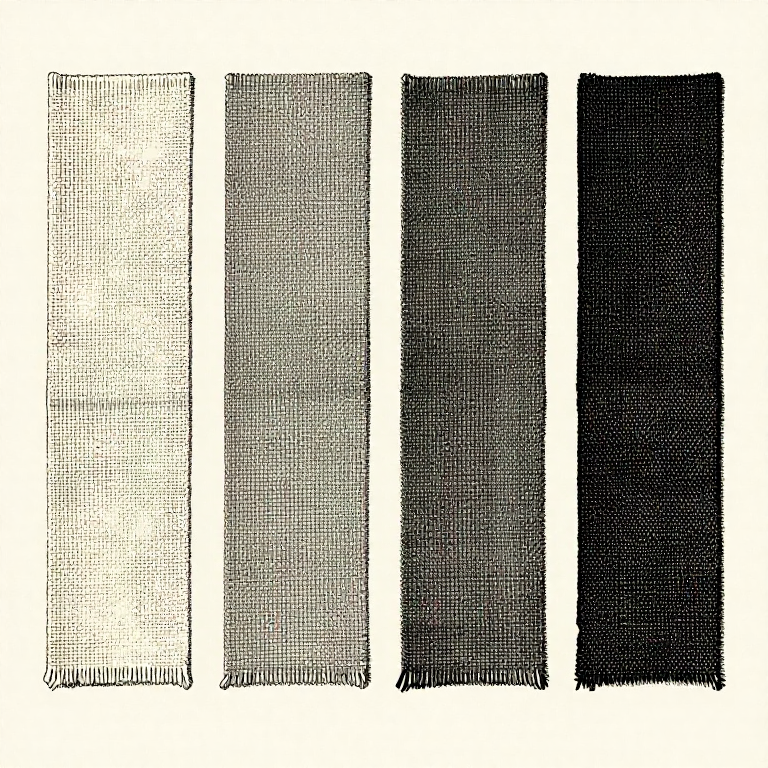


Mordants Beyond Alum: Why Cotton Needs Tannin and Iron Needs Restraint
A mordant is a metal salt that bonds to the fibre at one end and to the dye at the other. Without one, most natural dyes rinse straight out.
Alum on wool is the foundation and has its own blueprint. This rung is the next rung up: why the same alum does very little on cotton, what tannin does about it, what iron does to a colour as well as to its fastness, and which historical mordants are not worth using now.
The chemistry is worth knowing because it explains the recipes rather than replacing them.
中級者
5 hours
手順
1
1
Protein takes a mordant; cellulose barely does
Protein takes a mordant; cellulose barely does
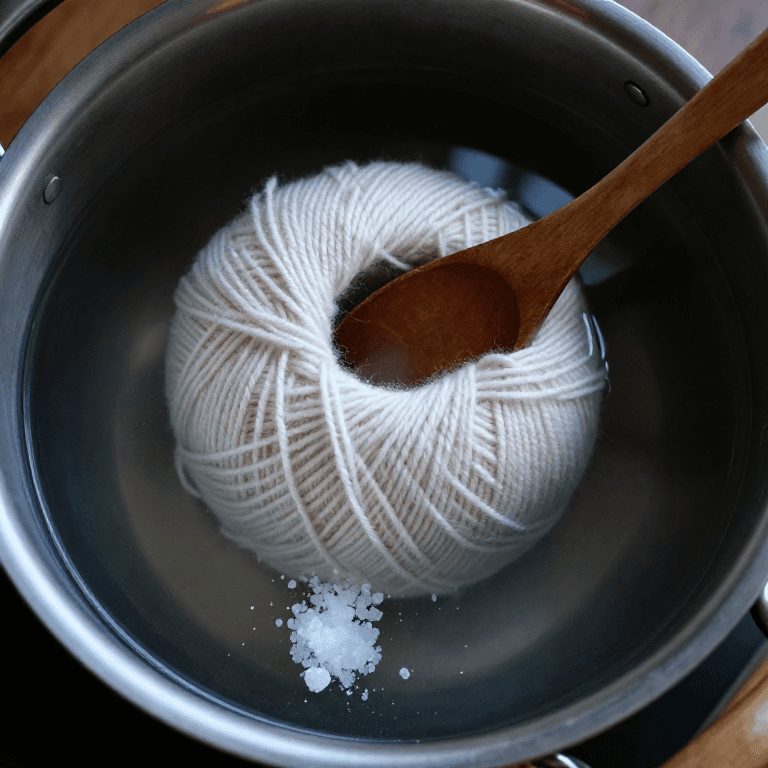
Wool and silk are proteins. Their chains carry amino and carboxyl groups all along them, and a metal ion such as aluminium bonds readily to those. That is why 15% alum on wool simply works.
Cotton, linen and hemp are cellulose — long chains of sugar rings with hydroxyl groups and very little else. Aluminium has almost nothing to hold onto, so alum alone on cotton gives a pale, patchy, poorly fast result. This is the single commonest disappointment in natural dyeing, and it is not a technique failure.
The answer worked out centuries ago is to give the cellulose something to hold the metal: **tannin**. Tannins bond to cellulose, and metal ions bond to tannins, so the tannin acts as a bridge between the fibre and the mordant.
That is why every serious cotton recipe has a tannin step in it and no wool recipe needs one.
このステップの材料:
 綿布(薄手)2 m
 未染色の毛糸1 かせ
 ミョウバン(カリミョウバン)1 個
必要な工具:
 大鍋
大鍋 精密天びん
精密天びん2
2
The tannin then alum sequence for cellulose
The tannin then alum sequence for cellulose
The classic cellulose preparation is **scour, tannin, alum**, and often tannin and alum twice over for a deep shade.
**Tannin bath.** Oak galls, sumac, myrobalan or tara at roughly 8 to 15% WOF, dissolved in hot water, the fibre entered warm and left overnight as it cools. Gallnuts are the strongest and the least coloured; sumac and myrobalan both carry a yellow of their own that shifts the final shade.
**Alum bath.** 15 to 20% WOF alum, warm, again left to cool. Some recipes add washing soda to the alum bath to help the aluminium fix; that is real, and it is also why the alum bath for cotton is not the same as the one for wool.
Rinse lightly between the two but do not scrub. The tannin is meant to stay on the fibre.
A tannin-mordanted cotton looks faintly cream or buff before dyeing. That is normal and it is the reason a pure white is difficult on cellulose with natural dyes.
このステップの材料:
綿布(薄手)2 m リネン生地1 m
 没食子1 個ミョウバン(カリミョウバン)1 個
 炭酸ナトリウム(洗濯ソーダ)1 個
必要な工具:
大鍋精密天びん 温度計
温度計 ゴム手袋
ゴム手袋 細目のこし器
3
3
Iron: a modifier as much as a mordant
Iron: a modifier as much as a mordant
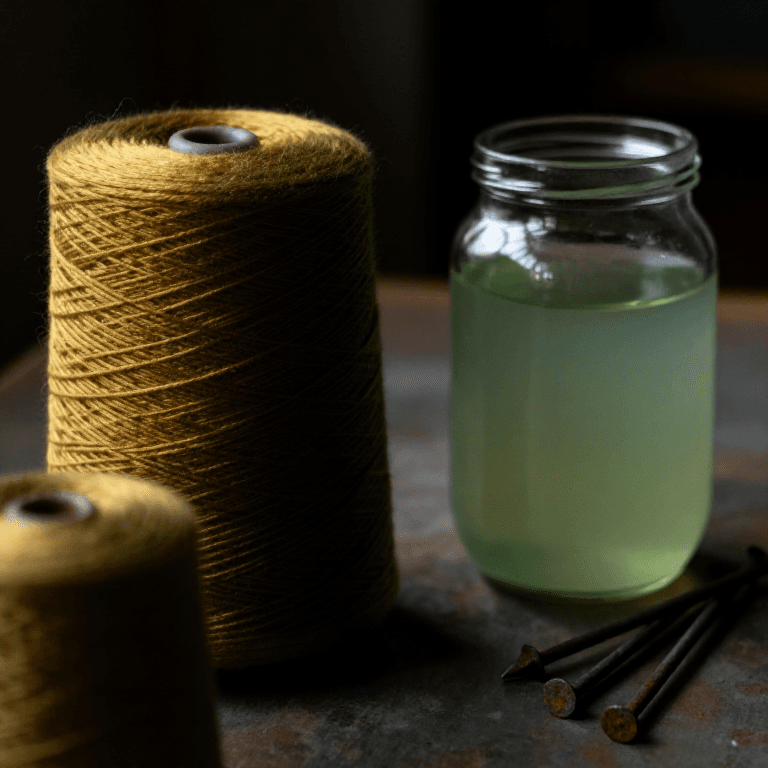
Ferrous sulfate is the other mordant every dyer ends up using, and it behaves differently from alum in two ways.
**It changes the colour, strongly.** Iron darkens and dulls: yellows go olive, reds go plum or brown, and a tannin-rich dye plus iron goes grey to black — which is how iron-gall ink and most historical blacks were made. Alum is close to colour-neutral; iron never is.
**A little goes a very long way.** 1 to 4% WOF is a normal amount. At much more than that the fibre is harsh, and on wool and silk iron in quantity actually weakens the fibre over years — historical black silks are notorious for shattering for exactly this reason.
It can be used before dyeing as a mordant, or afterwards as a modifier dip, which is what the iron-saddening blueprint covers in detail. Used afterwards it is far easier to control, because the colour can be watched and the fibre lifted when it is right.
Keep an iron pot and an iron spoon separate from everything else. Iron contamination of an alum bath is invisible until the colour comes out muddy.
このステップの材料:
 硫酸鉄1 個未染色の毛糸2 かせ没食子1 個
必要な工具:
大鍋精密天びん ふた付きガラス瓶ゴム手袋
 火ばさみ
火ばさみ4
4
What cream of tartar does, and what to leave alone
What cream of tartar does, and what to leave alone
**Cream of tartar** at 6 to 8% WOF is added to the alum bath for wool. It acidifies the bath, which helps the aluminium take up evenly, and it keeps the wool soft where alum alone can leave it slightly sticky. It also brightens some reds. It is not itself a mordant.
Three traditional mordants are better left in the history books:
**Chrome** (potassium dichromate) gives beautiful deep colours and is a confirmed carcinogen whose waste cannot responsibly go down a drain.
**Tin** (stannous chloride) brightens scarlets dramatically and embrittles the fibre badly if overdone; it is also an irritant.
**Copper** (copper sulfate) shifts colours green and is toxic to aquatic life at very low concentration.
Alum, tannin and iron cover most of what the others did, and all three can be used in a domestic kitchen and disposed of sensibly. Alum-spent baths can go on the garden in moderation; iron baths should be diluted heavily first.
Whatever is used: dedicated pots, gloves, a mask when weighing powders, and nothing that will later hold food.
このステップの材料:
ミョウバン(カリミョウバン)1 個 クリームターター(酒石英)1 個未染色の毛糸2 かせ
必要な工具:
精密天びん 防じんマスク
 耐薬品手袋大鍋
 情報カード
情報カード材料
8- 4 mプレースホルダー
- 5 かせプレースホルダー
- プレースホルダー
- 1 mプレースホルダー
- 1 個プレースホルダー
- プレースホルダー
- 1 個プレースホルダー
- プレースホルダー
この設計図で作るもの
関連ブループリント
これらのブループリントは知識を共有しています — 技術、材料、原理

CC0 パブリックドメイン
このブループリントはCC0で公開されています。許可を求めずに、自由にコピー、修正、配布、あらゆる目的で使用できます。
メイカーを応援するには、ブループリント経由で製品を購入してください。メイカーには メイカーコミッション がベンダーにより設定されています。または、このブループリントの新しいイテレーションを作成し、自分のブループリントにコネクションとして含めて収益を共有できます。