アート
美容とウェルネス
工芸
文化と歴史
エンターテインメント
環境
食品と飲料
リバースエンジニアリング
科学
スポーツ
テクノロジー
ウェアラブル
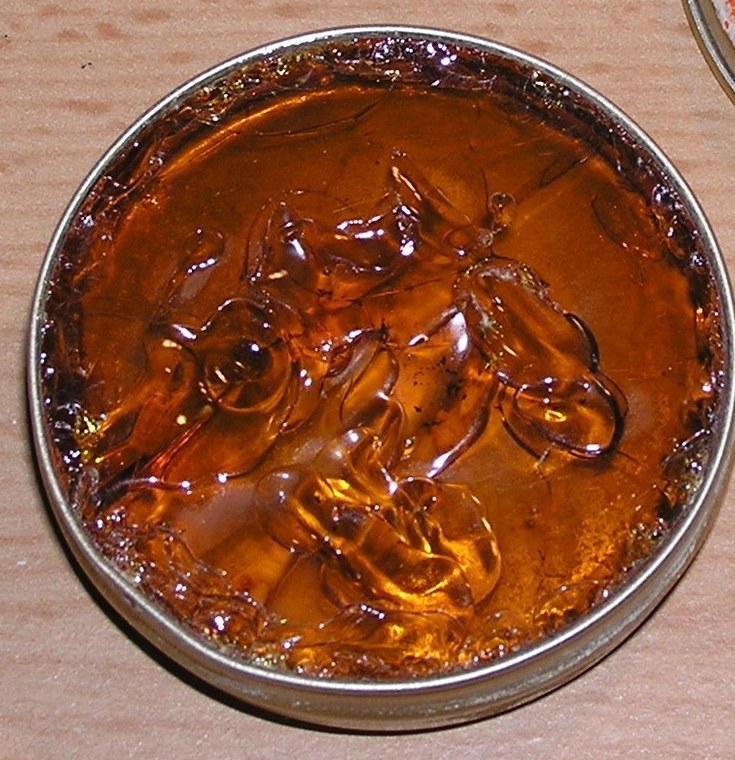


Plastic Rosin Flux: Ripley, 1929
Perry C. Ripley of Chicago, for the Kester Solder Company, patented this flux in 1929, US 1,724,680. In cored solder the heat releases the flux onto the surfaces to be joined. Rosin in the usual dry, powdered form cracks, lets in air and moisture and decomposes. Mixed with turpentine, rosin stays permanently plastic: it does not crystallise or crack, and it keeps air and moisture out. Ripley made it as the core of rosin-core solder.
初心者
Workshop process
手順
1
1
Melt the rosin
Melt the rosin
Melt the rosin in a suitable container until it is fluid.
このステップの材料:
 松脂(ロジン)1 as required
必要な工具:
 鍋
 ホットプレート
2
2
Add the turpentine
Add the turpentine
Add turpentine as the plasticiser, from 2% to 50% by weight depending on the grade of rosin, since rosins contain varying amounts of fluids. It may also be added while the rosin is still melting. Ripley lists other solvents (kerosene, naphtha, alcohol, acetone and more), but chose turpentine: it is not very volatile at soldering temperatures and does not conduct electricity.
このステップの材料:
 テレビン油1 as required
必要な工具:
 はかり
3
3
Mix thoroughly
Mix thoroughly
Agitate the rosin and turpentine mechanically until the turpentine has penetrated the whole rosin mass. The result is a rosin flux in a substantially permanent plastic form.
必要な工具:
 撹拌棒


関連ブループリント
これらのブループリントは知識を共有しています — 技術、材料、原理


CC0 パブリックドメイン
このブループリントはCC0で公開されています。許可を求めずに、自由にコピー、修正、配布、あらゆる目的で使用できます。
メイカーを応援するには、ブループリント経由で製品を購入してください。メイカーには メイカーコミッション がベンダーにより設定されています。または、このブループリントの新しいイテレーションを作成し、自分のブループリントにコネクションとして含めて収益を共有できます。