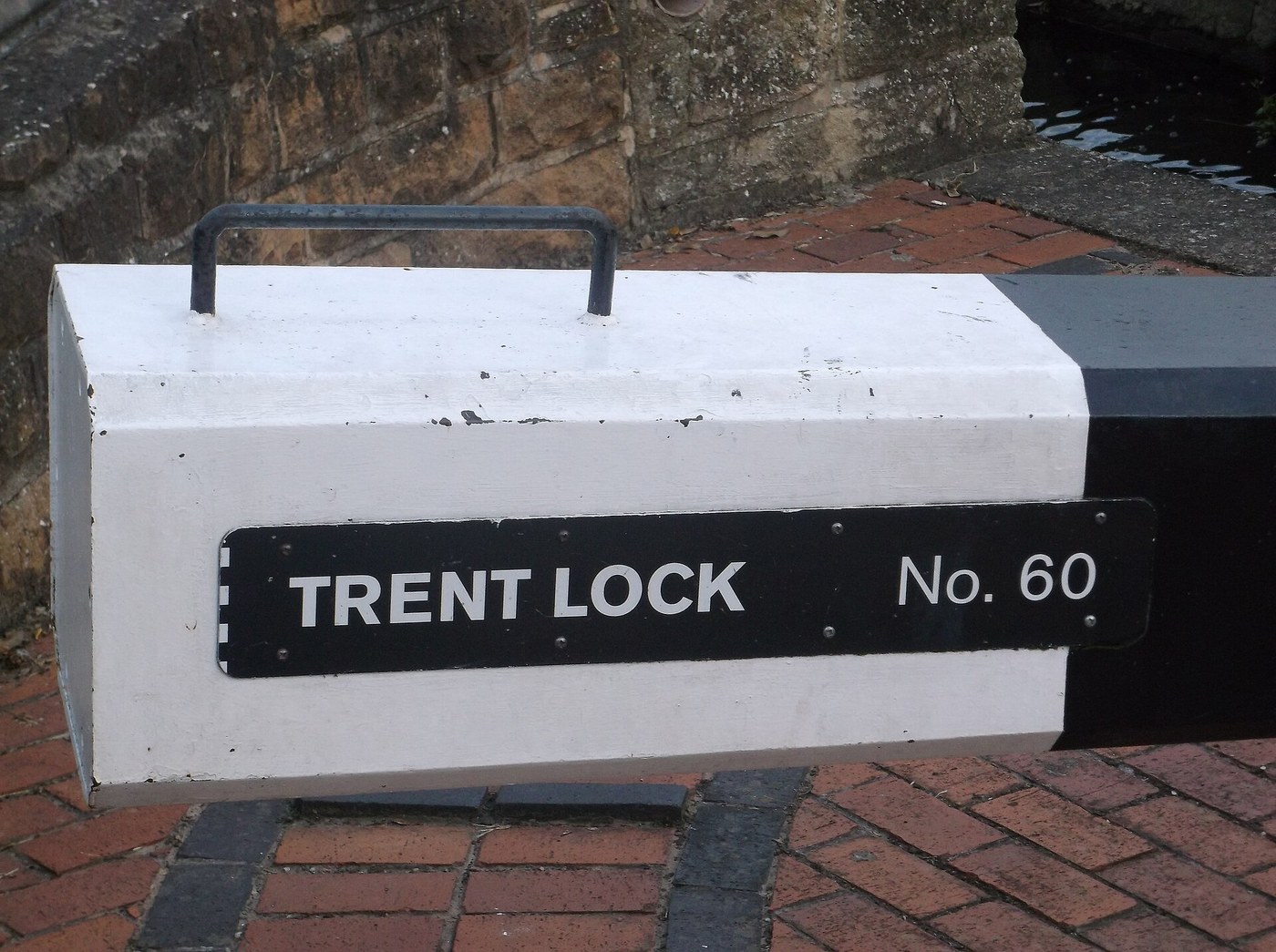


Pound Lock
手順
Build a two-level tank
Build a two-level tank
Two pounds at different levels with a chamber between them.
- Divide a long tank into three: upper pound, chamber, lower pound.
- Make the dividing walls with gate-sized openings.
- Set the upper pound's level several centimetres above the lower.
このステップの材料:
 合板1 パック
Fit mitre gates and see them self-seal
Fit mitre gates and see them self-seal
Two leaves meeting at an angle, pointing UPSTREAM.
- Hinge two gate leaves so they close into a shallow V pointing toward the higher water.
- Close them and raise the level on the pointed side.
- Try to push them open against that head.
このステップの材料:
 松板1 board
Add paddles and cycle the lock
Add paddles and cycle the lock
You never open a gate against a head — you equalise first.
- Cut small sliding paddles in each gate.
- With both gates shut and a boat in the chamber, open the upper paddle only.
- Wait until the levels match, then open the upper gate and float the boat out.
- Reverse the sequence to descend.
このステップの材料:
 木ダボ棒1 個
Measure the water each passage costs
Measure the water each passage costs
Every boat that goes up spends a lockful of water from the summit.
- Measure the chamber area and the rise.
- Volume per passage = area × rise.
- Multiply by a realistic number of daily passages.
必要な工具:
 定規
定規 ストップウォッチ
History and context
History and context
Before pound locks, waterways used flash locks: a removable section of weir that released a surge of water for a boat to ride down, or to be winched up through. They wasted enormous quantities of water, were dangerous, and required the two directions of traffic to negotiate. The pound lock's chamber holds a controlled amount instead of releasing a flood.
Chinese priority is well documented. Chhiao Wei-Yo built a double-gated lock on the Grand Canal in 984, some four centuries before the European examples. Europe's earliest confirmed pound lock is at Vreeswijk in the Netherlands in 1373.
Leonardo's contribution is the gate shape. As engineer to Milan in 1497 he introduced mitre gates on the Naviglio system — the V pointing upstream, self-sealing under head. It is a rare case of a Leonardo design that was built, worked, and is still the standard five centuries later.
What it enabled: canals could cross undulating country instead of following contours forever, and the British canal boom of the eighteenth century — which carried the coal and iron of the early industrial revolution before railways existed — depended on it entirely. The Panama Canal is the same device at maximum scale: its locks lift ships 26 metres, still by gravity, still with no pumps in the lift itself.
CC0 パブリックドメイン
このブループリントはCC0で公開されています。許可を求めずに、自由にコピー、修正、配布、あらゆる目的で使用できます。
メイカーを応援するには、ブループリント経由で製品を購入してください。メイカーには メイカーコミッション がベンダーにより設定されています。または、このブループリントの新しいイテレーションを作成し、自分のブループリントにコネクションとして含めて収益を共有できます。