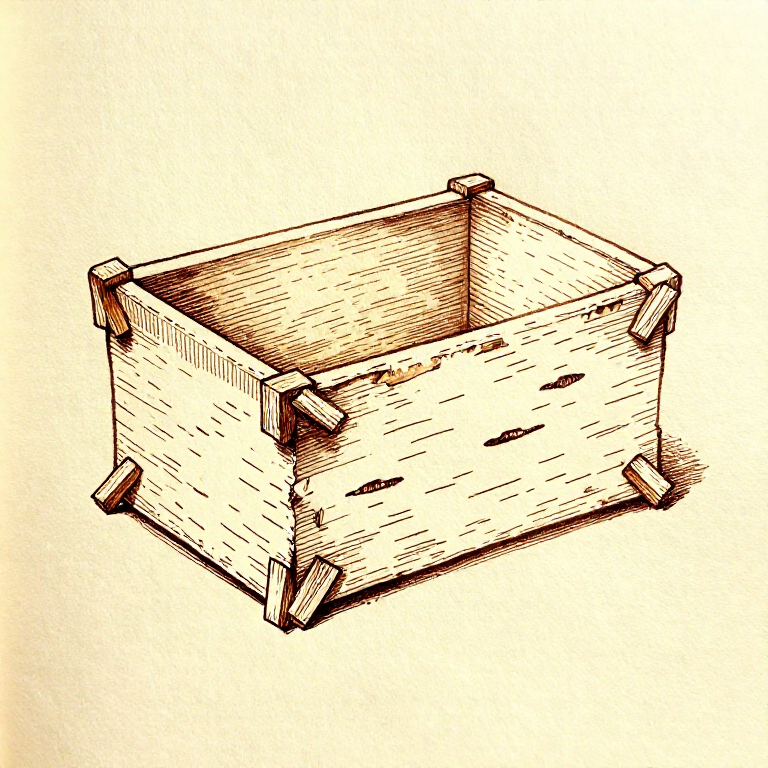


Folding a Birch Bark Container — Waterproof Vessel Without Adhesives
手順
Harvest and Flatten the Bark
Harvest and Flatten the Bark
Select a mature birch tree (at least 20 cm diameter) in late May or June when sap flow is at its peak and the bark peels most readily. Score a rectangle on the trunk using a flint blade, cutting only through the outer white bark — never into the inner bark (cambium), which would damage the tree. Peel the rectangle away in one sheet. The outer surface of the bark (the white side with horizontal lenticels) becomes the inside of the container because it is smoother and more waterproof. Lay the sheet flat, white side up, on a smooth stone surface. If the bark curls, weight the edges with stones and let it relax for 10-15 minutes.
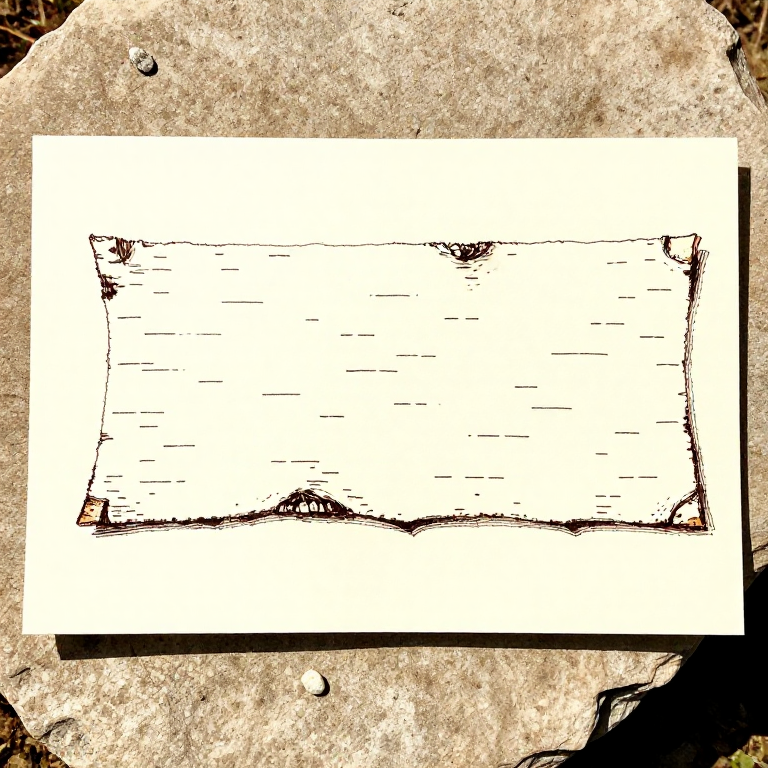
このステップの材料:
 白樺の樹皮シート1 sheet, approximately 40 x 30 cm cm
 木ダボ棒8-12 pegs 個
必要な工具:
 フリントナイフ
 平石(こて/成形具)
Score the Fold Lines
Score the Fold Lines
Using the tip of a flint blade, score four parallel lines on the inner (brown) surface of the bark to define the base of the container. These scored lines create controlled fold points — without scoring, birch bark tends to crack along its natural grain rather than folding cleanly. The base rectangle should be approximately 15 x 10 cm, centered on the sheet, leaving roughly equal margins on all four sides. Score gently — the line should compress the bark fibres without cutting through. At each corner of the base rectangle, score a diagonal line at 45 degrees from the corner outward to the nearest edge; these diagonals become the corner folds.
Fold Up the Walls
Fold Up the Walls
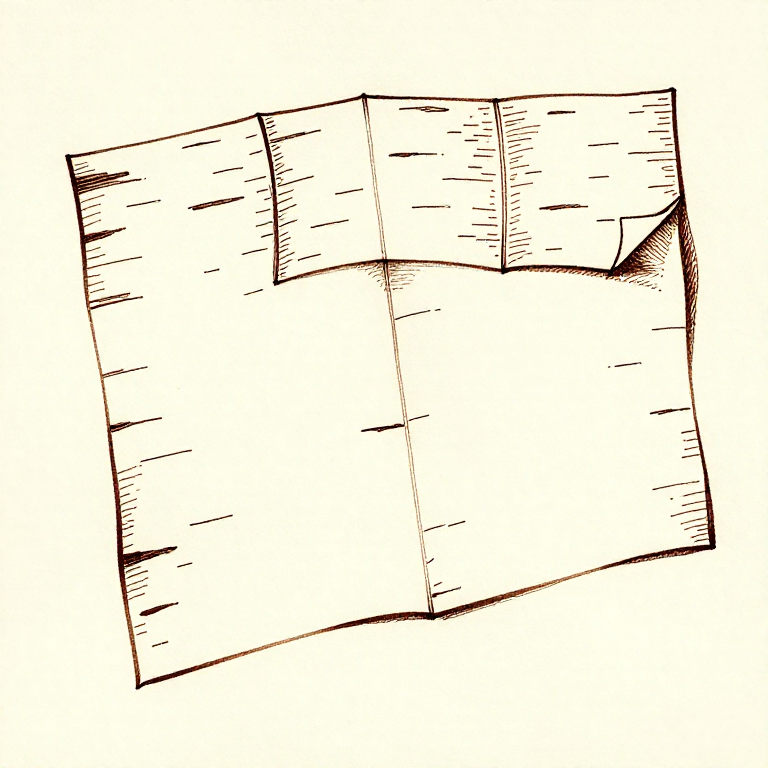
Working along the scored lines, fold all four walls upward along the base score lines. The bark should bend cleanly at the scored crease. At each corner, the diagonal score creates a triangular flap; fold this flap flat against the adjacent wall, overlapping it. Press firmly to set the fold. If the bark resists bending, warm it briefly near a fire or dip it in warm water — heat temporarily softens the betulin and makes the bark more pliable. All four corners should now show a neat triangular overlap where the wall panels meet.
Peg the Corners
Peg the Corners
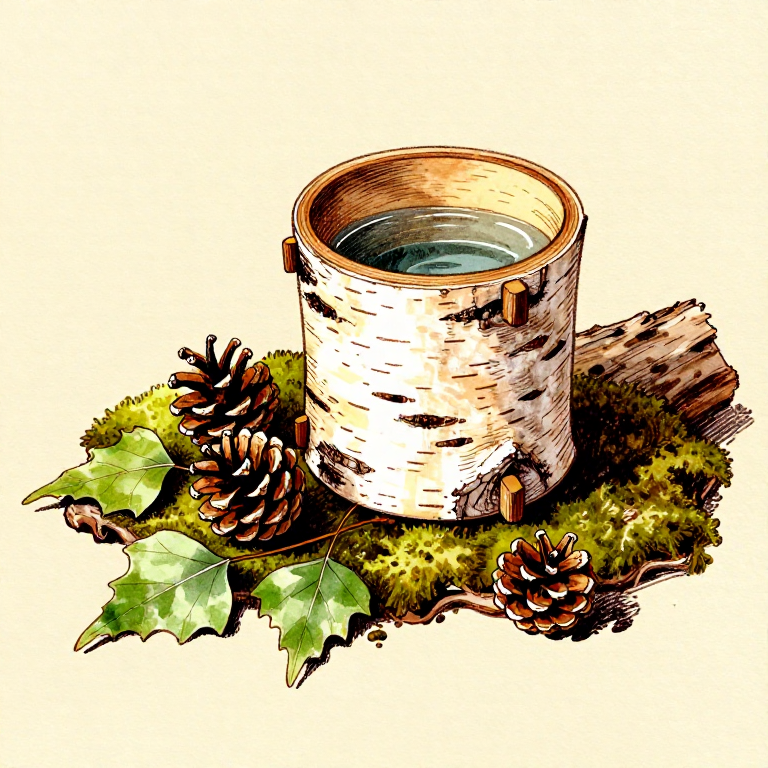
Pierce through the overlapping bark layers at each corner using a sharpened thorn or thin wooden peg. Hawthorn (Crataegus spp.) and blackthorn (Prunus spinosa) thorns are ideal because they taper to a fine point and grip well once inserted. Push the thorn through both layers of bark at each corner, about 1 cm below the rim. Two pegs per corner — one near the top and one near the base — provide secure fastening. The natural spring of birch bark presses against the pegs and holds the fold tight. No binding or adhesive is needed; the structural tension of the folded bark combined with the pegs creates a stable, self-supporting vessel.
Test for Watertightness
Test for Watertightness
Fill the container with water and check for leaks at the corners and fold lines. Fresh birch bark is naturally watertight — the betulin in the outer bark repels water effectively. Minor seepage at corners can be sealed by rubbing a small amount of pine resin or spruce gum along the overlapping edges. The finished container holds approximately 1-2 litres and can be used for collecting berries, carrying water, storing dried foods, or even boiling water by dropping hot stones into it (the water prevents the bark from burning as long as it stays below the water line). Birch bark containers were essential utilitarian objects throughout the northern boreal forests; the Ojibwe, Cree, and Sami peoples all developed sophisticated birch bark container traditions.
材料
3- 1 sheet, approximately 40 x 30 cm cmプレースホルダー
- 8-12 pegs 個プレースホルダー
- Thin wooden pegs or thorns (hawthorn or blackthorn)8-12 pegs 個
CC0 パブリックドメイン
このブループリントはCC0で公開されています。許可を求めずに、自由にコピー、修正、配布、あらゆる目的で使用できます。
メイカーを応援するには、ブループリント経由で製品を購入してください。メイカーには メイカーコミッション がベンダーにより設定されています。または、このブループリントの新しいイテレーションを作成し、自分のブループリントにコネクションとして含めて収益を共有できます。