アート
美容とウェルネス
工芸
文化と歴史
エンターテインメント
環境
食品と飲料
リバースエンジニアリング
科学
スポーツ
テクノロジー
ウェアラブル
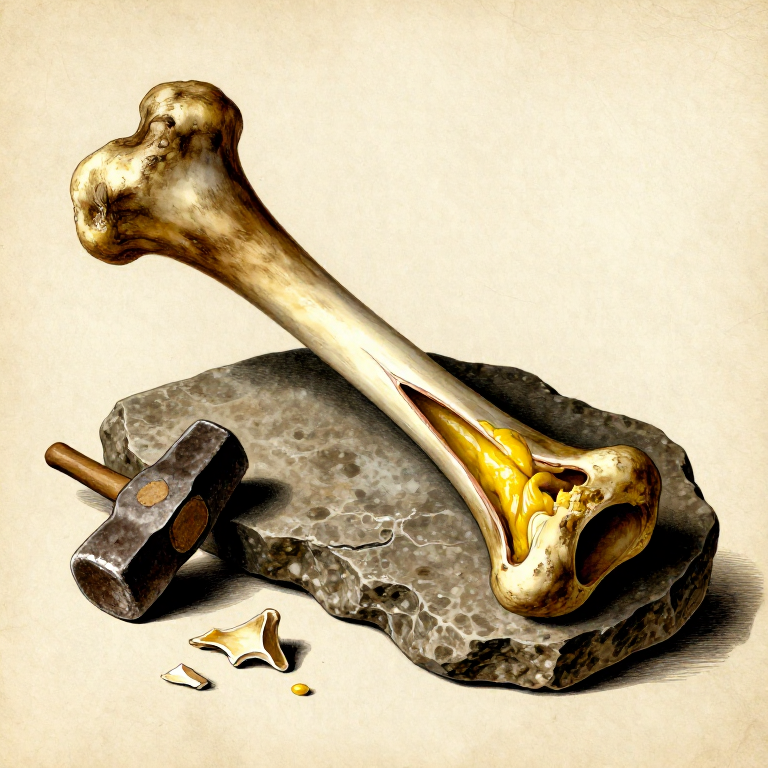


Extracting Bone Marrow by Percussion Splitting — Prehistoric Calorie-Dense Food Processing
Bone marrow was one of the most calorie-dense and nutritious foods available to prehistoric humans — a single femur from a large ungulate like a deer yields 50 to 100 grams of marrow containing roughly 800 calories per 100 grams, predominantly monounsaturated and saturated fats along with protein, iron, and fat-soluble vitamins A and K. Archaeological evidence of intentional percussion-fractured long bones for marrow extraction dates back over 2 million years at sites like Olduvai Gorge in Tanzania and Swartkrans in South Africa, making it one of humanity's earliest food-processing activities. The technique exploits the structural geometry of long bones: the shaft (diaphysis) is a hollow cylinder of dense cortical bone surrounding a marrow cavity, while the rounded ends (epiphyses) are spongy trabecular bone with little accessible marrow. By striking the mid-shaft against a stone anvil with a hammerstone, the bone splits cleanly along its long axis, exposing the soft fatty marrow inside. Marrow can be eaten raw — it has a rich, buttery flavour and smooth texture — or added to hot-stone broth for calorie enrichment. This blueprint teaches the complete anvil-and-hammer technique using only stone-age tools, from selecting appropriate bones to extracting every gram of marrow.
初心者
30-60 minutes
手順
1
1
Select Fresh Long Bones from Large Animals
Select Fresh Long Bones from Large Animals
Choose long bones — femur, tibia, or humerus — from freshly butchered large ungulates such as deer, elk, cattle, or bison. The bones should be fresh (butchered within the past day or two) for maximum marrow quality. Fresh marrow is soft, pinkish-yellow, and fatty; old marrow turns grey, dries out, and develops an off smell. The femur yields the most marrow due to its large diameter. Avoid short bones (vertebrae, ribs) and flat bones (pelvis, scapula) — they contain red marrow rather than the fatty yellow marrow found in long bone shafts. Collect 3 to 5 long bones for a substantial meal.
このステップの材料:
 動物の長骨4 個
2
2
Clean the Bones of Remaining Meat and Periosteum
Clean the Bones of Remaining Meat and Periosteum
Use a flint knife to scrape off any remaining meat, tendons, and the thin membrane (periosteum) that covers the bone surface. A clean bone is easier to grip and split cleanly. Save the scraped-off meat and tendon scraps for broth or other cooking. The periosteum is a tough fibrous layer that can deflect hammerstone blows if left intact, causing glancing strikes rather than clean fractures.
必要な工具:
 フリントナイフ
3
3
Set Up a Flat Stone Anvil
Set Up a Flat Stone Anvil
Place a large, flat, stable stone on firm ground to serve as an anvil. The stone should be at least 30 cm across and 10 cm thick — heavy enough not to shift under impact. Granite, basalt, or any dense flat rock works well. The anvil surface should be relatively smooth and level so the bone rests steadily without rolling. If the ground is soft, press the anvil stone down firmly into the soil to prevent it from rocking during strikes.
このステップの材料:
 平らな石板1 個
4
4
Position the Bone on the Anvil
Position the Bone on the Anvil
Lay the long bone horizontally across the anvil stone with the mid-shaft (the narrowest part of the bone, roughly halfway between the two bulbous ends) centred on the stone. The mid-shaft has the thinnest cortical bone walls and the widest marrow cavity — this is the optimal strike point. Do not place the rounded epiphyses (joint ends) on the anvil — they are spongy trabecular bone that crumbles rather than splitting cleanly, and they contain red marrow rather than the desired fatty yellow marrow.
5
5
Strike the Mid-Shaft with a Hammerstone
Strike the Mid-Shaft with a Hammerstone
Grip a dense, fist-sized hammerstone (a smooth river cobble of granite or quartzite, 400 to 800 grams) firmly in your dominant hand. Strike the bone sharply at the mid-shaft with a single firm downward blow. Aim for a controlled, decisive strike — not a wild swing. The bone should crack audibly. If it does not split on the first blow, rotate the bone 90 degrees and strike again at the same location. Most long bones from deer-sized animals split in 1 to 3 blows. Larger bones (bison, cattle) may need 3 to 5 firm strikes.
必要な工具:
 敲石(ハンマーストーン)
6
6
Open the Bone Along the Fracture
Open the Bone Along the Fracture
Once the bone has cracked, grip the two halves and pull them apart. If the fracture has only partially propagated, wedge a thick stick or antler tine into the crack and twist to lever it open. The marrow cavity will be exposed — a channel running the full length of the shaft, filled with soft, fatty, pinkish-yellow marrow. On a deer femur, this cavity is typically 2 to 3 cm in diameter and 15 to 20 cm long.
7
7
Extract the Marrow with a Bone Splinter or Stick
Extract the Marrow with a Bone Splinter or Stick
Use a thin stick, a bone splinter from the fracture itself, or a bone awl to scoop and scrape the marrow out of the cavity. Work from one end to the other, pressing the tool along the inner wall of the cavity to dislodge all the marrow. The marrow should come out in soft, buttery chunks. Scrape thoroughly — marrow clings to the inner bone surface and a casual scoop will leave a third of it behind. Collect the extracted marrow on a clean flat stone or bark sheet.
必要な工具:
 骨の錐
骨の錐8
8
Eat Raw or Lightly Warm for Immediate Consumption
Eat Raw or Lightly Warm for Immediate Consumption
Fresh bone marrow can be eaten raw immediately — it has a rich, buttery, slightly meaty flavour with a smooth, spreadable texture similar to soft butter. Raw marrow was a primary calorie source for prehistoric humans, especially in cold climates where fat was essential for thermoregulation. If you prefer it warm, place the split bone halves directly next to a fire (not in the flames) for 5 to 10 minutes, allowing the marrow to soften and become liquid without burning. The warmed marrow can be sipped directly from the bone cavity.
9
9
Add Marrow to Hot-Stone Broth for Calorie Enrichment
Add Marrow to Hot-Stone Broth for Calorie Enrichment
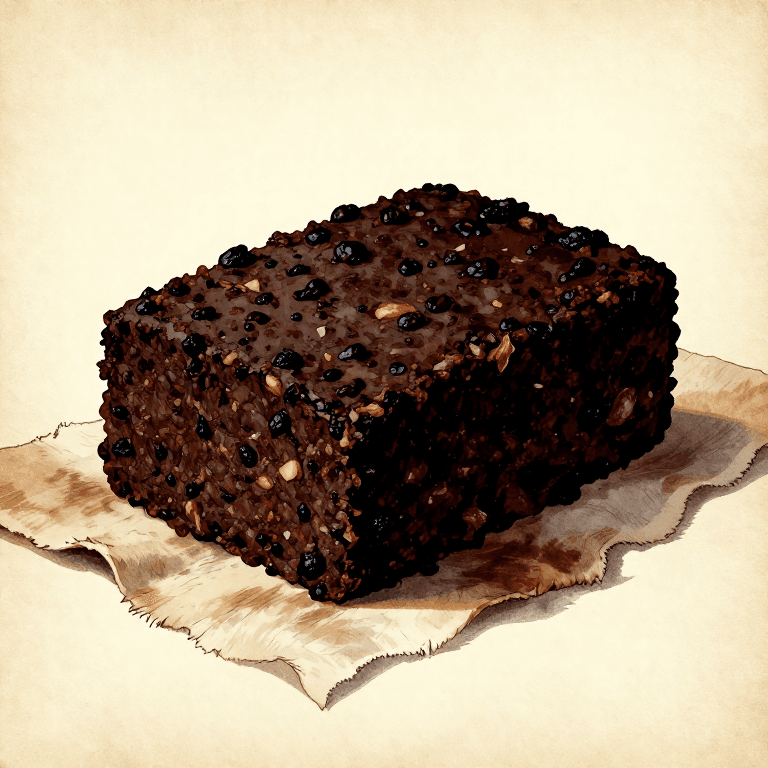
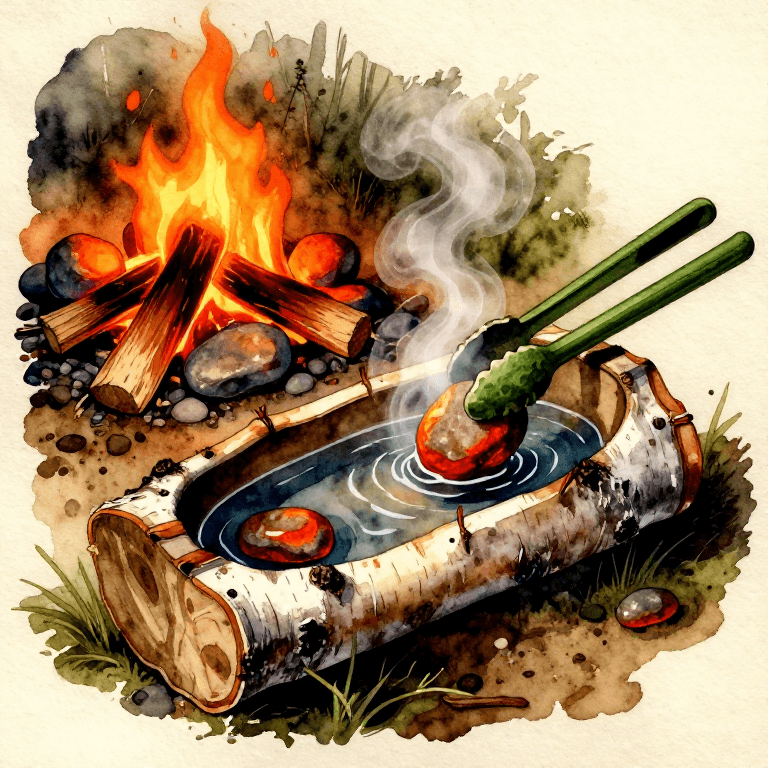
For a more substantial meal, add extracted marrow chunks to water being boiled by the hot-stone method. The marrow dissolves into the broth, creating a rich, fatty, calorie-dense soup. This technique combines marrow extraction with hot-stone boiling to make a complete prehistoric meal. A single deer femur's worth of marrow enriches 2 litres of broth with approximately 400 to 500 calories of pure fat. The resulting broth has a silky mouthfeel and deep savoury flavour.
10
10
Process the Remaining Bone Fragments
Process the Remaining Bone Fragments
Do not discard the split bone halves. The sharp edges of freshly fractured bone can serve as cutting tools or be further shaped into bone awls, needles, or scrapers. The spongy epiphyses can be added to a broth pot — prolonged boiling (several hours by hot-stone method) extracts gelatin and minerals from the trabecular bone, producing a nutritious stock. Bones were among the most thoroughly utilized materials in prehistoric life — nothing was wasted.
接続ブループリントの材料
この設計図で作るもの
関連ブループリント
これらのブループリントは知識を共有しています — 技術、材料、原理
Boiling Water with Hot Stones in a Bark Container — Stone Boiling
Bob 作
荒野
75
0
0
0
1
0
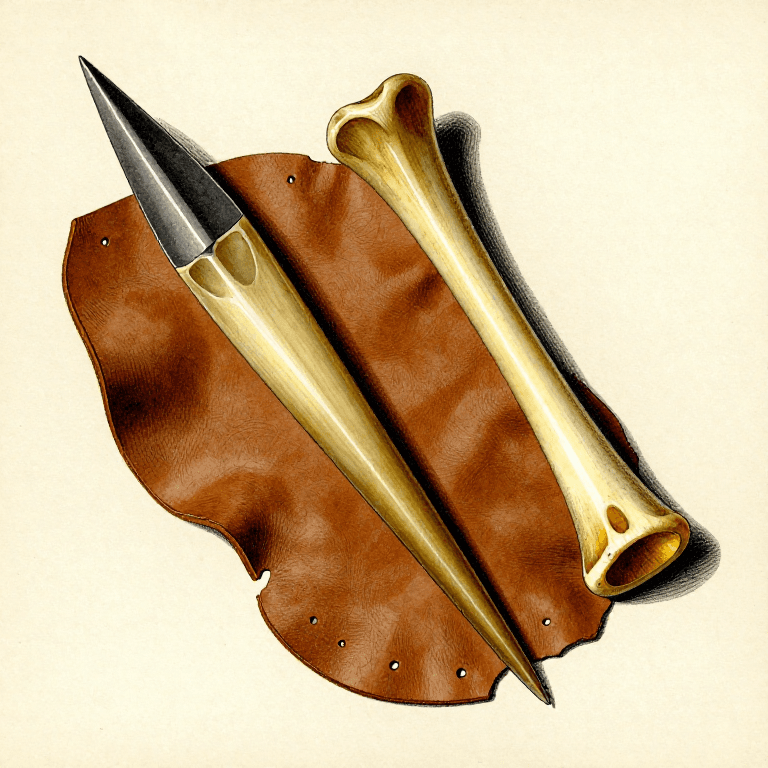
Making a Bone Awl — Piercing Tool for Sewing and Basketry
Mary 作
荒野
63
0
0
0
2
0
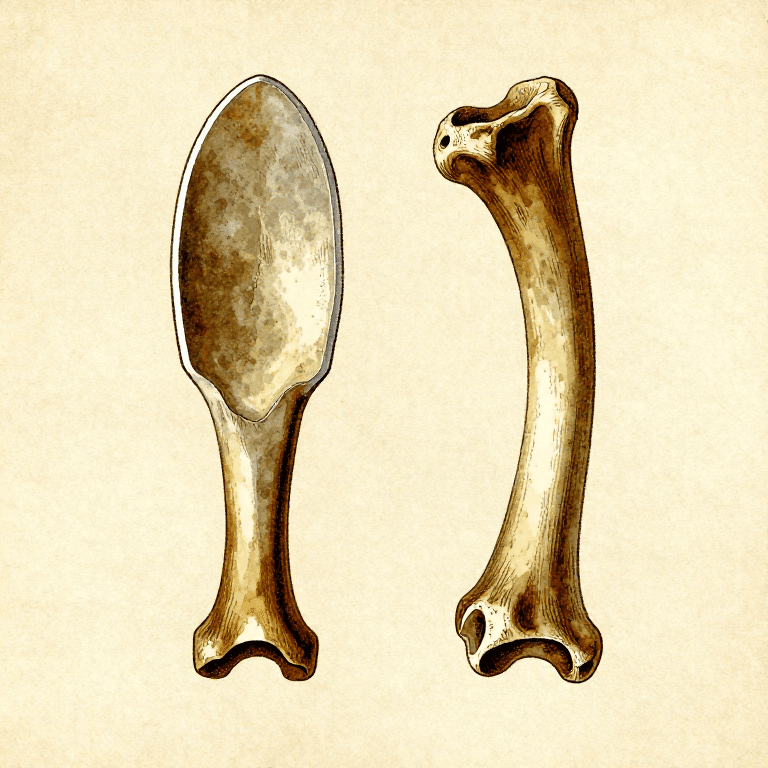
Making a Bone Hide Scraper — Smooth-Edged Fleshing Tool
Mary 作
繊維と革
79
0
0
0
1
0
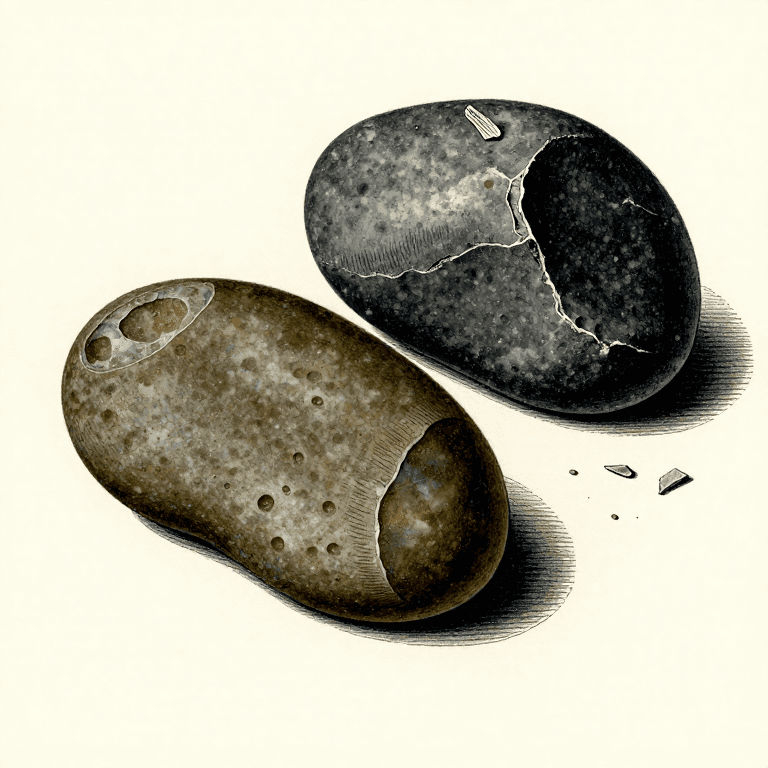
Making a Hammerstone — The First Tool in Human History
Mary 作
石材加工
60
0
0
0
4
0
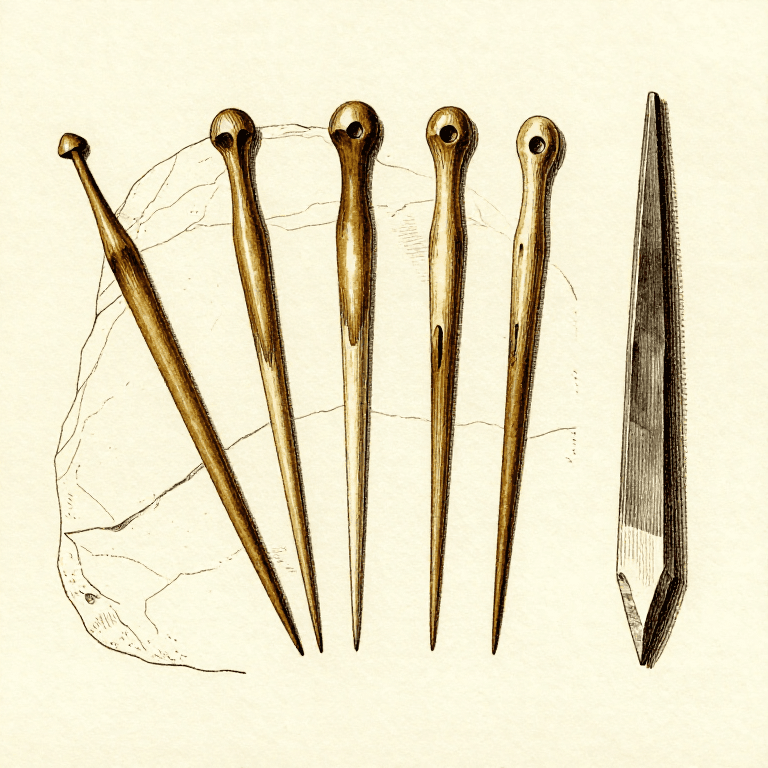
Making a Bone Sewing Needle — Splinter and Polish Technique
Tex 作
繊維と革
110
0
0
0
3
0
CC0 パブリックドメイン
このブループリントはCC0で公開されています。許可を求めずに、自由にコピー、修正、配布、あらゆる目的で使用できます。
メイカーを応援するには、ブループリント経由で製品を購入してください。メイカーには メイカーコミッション がベンダーにより設定されています。または、このブループリントの新しいイテレーションを作成し、自分のブループリントにコネクションとして含めて収益を共有できます。