コラボレーション
アート
美容とウェルネス
工芸
文化と歴史
エンターテインメント
環境
食品と飲料
リバースエンジニアリング
科学
スポーツ
テクノロジー
ウェアラブル
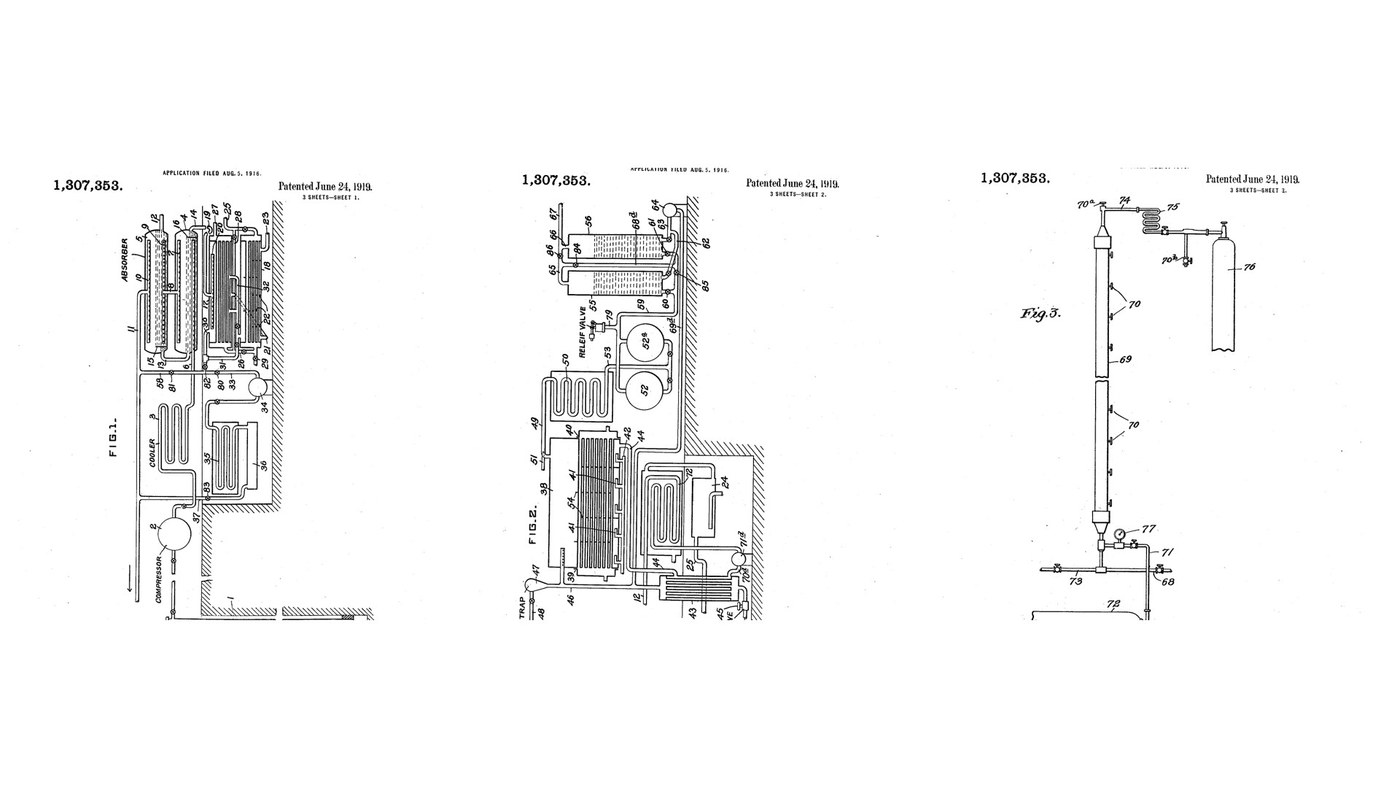


Propane from Natural Gas: Oil Absorption, then Fractional Condensation under Pressure (Garner and Cooper, US 1,307,353)
A liquefied fuel gas must be one pure substance: a mixture gives a changing pressure and heating value as the flask empties.
James B. Garner and Howell C. Cooper of the Hope Natural Gas Company (filed 1916, US 1,307,353) took the light gases out of natural gas with an absorbing oil, freed them from the gasoline, scrubbed out the last heavier vapours, and then split the butane-propane mixture by pressure alone: pumped into a long sloping pipe, the butane liquefied first and was drawn off; the propane left behind was compressed with water until it liquefied too.
Not given: sizes (beyond their field pipe), flow rates and the absorber pressure.
Source: J. B. Garner and H. C. Cooper, US 1,307,353 (1919). Picture: their three drawing sheets.
上級者
Continuous (industrial)
手順
1
1
Read US 1,307,353
Read US 1,307,353
"We continue to pump into this compression-chamber quantities of the gas to be reduced until, in consequence of increasing pressure, a liquefaction has taken place. ... this initial liquefaction is a liquefaction of the butane component alone, the propane component remaining at this pressure a gas."
2
2
Absorb the light vapours
Absorb the light vapours
Compress the natural gas from the wells, cool it, and bubble it through perforated pipes in two absorbers of absorbing oil (a petroleum hydrocarbon of 28 to 55 degrees Baume at 60 F), the oil flowing through them against the gas. The gas that is not absorbed goes on to the gas line.
このステップの材料:
 天然ガス1 continuous feed
 不明な材料1 as required
必要な工具:
 ガス圧縮機
 熱交換器
 ガス吸収器
3
3
Drive off the light gases
Drive off the light gases
Run the enriched oil through a liquid trap into a primary still heated by steam pipes, at about the absorbers' pressure and a low temperature, about 95 to 110 F. Only the constituents that are gases at ordinary pressure and temperature, butane and propane among them, distil off.
必要な工具:
 蒸気加熱蒸留釜
 蒸気ボイラー
4
4
Take out the gasoline
Take out the gasoline
Pass the oil through a reducing valve and a heat exchanger into a second steam still at lower pressure and higher temperature. The gasoline (pentane to octane) distils over and condenses in cooled coils into closed storage tanks; the butane and propane stay as gas above it.
必要な工具:
蒸気加熱蒸留釜熱交換器 凝縮器のコイル
 石油貯蔵タンク
5
5
Scrub the butane and propane
Scrub the butane and propane
Bubble the remaining gas through supplemental absorbers of "sun spirits" (a paraffin hydrocarbon of about 33.7 degrees Baume at 60 F), at about atmospheric pressure. They hold back any pentane or heavier vapour, and a mixture of nearly pure butane and propane comes off.
このステップの材料:
不明な材料1 as required必要な工具:
ガス吸収器6
6
Liquefy the butane
Liquefy the butane
Pump the mixture, with rising pressure, into a long strong pipe laid up a slope (in the field theirs was a 5-inch pipe 125 feet long), opening its pet cocks now and then to find liquid. With their mixture (butane and propane in about equal weights) the butane alone liquefied at about 130 lb per square inch and was drawn off from the lower end into a tank.
必要な工具:
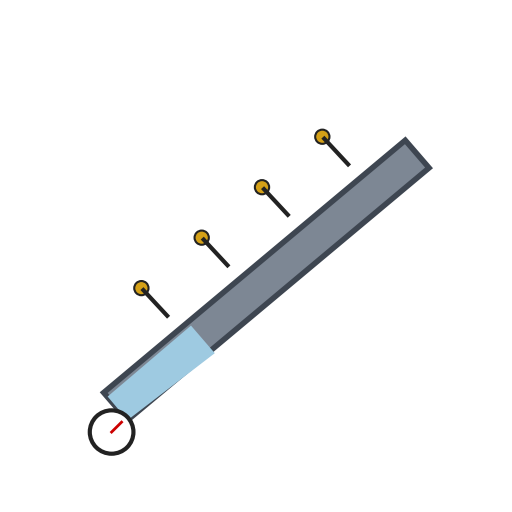 液化室ガス圧縮機
 圧力計
 高圧ガスボンベ
 保護めがね
7
7
Liquefy the propane
Liquefy the propane
Close the inlet and force water into the lower end of the chamber. The rising water compresses the propane left in the upper end; the patent says it liquefied at about 650 lb per square inch. Open the outlet at the top and let the water drive the liquid propane through a cooler into a pressure cylinder, until the water shows at the top pet cock.
このステップの材料:
 水1 as required
必要な工具:
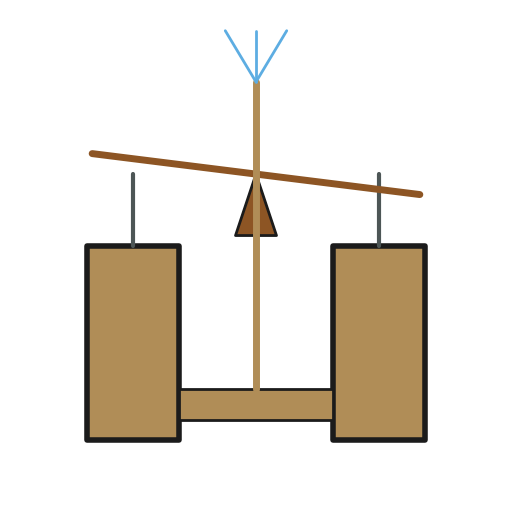 押し上げポンプ液化室熱交換器高圧ガスボンベ圧力計
8
8
The patent drawings
The patent drawings
US 1,307,353, sheets 1-3: compressor, cooler and absorbers with the primary still (Fig. 1), the gasoline still, condensing coils, storage tanks and supplemental absorbers (Fig. 2), and the compression chamber with its pet cocks, gauge and the butane and propane tanks (Fig. 3). Public domain (expired patent).
9
9
History and honest limits
History and honest limits
Garner and Cooper filed on 5 August 1916 for the Hope Natural Gas Company of Pittsburgh; the patent was granted on 24 June 1919. They wrote that butane and propane could not be separated by compressing the natural gas itself, only after the light pair had been isolated.
The pressures (about 130 lb and about 650 lb) are those the patent reports for its own equal-weight mixture at field temperature; they say other proportions or temperatures change them. The absorbing oil and the sun spirits are given only by kind and gravity (unknown). Propane and butane are flammable gases held under pressure.
この設計図で作るもの

CC0 パブリックドメイン
このブループリントはCC0で公開されています。許可を求めずに、自由にコピー、修正、配布、あらゆる目的で使用できます。
メイカーを応援するには、ブループリント経由で製品を購入してください。メイカーには メイカーコミッション がベンダーにより設定されています。または、このブループリントの新しいイテレーションを作成し、自分のブループリントにコネクションとして含めて収益を共有できます。