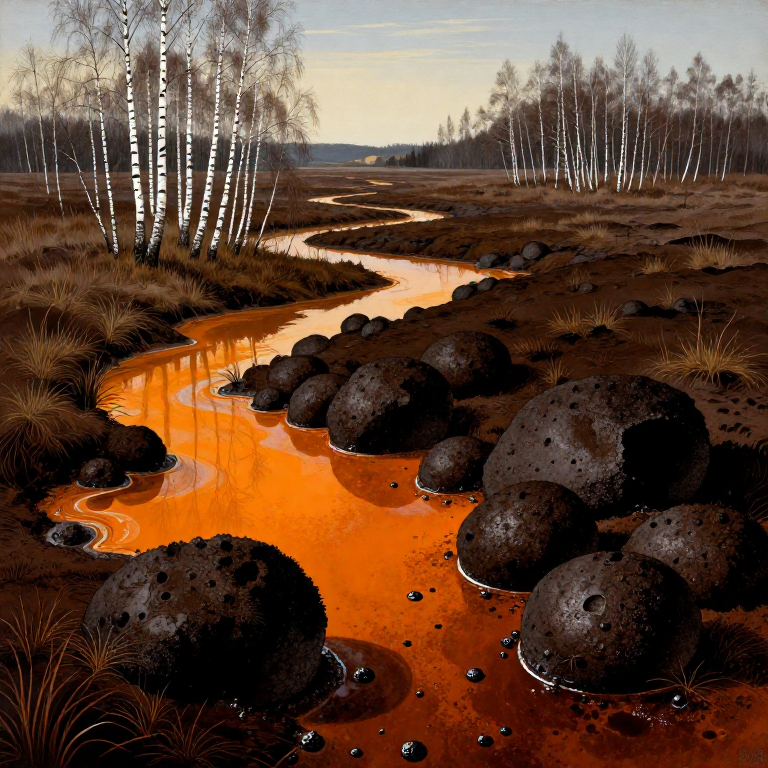


Ruda bagienna — zbieranie rudy darniowej z torfowisk i bagien
手順
Zrozumiec czym jest ruda bagienna
Zrozumiec czym jest ruda bagienna
Ruda bagienna (ruda darniowa, limonit bagienny) to naturalnie wystepujacy tlenek i wodorotlenek zelaza(III), glownie goethyt (FeOOH) z domieszka lepidokrokytu i ferrhydrytu. Powstaje w srodowisku bagiennym, gdy woda gruntowa bogata w rozpuszczone jony zelaza(II) — pochodzace z wietrzenia mineralow glebowych, np. pirytu i skaleni — wyplywa na powierzchnie w strefach mokradlowych. W kwasnym, ubogim w tlen srodowisku torfowiskowym bakterie zelaziste, przede wszystkim Gallionella ferruginea i Leptothrix ochracea, utleniaja jony Fe2+ do Fe3+, ktore wytraca sie jako nierozpuszczalne tlenki zelaza. Proces ten zachodzi w warstwie gleby na glebokosci 20-60 cm. Zawartosc zelaza w rudzie bagiennej wynosi typowo 30-60% Fe, co czyni ja uzytecznym surowcem hutniczym. Ruda bagienna byla glownym zrodlem zelaza w sredniowiecznej Polsce, Skandynawii i polnocnej Europie az do XIII-XIV wieku, gdy zaczeto eksploatowac glebokie zloza rud zelaza.
Poznac historyczne znaczenie rudy bagiennej w Polsce
Poznac historyczne znaczenie rudy bagiennej w Polsce
Ruda bagienna byla fundamentem produkcji zelaza na ziemiach polskich od epoki zelaza (ok. 700 p.n.e.) az po sredniowiecze. Region Swietokrzyski (okolice Nowej Slupi) byl jednym z najwazniejszych osrodkow hutnictwa zelaza w Europie — archeolodzy odkryli tam tysiace dymarek z okresu rzymskiego (I-IV w. n.e.). Wikingowie i Slowiane budowali piece dymarkowe (bloomery furnaces) specjalnie do wytopu rudy bagiennej. Unikalna cecha rudy bagiennej to jej odnawialnosc — zloza regeneruja sie w ciagu 20-30 lat dzieki ciaglej aktywnosci bakterii zelazistych, co czyni ja surowcem samoodnawialnym. Eksploatacja rudy bagiennej zanikla w Polsce w XIV-XV wieku, gdy gornictwo glebokie umozliwilo dostep do bogatszych zloz hematytu i magnetytu.
Zidentyfikowac torfowisko bogate w zelazo
Zidentyfikowac torfowisko bogate w zelazo
Torfowiska i mokradla zawierajace rude bagienna mozna rozpoznac po kilku charakterystycznych znakach. Pierwszym i najlatwiejszym do zauwazenia jest kolor wody — woda w rowach i kanalach odwadniajacych ma kolor rdzy, od pomaranczowego po ciemnobrunatny, co wskazuje na wysoka zawartosc rozpuszczonego zelaza. Na powierzchni wody czesto widoczna jest teczowa, opalizujaca plywajaca warstwa — to nie jest ropa ani olej, lecz cienki film tlenku zelaza (iron oxide film). Odroznic go od zanieczyszczen ropopochodnych mozna prosty testem: zelazo daje krucha, lamilawa blonke, ktora peka na kawalki po dotknieu patykikem, podczas gdy olej plynie i laczy sie z powrotem. Ruda bagienna wystepuje czesto na Mazurach, Podlasiu, Pomorzu, w Wielkopolsce i na Kujawach — na nizinnych terenach z wysokim poziomem wod gruntowych i kwasnym podlozem torfowym.
必要な工具:
 近隣湿地の地形図
 防水長靴(ゴム長靴)
Przygotowac sprzet do poszukiwan i wydobycia
Przygotowac sprzet do poszukiwan i wydobycia
Do poszukiwania i wydobywania rudy bagiennej potrzebny jest nastepujacy sprzet: zelazny lub stalowy pret sondazowy (dlugosc 80-120 cm, srednica 10-12 mm) do sondowania gleby pod powierzchnia bagna — ruda bagienna daje charakterystyczny twardy, chrzeszczacy opor w odroznieniu od miekkiego torfu. Potrzebna jest tez mocna lopata szpadlowa do kopania w mokrej glebie, wiadro na wydobyta rude, gumowe kalosze siegajace co najmniej do kolan, oraz rekawice robocze. Woda bagienna jest kwasna (pH 4-6) i moze podraznic skore przy dlugotrwalym kontakcie.
必要な工具:
 鋼製探り棒
鋼製探り棒 角スコップ
角スコップ 20 リットルのバケツ
 ひざ丈のゴム長靴
 厚手の作業用手袋
Sondowac glebe w poszukiwaniu rudy
Sondowac glebe w poszukiwaniu rudy
Wybierz miejsce w poblizu rdzawych wyplywow wody lub pomaranczowych plam na powierzchni gleby. Wbijaj pret sondazowy pionowo w ziemie na glebokosc 20-80 cm, co 50-100 cm wzdluz linii. Miękki torf i bloto daja maly opor — pret wchodzi latwo. Warstwa rudy bagiennej daje wyrazny twardy opor, czesto z charakterystycznym chrzestem lub skrzypnieciem zelaza. Ruda bagienna wystepuje najczesciej na glebokosci 20-60 cm pod powierzchnia, w postaci ciaglej warstwy (grubosc 5-20 cm) lub rozproszonych grudek i konkrecji o srednicy 2-15 cm. Zaznacz miejsca, gdzie napotkales opor — to tam bedziesz kopal. Najlepsze zloza czesto znajduja sie na krawediach torfowisk, gdzie woda gruntowa wyplywa z wyzszego terenu mineralnego na nizinne mokradlo.
必要な工具:
鋼製探り棒Wykopac rude bagienna
Wykopac rude bagienna
Zdejmij lopata wierzchnia warstwe torfu i roslinnosci (darni) — zwykle 10-20 cm. Pod spodem znajdziesz warstwe brunatno-rdza, wilgotna mase rudy bagiennej przemieszana z torfem, piaskiem i glina. Ruda bagienna wystepuje w kilku formach: grudki (noduly) o srednicy 2-15 cm, zwarte warstwy (skorupy) o grubosci 5-20 cm, oraz sypkie, porowate masy przypominajace rdza. Wyjmuj rude lopata lub rekami (w rekawicach) i wkladaj do wiader. Z jednego stanowiska mozna zwykle wydobyc 10-30 kg rudy. Dol po wydobyciu mozesz zasypac z powrotem torfem — bakterie zelaziste odnowia zloze w ciagu 20-30 lat. Unikaj kopania glebiej niz 60-80 cm, gdyz ponizej tej glebokosci ruda jest zwykle ubozsza.
このステップの材料:
 生の沼鉄鉱の団塊(採ったまま)20 kilogram
必要な工具:
角スコップ20 リットルのバケツ厚手の作業用手袋Umyc rude z torfu i blota
Umyc rude z torfu i blota
Swiezo wydobyta ruda bagienna jest pokryta torfem, blotem i materialem organicznym, ktory musi byc usuniety przed dalszym przetworzeniem. Plucz grudki rudy w czystej wodzie, pocierajac je rekami lub szczotka druciana, aby usunac przyczepiony torf i piasek. Mozesz uzyc duzego sita (oczko 5-10 mm) na wiadrze z woda — drobny material organiczny przepadnie, a ciezsze grudki rudy zostana. Po umyciu ruda ma kolor od ciemnobrunatnego po rdzawy, czesto z charakterystyczna porowata, gabczasta struktura (skutek aktywnosci bakteryjnej). Odrzuc kawaki, ktore sa zbyt lekkie lub calkowicie organiczne — prawdziwa ruda jest wyraznie ciezsza od torfu.
このステップの材料:
 蒸留水40 リットル
必要な工具:
 ワイヤーブラシセット
 粗ふるい
粗ふるい 洗い桶
洗い桶Rozkruszyc wieksze grudki
Rozkruszyc wieksze grudki
Wieksze grudki i bryly rudy bagiennej nalezy rozlamac na mniejsze kawalki o srednicy 2-5 cm. Mniejsze fragmenty schnac szybciej i rownosc sie praza w piecu. Uzyj mlotka lub kamienia na twardym podlozu (plaska skala, drewniana kloda). Ruda bagienna jest stosunkowo krucha i latwo sie lamiie — jest to porowaty, gabczasty material, a nie lity kamien. Przy rozbijaniu zwroc uwage na zawartosc: dobra ruda ma jednolity, rdza-brunatny kolor na przelamaniu. Jesli wnetrze jest jasnoszare lub biale, to moze byc glina lub piaskowiec, a nie ruda zelaza. Odrzuc takie kawaki. Grudki z wyrazna metaliczna polyskliwoscia lub ciemnobrunatnym, twardym jadrem sa najwartosciowsze — to czysty goethyt o najwyzszej zawartosci zelaza.
必要な工具:
 ハンマー
ハンマー 金床
金床Wysuszyc rude na powietrzu
Wysuszyc rude na powietrzu
Rozloz rozkruszone kawaki rudy w pojedynczej warstwie na drewnianej desce, metalowej blasze lub na trawie w nasłonecznionym miejscu. Ruda bagienna zawiera 15-30% wody, ktora musi byc usunieta przed prazeniem. Suszenie na powietrzu trwa 3-7 dni w zaleznosci od pogody — wybierz suche, sloneczne dni. Obracaj kawaki co 1-2 dni, aby schnac rownomiernie z kazdej strony. Ruda jest wystarczajaco sucha, gdy jest wyraznie lzejsza niz swiezo wydobyta, nie zostawia mokrych sladow na papierze i daje czysty, metaliczny dzwiek przy uderzeniu kawalek o kawalek (mokra ruda daje gluchy, stlumiony dzwiek). Niedostatecznie wysuszona ruda eksploduje przy gwaltownym nagrzewaniu w piecu z powodu gwaltownego parowania wody.
必要な工具:
 木製の乾燥板
Prazyc rude w ognisku (roasting)
Prazyc rude w ognisku (roasting)
Prazenie (kalcynacja) to kluczowy etap przygotowania rudy bagiennej do wytopu. Celem jest usuniecie wody chemicznie zwiazanej, wypalenie materii organicznej oraz przeksztalcenie goethytu (FeOOH) w hematyt (Fe2O3), ktory jest latwiejszy do redukcji w piecu dymarkowym. Zbuduj ognisko z suchego drewna (najlepiej drewno twarde — dab, buk, grab) i rozpal je. Gdy drewno zamieni sie w zarza placik, rozloz kawaki rudy na warstwie zaru, jedna warstwa rudy, jedna warstwa drewna, na przemian. Utrzymuj ogien przez 3-6 godzin w temperaturze 300-500 stopni Celsjusza. Ruda zmieni kolor z brunatno-zoltego na ciemnoczerwony lub ciemnobrazowy — to oznacza konwersje goethytu do hematytu. Po wygasnieciu ogniska i ostygunieciu (minimum 12 godzin), zbierz prazona rude. Bedzie wyraznie lzejsza — utracila 10-15% masy w postaci wody i materii organicznej.
このステップの材料:
 広葉樹の薪30 kilogram
 乾かした沼鉄鉱15 kilogram
必要な工具:
 焚き火穴
焚き火穴 長柄の火ばさみ
 耐熱手袋
耐熱手袋Ocenic jakosc prazonej rudy
Ocenic jakosc prazonej rudy
Prazona ruda bagienna dobrej jakosci ma nastepujace cechy: kolor ciemnoczerwony do ciemnobrazowego (hematyt), jest twarda i krucha (nie sypie sie jak piasek), daje czerwony pyl przy potarciu o chropowata powierzchnie (test rys — hematyt zostawia czerwona ryse, goethyt zolta). Zmierz mase prazonej rudy — powinna byc o 10-15% mniejsza niz przed prazeniem. Jesli ruda nadal jest zolta wewnatrz po rozlamaniu, prazenie bylo niedostateczne — powtorz proces. Prazona ruda o dobrej jakosci jest gotowa do wytopu w piecu dymarkowym (bloomery). Z 10-15 kg prazonej rudy bagiennej o zawartosci 40-50% Fe mozna uzyskac 2-4 kg surowego zelaza (lupy dymarkowej). Przechowuj prazona rude w suchym miejscu — wilgoc moze czesciwoo cofnac proces kalcynacji.
必要な工具:
 はかり
はかり 素焼きタイル
Przechowac rude do dalszego przetworzenia
Przechowac rude do dalszego przetworzenia
Prazona ruda bagienna powinna byc przechowywana w suchym, zadaszonym miejscu — najlepiej w jutowych lub bawelnianych workach, lub w drewnianych skrzyniach. Unikaj plastikowych pojemnikow zamknietych szczelnie, gdyz resztkowa wilgoc moze sie skraplac i powodowac ponowne utlenianie. Prazona ruda zachowuje swoje wlasciwosci przez wiele miesiecy, jesli jest sucha. Sredniowieczni kowale w Polsce gromadzili rude przez cale lato i jesien, aby miec zapas na zimowy sezon hutniczy. Nastepnym etapem przetworzenia jest wytop w piecu dymarkowym (bloomery furnace) z uzyciem wegla drzewnego jako reduktora — ale to temat na oddzielny blueprint. Pamietaj o aspektach prawnych: w Polsce zbieranie rudy bagiennej do celow edukacyjnych i rekonstrukcji historycznej jest dozwolone, ale eksploatacja komercyjna kopalin wymaga koncesji geologicznej zgodnie z Prawem geologicznym i gorniczym.
このステップの材料:
 ジュートの貯蔵袋2 個
必要な工具:
 木製の収納木箱
材料
5- 20 kilogramプレースホルダー
- 40 リットルプレースホルダー
- 30 kilogramプレースホルダー
- 15 kilogramプレースホルダー
- 2 個プレースホルダー
必要な工具
20- プレースホルダー
- プレースホルダー
- プレースホルダー
- プレースホルダー
- プレースホルダー
- プレースホルダー
- プレースホルダー
- プレースホルダー
- プレースホルダー
- プレースホルダー
- プレースホルダー
- プレースホルダー
- プレースホルダー
- プレースホルダー
- プレースホルダー
- プレースホルダー
- プレースホルダー
- プレースホルダー
- プレースホルダー
- プレースホルダー
この設計図で作るもの

CC0 パブリックドメイン
このブループリントはCC0で公開されています。許可を求めずに、自由にコピー、修正、配布、あらゆる目的で使用できます。
メイカーを応援するには、ブループリント経由で製品を購入してください。メイカーには メイカーコミッション がベンダーにより設定されています。または、このブループリントの新しいイテレーションを作成し、自分のブループリントにコネクションとして含めて収益を共有できます。