
Building a Song Dynasty Fire Lance — The World's First Gunpowder Weapon
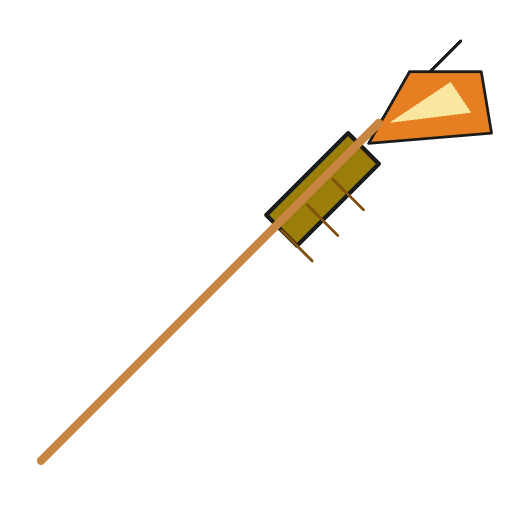
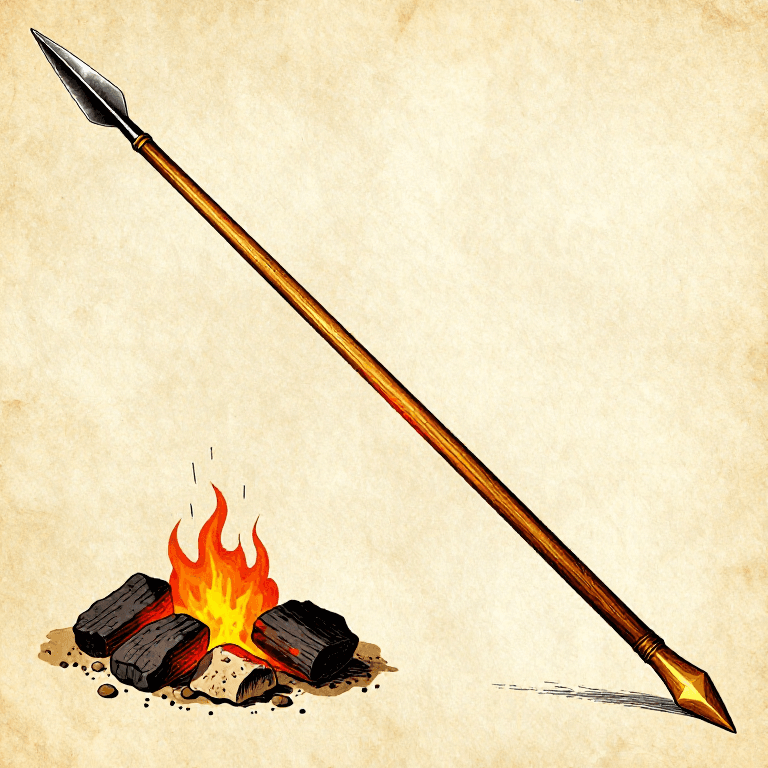
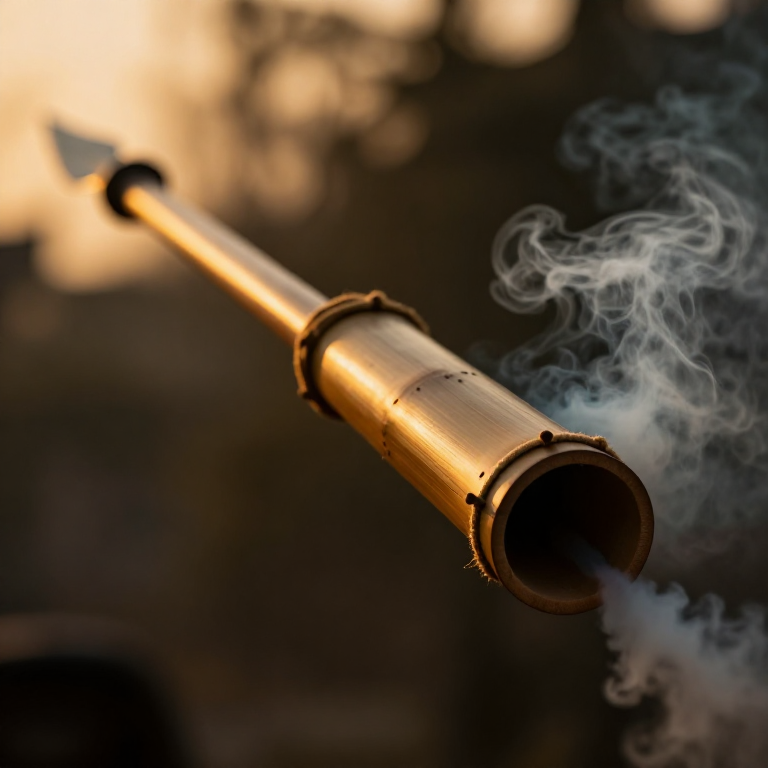
The fire lance (火槍, huǒ qiāng) is the ancestor of every firearm ever made. First documented in Chinese military manuals around 950-1000 AD during the Song dynasty, it was created by attaching a gunpowder-filled tube to the end of a spear. When ignited, the tube erupted in a jet of flame, hot gas, and shrapnel that could reach 3-5 meters — terrifying cavalry charges and demoralizing enemy infantry.
Chinese alchemists had been experimenting with saltpeter mixtures since the 9th century, originally seeking an elixir of immortality. What they found instead was the opposite — a formula for destruction. The earliest military manual to record gunpowder formulas, the Wujing Zongyao (武经总要, 1044 AD), describes several fire lance configurations: some designed purely for flame projection, others packed with iron filings, broken porcelain, or small stones as proto-shrapnel.
The fire lance represents the critical transition point in human innovation: the moment chemistry left the laboratory and entered the battlefield. Within two centuries, the bamboo tube would be replaced by bronze and iron barrels, the shrapnel would become bullets, and the fire lance would evolve into the gun — changing warfare, politics, and the balance of power across civilizations forever.
手順
Select and prepare the bamboo tube
Select a thick-walled bamboo culm at least 3-5 years old, with an internal diameter of 4-5 cm and walls at least 8 mm thick. Cut a section 30-40 cm long, keeping one natural node intact at the rear end — this node acts as a natural seal, containing the explosion. The open end will be the muzzle.
Scrape the interior smooth with a knife or chisel to remove any internal membrane. The smoother the bore, the more efficiently the gas jet will exit. Sand the exterior lightly and check for cracks — any split bamboo will burst catastrophically when the charge ignites. Discard any tube with visible fractures or insect damage.
このステップの材料:
Mature Bamboo Culm (3-5 years)1 個必要な工具:
Hand Saw
Sharp KnifePrepare the black powder charge
Prepare the black powder charge
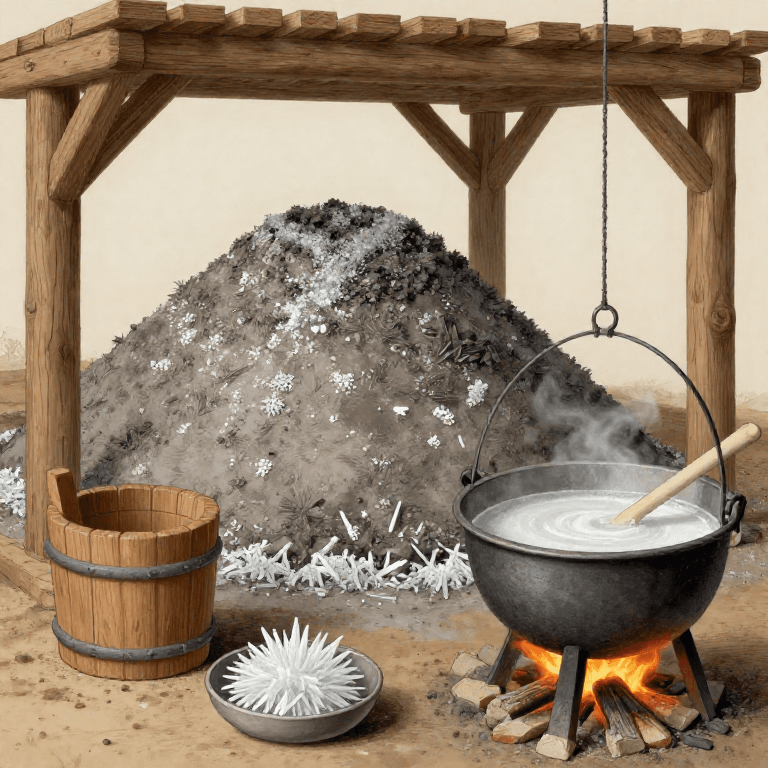
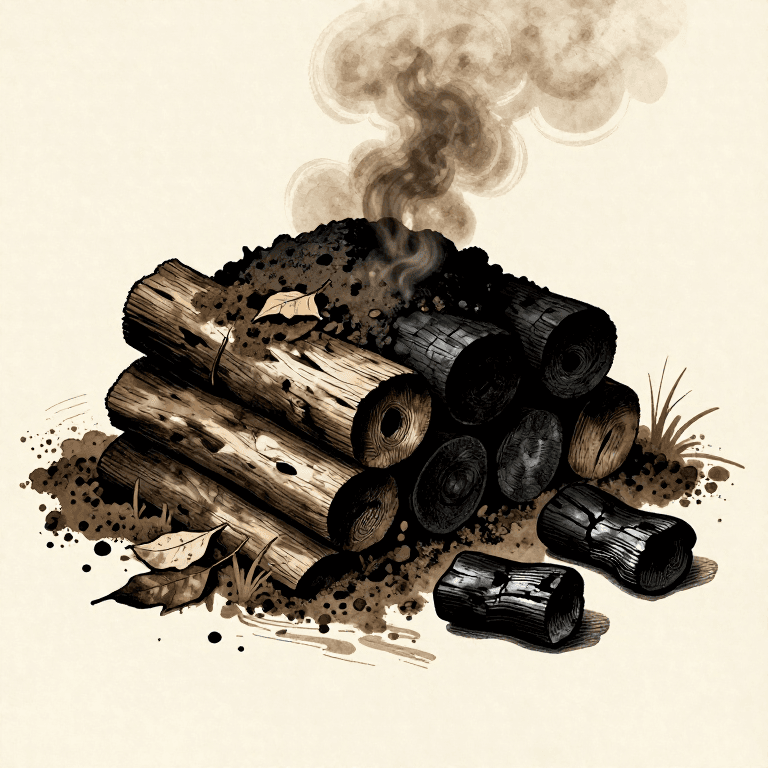
Prepare black powder in the Song dynasty ratio: approximately 75% saltpeter (potassium nitrate), 15% charcoal (willow charcoal preferred for fine grain), and 10% sulfur, all by weight. Each ingredient must be ground separately to a fine powder using a stone mortar and pestle — never grind them together, as friction can cause ignition.
Once individually powdered, combine the three ingredients in a ceramic or wooden bowl (never metal — sparks). Mix thoroughly by gently turning with a wooden spatula. The Wujing Zongyao specifies that the powder should be as fine as flour. You will need approximately 50-80 grams of finished powder for a standard fire lance charge.
このステップの材料:
Potassium Nitrate (saltpeter)60 g
Charcoal12 g
Native Sulfur (collected)8 g必要な工具:
Stone Mortar and Pestle (large)Prepare the shrapnel filling
Prepare the shrapnel filling
Song dynasty fire lances used a mixture of iron filings and broken pottery shards as shrapnel — these were propelled out of the tube along with the flame jet, causing wounds at a distance. Collect clean iron filings from blacksmith work or file them from scrap iron. Break fired pottery into small sharp fragments no larger than a fingernail.
Mix approximately 30 grams of iron filings with 20 grams of pottery shards. The iron provides mass and penetration; the pottery fragments spread the damage pattern. Some variants described in the Wujing Zongyao also included small pebbles or fragments of broken arrowheads.
このステップの材料:
Iron Filings (clean scrap iron)30 g
Broken Pottery Shards20 g必要な工具:
Hammer (2 kg)Pack the tube with propellant and shrapnel
Pack the tube with propellant and shrapnel
With the bamboo tube standing upright (sealed node end down), pour a layer of black powder into the tube — approximately half the charge (35-40 grams). Tamp it down gently with a wooden dowel. Never use metal tools for tamping — a single spark will ignite the powder.
Add the shrapnel mixture on top of the first powder layer. Then pour the remaining black powder on top of the shrapnel. This layering ensures the shrapnel is propelled by the expanding gases rather than settling to the bottom. Leave approximately 5 cm of empty space at the muzzle end to allow the gases to accelerate before exiting.
必要な工具:
Dowel RodInsert the fuse
Insert the fuse
Drill or bore a small hole (3-4 mm diameter) through the bamboo wall near the sealed rear end, about 2 cm from the node. Thread a slow-match fuse through this hole so it contacts the black powder inside. The fuse is made from hemp cord soaked in a saltpeter solution (approximately 50 grams of saltpeter dissolved in 200 ml of water) and dried — this creates a cord that burns slowly and reliably at about 1 cm per 10 seconds.
Leave approximately 15-20 cm of fuse protruding from the outside of the tube. This gives the soldier 15-20 seconds to position the weapon before the charge ignites. Seal around the fuse hole with clay or pine resin to prevent gas leakage.
このステップの材料:
Hemp Cord1 メートル
Potassium Nitrate (saltpeter)50 g必要な工具:
AwlSeal the muzzle with paper wadding
Seal the muzzle with paper wadding
Roll several layers of thick paper or cloth into a tight wad and press it into the muzzle end of the tube. This wadding serves two purposes: it keeps the powder and shrapnel from falling out during handling, and it creates a temporary seal that builds gas pressure before the charge blows through it — increasing the velocity and range of the flame jet.
The wadding should be tight enough to stay in place when the lance is tilted or swung, but not so compressed that it becomes a dangerous obstruction. Song dynasty soldiers used mulberry bark paper (the same material used for early Chinese paper money) or strips of silk cloth.
このステップの材料:
Mulberry Bark Paper3 枚Bind the tube to the spear shaft
Bind the tube to the spear shaft
Select a straight hardwood shaft approximately 2 meters long and 3-4 cm in diameter — ash, oak, or bamboo pole all work. The fire lance tube is bound to the tip of the shaft with the muzzle pointing forward, aligned with the spear's axis. Wrap wet rawhide strips or hemp cord soaked in animal glue tightly around the junction, overlapping in a spiral pattern for at least 15 cm.
The binding must be tight enough that the tube does not shift during use, but it should not compress the bamboo — any crack created by over-tightening will cause the tube to burst sideways when the charge fires. As the rawhide dries, it shrinks and tightens further, creating an extremely secure bond.
このステップの材料:
Hardwood Shaft (2m)1 個
Hemp Cord2 メートル必要な工具:
Sharp KnifeWaterproof the assembly
Waterproof the assembly
Black powder is hygroscopic — it absorbs moisture from the air and becomes useless when damp. Coat the entire bamboo tube and all bindings with a layer of tung oil or pine resin lacquer. Apply two coats, allowing the first to dry completely before applying the second. Pay special attention to the fuse hole seal and the muzzle wadding.
Song dynasty records indicate that fire lances were stored in oiled silk bags to protect them from rain. A wet fire lance was worse than no weapon at all — a misfired charge could burst the tube in the soldier's hands.
このステップの材料:
Tung Oil50 ml必要な工具:
Wide Paint BrushTest-fire the fire lance
Test-fire the fire lance
Secure the completed fire lance in a fixed position aimed at an open, non-flammable target area — a dirt bank or stone wall at least 10 meters away. Clear all combustible materials from a 5-meter radius around the firing position. Ensure no people or animals are within the danger zone.
Light the fuse at its tip using a slow-burning ember or candle. Retreat immediately to a safe distance of at least 10 meters. The fuse will burn for 15-20 seconds before reaching the charge. When it fires, a jet of flame and sparks will erupt from the muzzle for approximately 3-5 seconds, accompanied by a loud roar and dense smoke.
A successful fire lance produces a visible flame jet of 3-5 meters in length. The shrapnel will embed in soft targets within 5-8 meters. The bamboo tube is single-use — inspect it after firing and discard it, as the structure is compromised by the internal explosion.
必要な工具:
Chemical Splash Goggles
Nitrile Rubber Gloves (Thick)材料
10- プレースホルダー
- プレースホルダー
- プレースホルダー
- プレースホルダー
- プレースホルダー
- プレースホルダー
- プレースホルダー
接続ブループリントの材料
関連ブループリント
これらのブループリントは知識を共有しています — 技術、材料、原理
Related blueprints
Other builds that share materials, tools, or techniques with this one.


CC0 パブリックドメイン
このブループリントはCC0で公開されています。許可を求めずに、自由にコピー、修正、配布、あらゆる目的で使用できます。
メイカーを応援するには、ブループリント経由で製品を購入してください。メイカーには メイカーコミッション がベンダーにより設定されています。または、このブループリントの新しいイテレーションを作成し、自分のブループリントにコネクションとして含めて収益を共有できます。