コラボレーション
アート
美容とウェルネス
工芸
文化と歴史
エンターテインメント
環境
食品と飲料
リバースエンジニアリング
科学
スポーツ
テクノロジー
ウェアラブル
English


Straight Razor: a Blade Forged from 75-Point Carbon Steel and Hollow Ground (Holford, 1907)
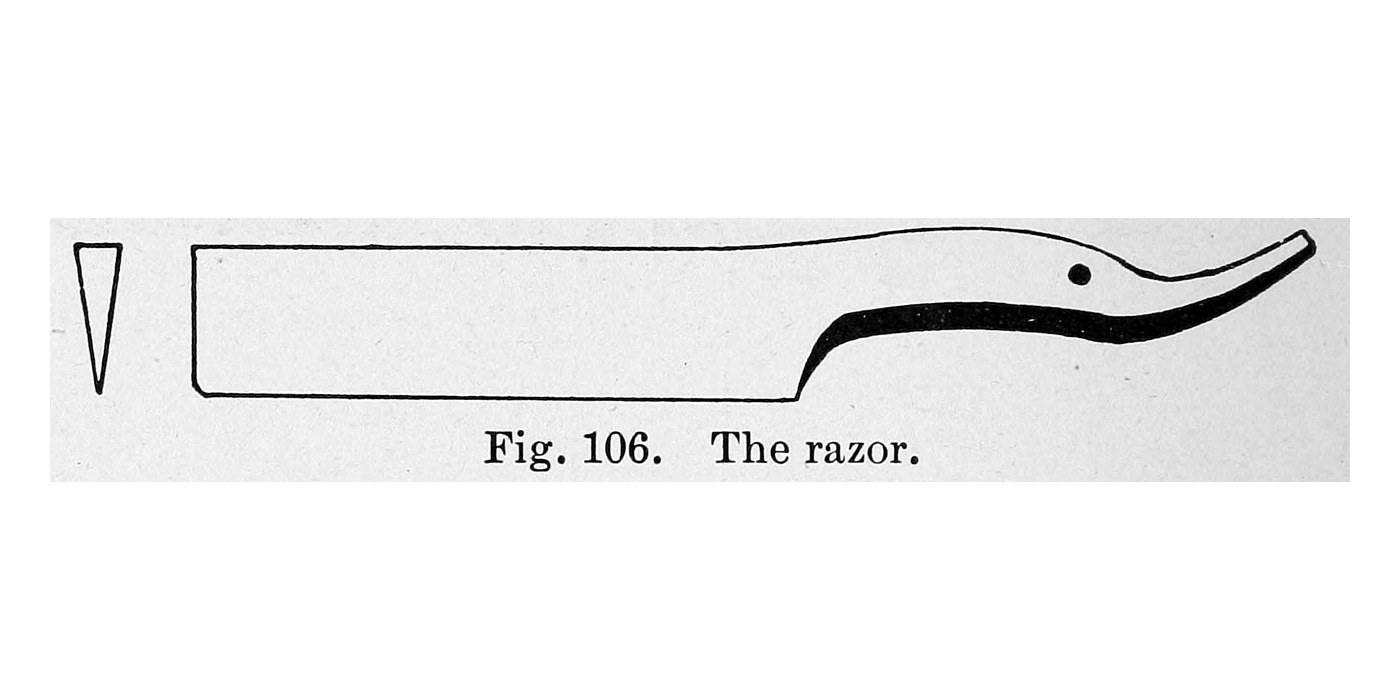
A straight razor forged by hand. Frederick Holford's 20th Century Toolsmith (1907) takes steel 3/16 by 7/16 inch of about 0.75 % carbon, fullers the shank for the finger hold, bends the blade a little edgewise and then forges, hammers and hardens it the way he makes butcher knives, drawing the temper to purple. The razor is hollow ground after tempering, by an expert, without drawing the temper; made so, he says, it "will hold a very keen edge, which will equal any razor manufactured".
He gives no blade length and does not describe the scales or the pivot; those are unknown here.
Source: F. J. Holford, The 20th Century Toolsmith and Steelworker (1907), p. 176 (razor), pp. 80-82 (butcher knives, for forging and hardening), p. 21 (the hardening bath). Picture: his Fig. 106.
上級者
A day
手順
1
1
Read Holford
Read Holford
"To make an ordinary razor use steel 3-16 by 7-16 of about 75 points carbon."
2
2
Fuller the shank and shape
Fuller the shank and shape
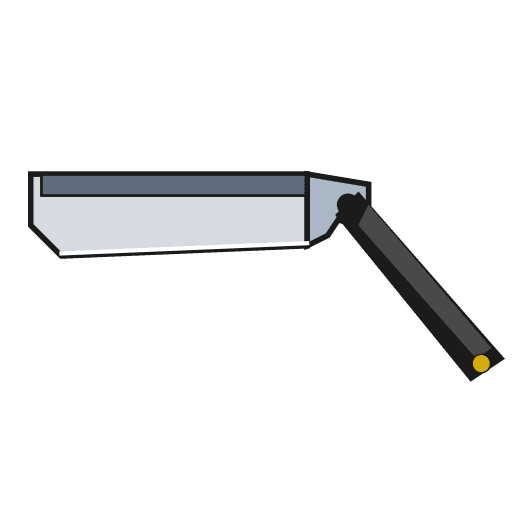
Fuller the shank in a little for the finger hold and forge it to shape, then form the blade by bending the steel a little edgewise (Fig. 106). The blade length is not given (unknown).
このステップの材料:
 工具鋼平角棒1 bar, 3/16 x 7/16 in
必要な工具:
 鍛冶炉
 金床
 鍛冶ハンマー
 フラー(溝切り鉄)
 鍛冶やっとこ
 不明な寸法
3
3
Draw the edge and pack the steel
Draw the edge and pack the steel
As for a butcher knife: at a deep red heat draw the edge thin, hammering evenly from both sides on the inside of the bend, until the bend has come out and the blade is straight. Then at a very low heat hammer equally on both flat sides of the edge to refine and pack the steel; heat again to the same low heat and hammer the centre of the blade, both sides evenly, its full length. Cool and file the edges straight.
必要な工具:
鍛冶炉金床鍛冶ハンマー 金工ヤスリ
4
4
Harden
Harden
Make the fire long so more of the blade heats at once. Put the blade in edge down and move it back and forth for an even heat along its length, just hot enough to harden. Plunge it lengthwise, edge down, into the hardening bath (Holford p. 21: clean water, best made a brine with as much salt as it will dissolve, large and cold) and cool entirely.
必要な工具:
鍛冶炉鍛冶やっとこ 飽和食塩水
 耐熱手袋
5
5
Temper to purple
Temper to purple
Brighten one side. Hold the blade flat about 2 inches above the fire, bright side up, never on the coals, and heat it very slowly, moving it back and forth for an even temper, until the bright side shows purple.
必要な工具:
 エメリー布鍛冶炉
6
6
Hollow grind and hone
Hollow grind and hone
Hollow grind the blade after tempering, taking care never to draw the temper while grinding; Holford says this should be done by an expert. Then hone the edge.
必要な工具:
 回転砥石
 砥石
7
7
Scales
Scales
A straight razor folds into a pair of scales on a pivot through the hole in the shank (Fig. 106). Holford does not describe the scales or the pivot; their material and making are unknown here.
このステップの材料:
 不明な材料1 scales and pivot
8
8
History and honest limits
History and honest limits
Holford's razor uses the same steel as his butcher knives and harnessmaker's knife, about 0.75 % carbon, but a harder temper: purple instead of the knives' blue.
Blade length, scales and pivot are not given; a flat tool steel bar stands for the 3/16 by 7/16 inch bar of 0.75 % carbon steel.
この設計図で作るもの
CC0 パブリックドメイン
このブループリントはCC0で公開されています。許可を求めずに、自由にコピー、修正、配布、あらゆる目的で使用できます。
メイカーを応援するには、ブループリント経由で製品を購入してください。メイカーには メイカーコミッション がベンダーにより設定されています。または、このブループリントの新しいイテレーションを作成し、自分のブループリントにコネクションとして含めて収益を共有できます。