アート
美容とウェルネス
工芸
文化と歴史
エンターテインメント
環境
食品と飲料
リバースエンジニアリング
科学
スポーツ
テクノロジー
ウェアラブル
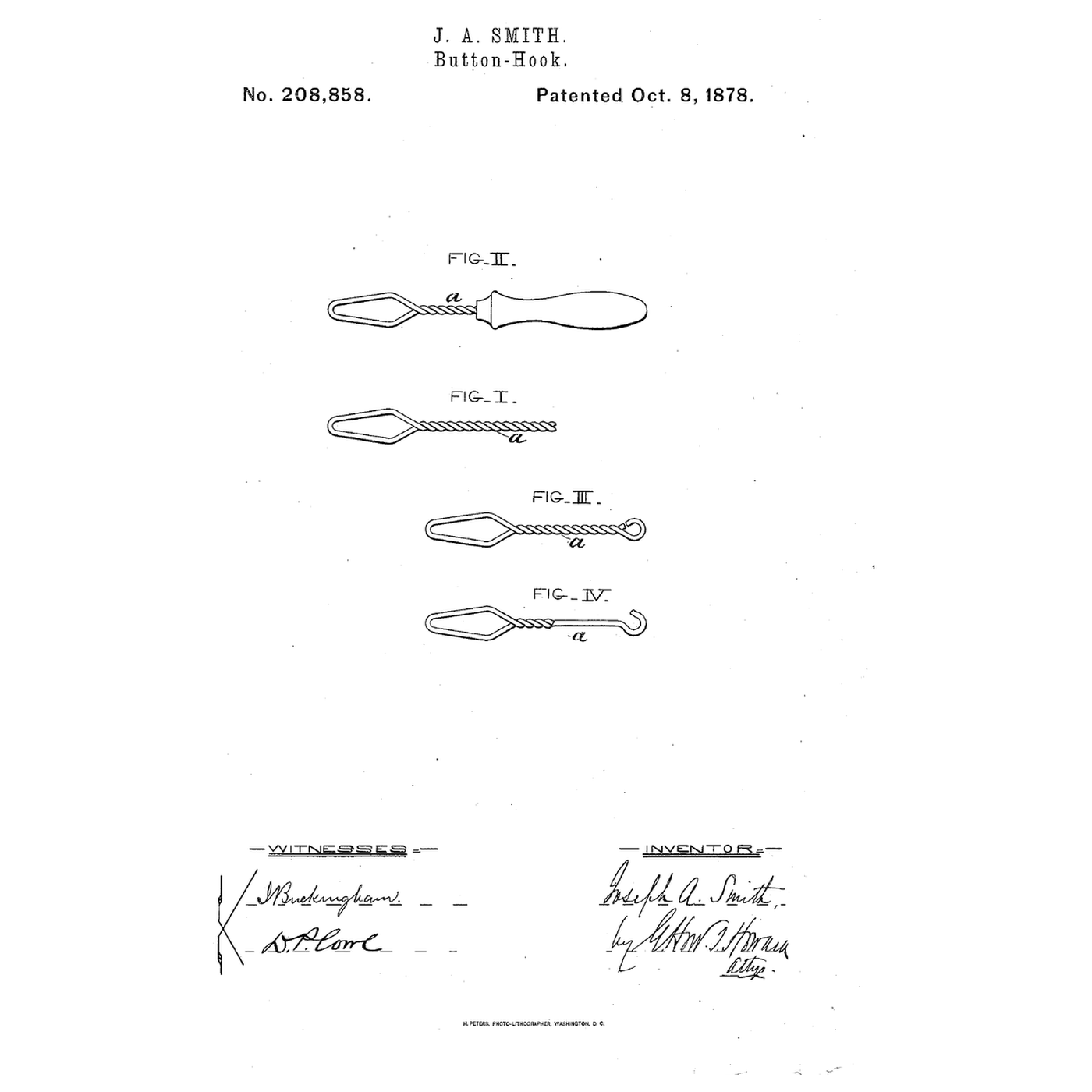


The Button Hook: One Wire, Bent and Twisted
Boots, gloves and dresses of the time fastened with rows of tiny buttons in tight holes. A button hook reaches through the hole, catches the button's shank and pulls it through.
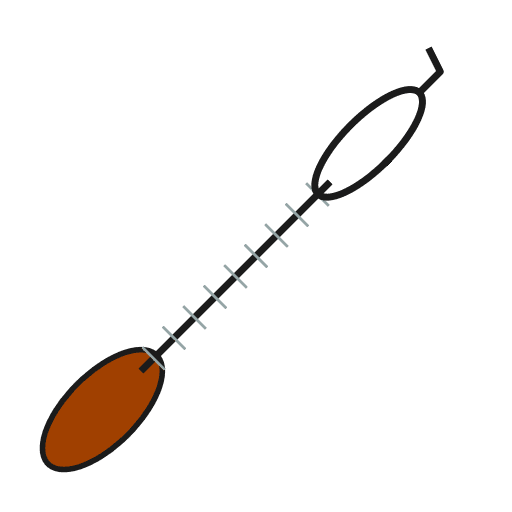
Joseph A. Smith of Deep River, Connecticut, received US 208,858, dated 8 October 1878 (filed 29 March 1878), for "a button-hook or buttoner formed out of a single wire, the wire being bent to the proper shape of the loop or hook, and then duplicated and twisted to form the shank." The twist "closes the base of the loop and prevents the disengagement of the wire", which a simply doubled wire would not.
This rung works out why the twist stiffens the shank, then bends and twists hooks from wire.
初心者
About 1 hour
手順
1
1
Why twist it
Why twist it
Jupyter ノートブックを読み込み中…
2
2
Where the wire comes from
Where the wire comes from
The buttoner is one length of drawn wire. The embedded blueprint draws wire through a plate.
3
3
Read US 208,858
Read US 208,858
"My invention relates to a button-hook or buttoner formed out of a single wire, the wire being bent to the proper shape of the loop or hook, and then duplicated and twisted to form the shank. The twist alone may constitute the handle, in which case it is found to be sufficiently strong for the purpose; or the twisted shank may be inserted in a wooden, bone, or other handle."
"An important advantage derived from the twisting of the wire is that of the preventing of the spread of the loop at the bottom or base thereof when strain is applied to the device in the act of using it. Where the wire is simply duplicated or bent over upon itself, the spreading of the loop at the point of union with the shank is liable to occur, and the symmetry and efficiency of the article are thereby impaired. This defect is completely obviated by twisting the wire, which closes the base of the loop and prevents the disengagement of the wire."
4
4
Bend and twist two hooks
Bend and twist two hooks
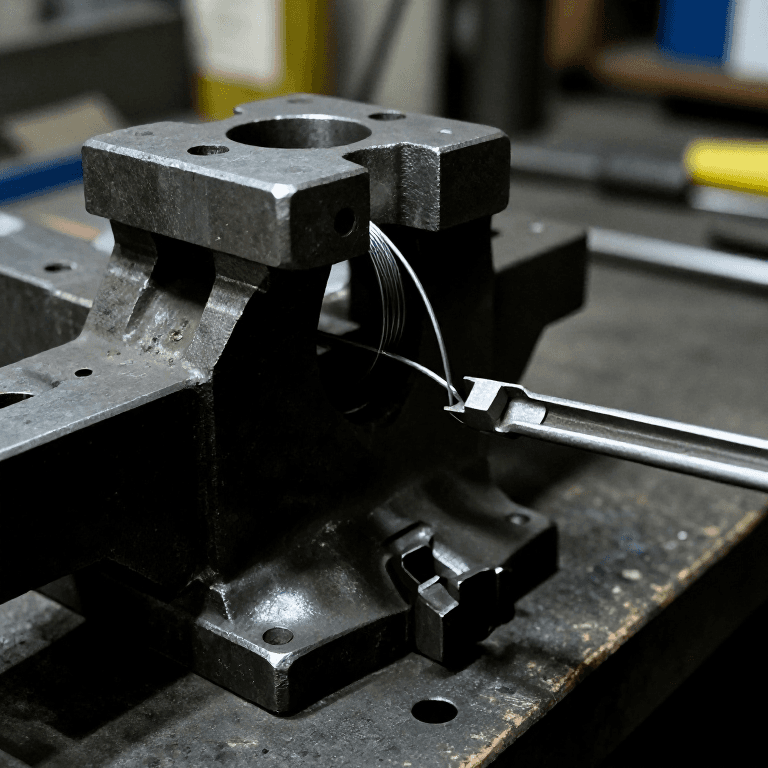
Cut two 30 cm lengths of steel wire. Bend each around round-nose pliers into a narrow loop at its middle, then fold the two legs together. Leave the first as a plain doubled wire. Clamp the loop of the second in a vise and twist the legs together with pliers, tight and even, to make a shank.
Hang the same weight from the tip of each loop with the shank held level, and measure the droop. Pull each loop sideways and see which spreads at its base. Use the better one to fasten a button through a tight leather buttonhole. Wear eye protection: cut wire ends spring.
このステップの材料:
 鋼線1 個
鋼線1 個 革1 個
革1 個必要な工具:
 丸口ペンチ
丸口ペンチ ニッパー
ニッパー 万力(ベンチバイス)
 定規
定規 透明保護メガネ
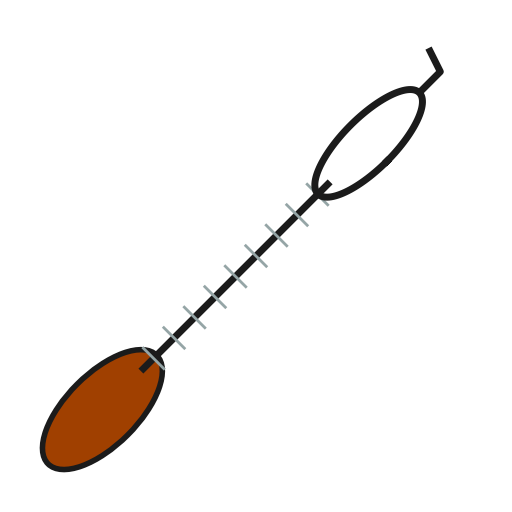 ボタンフック
5
5
A button hook that bends or will not catch
A button hook that bends or will not catch
Button hook troubleshooting.
Flow
Loading...
6
6
History and honest limits
History and honest limits
**Joseph A. Smith** of Deep River, Connecticut, filed US 208,858 on 29 March 1878; it is dated 8 October 1878. He notes "the twisting is accomplished by machinery, and is perfectly regular."
**Honest limits.** The patent gives no wire size. The wire diameter, length and load in the notebook are examples, and the bonded pair is an upper bound for a twist.
この設計図で作るもの
関連ブループリント
これらのブループリントは知識を共有しています — 技術、材料、原理
CC0 パブリックドメイン
このブループリントはCC0で公開されています。許可を求めずに、自由にコピー、修正、配布、あらゆる目的で使用できます。
メイカーを応援するには、ブループリント経由で製品を購入してください。メイカーには メイカーコミッション がベンダーにより設定されています。または、このブループリントの新しいイテレーションを作成し、自分のブループリントにコネクションとして含めて収益を共有できます。