アート
美容とウェルネス
工芸
文化と歴史
エンターテインメント
環境
食品と飲料
リバースエンジニアリング
科学
スポーツ
テクノロジー
ウェアラブル



The Clamp Skate: One Screw Closes the Toe and Heel Jaws
Before skates were built onto boots, a skate was a runner with a plate that fastened under an ordinary shoe. A clamp skate grips the sole's edges with jaws, so the same skate fits many shoes.
Charles T. Day of Newark, New Jersey, received US 98,237, dated 28 December 1869, improving the skate of his own US 40,916 (15 December 1863). The toe and heel jaws sit on clamping-levers "pivoted together in pairs", and one right-and-left screw, set diagonally so "it can be easily reached by the wearer", spreads or closes them all.
This rung works out how far the jaws move per turn and how hard they grip. Then it measures both on a skate and a shoe.
初心者
About 1 hour
手順
1
1
Jaw travel and grip
Jaw travel and grip
Jupyter ノートブックを読み込み中…
2
2
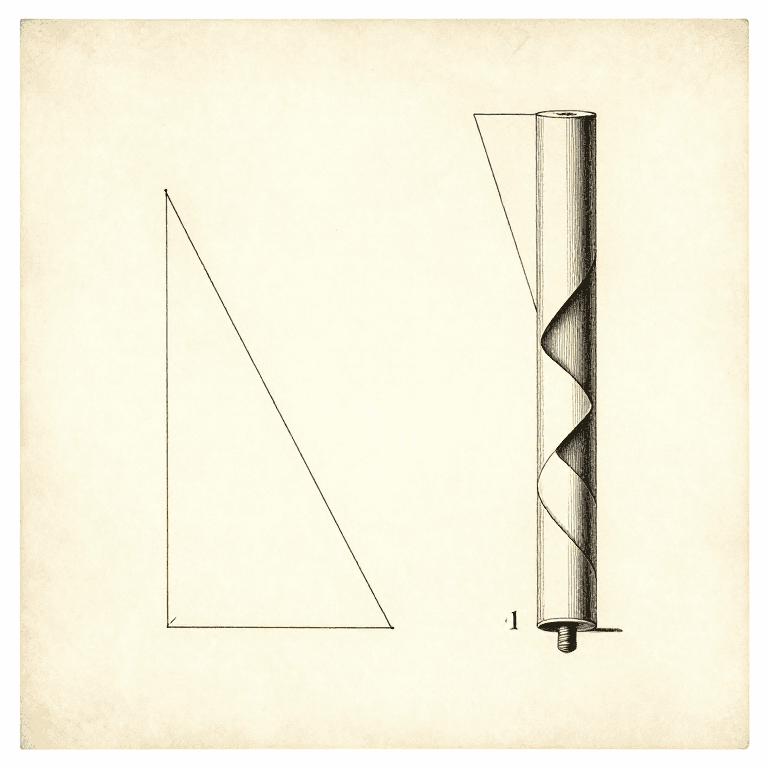
A ramp wrapped round a cylinder
A ramp wrapped round a cylinder
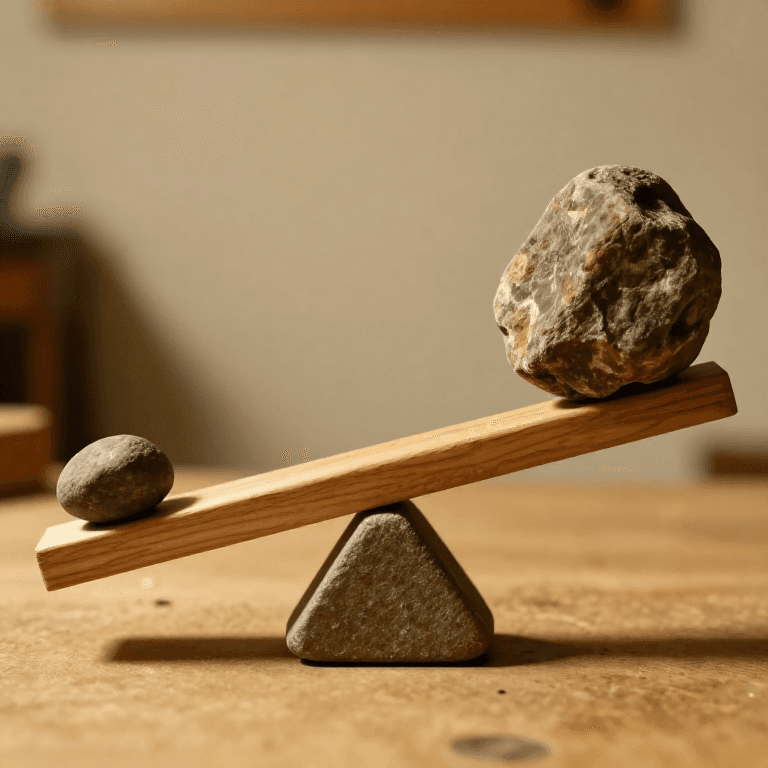
The screw turns a small torque into a large push. The embedded blueprint explains the thread.
3
3
Read US 98,237
Read US 98,237
"The object of the present invention is to facilitate the adjustment of the toe and heel-jaws by so setting the adjusting-screw that it can be easily reached by the wearer." "In the skate described in the aforesaid Letters Patent, the screw was set longitudinally, and was therefore difficult to reach".
"This longitudinal adjustment is obtained by means of a right and left screw, G, which is fitted through nuts g h, that are respectively pivoted to the inner ends of the levers E F, so that they can freely turn on their pivots. As by turning the screw G the nuts are forced further apart, the clamp-levers are moved outward, to spread the jaws, while the latter will be contracted when the nuts are drawn together."
On the heel-plate is "an upward-projecting lug, i, with a backward-projecting prong or point, j, which serves to retain the heel and boot in position, longitudinally as well as vertically."
4
4
The skate on wheels
The skate on wheels
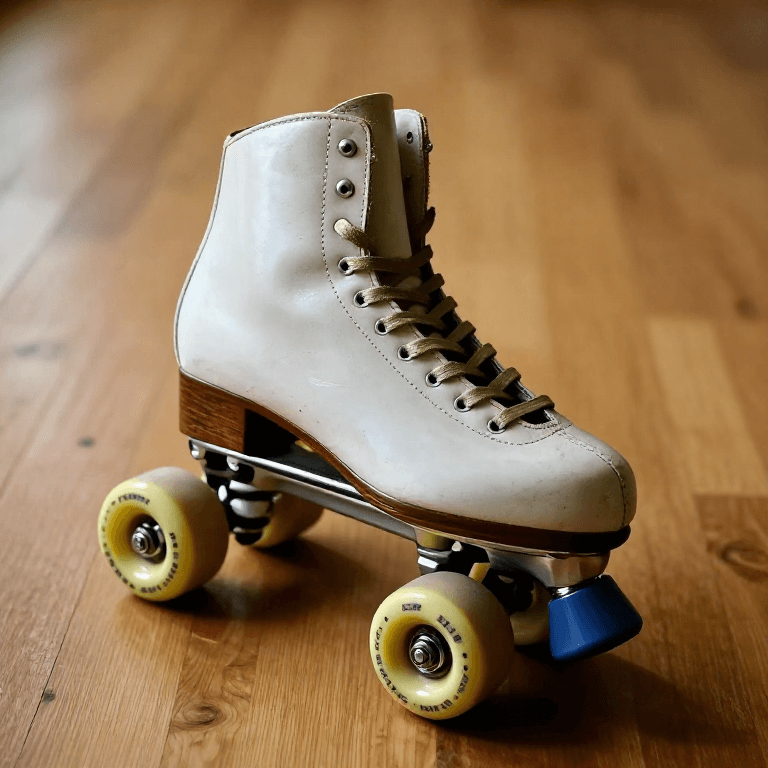
Plimpton's 1863 roller skate is the same idea on wheels. The embedded blueprint builds it.
5
5
Measure the jaws and the grip
Measure the jaws and the grip
Take an adjustable clamp-on skate. Measure the gap between the toe jaws with a caliper, turn the key one full turn and measure again; repeat for five turns. Compare the change per turn with twice the pitch times the lever ratio.
Clamp it onto a hard-soled shoe held in a vise by the upper, tightening the key the same way each time. Hook a spring scale to the skate's runner and pull sideways until it slips on the sole. Try half a turn tighter and looser. Never skate in a clamp that slips under a hand pull.
必要な工具:
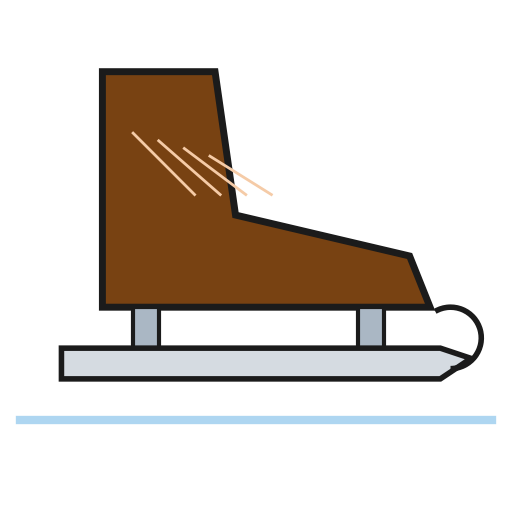 アイススケート靴
 デジタルノギス 6インチ
 ばねばかり
ばねばかり 万力(ベンチバイス)
6
6
A clamp skate that slips or will not fit
A clamp skate that slips or will not fit
Clamp skate troubleshooting.
Flow
Loading...
7
7
History and honest limits
History and honest limits
**Charles T. Day** of Newark, New Jersey, received US 98,237, dated 28 December 1869 (no filing date is printed on patents of that period); it improves his US 40,916 of 15 December 1863.
**Honest limits.** The patent gives no pitch or lever lengths. The pitch, efficiency, lever arms, friction coefficient and torques in the notebook are examples.
関連ブループリント
これらのブループリントは知識を共有しています — 技術、材料、原理
CC0 パブリックドメイン
このブループリントはCC0で公開されています。許可を求めずに、自由にコピー、修正、配布、あらゆる目的で使用できます。
メイカーを応援するには、ブループリント経由で製品を購入してください。メイカーには メイカーコミッション がベンダーにより設定されています。または、このブループリントの新しいイテレーションを作成し、自分のブループリントにコネクションとして含めて収益を共有できます。