アート
美容とウェルネス
工芸
文化と歴史
エンターテインメント
環境
食品と飲料
リバースエンジニアリング
科学
スポーツ
テクノロジー
ウェアラブル



The Dyebath: Even Colour Is a Question of Temperature and Patience
Two skeins in the same pot with the same dye can come out visibly different, and the reason is almost always how the bath was run rather than what was in it.
Dye strikes the fibre it touches first. If the bath is hot at the bottom and cool at the top, or if the skein is packed against the side, or if it goes into a bath that is already hot, the colour lands unevenly and cannot be corrected afterwards — a dye that has struck does not move.
This rung is about the four things that decide evenness: starting temperature, rate of rise, holding temperature, and movement.
中級者
4 hours
手順
1
1
Start cold, rise slowly
Start cold, rise slowly
Put the wet fibre into a bath that is at or below the temperature of the fibre itself, and bring the whole thing up together.
The reason is that dye uptake rises steeply with temperature. Fibre dropped into an already hot bath takes a great deal of dye in the first few seconds, and whichever part of it met the hot liquid first keeps that advantage for the rest of the day.
A rise of about one degree a minute up to the holding temperature is the usual advice, which means twenty-five to forty minutes of coming up. That is slow enough for the dye to distribute before very much of it has struck.
For wool there is a second reason: a sudden temperature change felts it. The slow rise serves both purposes at once.
このステップの材料:
 未染色の毛糸2 かせ
必要な工具:
 大鍋
 温度計
 火ばさみ
2
2
Hold below the boil, and hold it there
Hold below the boil, and hold it there
Most natural dyes are held at 80 to 90 C for half an hour to an hour. Very few want a boil, and several are damaged by one.
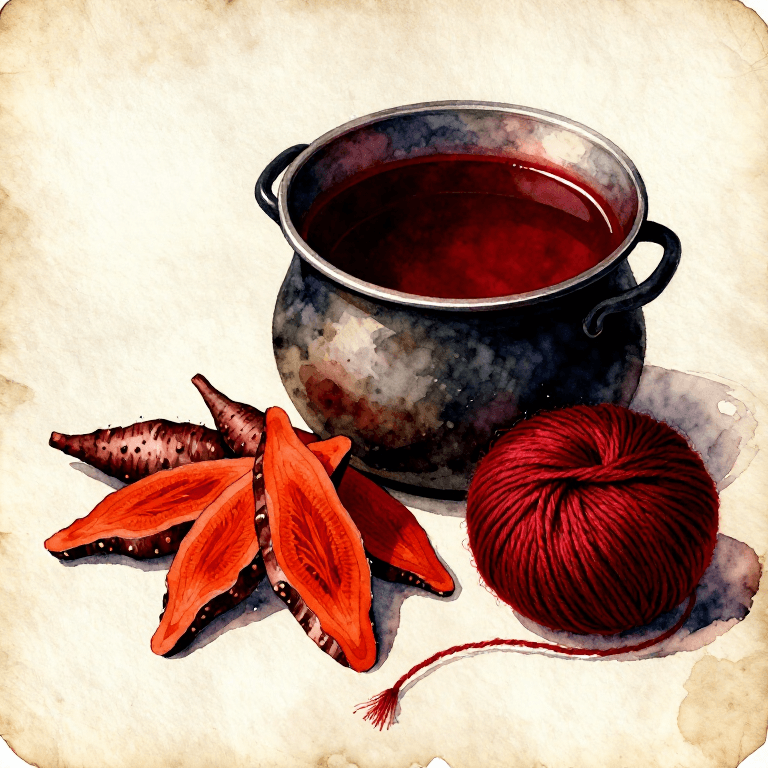
**Madder is the standard warning.** Held above about 80 C it turns brick and brown instead of red, because the compounds that give the orange-brown survive the heat while the red alizarin is degraded by it. A madder bath that has boiled cannot be brought back.
**Wool above 90 C** loses loft and goes harsh, whatever the dye.
**Indigo is a different process entirely** and is not heated like this at all — it is a vat, worked warm and without oxygen, and it has its own blueprint.
Hold means hold. A bath that swings between 70 and 95 C dyes in bands.
このステップの材料:
未染色の毛糸2 かせ 絹糸1 かせ
必要な工具:
大鍋温度計 撹拌棒
3
3
Move the fibre, do not stir the pot
Move the fibre, do not stir the pot
The fibre must move through the bath, but wool cannot be stirred like soup.
Lift the skein clear with tongs or a smooth rod, let it drain for a moment, turn it over, and lower it back in. Every ten minutes or so is plenty. That exchanges the liquid through the skein without rubbing the fibres against each other.
What causes felting is not movement but **friction plus heat plus alkali**. Lifting is nearly frictionless; stirring, squeezing and wringing are not.
Cotton and linen have no such problem and can be stirred freely — but they have the opposite one: they are heavy when wet and sink into a solid mass at the bottom of the pot, where the dye cannot circulate. They need lifting for a different reason.
Keep the pot big. A skein that cannot open out is a skein dyeing itself in patches.
このステップの材料:
未染色の毛糸2 かせ 綿布(薄手)1 m
必要な工具:
大鍋火ばさみ撹拌棒 ゴム手袋
4
4
Cool in the bath, rinse at temperature, dry in the shade
Cool in the bath, rinse at temperature, dry in the shade
The dye is still moving as the bath cools, and a long cool is free extra colour — many dyers turn the heat off and leave the fibre in overnight.
**Rinse at the temperature the bath is at**, not under a cold tap. Again, wool felts on a temperature shock, and a skein that survived the whole dye day can be ruined in the sink.
Rinse until the water runs clear. Water that keeps running coloured is dye that never bonded — it is sitting on the surface and it will come off in the first wash, taking the apparent depth of shade with it. That is not a failed rinse, it is a bath that was overloaded, and the fastness rung tests for it properly.
**Dry out of direct sun.** Freshly dyed fibre is at its most vulnerable to light, and a skein dried on a sunny line can be visibly faded down one side before it is even dry.
このステップの材料:
未染色の毛糸2 かせ必要な工具:
大鍋温度計 乾燥棚火ばさみ
この設計図で作るもの
関連ブループリント
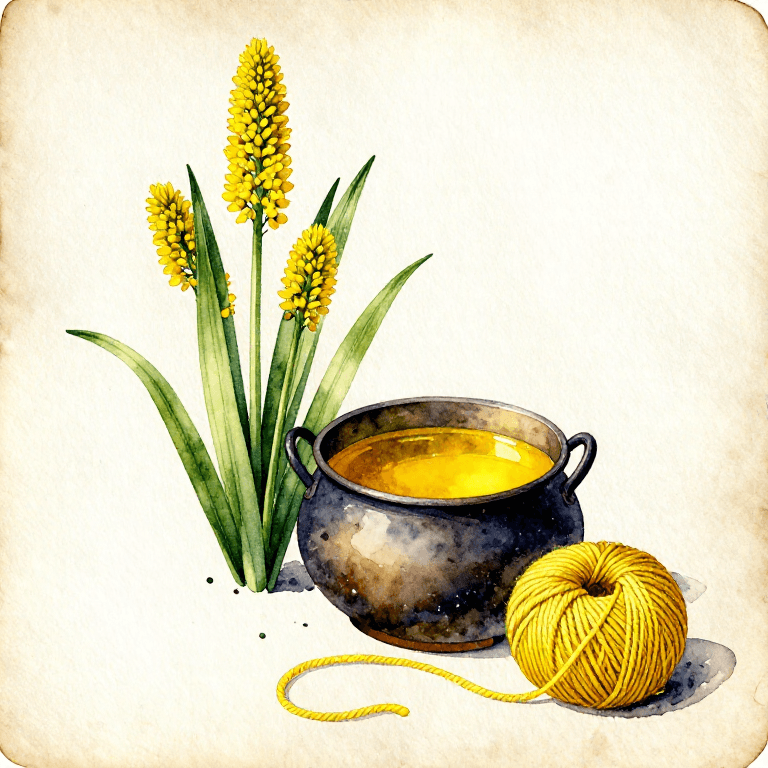
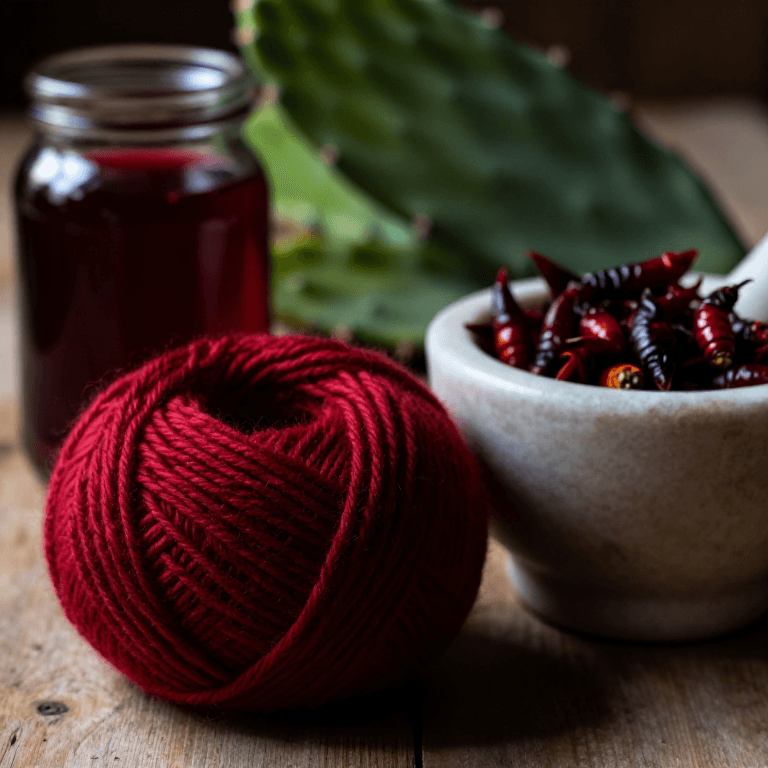
これらのブループリントは知識を共有しています — 技術、材料、原理
CC0 パブリックドメイン
このブループリントはCC0で公開されています。許可を求めずに、自由にコピー、修正、配布、あらゆる目的で使用できます。
メイカーを応援するには、ブループリント経由で製品を購入してください。メイカーには メイカーコミッション がベンダーにより設定されています。または、このブループリントの新しいイテレーションを作成し、自分のブループリントにコネクションとして含めて収益を共有できます。