アート
美容とウェルネス
工芸
文化と歴史
エンターテインメント
環境
食品と飲料
リバースエンジニアリング
科学
スポーツ
テクノロジー
ウェアラブル
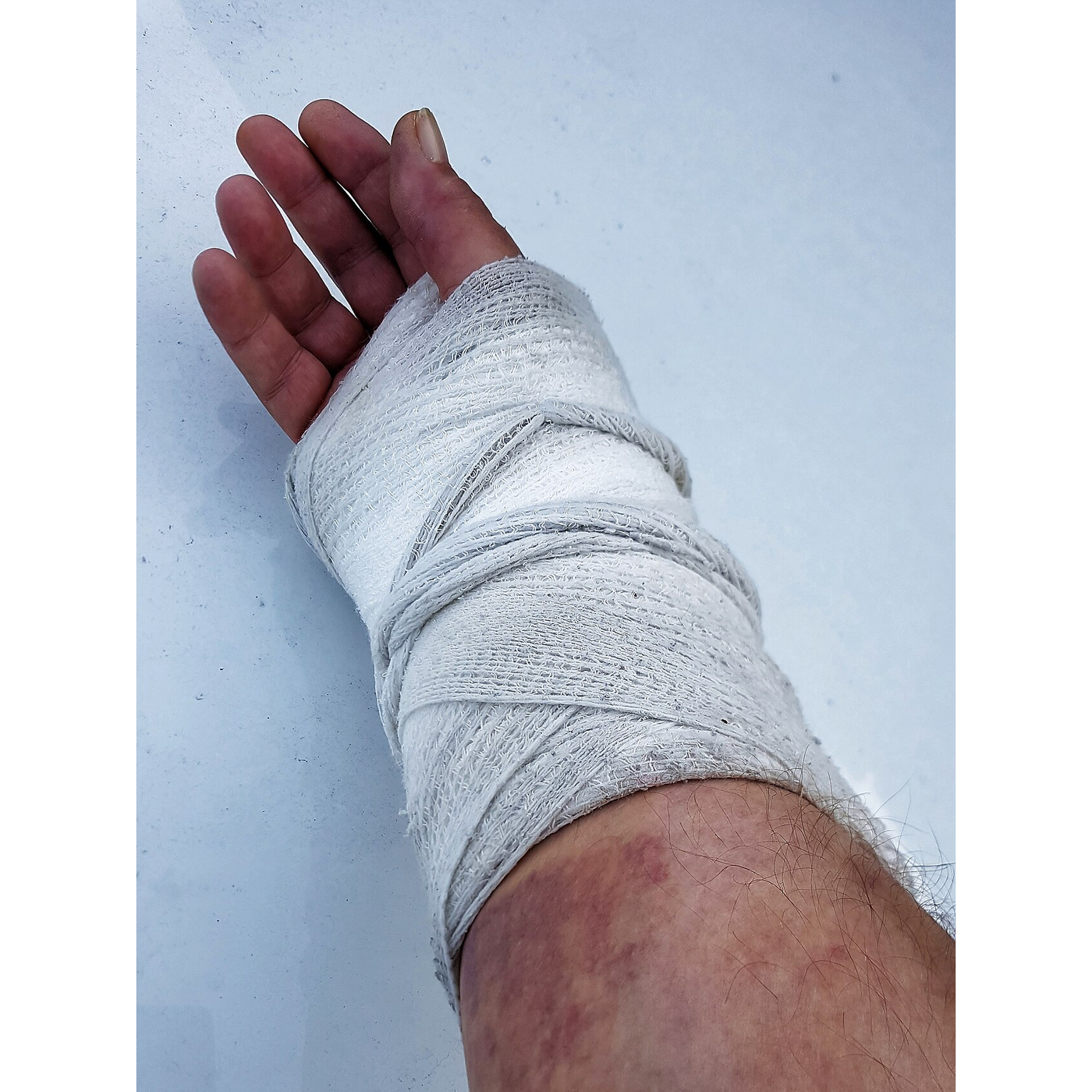


The Plaster Cast: Gypsum That Sets Round a Broken Limb
A broken bone heals only if its ends are held still in line for weeks. Splints of wood and bandages stiffened with starch or egg white took hours or days to harden. Antonius Mathijsen, a Dutch army surgeon at the military hospital in Haarlem, rubbed plaster of Paris into coarse cotton bandages in 1851: soaked in water and wrapped round the limb, they could be moulded to it and set hard within minutes. He published the method in February 1852, and armies adopted it because it could be applied on the battlefield.
The chemistry is simple: the hemihydrate takes up water and crystallises as gypsum. But the reaction gives off heat, and the water the mix needs to be workable is far more than the reaction uses.
This rung works out the heat and the water, models a setting cast's temperature, and makes a cast round a bottle, measuring its temperature as it sets.
初心者
About 3 hours
手順
1
1
Hydration chemistry, water ratio and heat
Hydration chemistry, water ratio and heat
Jupyter ノートブックを読み込み中…
2
2
The older plaster it follows
The older plaster it follows
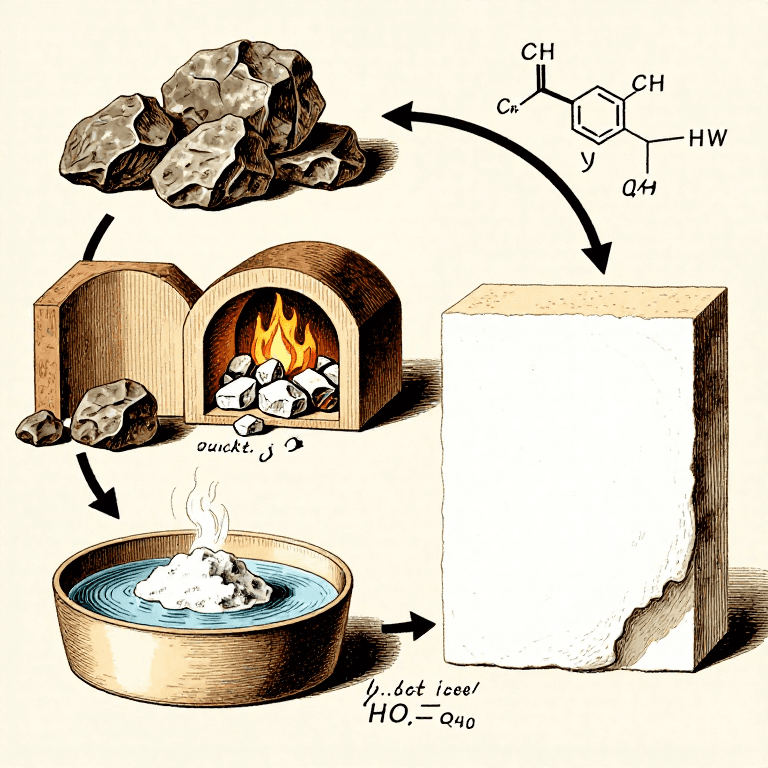
Lime plaster sets by taking up carbon dioxide over days; gypsum plaster sets by taking up water in minutes. The embedded blueprint makes the older one.
3
3
Measure the heat of setting
Measure the heat of setting
Weigh 100 g of plaster of Paris into a paper cup and 60 g of water at room temperature into another. Stir the plaster into the water, push a thermocouple probe into the middle, and read the temperature every minute for 40 minutes.
Repeat with a thin disc — 100 g spread 5 mm thick on a plastic sheet with the probe under it — and with a deep cup of 300 g. Plot the three curves: the thick lump gets far hotter than the thin disc, as the notebook's model shows. Never repeat the deep test with warm water near skin.
このステップの材料:
 焼石こう1 kilogram
 水1 リットル
必要な工具:
 デジタルキッチンスケール
 表示器付き熱電対
 ストップウォッチ
 革の作業用手袋
 透明保護メガネ
 カップ
カップ4
4
Wrap a cast round a bottle
Wrap a cast round a bottle
Use a plastic bottle as the limb. Smear it with petroleum jelly so the cast releases, and wrap one layer of cotton gauze as padding.
Cut plaster bandage into lengths. Dip each in cool water for a few seconds until the bubbles stop, squeeze it gently, and wrap it round with each turn overlapping the last by half, smoothing it with a wet palm so the layers bond. Build four to six layers, thicker where a real cast takes the load. Mould it with flat palms, never fingertips, which leave dents that press on skin.
It is firm in minutes and sets fully over hours as it dries. Next day, cut it off with a saw down one side and weigh it wet and dry.
このステップの材料:
 仮面作り用ギプス包帯ロール1 個
 綿のガーゼ1 個水2 リットル
必要な工具:
 バケツ革の作業用手袋デジタルキッチンスケール
 金切りのこ(ハクソー)
 ワセリン
ワセリン PET ボトル(炭酸飲料)
5
5
A cast that is not right
A cast that is not right
Warning signs with a plaster cast. On a real patient, any of them means seeing a clinician.
Flow
Loading...
6
6
History and honest limits
History and honest limits
**Antonius Mathijsen** (1805–1878) first used plaster of Paris bandages in 1851 at the military hospital in Haarlem, and published the method in the Dutch journal *Repertorium* in February 1852; he took out no patent. Fibreglass and resin casts now often replace plaster because they are lighter and tolerate water, but plaster is still used where it must be moulded closely.
**Honest limits.** The temperature model is a simple lumped estimate, not a clinical figure. Applying a cast to a person is a clinical skill: this rung casts a bottle. The enthalpy figures are standard tabulated values; real plasters differ slightly by type.
関連ブループリント
これらのブループリントは知識を共有しています — 技術、材料、原理


CC0 パブリックドメイン
このブループリントはCC0で公開されています。許可を求めずに、自由にコピー、修正、配布、あらゆる目的で使用できます。
メイカーを応援するには、ブループリント経由で製品を購入してください。メイカーには メイカーコミッション がベンダーにより設定されています。または、このブループリントの新しいイテレーションを作成し、自分のブループリントにコネクションとして含めて収益を共有できます。