アート
美容とウェルネス
工芸
文化と歴史
エンターテインメント
環境
食品と飲料
リバースエンジニアリング
科学
スポーツ
テクノロジー
ウェアラブル
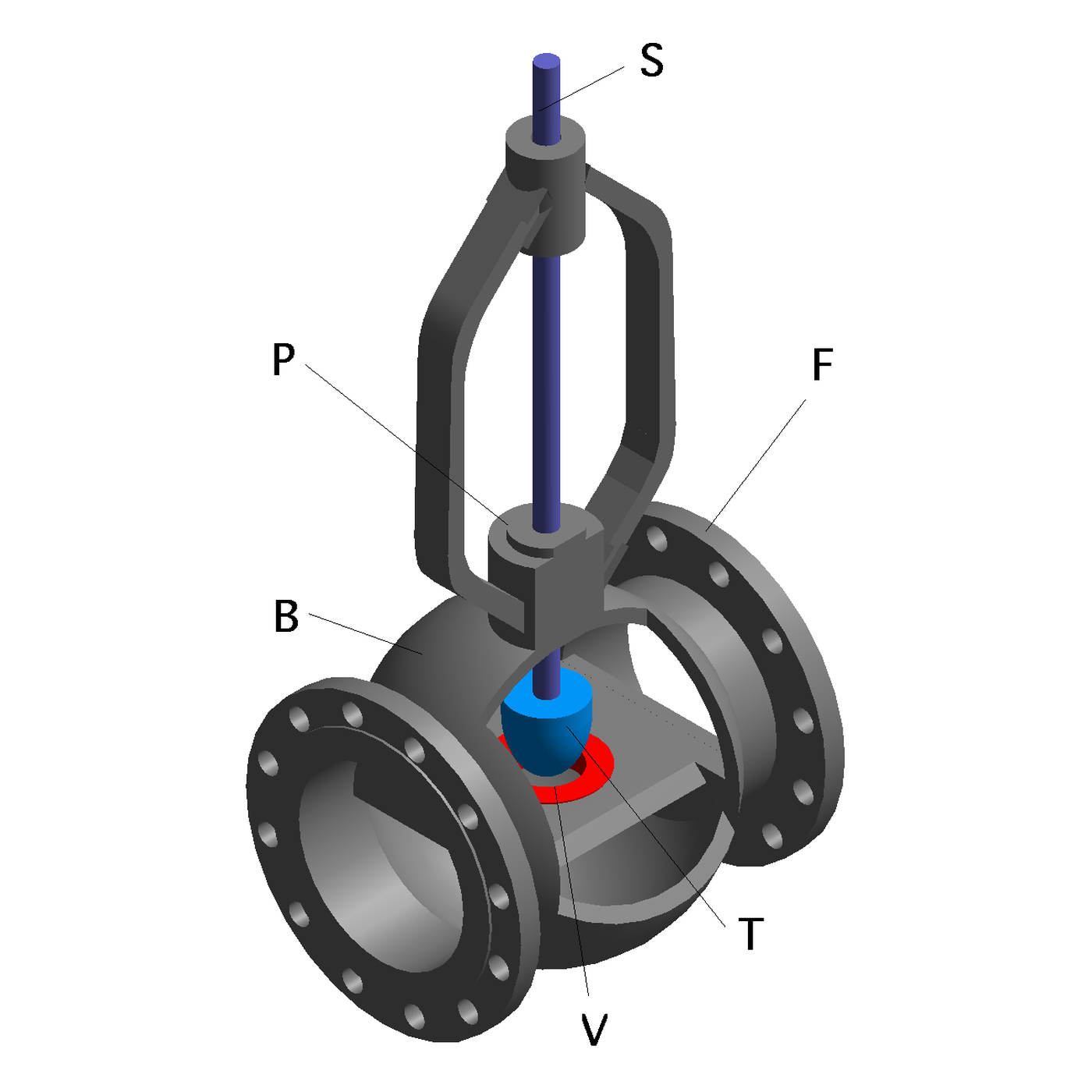


Throttling: Letting Some of It Past
Shutting a flow off is easy. Letting a *chosen amount* past, repeatably, is the harder problem and the one every process depends on.
Three things get in the way. Flow goes with the **square root** of pressure drop, so a valve half closed does not halve anything. The pipe around the valve takes a share of the drop that grows as the flow rises, which steals the valve's control — a phenomenon with the good name **valve authority**. And if you drop too much pressure in one place the liquid boils inside the valve and then collapses again, which destroys it in weeks.
This rung measures a real valve's characteristic on a bench, shows what an oversized valve does to it, and works out how much pressure you are allowed to drop at once.
上級者
About 4 hours
手順
1
1
Plot the characteristic of a real valve
Plot the characteristic of a real valve
Set up the flow bench from rung 1 — supply, valve under test, measured catch, stopwatch — and this time work in small steps of opening.
Mark the handwheel or lever so you can return to the same position, and take at least eight readings from shut to fully open. At each one record **flow** and, if you have two gauges, the **pressure either side**.
Plot flow against lift for:
- a **globe valve**, whose disc lifts off a flat seat;
- a **needle valve**, whose long taper enters a small orifice;
- a **ball valve**, for contrast.
You will get three very different curves. The needle valve is nearly straight over most of its travel and is fine at very small flows. The globe is reasonable. The ball does almost nothing, then everything, as rung 4's notebook predicted.
Now the finding that matters. Repeat the globe valve's run **with the tap only half open**, so the supply itself is now a significant restriction. The curve changes shape: the valve reaches most of its effect much earlier and then flattens.
Nothing about the valve changed. The **system** around it changed, and the valve's control went with it. That is valve authority, and step 4 computes it.
必要な工具:
 玉形弁
玉形弁 ニードルバルブ
 黄銅ボールバルブ
 シリコンチューブ
 バケツ
バケツ メスシリンダー
 ストップウォッチ
 圧力計
圧力計 ニトリル手袋
2
2
Look at the trim, and see the characteristic in the metal
Look at the trim, and see the characteristic in the metal
A control valve's characteristic is cut into its plug. Take the bonnet off a globe valve and a needle valve and look at what closes them, under the microscope.
- **A flat disc** — a plain stop valve. It has a *quick-opening* characteristic: the flow area is the circumference times the lift, so it rises fast and then stops mattering because the seat bore becomes the restriction.
- **A tapered plug or needle** — as it lifts, the annular gap grows steadily. Roughly *linear*, and very fine at small openings if the taper is shallow. Measure the taper angle; a 2° needle gives far finer control than a 15° one and takes far more turns.
- **A contoured or skirted plug**, on a proper control valve — shaped so that each equal step of lift multiplies the flow by the same factor. That is *equal percentage*, and step 4 explains why it is the usual choice.
Sketch each profile in your notebook next to the curve you measured for it in step 1. The connection between the shape of a piece of metal and the shape of a graph is the whole content of this rung, and seeing them side by side is what makes it stick.
One practical note: a needle valve's fine control comes from a long shallow taper, which means it is easily damaged by being closed hard. Closing a needle valve with force drives the taper into the seat and deforms both. They are closed **gently**; that is not delicacy, it is the only way they stay accurate.
必要な工具:
玉形弁ニードルバルブ デジタル顕微鏡
 デジタルノギス 6インチ
 モンキーレンチ
 万力(ベンチバイス)
3
3
Make it cavitate, and listen
Make it cavitate, and listen
Cavitation is the limit on throttling, and it announces itself.
Arrange the highest supply pressure you can get and throttle hard against it — a globe or needle valve nearly shut, with a free discharge just after it. Put your ear or a screwdriver handle against the valve body.
At moderate drops you hear flow. As the drop increases there is a point where the sound changes character completely: a harsh hissing, then something that sounds exactly like gravel rattling through the valve. That is vapour bubbles forming where the velocity is highest, then **collapsing** as the pressure recovers downstream.
Each collapse is a microscopic implosion against the metal. The damage looks like corrosion but it is mechanical, and it works through hardened trim in months.
Two things to try:
1. **Raise the downstream pressure** by partly closing a second valve after the first. The noise stops, even though the flow is lower. Cavitation depends on how far the pressure falls **below vapour pressure**, not on how much flow there is.
2. **Split the drop** across the two valves deliberately. Same total drop, no gravel. That is exactly what a multi-stage trim does inside one body.
Step 4 puts numbers on it, including the uncomfortable one: hot water cavitates at less than half the drop cold water will take.
必要な工具:
玉形弁ニードルバルブ圧力計シリコンチューブバケツストップウォッチ 透明保護メガネニトリル手袋
4
4
Characteristic, authority and the cavitation limit
Characteristic, authority and the cavitation limit
Jupyter ノートブックを読み込み中…
5
5
History and context
History and context
**Attribution, stated honestly.** No patent is claimed for this rung. Throttling is as old as the sluice gate, and the specific ideas here — the flow coefficient, the inherent characteristic, valve authority, the pressure recovery factor — are **measurement conventions** developed by the process industries through the twentieth century and settled into standards, not inventions with an owner.
That is itself worth noticing. Much of what makes a field workable is not patented machinery but **agreed ways of describing behaviour**, so that a valve bought from one firm can be sized against a pump bought from another. $C_v$ is a number with no physics in it — it is gallons per minute at one psi — and it has done more for fluid engineering than most patents.
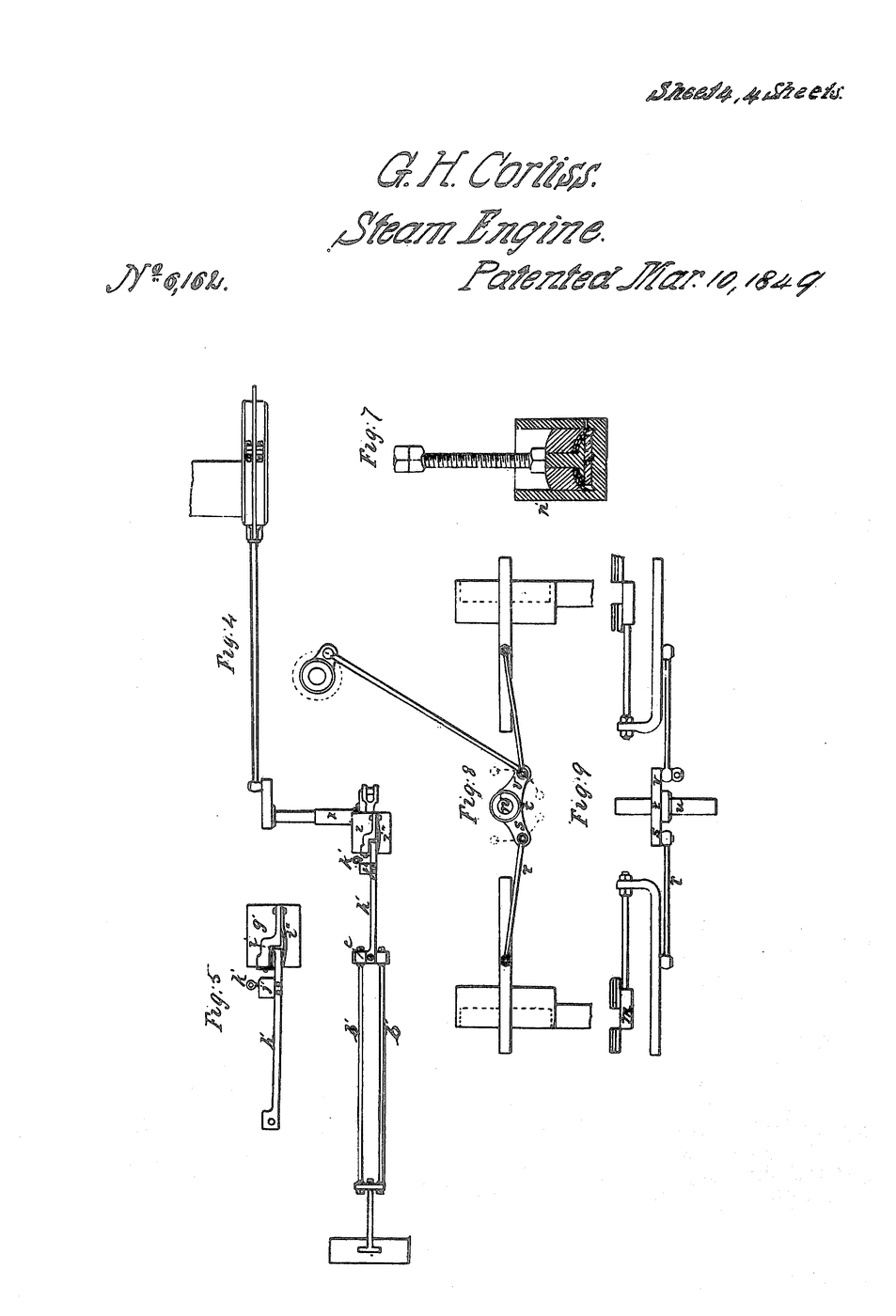
**Where the control valve body comes from.** The globe body of rung 1, with its tortuous path and its disc pressed onto a seat, turns out to be the right shape for throttling for the same reason it is a poor shape for simply passing flow: the pressure is taken across a small, well-defined gap that a shaped plug can control. Nearly every modern control valve is a globe body with a characterised plug in it, and the Corliss valve gear already in the catalogue is a nineteenth-century ancestor of the same thinking.
**The rule that saves the most equipment.** *Size the valve for the job, not for the pipe.* A control valve should be taking a real share of the system's pressure drop — step 4's authority — and a valve the same size as the line almost never is. The commonest fault in an installed control loop is a valve that is far too big, operating between five and twenty per cent open, controlling badly and eroding its own seat.
**Honest limits.** The figures in step 4 are illustrative: real $C_v$, characteristic and $F_L$ values are per-valve data from the maker. The bench work measures ratios rather than absolutes. And cavitation prediction in a real system is genuinely difficult — the arithmetic here tells you when you are certainly in trouble, not when you are safe.
関連ブループリント
これらのブループリントは知識を共有しています — 技術、材料、原理


CC0 パブリックドメイン
このブループリントはCC0で公開されています。許可を求めずに、自由にコピー、修正、配布、あらゆる目的で使用できます。
メイカーを応援するには、ブループリント経由で製品を購入してください。メイカーには メイカーコミッション がベンダーにより設定されています。または、このブループリントの新しいイテレーションを作成し、自分のブループリントにコネクションとして含めて収益を共有できます。