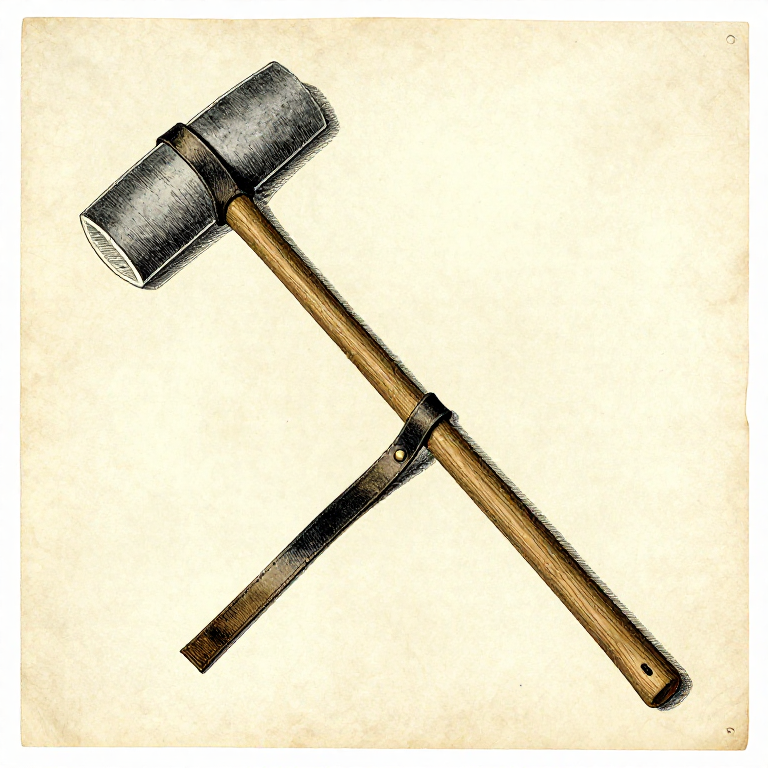

Building a Viking Threshing Flail — Separating Grain from Husk
手順
Select and Prepare the Handle
Select and Prepare the Handle
Choose a straight, knot-free hardwood branch — ash, oak, or birch — approximately 120cm long and 3-4cm in diameter. Strip the bark using a knife or drawknife. Allow the wood to dry if using green wood (a few days near a fire speeds this). The handle should be comfortable to grip and swing overhead repeatedly.
Shape the Beater (Swipple)
Shape the Beater (Swipple)
Select a shorter, heavier hardwood piece for the beater — approximately 60cm long and 4-5cm in diameter. This is the swipple that strikes the grain. A denser wood (oak, hornbeam) is ideal for the beater as it adds striking weight. Trim to final length and smooth any rough spots with a knife.
Drill the Strap Holes
Drill the Strap Holes
Using an awl, auger, or heated iron point, drill a hole (approximately 1cm diameter) through one end of the handle and one end of the beater. The holes should be centered and perpendicular to the length of the wood. Smooth the hole edges to prevent the leather strap from wearing against sharp wood fibers.
Connect with Leather Strap
Connect with Leather Strap
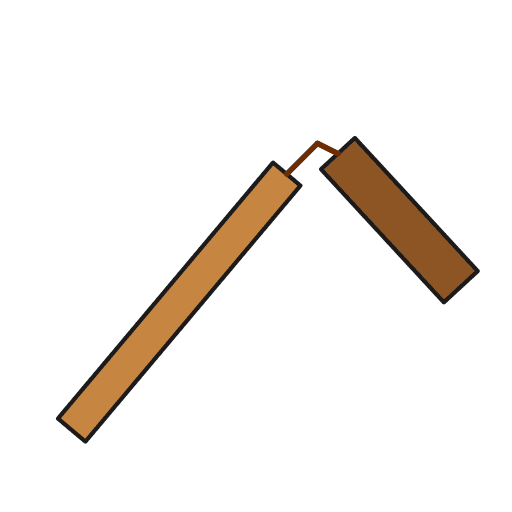
Thread a strong leather strap or rawhide thong (approximately 15cm long, 2cm wide) through both drilled holes. The strap connects the handle to the beater but must allow the beater to swing freely in a full arc. Knot or peg the strap securely on each side — use a wooden peg or toggle pushed through a slit in the leather.
Rawhide is ideal because it shrinks as it dries, tightening the connection. If using tanned leather, ensure it is thick and strong enough to withstand repeated impact forces.
このステップの材料:
 柄用の堅木材1 個柄用の堅木材1 個
 革ひも1 piece (15cm) cm
Test and Use
Test and Use
Spread sheaves of harvested grain on a hard, flat threshing floor (packed earth, flat stone, or a wooden platform). Grip the handle firmly and swing the flail overhead in an arc, letting the beater strike the grain with its own weight and momentum.
The impact knocks the grain kernels free from the husks and stalks. After threshing, winnow the grain by tossing it in the air — the lighter chaff blows away while heavier kernels fall back down. The clean grain is now ready for grinding on a quern stone.
この設計図で作るもの
CC0 パブリックドメイン
このブループリントはCC0で公開されています。許可を求めずに、自由にコピー、修正、配布、あらゆる目的で使用できます。
メイカーを応援するには、ブループリント経由で製品を購入してください。メイカーには メイカーコミッション がベンダーにより設定されています。または、このブループリントの新しいイテレーションを作成し、自分のブループリントにコネクションとして含めて収益を共有できます。