アート
美容とウェルネス
工芸
文化と歴史
エンターテインメント
環境
食品と飲料
リバースエンジニアリング
科学
スポーツ
テクノロジー
ウェアラブル
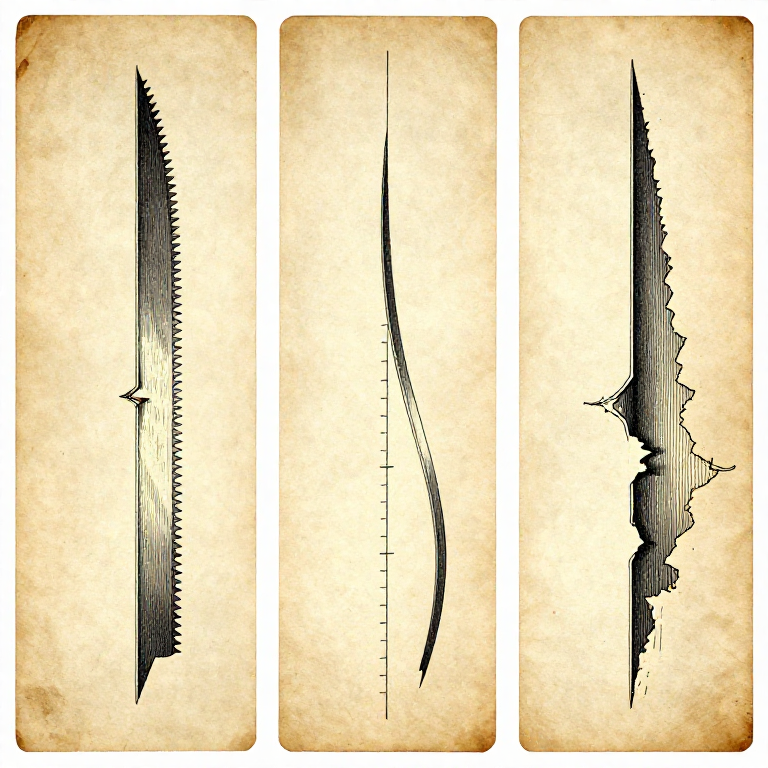


Binding, Wandering and Snatching: Reading a Cut That Goes Wrong
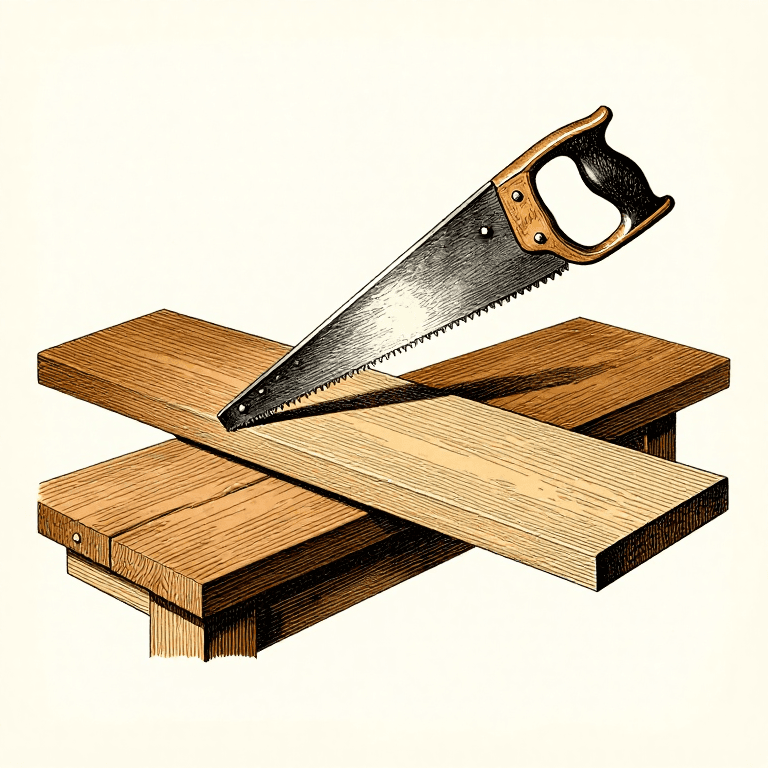
A saw that is not behaving is telling you something specific, and each symptom has a short list of causes. Guessing is slow; reading it is fast.
Binding means the kerf is closing. Wandering means the blade is being steered, by set, by grain or by your wrist. Snatching means too many teeth are engaging at once. Burning means friction where there should be cutting.
Nearly every one of these is about the wood or the setup rather than the technique, which is good news — they are fixable in seconds once identified, and no amount of trying harder addresses any of them.
中級者
2 hours
手順
1
1
Binding: the cut is closing behind the blade
Binding: the cut is closing behind the blade
The saw goes in fine and then grips harder and harder until it will not move. That is the kerf closing, and there are three usual reasons.
The WORK IS PINCHING: a long rip cut in a board with internal stress will close as it is released. Drive a thin wedge into the kerf behind the saw and it stays open. The SUPPORT IS WRONG: a board supported at both ends sags in the middle and closes the cut — support it so the offcut falls away. Or the SET IS WORN, so the kerf is barely wider than the blade.
Wax helps in every case. A rub of beeswax or candle on the blade reduces friction noticeably and costs nothing. It is not a fix for a genuinely pinching cut, but it makes a marginal one comfortable.
このステップの材料:
 蜜蝋1 個
蜜蝋1 個 乾燥した針葉樹の板1 個
必要な工具:
 手のこぎり
手のこぎり C 型クランプ
2
2
Wandering: the cut curves away from the line
Wandering: the cut curves away from the line
If the cut consistently curves the same way, the saw has MORE SET ON ONE SIDE — it cuts more on that side and steers itself. Check by sighting down the teeth; the fix is in the sharpening rung.
If it wanders differently each time, it is the wrist. Twisting even slightly steers the blade, and it is almost impossible to feel. Sawing in front of a mirror, or having someone watch from the side, shows it up immediately.
In wood there is a third cause: the blade following the GRAIN. Ripping a board with wavy grain, the teeth take the path of least resistance and drift along the fibres. The answer is a sharper saw and a slower, more deliberate stroke — a blunt saw follows the grain far more than a sharp one.
このステップの材料:
乾燥した針葉樹の板1 個必要な工具:
手のこぎり 完全スコヤ
完全スコヤ 直定規
直定規3
3
Snatching, juddering and burning
Snatching, juddering and burning
SNATCHING at the start means too many teeth engaged at once — start at a shallower angle with fewer teeth touching. Snatching in mid-cut on metal usually means too coarse a blade for the thickness: the three-tooth rule again.
JUDDERING is almost always the work moving. Clamp it properly, grip it shorter, and the judder disappears. It is the same diagnosis as chatter when filing and it has the same fix.
BURNING — scorched wood, blued metal — means the blade is rubbing rather than cutting. Either it is blunt, or it is bound in the kerf, or you are going far too fast. On metal, slow down and add oil; on wood, check the blade is sharp and the kerf is open.
このステップの材料:
乾燥した針葉樹の板1 個 軟鋼バー1 個
必要な工具:
手のこぎり 金切りのこフレームと替刃
 重量級万力
重量級万力 拡大ルーペ
拡大ルーペ4
4
Tearout on the far face, and how to prevent it
Tearout on the far face, and how to prevent it
The cut looks clean on top and the underside is ragged where the teeth burst out of the far face. The fibres there have nothing behind them to hold them in.
Support the exit. Clamp a sacrificial scrap tight against the underside and the teeth pass into it instead of into air; the fibres are backed and cannot lift. The identical trick stops a drill blowing out the back of a hole and stops a rasp tearing end grain.
Alternatively, score the line first with a marking knife on both faces. The fibres are severed before the saw reaches them, so there is nothing to tear. That is why a knife line is used for joinery and a pencil line for rough work, and it is worth the thirty seconds on anything that will be seen.
このステップの材料:
乾燥した針葉樹の板2 個必要な工具:
 けがき針C 型クランプ
 背金鋸
背金鋸 鋸用当て板
鋸用当て板関連ブループリント
これらのブループリントは知識を共有しています — 技術、材料、原理

CC0 パブリックドメイン
このブループリントはCC0で公開されています。許可を求めずに、自由にコピー、修正、配布、あらゆる目的で使用できます。
メイカーを応援するには、ブループリント経由で製品を購入してください。メイカーには メイカーコミッション がベンダーにより設定されています。または、このブループリントの新しいイテレーションを作成し、自分のブループリントにコネクションとして含めて収益を共有できます。